Cromwell Point Lighthouse and the lives of its keepers
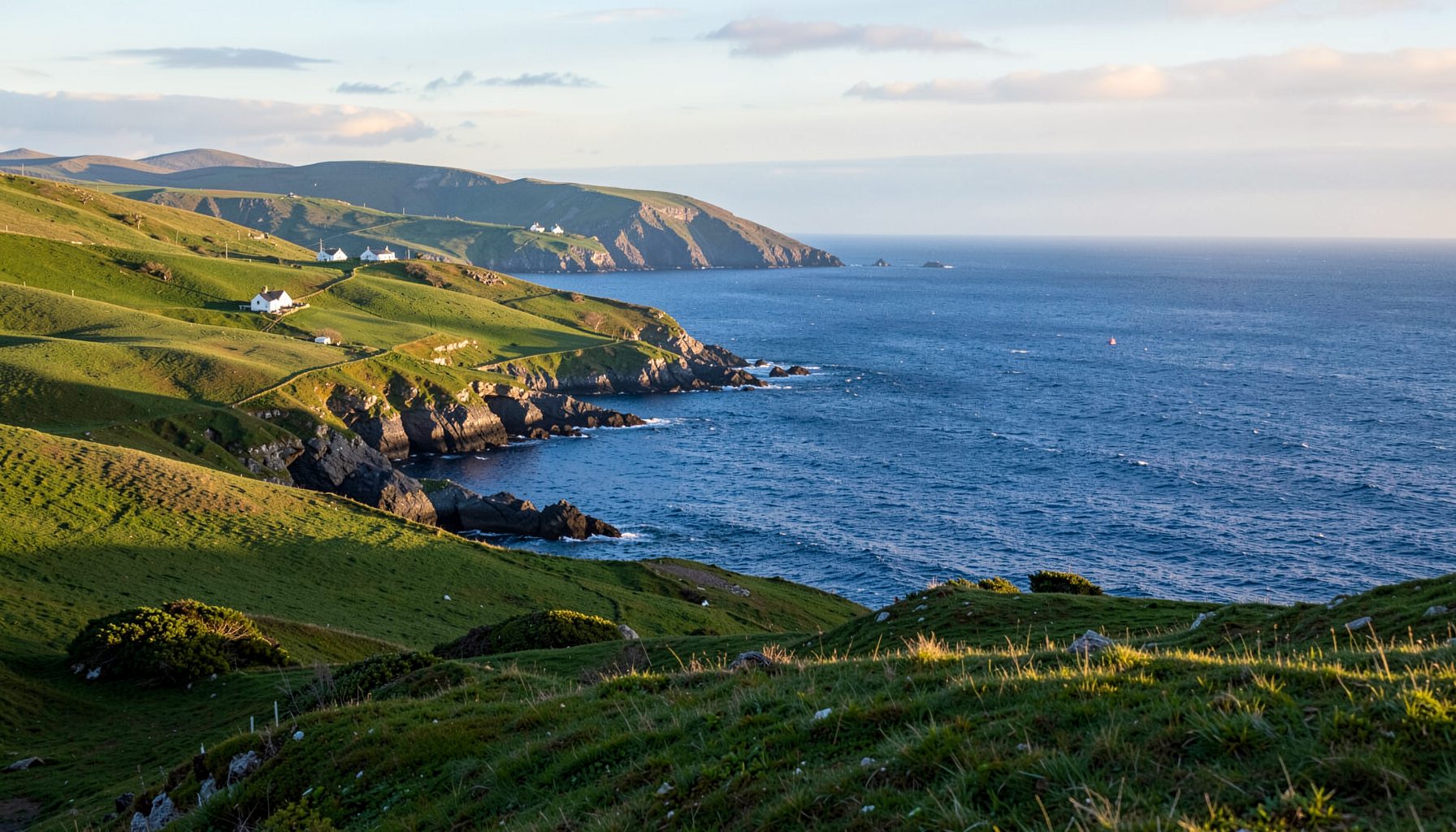
At the western tip of Valentia Island, where the Atlantic gathers against the slate cliffs of the Iveragh Peninsula, a small white tower banded with two black rings rises beside the stone remains of a 19th-century fort. This is the Cromwell Point Lighthouse, a working beacon that has welcomed vessels into Valentia Harbour for nearly two hundred years. Its story weaves together engineering ambition, island isolation, and the steady patience of the families who kept its flame alive.
The lighthouse sits a short drive from Cahersiveen and a few minutes beyond the bridge that carries traffic onto Valentia Island. For travellers tracing the Ring of Kerry from Kells down toward Castlecove, it offers the kind of slow detour Australians on a long coastal drive appreciate: the equivalent of pulling off somewhere like Wilsons Promontory when the Great Ocean Road gets too busy. There is parking close to the site, short walking tracks, and a quiet that feels genuinely off the beaten track.
What makes Cromwell Point unusual is the layering of its heritage. The fort beside it was begun during the Fenian scare of the 1860s, the lighthouse tower was raised in 1836, and the surrounding shoreline carries traces of much older Atlantic history. Together the buildings form a small open-air museum where maritime, military, and social history sit side by side.
Origins and the building of a beacon
The decision to build a light at Cromwell Point grew out of trade pouring through Valentia Harbour in the early 19th century. Slate from the island's quarries was being shipped to London, fishing fleets crowded the anchorage, and naval vessels used the shelter. Local merchants petitioned the Corporation for Preserving and Improving the Port of Dublin, then responsible for Irish lighthouses, for a reliable harbour light to replace the coal fires occasionally lit on the headland.
Construction began in 1836 and took the better part of two years. Builders used local stone bedded in lime mortar, and they anchored the tower on a rocky platform that had previously hosted a small Cromwellian-era gun battery, the source of the headland's name. The lantern originally burned sperm whale oil, fed by a multiwick lamp backed by silvered reflectors, a common arrangement before more advanced optics reached Ireland.
In 1842, Valentia became one of Ireland's first stations to receive a Fresnel lens, the French prismatic apparatus that threw a far stronger beam across the water. The lens arrived by ship from Paris, was hauled up the slip at the harbour, and was fitted into the lantern room by a small crew under the Dublin engineer's office. That single piece of glass turned a harbour marker into a true coastal beacon visible far out into the Atlantic.
The keepers and their daily round
Life at Cromwell Point followed a rhythm dictated by the lamp and the weather. Three keepers were usually stationed here, with a principal keeper overseeing the station and two assistants sharing the night watches. Each evening the men climbed the spiral stair, trimmed the wicks, polished the reflectors, and adjusted the lamp until the flame burned clean. They logged wind, visibility, and any passing vessels they could see against the dark Atlantic horizon.
Families lived in the small terrace of keepers' cottages tucked behind the tower, and the children walked along the track to the village school or were taught by their parents during wild weather. Wives kept kitchen gardens, hens, and a small potato patch, and the household often went for days without seeing anyone beyond their own family when winter storms cut off the road. Food came in by boat from Cahersiveen, and the keepers learned to plan ahead, much like a Queensland family battening down before a cyclone rolls in from the Coral Sea.
For anyone tracing their own coastal ancestry, the rhythms at Cromwell Point will ring a bell. The keepers at Cape Otway on Victoria's Shipwreck Coast, or at Split Point near Aireys Inlet, lived a similar pattern of oil lamps before sunrise, the constant fight against salt corrosion, and children schooled between the roar of gulls and the whistle of wind. Many Australian lightkeepers came from Cornish or Irish backgrounds, and the kinship between the two traditions runs deeper than most visitors realise.
A few features of the keeper's day became part of the station's standing routine:
- A sunrise check of the tower, the weather, and any vessels anchored in the bay
- A midday cleaning of the lantern glass and brasswork to keep the beam at full strength
- A sunset trimming of the lamp wicks and a final log entry before the night watch
- A weekly posting of weather observations to the harbourmaster's office in Valentia
Technology, automation, and the end of the watch
The biggest shift in the lighthouse's working life came with new lighting technology in the early 20th century. A petroleum vapour lamp replaced the old oil burner, and the reflectors were eventually swapped for a smaller, more powerful optic. Later still, mains electricity reached the headland, and the station was wired into the national grid. Each change improved the light's character but also reduced the number of hands required to keep it running.
Automation came in 1954. The last resident keeper locked the tower door, handed the keys to a visiting inspector, and walked down the path for the final time. From that point on, the beacon was monitored from a central control room, and the cottages fell silent. Tools, logbooks, and a scattering of personal belongings were gathered into a small display that now forms part of the visitor experience on site.
Australians will recognise this pattern. The same shift reshaped Macquarie Lighthouse on the cliffs above Sydney Harbour, and similar debates still surround the future of remote lights along the Tasmanian coast. Once automation takes over, the question becomes how to keep the buildings alive: as tourist stops, as heritage centres, or simply as landmarks along a coastal road. At Cromwell Point, the answer has been a gentle one, opening the site to walkers, school groups, and cruise passengers while leaving the working light untouched.
A maritime crossroads of the Atlantic
Cromwell Point sits at a strategic hinge between the sheltered waters of Valentia Harbour and the open Atlantic. Ships heading north from the southern ocean or south from Galway had to read the light carefully to avoid the rocks of Bray Head. The Skellig Islands in the distance claimed more than their share of wrecks, and the lighthouse's beam served as the last reliable sighting before vessels turned into harbour or pressed on.
The trade routes that justified the lighthouse's existence have largely faded. The slate ships no longer sail, the cable station that once linked Valentia to Newfoundland has become a museum, and the harbour now sees pleasure boats and small fishing skiffs rather than merchantmen. Yet the beacon still flashes across the bay, maintained by automated systems and inspected regularly by engineers from the Commissioners of Irish Lights.
A visit to Cromwell Point pairs well with several other stops along the Skellig Coast:
- The Valentia Island Heritage Centre, which tells the story of the transatlantic telegraph cable
- A short walk to Bray Head viewpoint, where Atlantic gannets and choughs wheel along the cliffs
- A boat trip from Portmagee to Skellig Michael, the UNESCO World Heritage Site visible on clear days
- A drive through the old slate quarry valley, where the cutting marks of 19th-century stonemasons still show in the rock face
Visiting the lighthouse today
The Cromwell Point Lighthouse sits within an easy walk of the Valentia Island bridge. Visitors cross from the mainland, follow the signposted track past the old slate quarry schoolhouse, and emerge onto a grassy headland where the tower stands tall above the ruins of the fort. The site is open year-round, with interpretation panels explaining the history of the lighthouse, the construction of the fort, and the natural environment of the Atlantic shoreline.
The setting rewards slow exploration. Seabirds nest on the cliffs, and the footpath curves past a chapel and graveyard that once served the lighthouse community. On clear afternoons the Skelligs sharpen into view, and visitors can stand on the same rocks where generations of lightkeepers once took their evening air. Day-trippers will find parking close by, a small café in the village, and the quiet that makes the headland feel like the edge of the world.
For Australian travellers planning a longer stay along the Iveragh Peninsula, Cromwell Point fits naturally into a route linking Portmagee and Cahersiveen. The lighthouse is a working piece of maritime history rather than a recreated attraction, and that honesty is what makes the detour worthwhile. Bring a windproof jacket, give yourself time to walk the loop, and save a few hours for a slow lunch in the village.
Stand on the rocks below the tower and look out across the same stretch of Atlantic the keepers watched for generations. Cromwell Point is a quiet reminder that the most important stories of the Skellig Coast are the ones told by a steady light and the families who kept it burning.
The lighthouse is open to visitors throughout the year, and the surrounding headland welcomes walkers at any time of day. Pair it with a stop at the Valentia Island Heritage Centre, a coffee in the village, and a slow drive back across the bridge. Anyone with a few days to spare will find that this small lighthouse holds more story than most towns twice its size.