The Story of Caherdaniel and Its Sandy Beaches
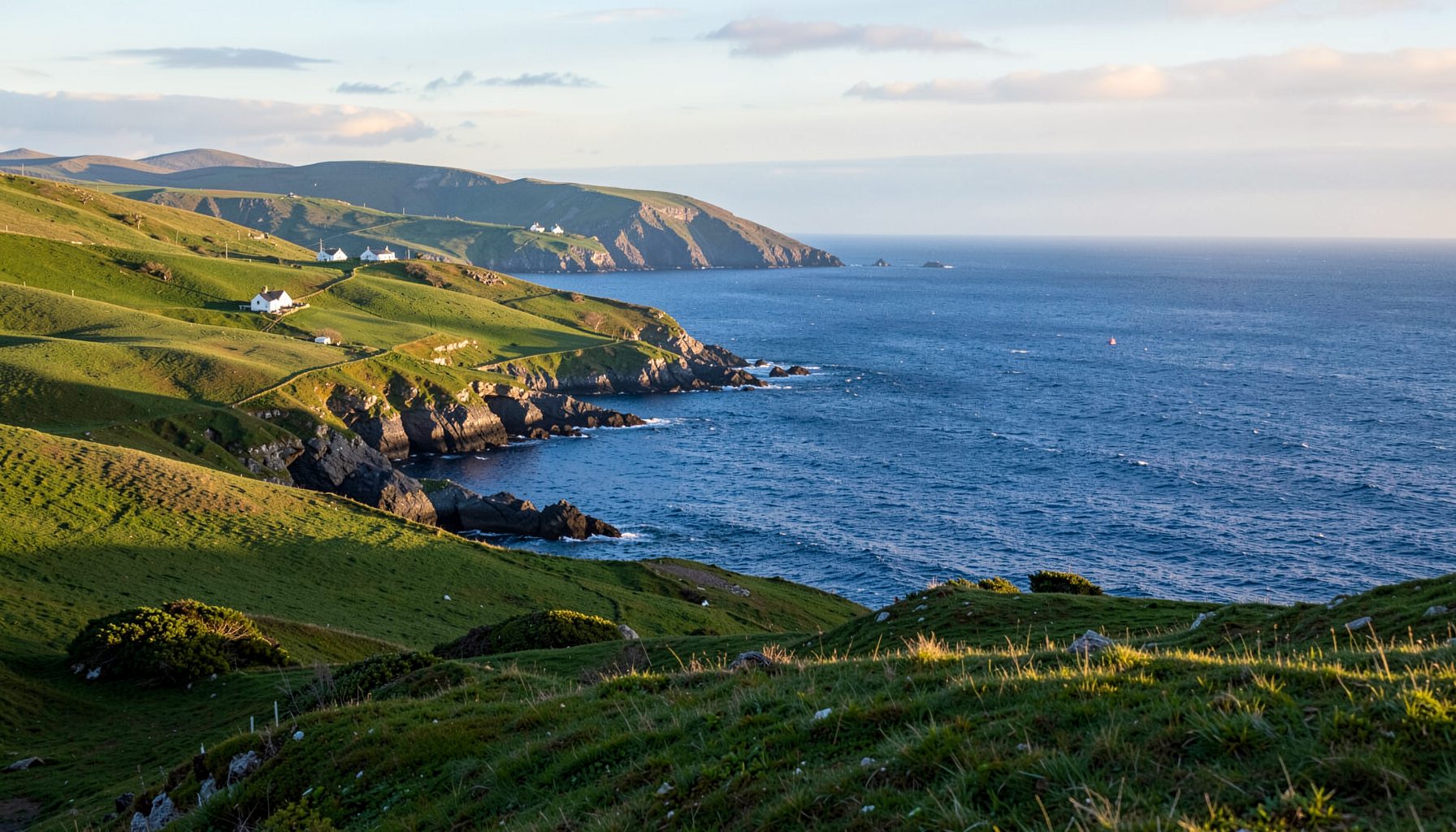
Caherdaniel sits on the southern edge of the Iveragh Peninsula, where the Ring of Kerry meets a coastline of islands, stone walls, wooded valleys and sheltered bays. It is a small village with an unusually rich sense of place: ancient fortifications, the home of Daniel O’Connell, monastic remains and wide beaches all belong to the same landscape.
For visitors from Australia, the area offers a different kind of seaside experience from the patrolled surf beaches of Sydney, Brisbane or Perth. The water can be calm in Derrynane Bay, yet the tides, rocky edges and changeable Atlantic weather still demand respect. Caherdaniel is best understood slowly, through its stories, walking routes, local customs and connections between land and sea.
A Village Shaped by Stone and Sea
The name Caherdaniel is associated with a stone fort, or caher, and with Daniel O’Connell, the nineteenth-century political leader known as “The Liberator”. The name reflects the way history is layered across the peninsula. Long before modern roads brought visitors along the N70, families lived with the tides, worked small plots of land and used the sheltered coastline for fishing, gathering and travel.
The wider area contains many reminders of earlier settlement. Dry-stone walls divide fields into irregular sections, while old lanes lead towards beaches, churches and ruined buildings. These features are not decorative additions to the landscape. They reveal how people adapted to thin soils, strong winds and limited transport links. The coastline was a source of food and livelihood, but it could also isolate communities when storms made travel difficult.
Caherdaniel’s story is therefore larger than a single monument. It includes the everyday work that maintained farms, houses, boats and roads, as well as the political history connected to O’Connell. The village remains a useful starting point for understanding how community life developed along the more remote southern coast of Kerry.
Daniel O’Connell And Derrynane House
Derrynane House, set within a wooded estate near the beach, was the family home of Daniel O’Connell. The house and surrounding grounds help explain the scale of his local roots. O’Connell was born nearby in 1775 and later became one of Ireland’s most important advocates for Catholic emancipation and parliamentary reform. His public career reached far beyond Kerry, but Derrynane remained closely tied to his identity.
The estate is now part of the national heritage of the region. Visitors can explore the house, gardens and paths that lead towards the shore, gaining a sense of the relationship between the O’Connell family and the landscape. The setting matters as much as the interior: woodland, pasture, historic walls and sea views show how a country house was connected to farming and the wider community.
Stories of O’Connell are often told through large political events, yet Caherdaniel gives them a more personal scale. The quiet roads, rocky headlands and small settlements make it easier to imagine the distance between this corner of Kerry and the political centres of Dublin and London. They also show why local heritage should be read in its landscape rather than treated as a collection of isolated attractions.
Derrynane Beach And The Tidal Landscape
Derrynane Beach is the best-known stretch of sand near Caherdaniel. Its sheltered position gives the bay a gentler character than many exposed Atlantic beaches, with views towards islands and headlands that change as the light moves across the water. On a clear day, the combination of pale sand, green hills and deep blue sea can appear almost Mediterranean, although the weather remains distinctly Atlantic.
At low tide, the beach reveals more of its shape. Sandbanks, rock shelves and routes towards Abbey Island become easier to see, while shallow water can make the shore inviting for paddling and quiet exploration. Conditions change quickly, however. A path that appears obvious on a falling tide may become less comfortable on the return journey, so visitors should check tide times and avoid crossing unfamiliar stretches when the water is rising.
Reenroe Beach, a little farther along the coast, adds another sandy option to the area. It is more open to the Atlantic and can feel wilder, particularly in windy weather. These beaches are valuable precisely because they are not urban swimming complexes. There may be limited facilities, no constant lifeguard presence and few barriers between visitors and natural conditions. That simplicity is part of their appeal, provided people arrive prepared.
Australian visitors may initially compare Derrynane with beaches around Melbourne, Adelaide or the Gold Coast. The difference is significant: Irish beaches can have cold water, fewer marked swimming zones and stronger local dependence on tide awareness. The familiar Australian habit of an early walk, a hat and sunscreen remains sensible, but an Irish beach day also calls for warm layers, sturdy footwear and a plan for changing weather.
Memory, Market And Community Life
Caherdaniel is more than a heritage stop on a scenic driving route. It belongs to a network of villages and local initiatives that keep the peninsula active throughout the year. Community halls, schools, walking groups, arts projects and seasonal events create connections that may not be visible to a visitor who arrives only for a short beach visit.
Food is one way those connections become visible. Small producers, growers, bakers and craftspeople contribute to the regional identity, linking the coastal villages with inland farms. Travellers interested in this side of the area can also follow the wider tradition of local trading through the Cahersiveen farmers market, where food and conversation help express the character of the Skellig Coast.
That community atmosphere may feel familiar to Australians who visit weekend markets in Melbourne’s inner suburbs, Sydney’s regional outskirts or towns along the Great Ocean Road. Farmers’ markets in Australia often work as social meeting places as much as shopping destinations, and the same principle applies in Kerry. A reusable bag, cash for small purchases and patience for conversation are useful habits, particularly where stalls operate on a modest local scale.
The coastline also carries memories that are less formal than those preserved in a museum. A family picnic spot, a remembered swimming cove, a lane used by generations of neighbours or a story about a winter storm can all form part of local heritage. Listening to those accounts adds depth to the visible monuments and helps visitors understand why residents value the area beyond its scenery.
Visiting With Care And Curiosity
Caherdaniel rewards a flexible itinerary. A visit might combine Derrynane House with a walk through the grounds, time on Derrynane Beach, a view across the bay and a meal or purchase from a local business. The Kerry Way and other walking routes offer longer ways to encounter the peninsula, but weather, distance and terrain should be assessed before setting out.
Driving is often the most practical way to reach the beaches and heritage sites, although the roads can be narrow and winding. Australian visitors are accustomed to driving on the left, which helps, but Irish rural roads still require patience around blind bends, stone walls, cyclists and farm vehicles. Irish speed limits and road signs apply, and drivers should never assume that a quiet road is a fast road.
Environmental care is especially important in a coastal landscape with dunes, nesting birds, exposed archaeological remains and limited waste services. In Australia, national parks and reserves are managed under state legislation such as the New South Wales National Parks and Wildlife Act 1974 and Victoria’s National Parks Act 1975. Caherdaniel has its own Irish protections and local rules, so visitors should follow signs, stay on marked paths where requested and treat conservation guidance as part of the experience.
Simple Ways To Respect The Coast
- Check tide times and weather forecasts before walking towards islands, rocks or remote coves.
- Take rubbish home when bins are full or unavailable, including food packaging and fishing line.
- Keep dogs under control near wildlife, livestock, dunes and other beach users.
- Avoid climbing on fragile walls, monuments or archaeological structures.
- Buy locally where possible and allow time for small businesses and community venues to operate at their own pace.
The story of Caherdaniel is held in several places at once: in the stone fort suggested by its name, in Derrynane House and O’Connell’s political legacy, in the shifting sands of Derrynane Beach and in the community life that continues around the coast. Its beaches are beautiful, but they are not separate from the history. The tide, farms, houses, paths and people have shaped one another for centuries.
Plan a visit that gives the area time to unfold. Walk beyond the viewpoint, learn the history before reaching the sand, support local producers and leave the shoreline as you found it. By doing so, you experience Caherdaniel as a living part of the Skellig Coast rather than simply a scenic stop on the Ring of Kerry.