The Story of Ballinskelligs Priory and Its Archives
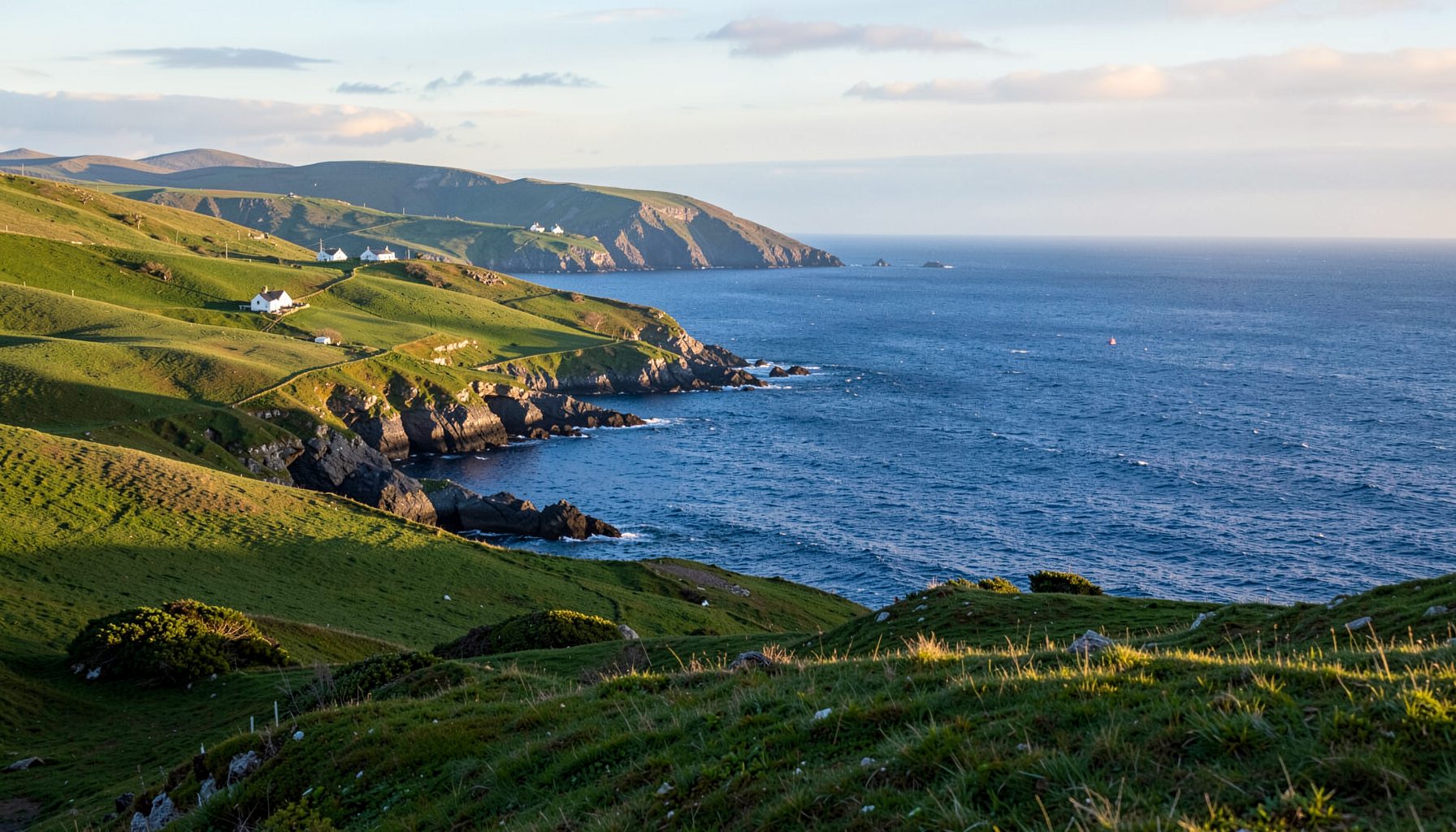
On the western edge of the Iveragh Peninsula, Ballinskelligs Priory stands among a landscape shaped by Atlantic weather, monastic devotion and centuries of local memory. Its ruined walls are often associated with the Skelligs, yet the priory has its own story: one rooted in medieval religious life, landholding, parish change and the long movement of historical records.
For visitors from Australia, the site offers a useful reminder that Irish heritage is frequently read through several layers at once. A stone arch, a grave marker or a reference in a manuscript may connect the early Christian tradition of Skellig Michael with later Norman influence, Gaelic society, plantation-era administration and modern conservation. The archive is therefore larger than a single collection in one building.
A Monastic Community Beside The Atlantic
Ballinskelligs Priory is generally understood to have been founded in the early thirteenth century by Augustinian canons. The community is often linked with the older monastic settlement on Skellig Michael, where harsh conditions and isolation made daily life demanding. Moving some activity to the mainland gave the canons better access to farmland, supplies and communication while keeping them within the spiritual landscape of the Skelligs.
The priory was dedicated to Saint Michael, a fitting association for a community facing the islands across the bay. Its setting was practical as well as symbolic. The monks could work within a settled agricultural area, serve nearby communities and maintain links with a wider network of religious houses. The surviving ruins, including sections of church and domestic buildings, reveal a complex that was functional rather than grand in scale.
What The Ruins Can Tell Us
The masonry is an archive in its own right. Wall thickness, blocked openings, fragments of windows and the arrangement of the church help archaeologists reconstruct how the priory developed. Building stone, mortar and repair patterns can indicate different phases of construction, periods of investment and later adaptation after the religious community declined.
The graveyard adds another layer. Memorials and burial patterns may preserve family names, religious customs and changes in local status. Some evidence is easy to overlook: a worn inscription, a reused stone or a boundary line can carry information that does not appear in a written catalogue. Visitors should treat the site as a protected historic place, avoiding contact with fragile masonry and following any access guidance.
The Reformation And Dispersal Of Records
Like many Irish religious houses, Ballinskelligs Priory was affected by the dissolution of the monasteries during the sixteenth century. Suppression changed the legal ownership and everyday use of the property. Land, buildings and rights that had been associated with the canons entered new administrative arrangements, while the community’s books and papers were separated from the place where they had been created.
This dispersal explains why there is unlikely to be a single, complete “Ballinskelligs Priory archive”. Medieval religious records could be transferred to diocesan, estate, legal or state repositories. Some documents may survive as copies, references or later antiquarian descriptions rather than as original priory manuscripts. The absence of a document is itself part of the story, showing how political change affected the survival of local memory.
Reading The Documentary Trail
Research into the priory may involve several kinds of source. Medieval charter evidence can shed light on land grants and obligations, while diocesan material may reveal church administration after the canons left. Estate papers, maps and leases can help trace ownership and land use around Ballinskelligs in later centuries. Antiquarian surveys are useful too, although they must be read critically because early writers sometimes supplied interpretations that modern archaeology has revised.
Archives connected with the wider region may hold references to the priory even when the title of a collection does not mention it. Researchers can encounter the site in catalogues for Kerry, church records, local history collections, archaeological reports or family papers. A careful search should include variant spellings such as Ballinskelligs Abbey, St Michael’s Priory and the Irish place-name forms used in historical sources.
Memory Held By Local Communities
Formal repositories are only part of the evidence. Oral history, family photographs, school projects, parish newsletters and local newspaper files may preserve details about the ruins, excavations and changing attitudes to the site. A story passed through a Ballinskelligs family might identify a field name or burial tradition that gives meaning to a written record.
This community dimension is central to the work of a regional information hub. The Skellig Coast community connects heritage with local learning, cultural activity and the people who continue to live around these monuments. For an Australian reader, the principle may feel familiar: a historic place is often understood through the combined work of libraries, volunteers, historical societies and residents rather than through a national institution alone.
Digital Research From Australia
Digitisation has made it easier to begin research from Sydney, Melbourne, Brisbane or regional centres without travelling immediately to Kerry. Online catalogues, scanned maps and archaeological publications can establish a chronology before a visit. Australian researchers are accustomed to checking opening hours, booking online and fitting cultural visits around work, school terms and long travel distances; the same practical habits are valuable when consulting Irish collections.
The local market also matters. Many Australians plan heritage trips around farmers’ markets, food festivals and small-town events, and Ballinskelligs is best experienced as part of the living peninsula rather than as an isolated ruin. Allow time for local roads, weather and seasonal opening arrangements. A visit to the priory can sit alongside exploration of the coast, nearby villages and the wider Skellig heritage landscape.
Archives, Access And Responsible Use
Anyone seeking copies of historic documents should check the rules of the holding institution. Reproduction permissions, image fees and copyright status can differ between medieval material, modern photographs and published research. Australian visitors may recognise a related principle from the Copyright Act 1968: access to a scan does not automatically mean unrestricted permission to republish it. Irish institutions set their own conditions, and crediting the repository is essential.
Privacy also needs care. Modern parish registers, family papers and oral-history recordings may contain personal information even when they concern an old place. Australian public-sector researchers are familiar with privacy obligations and archival access restrictions under Commonwealth and state systems; similar caution is appropriate when working with Irish collections. Ask whether a source may be downloaded, reproduced, displayed or used in a commercial project.
The most reliable method is to record a document’s repository, collection name, reference number, date and page or folio. Keep a distinction between what a source states and what later historians infer. Comparing archaeology with maps, legal papers, church records and oral testimony can produce a more balanced account than relying on a single attractive story.
Why The Priory Still Matters
Ballinskelligs Priory is important because it links the sacred geography of the Skelligs with the social history of the mainland. Its canons belonged to a religious world that valued prayer, land management and pastoral responsibility. After suppression, the site continued to reflect changes in ownership, worship, settlement and heritage practice. The ruin is therefore a record of transformation rather than a frozen image of medieval Ireland.
Its archive survives in fragments: stones in the ground, names in catalogues, references in estate papers, memories held by local people and records preserved far from the peninsula. Bringing these fragments together gives the priory a fuller presence. It also shows why conservation is a shared responsibility, involving specialists, communities, public bodies and visitors.
When planning a Skellig Coast visit, include Ballinskelligs Priory as a place for slow observation and careful listening. Explore the available local history resources, support community-led heritage work and make notes about the landscape as well as the ruins. By engaging respectfully with the site and its surviving records, you help keep the priory’s story available to future readers, researchers and residents.