The story of Ballinskelligs Castle and its defenders
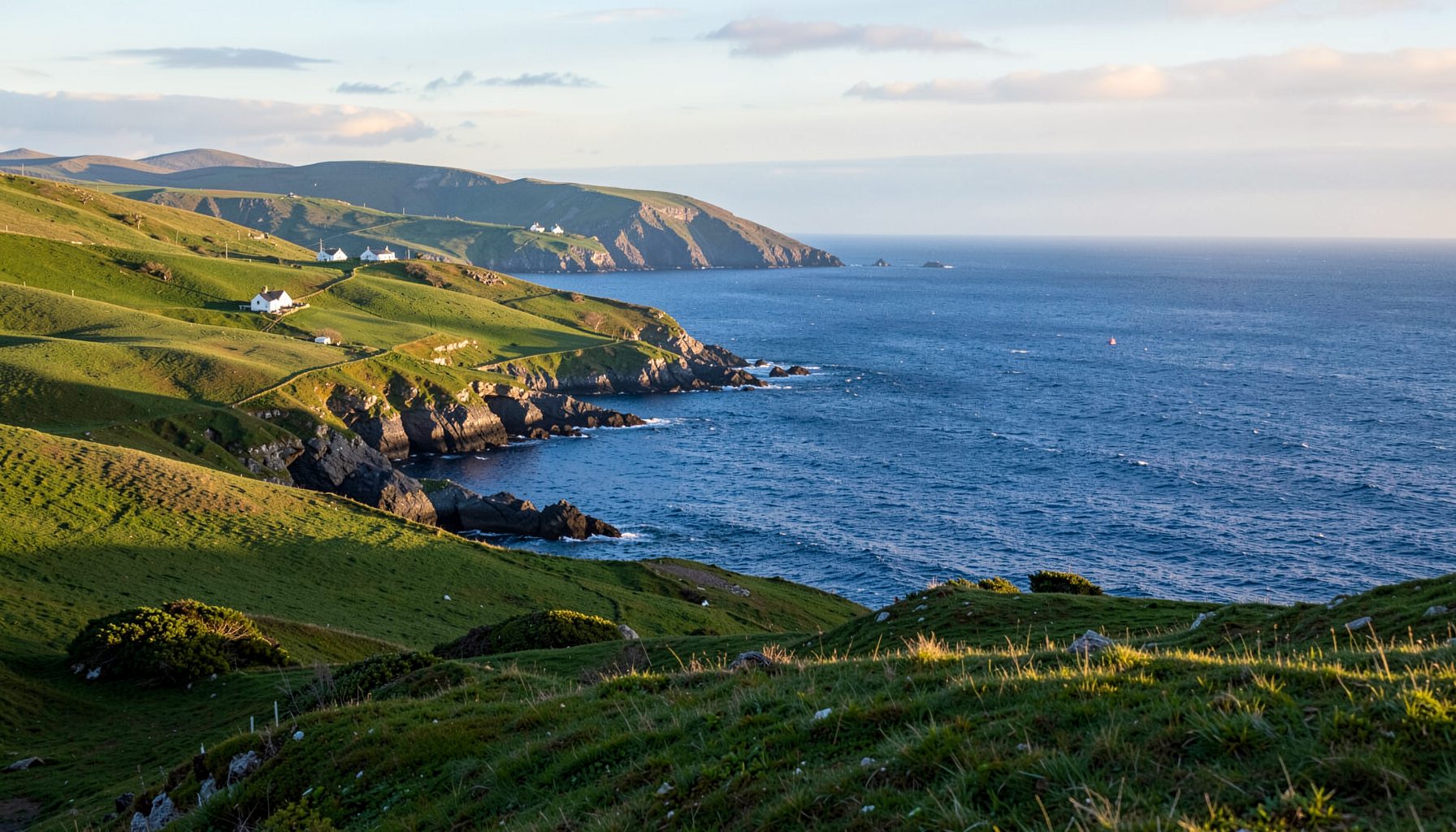
On the shore of Ballinskelligs Bay, the remains of a stone tower stand close to the Atlantic. Waves, wind and salt have shaped its appearance, but the ruin still reveals the importance of this small coastal settlement. Ballinskelligs Castle was built for a world in which control of a harbour could mean security, income and influence.
The castle is associated with the MacCarthy family, one of the powerful Gaelic dynasties of south-west Ireland. Its story belongs to a wider history of Iveragh, where lordships, monastic communities, seafaring families and English administration interacted across a rugged landscape. The nearby Skellig Islands and the coast between Waterville, Ballinskelligs and Portmagee formed part of a maritime region rather than an isolated rural corner.
Although popular accounts often describe the castle as a stronghold against pirates, its history was more complex. It served as a residence, watchpoint and defensive building, while also helping its owners control activity in Ballinskelligs Bay. Its defenders were connected to local power, changing military conditions and the long struggle between Gaelic lordships and the English Crown.
A coastal stronghold of the MacCarthys
Ballinskelligs Castle is generally understood to have been built in the sixteenth century by the MacCarthy Mór, or by a branch of the wider MacCarthy lordship. The exact date and identity of its builders are not completely certain, a common problem with smaller Irish tower houses. Written records often mention land, ownership or political allegiance without describing the construction of individual buildings.
The castle’s position explains much of its purpose. It stood beside a sheltered stretch of Ballinskelligs Bay, near a landing place and an important route along the Iveragh coast. From the shore, its occupants could observe boats approaching the bay and maintain a visible presence over local maritime traffic. A tower house in this setting represented authority as clearly as it offered protection.
The MacCarthy lords controlled extensive territory in south-west Munster through a network of castles, settlements and dependent families. Ballinskelligs was less imposing than some inland fortifications, yet its coastal location gave it particular value. The tower linked the local community to the sea, the Skelligs and the wider trading and political networks of Kerry.
What the castle was built to protect
The phrase “pirate castle” is often used in connection with Ballinskelligs Castle. There is a practical reason for the description: ships and small craft using the bay could be vulnerable to raiding, and a fortified tower provided a place from which movement along the coast could be watched. However, the castle should not be imagined as a purpose-built naval fortress in the modern sense.
Its walls were designed primarily for a small household and its armed retainers. Like other Irish tower houses, Ballinskelligs Castle probably combined domestic rooms with defensive features. Thick masonry, narrow openings and elevated living quarters made it more secure than an ordinary dwelling. The tower would have offered a refuge during a local attack, while its occupants could use the surrounding land and shoreline to monitor activity.
The castle may also have played a role in controlling dues or payments connected with ships entering the bay. Gaelic lords commonly asserted rights over land, movement and trade within their territories. A fortified building beside the water made those claims harder to ignore. Protection and revenue were therefore closely connected: the people who defended the harbour also sought to regulate it.
The people who held the tower
The castle’s defenders were likely a small household rather than a permanent garrison of soldiers. The lord or appointed steward would have relied on trusted retainers, local tenants and fighting men connected to the MacCarthy network. In times of tension, additional support could have come from neighbouring settlements and allied families.
Daily life in the tower would have been demanding. Supplies had to be stored, fires maintained and weapons kept ready. Food may have included grain, dairy products, fish and meat from the surrounding district. The castle’s occupants depended on the farming communities behind the shore, while those communities could look to the tower for protection or representation in disputes.
A tower house was also a home. Its upper rooms may have contained sleeping areas, private chambers and a hall for meals and business. The building’s defensive features did not separate military life from ordinary life; they formed part of a household shaped by the possibility of sudden conflict. A family’s status, security and authority were all expressed through the castle.
Ballinskelligs in an age of changing power
The sixteenth and seventeenth centuries brought major political change to Ireland. English administrations expanded their influence, Gaelic lordships faced pressure to accept new forms of authority, and local rivalries were increasingly connected to national conflicts. In Kerry, the Desmond rebellions, the Nine Years’ War and later Cromwellian campaigns altered the balance of power.
Ballinskelligs Castle stood within this shifting landscape. Its defenders were not simply guarding against unknown raiders from the sea; they belonged to a society where neighbouring lords, government forces and military expeditions could all present a threat. Allegiance mattered, and the fate of a castle could change when its owner was defeated, dispossessed or compelled to recognise a new political order.
The castle’s precise role in particular campaigns remains difficult to establish from surviving evidence. It should not be assigned a dramatic battle without reliable documentation. Many Irish tower houses changed hands through surrender, legal transfer or political settlement rather than through a recorded siege. The absence of a famous battle does not make Ballinskelligs unimportant; it reflects the fragmentary nature of local records.
| Feature | What it tells us about Ballinskelligs Castle |
|---|---|
| Coastal location | The tower overlooked Ballinskelligs Bay and a significant landing place |
| Tower-house form | It served as both a fortified residence and a centre of local authority |
| MacCarthy association | The castle formed part of a wider Gaelic lordship in south-west Munster |
| Defensive masonry | Thick walls and limited openings helped protect the household from attack |
| Nearby monastic heritage | The castle belonged to a landscape shaped by the Skelligs and medieval religious communities |
| Present condition | Erosion and exposure have left a striking ruin rather than a complete fortified house |
A neighbour to the Skelligs and Prior’s Castle
Ballinskelligs Castle is part of a wider heritage landscape. Offshore, Skellig Michael preserves the remains of an early medieval monastic settlement, while the mainland carries its own evidence of religious and Gaelic history. The Skelligs were places of prayer, pilgrimage, navigation and cultural memory long before the tower house was built.
A second local ruin, commonly known as Prior’s Castle, adds another layer to the story. It is associated with the Augustinian monastery on Skellig Michael and is often understood as a later mainland base for the monks. Its presence shows that Ballinskelligs was connected to both secular and religious networks. The castle and the monastic site should not be treated as identical structures, but together they illustrate how the coast supported different forms of authority.
This relationship between shore and island remains important today. Visitors who see Ballinskelligs Castle are looking across a landscape where medieval spirituality, Gaelic lordship and maritime travel overlapped. The tower’s defenders belonged to a later period than the Skellig monks, yet both relied on knowledge of the sea, local resources and the difficult geography of the Iveragh Peninsula.
Ruin, memory and the Atlantic shoreline
Ballinskelligs Castle has survived in a fragile form. Its exposed position leaves it vulnerable to storms, salt air and coastal erosion. The lower walls and tower outline still communicate its strength, but the ruin also shows how quickly a defensive building can lose its original shape when its roof, floors and occupied rooms disappear.
Local tradition has helped preserve the castle’s identity, even where documentary evidence is limited. Stories about pirates, hidden treasure and battles can make the past vivid, but they need to be distinguished from information supported by architectural study or historical records. Responsible interpretation does not diminish the castle; it allows the known, probable and uncertain parts of its story to stand side by side.
The ruin is valuable because it connects broad history with a specific place. Political change in Ireland can seem distant when described through dates and dynasties, but at Ballinskelligs it appears in stone beside the bay. The castle makes questions of land, defence, trade and allegiance tangible for anyone exploring the Skellig Coast.
Reading the castle in the landscape
A visit begins with observation. The castle’s relationship with the shoreline, the bay and the surrounding hills explains why its builders chose this location. Look at the surviving wall thickness, the position of openings and the way the tower commands attention from the beach. These details reveal more than a general label such as “castle” or “ruin.”
It is also worth placing Ballinskelligs within the route between Kells, Waterville, Portmagee, Valentia and Castlecove. The coast is marked by small harbours, old roads, religious sites and communities whose histories overlap. Exploring these places gives a fuller sense of the world in which the castle functioned.
When visiting, protect the structure by keeping away from unstable masonry and following local access guidance. The building is part of a vulnerable coastal environment, and responsible behaviour helps ensure that its remaining fabric and setting can be appreciated by future generations.
Ways to explore its history responsibly
- Read the castle alongside the history of the MacCarthy lordships and Gaelic Munster.
- Compare the coastal tower with nearby religious and archaeological sites, including Prior’s Castle.
- Treat pirate stories as local tradition unless specific historical evidence supports them.
- Observe the effects of weather, erosion and changing shorelines on the surviving structure.
- Support local heritage projects, museums, guided walks and community-led interpretation.
Ballinskelligs Castle does not tell its story through a single famous battle or a complete written record. It speaks through its location, its masonry and the traditions attached to it. The defenders who once occupied the tower protected a household and a coastal interest, while also displaying the authority of a Gaelic lordship in a contested age.
Visit the castle with time to look beyond the ruin itself: across Ballinskelligs Bay, towards the Skelligs and into the communities that continue to care for this remarkable part of the Iveragh Peninsula. Share its history carefully, support local heritage initiatives and help keep the story of the castle and its defenders alive.