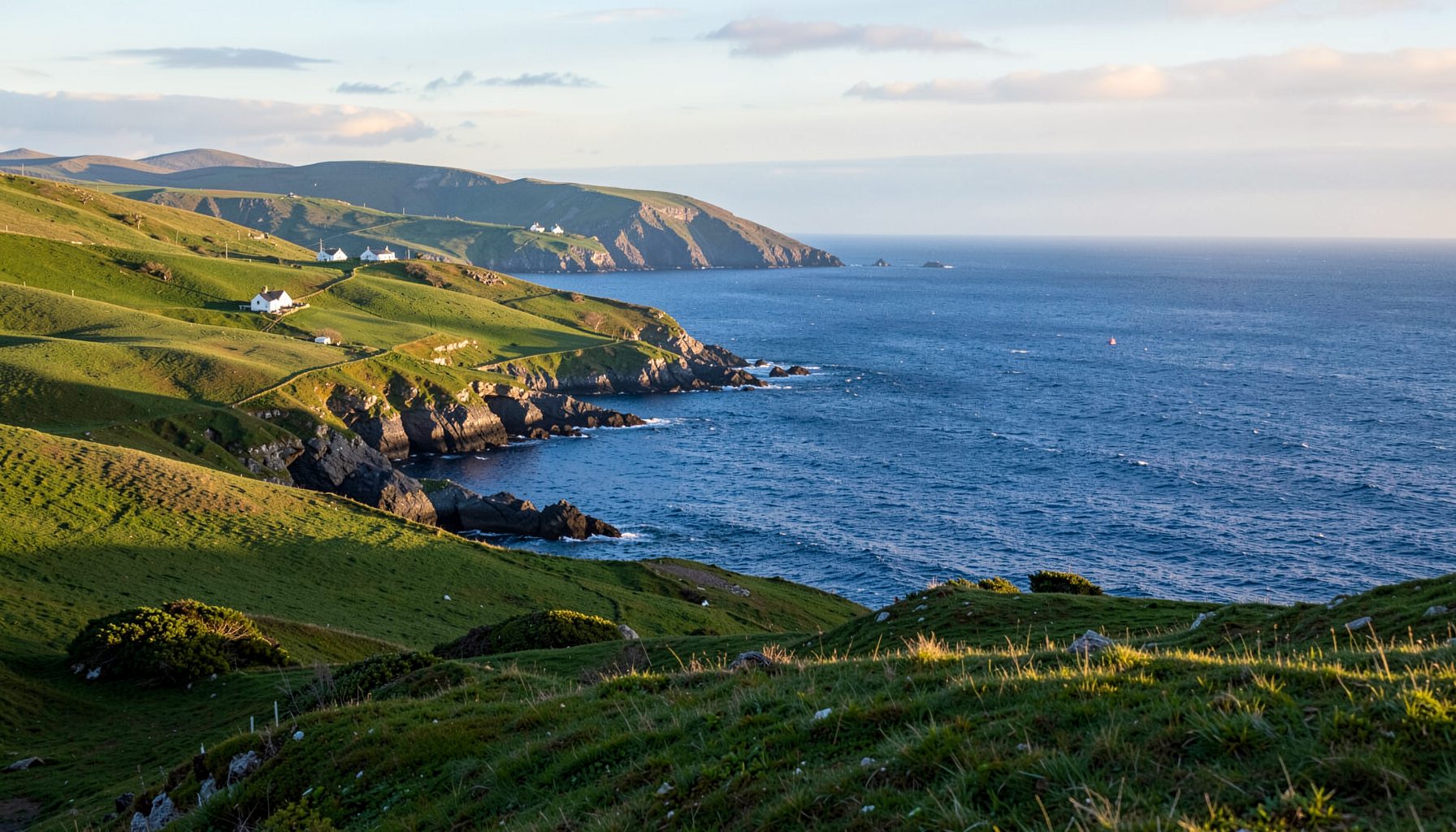
The Seasonal Rhythm of Flora Along the Skellig Coast
From Kells to Castlecove, the plant life of the Iveragh Peninsula follows a rhythm shaped by Atlantic weather. Mild winters, frequent rain, salt-laden winds and occasional spells of bright sunshine allow vegetation to remain active for much of the year. The result is a coastal landscape that rarely appears completely dormant, even in the coldest months.
The flora changes according to exposure and elevation. Sheltered lanes near villages support hedgerows, ash and hazel, while windswept headlands carry low grasses, thrift and sea campion. Bogland, rocky shore, woodland, pasture and garden ground each keep their own seasonal calendar. Skellig Michael adds another dimension, with hardy plants growing among stone terraces and steep maritime cliffs.
Watching these changes can deepen a walk along the coast. A bank of primroses, a flush of gorse or the late flowering of thrift can reveal the character of a place as clearly as its buildings, stories and archaeological remains.
Early Growth In A Maritime Spring
Spring begins gradually on the coast. In sheltered ground, snowdrops and primroses may appear while the surrounding fields still look muted. Lesser celandine brightens damp banks, and sorrel brings small, delicate flowers to grassy places. The timing varies from year to year, since a mild February can bring early growth while Atlantic storms may delay it.
Hedgerows become increasingly active as hawthorn, blackthorn and hazel respond to lengthening daylight. Blackthorn can flower before its leaves emerge, covering thorny branches with pale blooms. Hazel catkins release pollen into the wind, supporting the first stages of the seasonal food chain even before many flowering plants are fully open.
On open headlands, spring growth remains close to the ground. Sea thrift, also called sea pink, begins to show colour in rocky crevices and short turf. Wall vegetation, lichens and mosses take advantage of moisture, while young grasses appear between stones and along old paths. These plants must grow quickly before summer drought, grazing pressure or stronger winds limit their development.
Summer Colour On Cliffs And Fields
By early summer, the coast develops a richer mixture of texture and colour. Gorse produces its familiar yellow flowers and carries a distinctive coconut-like scent on warm days. Bell heather, cross-leaved heath and ling add purple and pink shades to heathland, especially where the soil is acidic and thin.
Wild grasses dominate many fields and roadside margins, but they share space with oxeye daisies, buttercups, clovers and yarrow. In less intensively managed areas, knapweed and scabious provide nectar for bees, hoverflies and butterflies. The exact combination depends on mowing, grazing and soil fertility. A closely cut verge may show only a few resilient species, while a lightly managed meadow can develop a much broader plant community.
The rocky shore has its own summer sequence. Sea campion, sea beet and scurvy grass occupy crevices above the reach of regular waves, where salt spray and wind discourage taller plants. On Skellig Michael and other exposed islands, vegetation is especially low-growing and tough. Plant communities there are easily damaged by foot traffic, making existing paths and marked access points important for both conservation and visitor safety.
Woodland Edges And Sheltered Habitats
Not every part of the Skellig Coast is shaped by exposure. Around sheltered settlements, streams and old farm boundaries, woodland plants benefit from deeper soils and protection from prevailing winds. Bluebells, wood sorrel and stitchwort may flower beneath deciduous trees, while ferns unfurl in damp banks and shaded stone walls.
Holly is well suited to the region’s mild climate and can remain green throughout the year. Rowan, birch, willow and ash contribute to the structure of small woods and wooded margins, although individual trees vary according to soil, age and exposure. Ivy provides late-season flowers and berries, extending food supplies for insects and birds after many other plants have finished blooming.
Gardens and community spaces also form part of the local botanical picture. Ornamental plants may flower earlier or later than native species, creating pockets of colour near homes, schools and village centres. These cultivated areas can benefit pollinators when they include a long succession of nectar-rich flowers, while native hedgerow trees and locally occurring wild plants help maintain a stronger connection with the surrounding landscape.
A Living Calendar Of Coastal Plants
The seasons overlap rather than changing at fixed dates. A sheltered valley may be several weeks ahead of a high headland, and a south-facing wall can support flowering plants long after an exposed slope has turned brown. The guide below describes broad patterns rather than precise flowering dates.
| Season | Plants and habitats to notice | Typical changes |
|---|---|---|
| Spring | Primrose, lesser celandine, blackthorn, hazel, early thrift | New leaves appear, hedgerows flower and damp ground brightens |
| Early summer | Gorse, sea campion, oxeye daisy, buttercup, clover | Meadows become colourful and pollinating insects become more active |
| Late summer | Bell heather, ling, knapweed, scabious, ripening grasses | Heathland flowers, seed heads form and coastal growth reaches its fullest |
| Autumn | Rowan berries, blackberries, ivy, fungi, changing bracken | Fruits develop, leaves fade and plants disperse seed |
| Winter | Holly, ivy, mosses, lichens, evergreen grasses | Growth slows, but sheltered plants and hardy maritime species remain visible |
Autumn often brings the most noticeable change in hedgerows. Brambles produce blackberries, rowan trees carry clusters of red berries and hawthorn develops haws. These fruits support birds and small mammals while their seeds help regenerate the next generation of shrubs. Ivy flowers late, offering an important source of nectar when fewer flowers remain.
Bracken turns copper and gold across rough ground before collapsing into a dense layer. This fallen material protects soil and contributes organic matter, although the spread of bracken can reduce the diversity of smaller plants where it becomes dominant. Fungi appear after damp weather, but they should be observed rather than collected unless identification and land access are certain.
Winter Structure Beneath The Green
Winter does not erase the coastal flora. Holly retains its glossy leaves and red berries, ivy remains green, and grasses continue to hold the shape of fields and cliff tops. Mosses and lichens can be particularly vivid after rain, covering stone walls, tree trunks and shaded ground with soft greens, greys and ochres.
Many plants use winter for less visible work. Roots remain active when conditions permit, perennial plants store energy below ground and seeds lie dormant until temperature and moisture become suitable. Wind can expose bare soil and damage tall stems, but it also opens small spaces where new seedlings may establish in spring.
The season makes structure easier to see. Without dense foliage, the form of hedgerows, old woodland boundaries and stone-lined paths becomes clearer. Winter walks can reveal how plants respond to shelter: a sheltered garden wall may support delicate growth, while the nearby cliff edge carries only compact, salt-tolerant species.
Reading The Landscape With Care
The most useful way to observe local plants is to notice patterns rather than isolate rare specimens. Compare a sheltered lane with an exposed headland, or a grazed field with a neglected margin. Look at flowering times, plant height, leaf shape and the relationship between vegetation and soil. A basic field guide can help, but photographs and notes are often enough to build a personal seasonal record.
Responsible observation protects the habitats being enjoyed. Keep to established paths where possible, avoid trampling cliff-top turf and never remove plants from protected sites. Particular care is needed around nesting birds, fragile island vegetation and archaeological structures, where even a small shortcut can cause lasting damage.
Practical Ways To Follow The Seasons
- Visit the same short stretch of coast in spring, summer, autumn and winter to record changing species.
- Photograph plants beside a familiar feature, such as a stone wall or gate, to compare growth over time.
- Leave wildflowers, berries, mosses and lichens in place for pollinators, birds and natural regeneration.
- Use local community events, learning hubs and guided walks to improve identification and understand land management.
- Check access information before visiting islands, cliffs or heritage sites, and follow all conservation guidance.
A seasonal flora log can become a valuable community resource. Records from residents, schools and visitors may reveal flowering trends, the return of familiar species or the spread of plants that need monitoring. Simple observations are most useful when they include the date, location, habitat and a clear photograph.
Plants As Part Of Coastal Heritage
Flora is closely tied to the cultural history of the peninsula. Hedgerows mark boundaries, turf and bog plants reflect traditional land use, and garden species can tell stories of household exchange and local taste. Gorse-covered slopes, rough pasture and stone walls are not separate from human history; they are living results of farming, weather and settlement over generations.
The same relationship appears at heritage sites. Vegetation around monastic remains, old roads and island terraces must be understood alongside the stonework. On Skellig Michael, the combination of sea, cliff, masonry and sparse plant life creates a distinctive environment. Protecting that character requires attention to both built heritage and the slow-growing communities that occupy it.
Across the Skellig Coast, every season offers a different view of the same landscape. Spring shows renewal, summer reveals abundance, autumn brings seed and fruit, and winter exposes the underlying structure. Follow the changes from Kells to Castlecove through local walks, community activities and heritage visits, and share observations that help keep the coast’s natural story visible.