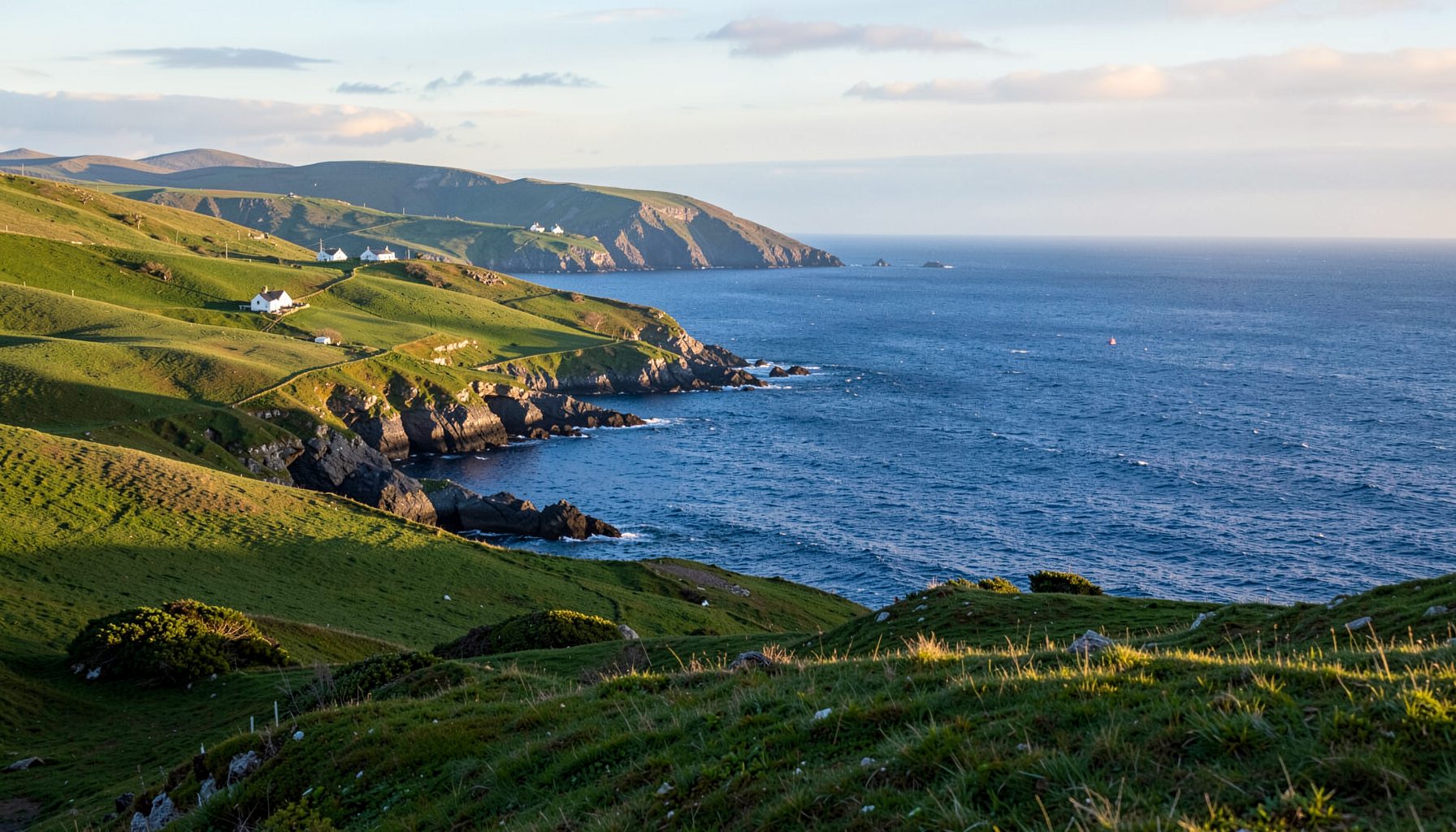
The Life of a Traditional Fisherman in Portmagee Harbour
Before daylight reaches the Iveragh Peninsula, Portmagee Harbour is already awake. A porch light flickers above a stone cottage, a van rolls towards the quay, and the sound of an engine carries across the water. For a traditional fisherman, the working day begins with the tide, the weather and the condition of the gear rather than with a clock.
Portmagee is a small coastal village on County Kerry’s Skellig Coast, connected by bridge to Valentia Island and shaped by the Atlantic Ocean. Fishing here has never been a simple matter of putting a boat into the water. It is a livelihood built around local knowledge: reading cloud on the horizon, understanding tidal streams, recognising a safe landing place and knowing which grounds have produced in different seasons.
Visitors from Australia may recognise the rhythm from working harbours in Tasmania, South Australia or regional New South Wales. The scale is different, but the habits are familiar: an early start, practical clothing, strong tea or coffee, careful maintenance and an intimate awareness of the sea. In Portmagee, these daily routines sit alongside tourism, island life and a long cultural history reaching towards the Skellig Islands.
A Harbour Shaped By Tides
Portmagee Harbour is sheltered enough to support a working fleet, yet its entrance opens towards exposed Atlantic waters. The nearby islands and headlands can make conditions look calm from the quay while wind and swell build offshore. A fisherman must judge the difference between a quiet surface inside the harbour and a dangerous sea beyond the channel.
Tides influence every decision. They affect when a boat can leave, where pots can be hauled and how a vessel returns with a load. The tide also changes the appearance of rocks, channels and shallow water. Knowledge of these patterns is often learned over many years, passed between generations through conversation, observation and practical experience.
The harbour is a place of movement rather than a static postcard. Small boats come alongside for fuel, repairs or unloading. Ropes are coiled, buoys are checked and wet decks are washed down. Even when no boat is sailing, the working signs of fishing remain visible in stacked creels, floats, nets and weathered sheds.
The Work Begins Before Sunrise
A traditional fisherman’s preparation starts long before the boat leaves the pier. Nets need inspection for tears, ropes need checking for chafe and lobster or crab pots must be fitted with sound lines and escape gaps. A failed knot or damaged float can become a serious problem in rough water, so maintenance is part of the job rather than an occasional task.
Weather forecasts are read alongside personal judgement. Wind direction, swell, visibility and the timing of rain can determine whether a trip is sensible. Forecasts provide essential information, but experienced crews also notice local signs: the way seabirds move, how the sea breaks over a reef and whether clouds are gathering behind the Skellig coast.
The boat itself is a working partner. Its engine, bilge pump, navigation lights and radio must be dependable. Fishermen keep an eye on fuel use and carry the basic tools needed for repairs. A day at sea can become much longer than planned if gear snags or weather delays the return, so preparation includes food, water, warm layers and emergency equipment.
Lobster, Crab And Seasonal Fishing
Pot fishing for lobster and crab has long been associated with the rocky coastline around Portmagee. Creels are baited and lowered to the seabed, often in areas selected for their depth, shelter and known habitat. When hauled, a pot may contain a valuable catch, empty shells, small animals that must be returned or a surprise visitor that has taken advantage of the bait.
The work is physical. Hauling a line by hand or with a small hauler requires strength, balance and careful attention. Pots can be heavy when wet, and ropes may be coated with weed or pulled sideways by the current. The fisherman must handle the catch quickly while keeping fingers clear of claws, hooks and moving gear.
Seasonal species bring different routines. Mackerel may provide fast, mobile fishing when shoals move close to shore, while shellfish demand patience and repeated visits to pots. Catches vary with water temperature, weather and marine conditions. There is no guarantee that a familiar mark will produce as it did the previous year.
Selling The Catch Close To Home
Once the boat returns, the working day continues. Fish and shellfish must be sorted, kept cool and handled cleanly. A local catch may go to a buyer, a processor, a restaurant or a market further away. The value of the fisherman’s labour depends on freshness, presentation, demand and the costs of fuel, bait, insurance and repairs.
This direct connection between harbour and plate is easy to understand for Australians accustomed to buying seafood through fish markets in Sydney, Melbourne or Brisbane. Australian shoppers often look for information about whether prawns, barramundi or snapper are local, imported or sustainably sourced. In Portmagee, provenance is similarly important, although the supply chain may be smaller and much more closely tied to individual boats and local buyers.
Everyday eating habits also shape demand. An Australian family may buy prawns for Christmas, pick up fish and chips after a beach walk or choose oysters for a weekend gathering. In Portmagee, seafood is part of coastal life rather than a special product separated from its source. The catch may appear in a village kitchen, a local pub or a nearby restaurant soon after landing.
Rules, Safety And Stewardship
Fishing is governed by rules designed to protect stocks, habitats and people at sea. Irish commercial and inshore fisheries operate within national and European regulation, with requirements covering registration, licensing, permitted gear, landing records, minimum sizes and closed seasons. These regulations affect the practical decisions made on the boat, including where and when fishing can take place.
The comparison with Australia is useful. A recreational fisher in Queensland, Victoria or Western Australia may need a state-specific licence, follow bag and size limits and observe marine sanctuary restrictions. Commercial operators work under separate management systems, with reporting obligations and rules that vary by fishery. Australia’s fisheries legislation is not uniform across the country, just as coastal fishing rules in Ireland reflect particular species, waters and conservation needs.
Safety requirements are equally important. Lifejackets, communications equipment, flares, navigation lights and emergency plans are not optional details. A harbour community understands that the sea can change quickly and that assistance may take time to arrive. Training and experience matter, yet no amount of familiarity removes the need for proper equipment.
Stewardship is part of the long-term livelihood. Fishermen have an interest in healthy stocks, clean water and undamaged seabed because the future of the harbour depends on them. Selective gear, returning undersized animals and respecting protected areas help preserve the marine environment for the next generation.
Family Knowledge And Harbour Community
A fishing life is rarely an individual story. Family members may help mend gear, keep accounts, prepare food, organise transport or maintain the boat. Children grow up learning the vocabulary of tides, weather and species, even if they later choose work in tourism, education or another local industry.
Portmagee’s community identity includes people who fish, process seafood, operate boats, welcome visitors and support harbour services. The same vessel may be part of a fishing business at one time of year and involved in island transport or marine tourism at another. These overlapping roles reflect the economic reality of a small coastal settlement.
The harbour also carries memory. Older residents may remember boats built from local materials, methods of preserving fish, difficult winters and periods when families depended more heavily on the sea. Stories about the Skelligs, Valentia Island and journeys along the coast connect present-day work with a much older maritime culture.
Tourism brings a new audience to that culture. Visitors heading towards Skellig Michael, exploring Valentia or joining a boat trip see the harbour as a place of discovery. Kayakers encounter a quieter view of the coastline, and kayaking routes can reveal coves and headlands that are understood differently by people who work on the water.
Weather, Tourism And A Changing Future
The traditional fisherman’s routine is changing as fuel prices, environmental pressures, regulation and climate patterns affect the viability of small boats. Stronger storms or altered seasonal conditions can reduce safe working days. Warmer water may influence where species are found, while marine conservation measures can change access to familiar grounds.
Tourism provides opportunities but also creates pressure. Harbour spaces must accommodate working vessels, passenger boats, visitors, parking and safety zones. A successful coastal community needs to protect the fishing function while allowing visitors to appreciate the place without treating it as a museum.
For Australian readers, the balance may be familiar from places such as Fremantle, Hobart or Port Lincoln, where working ports exist alongside restaurants, galleries and visitor attractions. The challenge is to retain the practical knowledge and local employment that make a harbour real. Portmagee’s identity is strongest when fishing remains a living activity rather than merely an image used in promotion.
Ways To Respect Portmagee’s Working Harbour
- Keep clear of boats, ropes, gear and loading areas when walking near the quay.
- Follow local signs, marine safety instructions and directions from harbour staff or skippers.
- Buy seafood through reputable local businesses and ask about its origin when provenance matters.
- Avoid taking photographs of fishermen at close range without permission.
- Do not touch creels, nets, floats or catch that are being prepared for landing.
- Learn about seasonal restrictions and protected marine areas before joining a coastal activity.
- Support community events, heritage projects and local learning initiatives that preserve maritime knowledge.
A traditional fisherman’s life in Portmagee is measured in tides, weather windows, engine hours and the condition of the catch, yet it is also measured in relationships. The harbour links families to the sea, businesses to local resources and visitors to the living heritage of the Skellig Coast.
Explore Portmagee with care, spend time learning from its community stories and recognise the people whose daily work keeps this Atlantic harbour connected to the water. Supporting local enterprises and respecting the working waterfront helps ensure that its fishing culture remains part of the region’s future.