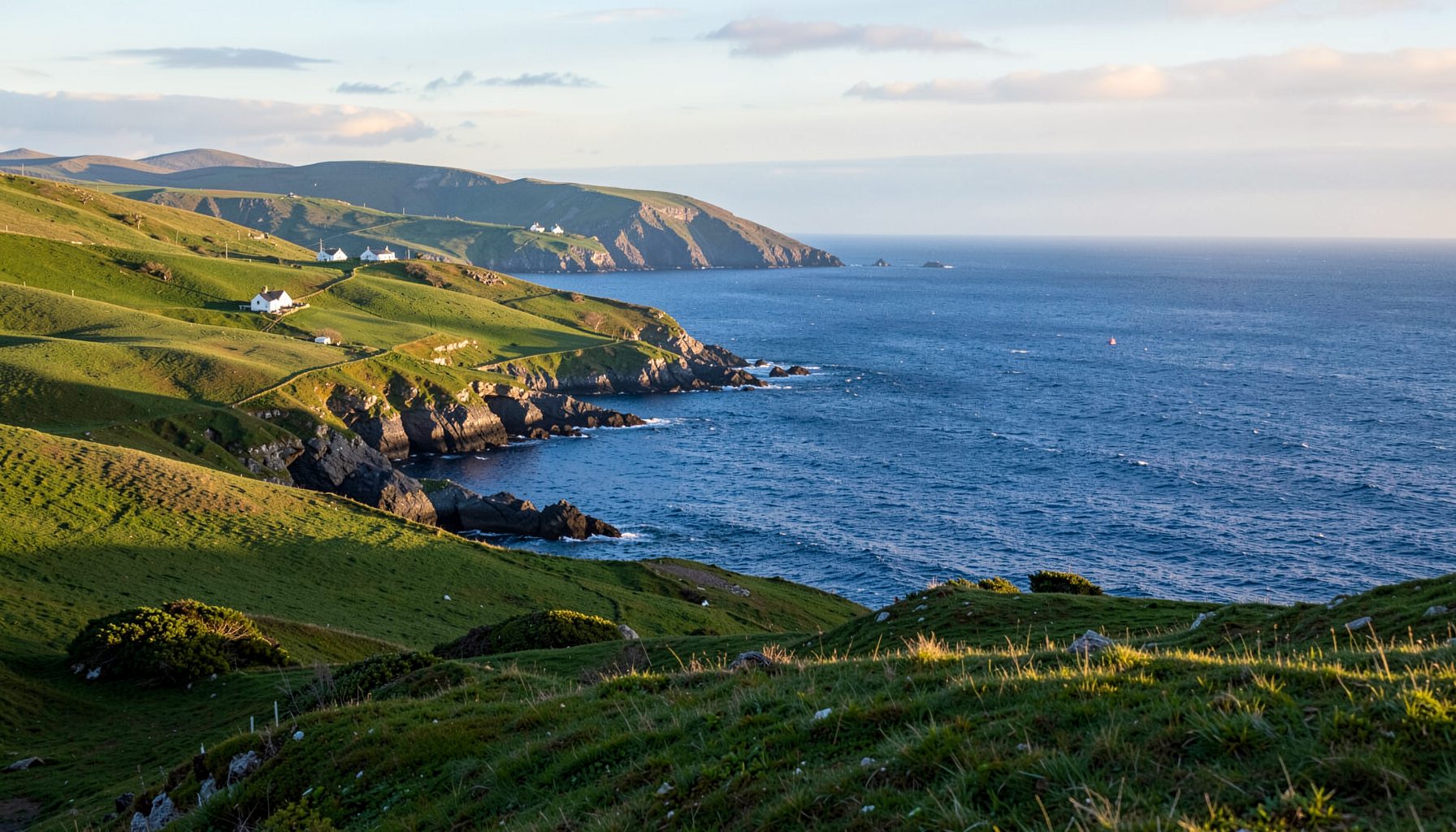
The Life of a Sea Kayak Guide on the Iveragh Peninsula
A sea kayak guide on the Iveragh Peninsula works where land, weather, wildlife, and local memory meet. The day may begin beside a quiet harbour and continue through sheltered coves, sea arches, islands, and long stretches of Atlantic water. Every outing demands practical judgement, physical energy, and a strong respect for the coastline.
From Kells to Castlecove, the Skellig Coast offers a varied setting for guided kayaking. The shoreline includes beaches, rocky headlands, small inlets, exposed passages, and culturally important places connected with fishing, pilgrimage, monastic history, and maritime travel. A guide must understand how these features affect a journey on the water.
The visible part of the job is leading a group through a beautiful landscape. Much of the real work happens before and after the trip: checking conditions, preparing equipment, planning an appropriate route, briefing guests, recording incidents, and keeping the kayaks ready for the next launch.
Reading The Iveragh Coast
A guide learns to read the coast at a much closer level than a visitor on land. A headland that appears simple from a road may create confused water around its outer edge. A narrow channel may be calm at one stage of the tide and difficult later. The shape of a bay, the direction of the swell, and the wind funnelled between hills can all change the character of a route.
Local knowledge grows through repeated observation. Guides learn which beaches provide an easy landing, where rocks become slippery, which coves offer shelter, and where a group can pause without damaging sensitive habitats. They also watch for fishing activity, nesting birds, changing visibility, and the sea state beyond the immediate shoreline.
The Skellig Coast has a strong connection with the wider maritime story of County Kerry. A guide may share information about island communities, traditional boats, abandoned settlements, lighthouse routes, and the monastic heritage associated with Skellig Michael. These stories give a paddle context, provided they are delivered accurately and without distracting from safety.
The Work Before Launch
A professional sea kayaking day starts well before guests arrive. Equipment must be inspected for damage, paddles matched to participants, buoyancy aids adjusted, and spare gear prepared. Dry clothing, communication equipment, first-aid supplies, tow lines, and navigation tools have to be accessible rather than buried beneath unnecessary equipment.
The guide also considers the people joining the trip. A family group, a school party, experienced paddlers, and first-time visitors may need different levels of support. The route, pace, launch site, and rest stops should suit the least confident member of the group while still providing an enjoyable experience for everyone.
A clear safety briefing sets the tone. Guests need to know how to hold a paddle, maintain balance, follow instructions, stop safely, and respond if a kayak capsizes. Good guides explain these points calmly and practically. They avoid overwhelming people with technical language while making it clear that the sea deserves attention.
Weather, Tides, And Decision-Making
Weather is part of every working day on the Iveragh Peninsula. Forecasts provide essential information, yet a guide still needs to compare them with conditions observed at the launch site. Wind direction, wave period, visibility, rainfall, temperature, and the skill level of the group all influence whether a planned route remains suitable.
Tidal movement can shape the timing of a journey. A guide may use a current to assist progress, avoid a channel during a stronger flow, or select a sheltered alternative when the sea becomes uncomfortable. The best decision is often a quiet change of plan made early, before a group reaches a difficult section.
| Working factor | What the guide watches | How it affects the outing |
|---|---|---|
| Wind | Direction, strength, gusts, and shelter | Determines effort, drift, and route choice |
| Swell | Height, period, and angle to the shore | Influences landings, crossings, and rocky passages |
| Tide | Flow, timing, and local acceleration | Changes speed, access, and safety margins |
| Visibility | Fog, rain, glare, and daylight | Affects navigation and group control |
| Group ability | Confidence, fitness, and experience | Sets the pace and level of exposure |
Turning back is a normal part of responsible guiding. A sea kayak guide is not measured by completing every planned route. Sound judgement means recognising when conditions, equipment, or group wellbeing no longer support the original plan and communicating that decision without creating alarm.
Guiding People, Not Just Kayaks
Visitors arrive with different expectations. Some want a peaceful coastal tour, while others hope to develop paddle skills or see wildlife. A guide balances these ambitions with the practical needs of the group. The experience should feel purposeful without becoming a race from one landmark to the next.
Instruction continues throughout the trip. A guide may show participants how to use a forward stroke efficiently, correct an unstable posture, or suggest a better angle for entering a small wave. Encouragement matters as much as technique, particularly when someone feels nervous after launching or becomes tired in wind.
Conversation is another important part of the work. The guide can point out seabirds, seals, geological formations, or traces of former coastal life. Around the Skellig Coast, local heritage can be woven into the journey through brief, well-timed stories. Guests often remember the sense of place as strongly as the physical activity.
The guide also represents the standards of the local outdoor community. That includes respecting residents, using appropriate access points, keeping noise under control, and leaving no litter. A responsible trip protects the character of the coastline for people who live there and for future visitors.
Skills Behind A Safe Day
Sea kayak guiding combines several forms of expertise. Formal training in rescue, navigation, first aid, and leadership provides a foundation, while regular practice keeps those skills usable under pressure. A guide must be able to assist a tired paddler, manage a capsize, organise a group, and make decisions when communication is difficult.
Physical fitness helps with carrying boats, launching through small surf, paddling against wind, and assisting participants. Mental stamina is equally important. Long days require concentration from the first equipment check to the final kayak wash, especially when conditions have been demanding.
Useful qualities include:
- Careful observation of weather, sea state, equipment, and group behaviour
- Clear communication before launch and during changing conditions
- Patience with beginners and confidence without unnecessary risk-taking
- Strong navigation, rescue, and first-aid habits
- Respect for wildlife, local communities, and coastal heritage
Guides also keep learning. They may review a route after each trip, discuss conditions with other instructors, attend skills workshops, or explore a new landing place during quieter periods. This ongoing development makes local experience more reliable and helps prevent routine from becoming complacency.
A Working Day On The Water
A typical day has a rhythm, although no two trips are identical. The guide may arrive early to check the forecast, tide times, access arrangements, and equipment. After meeting the group, they fit buoyancy aids, explain the route, and assess how participants respond during basic practice near shore.
Once underway, the guide usually paddles where the whole group can be seen and supported. They may lead from the front, stay behind the slowest paddler, or move between participants depending on the route. Stops are used for rest, navigation, interpretation, and discreet checks on comfort and confidence.
A trip can change character quickly. The group may encounter a fresh breeze, a curious seal, low cloud over the hills, or a stronger current than expected. These moments require flexibility rather than drama. The guide keeps people together, shortens the route if needed, and makes the environment understandable without pretending it is completely predictable.
After landing, the work continues. Kayaks are rinsed, inspected, dried, stored, and prepared for future use. Equipment faults are recorded, guests are debriefed, and any incident or near miss is reviewed. On a busy season day, this practical routine may happen again before the guide has time for a proper meal.
Local Knowledge And Community Connections
The role reaches beyond commercial outdoor activity. Guides often become familiar faces at harbours, beaches, visitor centres, learning hubs, and community events. Their work connects visitors with the living communities of the peninsula rather than presenting the coast as an empty backdrop.
That connection requires care. Local stories should be shared with permission and accuracy, while sensitive sites should be treated respectfully. A guide can encourage guests to support nearby cafés, heritage projects, craft workers, and cultural initiatives without turning every part of the journey into a sales pitch.
Regional information is valuable when planning a day on the coast, particularly when activities, access, and community events overlap. Visitors looking for current local contacts and wider information about the area can reach the Skellig Coast team, whose work supports connections across the peninsula.
The most rewarding part of guiding is often the moment when a guest begins to see the coastline differently. A familiar-looking rock becomes evidence of changing geology, a quiet island suggests generations of sea travel, and a short paddle becomes a direct encounter with the character of Iveragh.
A life spent guiding sea kayaks on the peninsula is shaped by variety. It involves route planning, physical work, teaching, storytelling, conservation, and constant attention to the Atlantic. Each launch is an opportunity to share the coast responsibly, helping people experience its beauty while understanding its power and protecting its future.