The Life Of A Local Ranger On The Ring Of Kerry
A local ranger on the Ring of Kerry works where mountain, sea and community meet. The job reaches far beyond checking paths or pointing visitors towards a viewpoint. It involves reading weather over the Iveragh Peninsula, protecting fragile habitats, explaining local history and helping people experience the coast without wearing away the places they have come to see.
For visitors from Australia, the scale may feel familiar in some ways. The practical habits of a bushwalker in the Blue Mountains, a coastal walker near Perth or a visitor exploring the Great Ocean Road all matter here: carry water, respect changing conditions and leave natural places as they were found. Yet the Skellig Coast has its own rhythm, shaped by Atlantic weather, working landscapes, ancient monuments and villages where local knowledge is part of everyday life.
Work Begins Before Sunrise
A ranger’s day often starts before the first walkers arrive. At a trailhead near Ballinskelligs, Portmagee, Caherdaniel or along the coast towards Castlecove, the first tasks may include checking gates, examining a damaged stile and looking for fresh erosion after overnight rain. A short section that appeared safe yesterday can become slippery or unstable after a night of wind and heavy showers.
This early inspection is also a chance to notice wildlife and seasonal changes. A ranger may record nesting activity, identify plants affected by trampling or spot signs that livestock have moved through a boundary. The work is observant rather than dramatic. Good land management depends on hundreds of small decisions made consistently, often before the public sees any sign of them.
The role combines outdoor fieldwork with administration. Incident reports, maintenance requests, visitor counts and conversations with landowners all form part of the working week. A ranger may spend the morning on a cliff path and the afternoon at a desk, coordinating with a community group or updating information for a local learning hub.
Reading The Atlantic Landscape
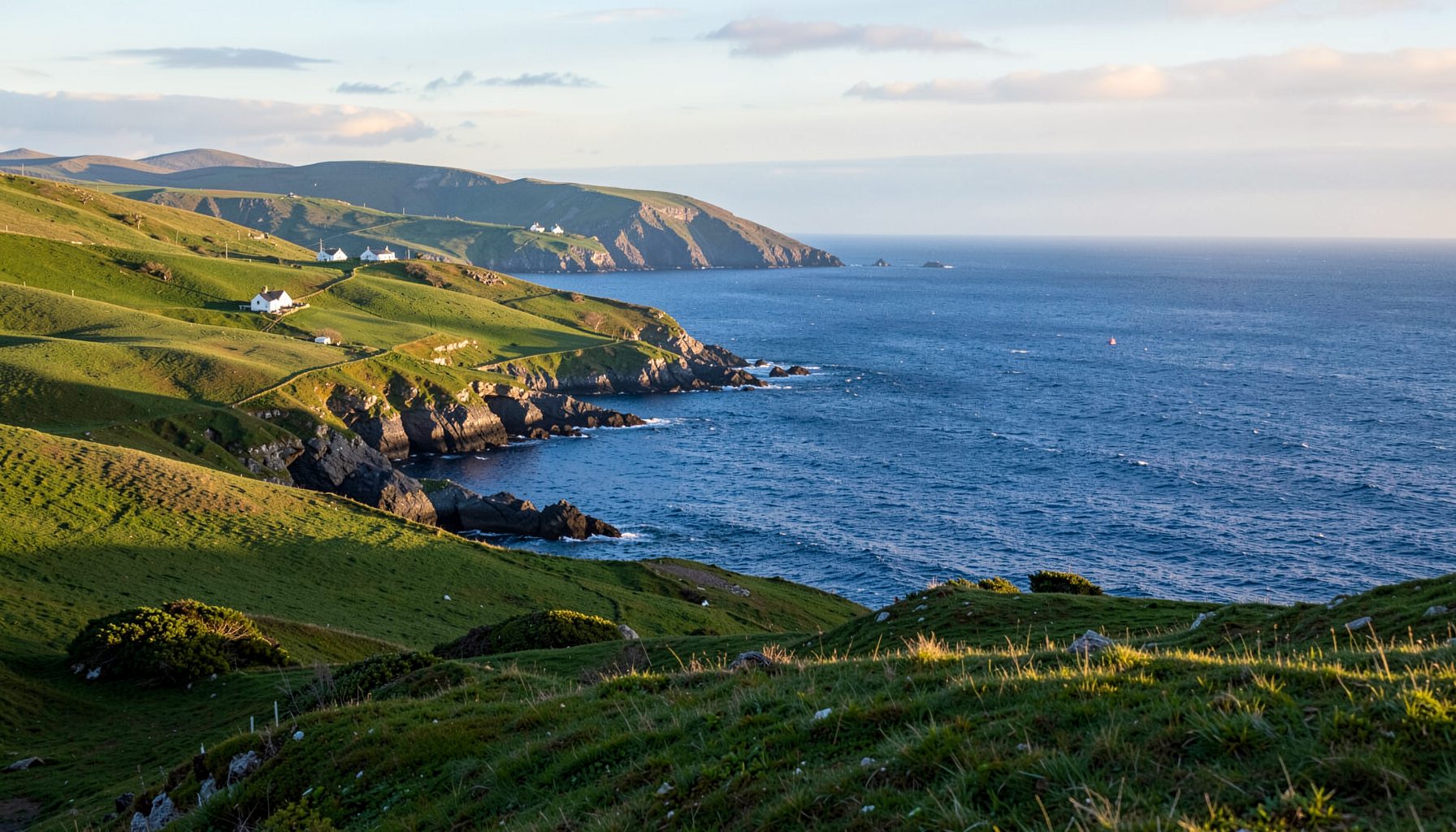
The Ring of Kerry is often presented through its famous scenery, but a ranger sees a living system rather than a postcard. The coastline is exposed to Atlantic swell, while upland tracks cross peatland, heath and rough pasture. Rain can run quickly off steep ground, creating channels that widen beneath boots and bicycle tyres. Small changes in drainage can determine whether a path remains usable through the season.
Visitor guidance therefore needs to be practical and specific. A ranger might explain why walkers should stay on a marked route, close farm gates and keep dogs under control around sheep. On a clear morning, a distant island may seem close enough to reach quickly, yet fog can reduce visibility within minutes. Advice about footwear, layers and navigation is a form of conservation because it reduces rescues, shortcuts and accidental damage.
Australian visitors often understand this relationship with weather. Someone accustomed to sudden conditions in Tasmania or a hot afternoon on a Victorian trail may already know why preparation matters. The difference on the Kerry coast is the combination of cool temperatures, saturated ground, strong wind and rapidly changing visibility, even during the longer daylight of summer.
A Ranger’s Relationship With The Community
Rangers work with residents as much as they work with landscapes. Farmers, fishers, teachers, volunteers, youth groups and business owners each hold part of the local picture. A farmer may know where water collects after a storm, while a resident may remember how a ruined wall was used by generations of walkers. These details help shape decisions that cannot be made from a map alone.
The community dimension is especially visible during events and outdoor programmes. A ranger might help a school group understand coastal geology, support a heritage walk or give safety guidance before a beach clean-up. They may also direct visitors towards local people whose stories add context to the villages and landmarks of the Skellig Coast.
This exchange works both ways. Residents often raise concerns about parking, litter, drones, noise or blocked access, while visitors bring enthusiasm and useful attention to places that deserve care. The ranger’s role is to keep communication constructive, so tourism supports community life instead of overwhelming it.
For an Australian audience, the closest comparison might be a park officer working alongside a local council, Traditional Owner organisation, surf lifesaving club and community market. The structures are different, but the principle is familiar: outdoor recreation works best when people who live in a place help shape how it is visited.
Safety, Weather And Quiet Judgement
Safety decisions are a constant part of the job. A ranger assesses tide times, wind direction, visibility, ground conditions and the experience of a group before recommending a route. The most responsible advice may be to shorten a walk or postpone it. That judgement can disappoint someone who has travelled from Dublin, Sydney or Melbourne, but it can prevent a minor problem becoming a serious emergency.
Clothing and equipment matter in every season. Waterproof layers, sturdy footwear, a charged phone, an offline map and enough food are basic safeguards. Sunscreen is still worthwhile on bright Irish days, just as it is on an Australian bushwalk, while a hat and water bottle remain useful even when the air feels cool. A ranger also encourages visitors to share their plans and allow extra time for rough or unfamiliar ground.
Emergency response is rarely a solo effort. Depending on the location, a ranger may liaise with local emergency services, coastguard teams, landowners and other outdoor professionals. Clear information about a person’s last known location can save valuable time. This is why marked trails, sensible route choices and honest estimates of ability matter long before an incident occurs.
Useful Habits On The Trail
- Check the forecast, tide information and daylight before setting out.
- Carry a map, charged phone, water and weatherproof layers.
- Keep dogs close to livestock and follow signs around nesting areas.
- Take litter home, including food scraps and biodegradable packaging.
Heritage That Needs Care
The Skellig Coast contains layers of history that are easy to overlook when a view commands attention. Stone walls, holy wells, old roads, abandoned buildings and archaeological sites connect present-day communities with earlier generations. Skellig Michael, a UNESCO World Heritage Site and a famous Star Wars filming location, draws international interest, yet its significance reaches far beyond its appearance on screen.
A ranger helps visitors understand that heritage is vulnerable. Ancient masonry can be damaged by climbing, touching or repeated footfall. Artefacts should remain where they are found, and informal paths around historic sites can gradually alter the character of a place. Explaining these points respectfully is more effective than treating every visitor as a potential threat.
Interpretation is an important skill. A ranger may describe how monastic communities lived on offshore rock, explain the purpose of a field boundary or connect a village street with maritime history. The strongest stories are grounded in evidence and local memory. They make a place more meaningful without turning it into a stage set.
There is also a responsibility to acknowledge uncertainty. Not every local story can be verified, and some traditions have several versions. A careful ranger distinguishes between established history, community recollection and popular legend, allowing visitors to appreciate all three without confusing them.
Markets, Villages And Everyday Encounters
A working landscape is best understood through ordinary encounters. In a coastal village, the ranger may speak with someone repairing a wall, preparing a boat or setting up a stall for a weekend market. Local produce, crafts and community events reveal how people continue to live in the region rather than simply presenting it as a scenic destination.
That atmosphere can feel familiar to Australians who enjoy farmers markets in Melbourne, community stalls in Brisbane or weekend produce markets around Adelaide. The scale on the Iveragh Peninsula is smaller, and the conversations may last longer, but the purpose is similar: visitors meet makers, growers and organisers while money circulates through the local area.
Rangers often become informal connectors. They can point visitors towards a village exhibition, a heritage centre, a public talk or a community-led walk. They may explain that a quiet-looking hall is active during a music session, or that a learning hub is hosting an event that welcomes visitors. These recommendations give context to a landscape that might otherwise be reduced to a sequence of viewpoints.
A respectful visitor also understands that rural roads and harbours are working spaces. A narrow lane may be used by tractors, and a pier may serve local boats before it serves photographers. Patience, careful parking and a willingness to step aside are small courtesies with a large effect.
A Profession Built On Stewardship
The life of a local ranger is defined by stewardship rather than spectacle. Some days involve repairing a sign in cold rain; others bring rewarding conversations with children, walkers or residents who have discovered a new reason to value their surroundings. The work can be physically demanding, but its deeper purpose is to maintain a relationship between people and place.
That relationship is always changing. Visitor numbers rise and fall, storms reshape paths, invasive species spread and community priorities evolve. Rangers need practical skills, patience and the confidence to make decisions without complete certainty. They also need humility, because the landscape and the people connected to it will remain after any individual project has ended.
For someone visiting from Australia, the ranger’s work offers a useful way to see the Ring of Kerry. The coastline is not simply a route to drive, photograph and leave behind. It is a network of habitats, farms, heritage sites, villages and memories. Moving through it thoughtfully means noticing the work that keeps those connections intact.
Supporting that work can be as simple as following local guidance, choosing community-run activities, keeping to durable paths and sharing accurate information with other visitors. Spend time in the villages, listen to local stories and treat every historic site as irreplaceable. Discover the Skellig Coast with care, and help preserve its paths, communities and heritage for the people who call it home and for those who come after you.