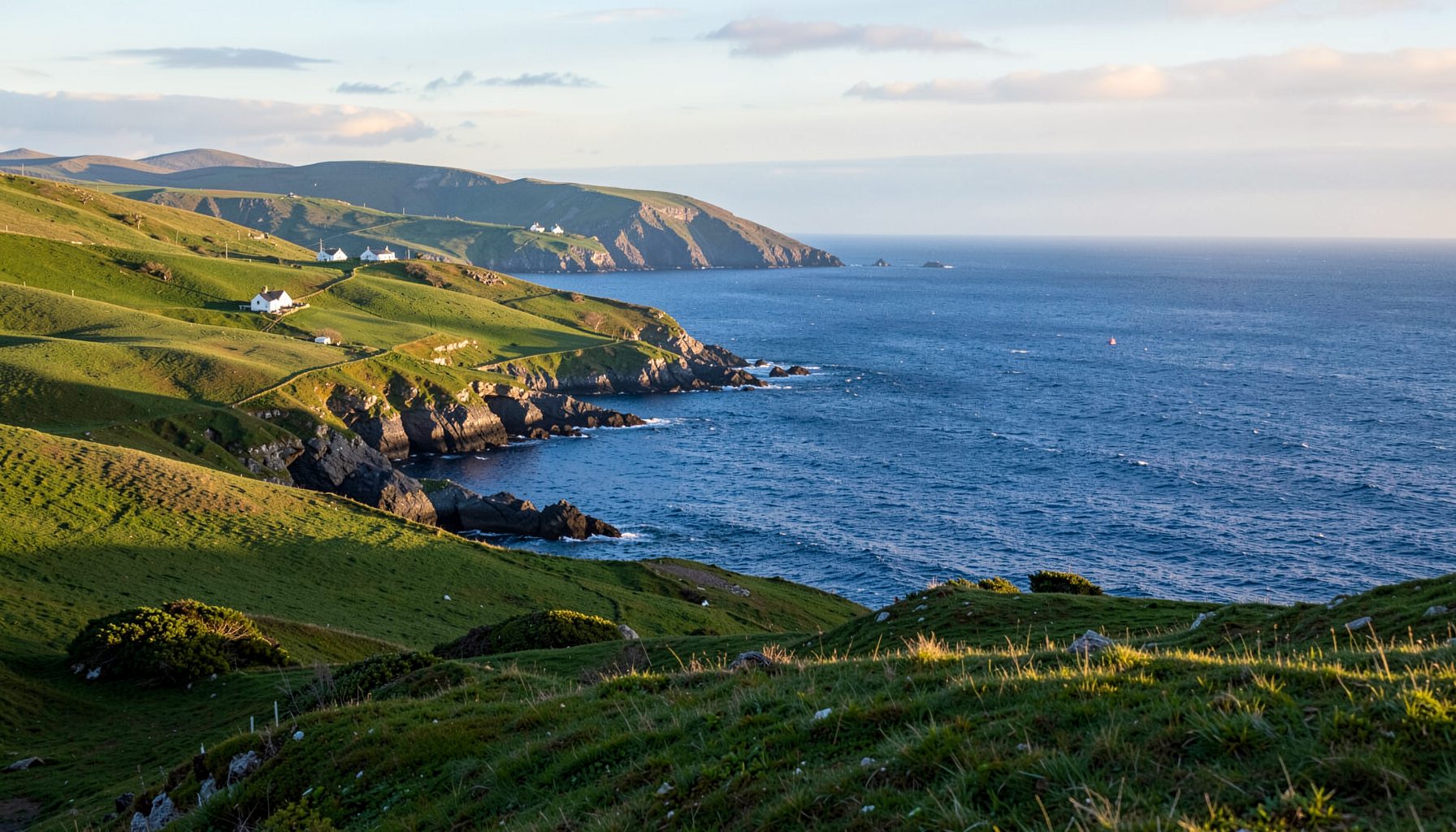
A Painter’s Life Along the Skellig Coast
Along Ireland’s south-western edge, painting is shaped by weather, memory and the changing light over the Atlantic. The Skellig Coast, stretching from Kells to Castlecove across the Iveragh Peninsula, offers an artist a remarkable studio: fishing harbours, stone walls, windswept headlands and the distant outline of Skellig Michael.
For a local painter, the Skelligs are more than a dramatic subject. They are part of daily life, local identity and inherited stories. A painting may begin with a view of the islands, yet its deeper meaning often comes from a lifetime spent observing the sea, listening to neighbours and walking familiar roads in every season.
Growing Up With The Atlantic
A painter raised on the Skellig Coast learns to notice small changes. The sea may appear slate-grey before rain, deep blue under a brief break in the cloud, or almost violet at dusk. Light can shift within minutes, turning the cliffs around Valentia Island bright and then veiling them in mist.
Childhood landscapes become visual reference points. Ballinskelligs beach, the narrow roads near St Finan’s Bay, the harbour at Portmagee and the broad views around Cahersiveen can remain present in an artist’s mind long after the easel has moved indoors. A familiar lane may be painted dozens of times, with each version reflecting a different tide, season or mood.
Local life supplies another layer of education. Stories told in kitchens, at the pub or after Mass often connect places with families, wrecks, saints and old working traditions. A painter absorbs the sound of local speech and the rhythm of community life alongside formal lessons in colour and composition.
Finding A Personal Way Of Seeing
Many coastal artists begin by copying what they see. Over time, observation becomes interpretation. The painter may reduce the horizon to a few broad strokes, exaggerate the height of a sea cliff or use a muted palette to express the quiet before a storm.
The Skelligs encourage this movement away from simple illustration. Skellig Michael is instantly recognisable, with its steep island profile and early monastic settlement, but a painting that merely records its shape can feel incomplete. The strongest work often suggests isolation, devotion and the physical effort required to reach such a place.
This is where artistic identity develops. One painter may work in oils, building dense layers that echo the weight of wet rock. Another may prefer watercolour, allowing washes to dissolve like sea fog. Acrylics, pastels, charcoal and mixed media each offer a different response to the same coast.
A Working Day Near The Water
A local painter’s routine is rarely romantic for long. Wind can lift a canvas, rain can arrive sideways and salt spray can damage equipment. Some artists make quick sketches outdoors before returning to a home studio, where the day’s impressions are developed into larger works.
The most productive time may be early morning, before traffic and visitors gather around popular viewpoints. Other painters prefer the late afternoon, when the sun falls low across the peninsula and the rocks take on warmer tones. There is no fixed timetable; the weather decides much of the working day.
A painter also works around ordinary responsibilities. Materials must be ordered, frames collected and finished pieces delivered to a gallery or community exhibition. During the busy summer period, local artists may speak with visitors, explain the stories behind their work and manage sales while continuing to paint.
For Australian visitors, this rhythm may feel familiar in a different landscape. Artists along the Great Ocean Road, the Tasmanian coast or the South Australian coastline also work with changing weather, seasonal visitors and the tension between making art and earning a living. The difference lies in the Skellig Coast’s deep connection between landscape and Gaelic history.
The Skelligs As Memory And Meaning
Skellig Michael is a UNESCO World Heritage Site, known for its early Christian monastery and remote position in the Atlantic. Its beehive huts, steep steps and exposed setting have made it a powerful subject for generations of artists. Its later appearance in Star Wars has brought another audience, though local painters often see the island through a much older lens.
For a painter from the region, the Skelligs can represent departure and return. Fishing families, island communities and generations of coastal workers have lived with the islands as part of the horizon. They may mark direction, weather or belonging. A painting of the Skelligs can therefore carry personal memory even when no person appears in the scene.
The surrounding landscape matters just as much. The view from Waterville, the coast near Castlecove, the coves around Ballinskelligs and the roads towards Portmagee all offer different relationships with the islands. Sometimes the Skelligs are central; sometimes they are barely visible, a small dark form beyond a field or harbour wall.
Art, Community And Local Heritage
A local painter is often connected to the community in practical ways. Work may appear in a village hall, a library, a learning hub, a craft shop or a temporary exhibition during a festival. These settings allow art to become part of everyday regional life rather than something reserved for major city galleries.
Community exhibitions can bring together professional artists, hobby painters, young people and makers working in textiles, ceramics or photography. Such events encourage conversation about the area’s history and help preserve visual records of places that are changing. An old pier, a closed schoolhouse or a familiar stone cottage may survive in paint after its original use has disappeared.
The local art economy is modest but varied. Visitors may purchase small prints, postcards or affordable watercolours, while collectors look for larger original works. A painter can sell through a gallery, a studio visit, a website, a market stall or a seasonal exhibition. Word of mouth remains important, especially in communities where people know the artist’s family and local connections.
Australian travellers often encounter a similar pattern in regional arts markets. A gallery in a coastal town may sell local paintings alongside ceramics, books and handmade goods, while visitors browsing after a morning walk or an arvo drive become unexpected buyers. For Australians planning an Ireland trip, these small venues can provide a more personal experience than a large commercial gallery.
Seeing The Coast Through A Painter’s Eyes
Visitors do not need specialist knowledge to understand a painting inspired by the Skellig Coast. It helps to look for the decisions behind the image. What has been left out? Where does the eye settle? Is the sea calm because the artist remembers a rare peaceful day, or because calmness expresses a feeling of home?
A painting can also encourage slower travel. Instead of passing through Portmagee only to reach a boat departure point, visitors may notice the texture of the harbour walls, the colours of painted shopfronts and the relationship between the village and the water. Around Cahersiveen, historical sites and broad coastal views reveal how settlement, defence and travel have shaped the region.
Weather is part of the experience. A soft day of drizzle may obscure Skellig Michael, while a clear morning can make the island seem surprisingly close. Visitors should follow local guidance for boat trips and protected heritage sites, particularly because sea conditions can change quickly. The island’s steps and exposed terrain also demand care.
The following guide shows how different places might appear in a painter’s work and what each setting can reveal:
| Place or Motif | Artistic Character | Local Story Or Feeling | What Visitors May Notice |
|---|---|---|---|
| Skellig Michael | Strong silhouettes, dark rock and open sky | Monastic isolation and spiritual endurance | The island’s steep profile and Atlantic setting |
| Ballinskelligs | Broad beaches, dunes and shifting light | A working coastal community beside ancient heritage | The contrast between sand, sea and stone |
| Portmagee | Harbour colours, boats and reflective water | Fishing, travel and the gateway to the Skelligs | Everyday life around the waterfront |
| Valentia Island | Layered hills, cliffs and changing horizons | Geological history and island identity | Long views across channels and headlands |
| Cahersiveen | Roads, walls and wide peninsula views | A town linked with local history and community life | How settlement sits within the landscape |
| Castlecove | Coves, headlands and sheltered water | A quieter southern edge of the coast | The meeting of rocky shore and open sea |
For Australians, the appeal lies in the connection between place and personality. The Skellig Coast is not simply a scenic backdrop to photograph and leave behind. It is a lived landscape, shaped by residents, visitors, weather, heritage and creative work.
A local painter keeps that relationship visible. Each brushstroke records something of the coast’s physical appearance, but also the patience required to live beside the Atlantic. Through paintings, sketches and community exhibitions, the region’s villages and islands continue to speak to people far beyond Ireland.
Explore the stories, communities and heritage of the Skellig Coast before setting out. Learn about the villages from Kells to Castlecove, discover the history surrounding Skellig Michael and make time for the local galleries, cultural initiatives and outdoor programmes that give the landscape its human meaning.