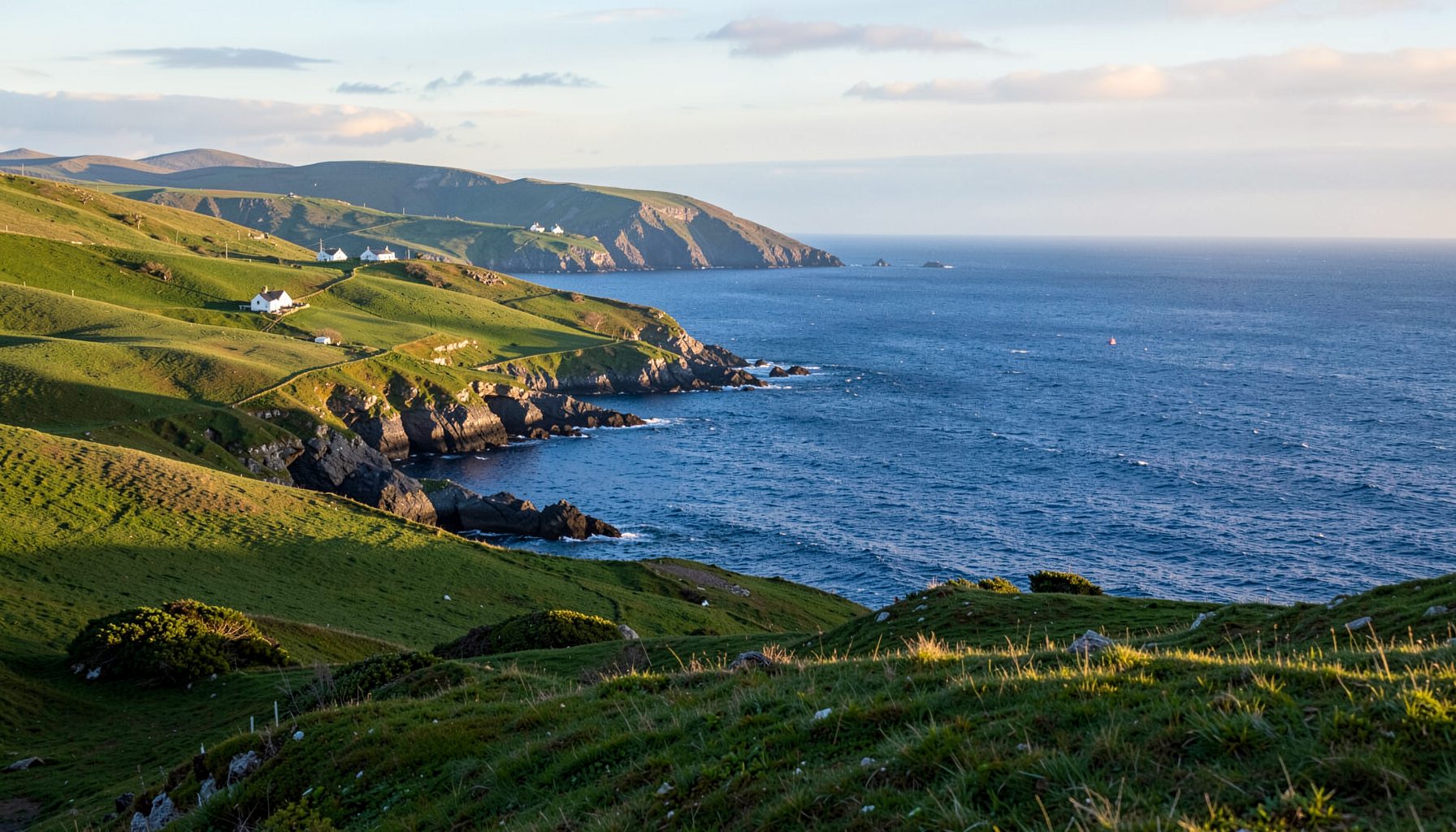
The Life of a Local Hedge Layer on the Ring of Kerry
Along the Ring of Kerry, a hedgerow is far more than a boundary between fields. It can shelter sheep from Atlantic winds, guide walkers along a boreen, mark an old townland division, and provide food and cover for birds, insects, and small mammals. Its shape often reflects decades of careful work, with each generation maintaining the living structure left by the one before it.
For a local hedge layer, the working year follows the seasons, the weather, and the condition of the hedge. The job combines agricultural knowledge with traditional craft. It involves reading the growth of hawthorn, blackthorn, ash, hazel, and willow, then deciding how each plant can be cut, bent, or encouraged to form a strong stock-proof barrier.
On the Iveragh Peninsula, where roads wind between mountains, bogland, pasture, and the coast, hedge laying remains part of the visual character of rural Kerry. It is a practical skill, a form of landscape management, and a living link to the farming traditions of the region.
A craft shaped by the Kerry landscape
Hedge laying is the process of partially cutting young tree stems, known as pleachers, near their base and laying them along the line of the hedge. The stems remain connected to their roots, so they continue to grow while creating a dense, woven barrier. Stakes and binders may be added to hold the hedge in place and guide its final form.
The method used depends on the hedge itself. A mature boundary may contain gaps, multiple layers of growth, or trees that have been allowed to grow tall. A younger hedge may be easier to pleach and shape. On exposed ground near the coast, the hedge layer must consider prevailing winds, salt-laden air, drainage, and the pressure of livestock.
Kerry hedges are often irregular rather than uniform. That character is part of their value. A skilled worker does not necessarily try to make every section look identical. The aim is to create a durable boundary while respecting the age, species, and history of the existing hedge.
A working day in the field
A typical day begins with an assessment rather than immediate cutting. The hedge layer checks where livestock have pushed through, which stems are healthy, and whether the bank beneath the hedge is stable. They may also look for old stones, ditches, archaeological features, or signs that the boundary follows a historic route.
The main tools are simple but require practice. A billhook is used for controlled cuts, while a chainsaw may be needed for thicker stems or larger branches. Loppers, a hand saw, stakes, and a hazel or willow binding rod complete much of the working kit. Protective clothing is essential, particularly when cutting thorny growth or operating machinery.
The work is physical. Each pleacher must be cut deeply enough to bend without snapping, but not so deeply that it loses its connection to the root system. Stems are then positioned along the hedge line, with gaps filled and the base cleared of competing growth. The finished hedge should be firm, dense, and capable of becoming stronger as it regrows.
Weather governs the pace. Wet ground can make access difficult, while high winds make cutting unsafe and can damage newly laid stems. In a coastal part of Kerry, a day that begins calm can quickly become unsuitable for detailed work. Patience is therefore part of the craft.
The seasons of traditional hedge maintenance
The dormant season, generally from late autumn through winter, is the main period for hedge laying. Deciduous trees have lost their leaves, making the structure easier to see, and the sap is not rising as strongly as it does in spring. The hedge layer can identify the strongest stems and make careful cuts with less stress on the plants.
Timing also has to respect wildlife. Hedgerows are nesting and feeding places for many species, and cutting during the main bird-breeding period can cause serious disturbance. Irish countryside management is subject to wildlife protection requirements, so landowners and contractors must check current regulations before trimming or laying a hedge.
Spring brings new growth and reveals which sections have settled successfully. Fresh shoots appear from the base, while laid stems begin to straighten and thicken. Summer is usually a time for observation, light management, and allowing the hedge to provide shelter and flowers. Hawthorn blossom, blackthorn flowers, berries, and autumn hips each contribute to the seasonal rhythm of the countryside.
A well-managed hedge is not cut back severely every year. Repeated hard trimming can reduce flowering and fruiting, weaken the structure, and create a dense outer shell with little life inside. Rotational management gives different sections time to mature and ensures that the landscape retains a mixture of young growth, older stems, and occasional hedgerow trees.
Farm boundary, wildlife corridor, and shelter
For farms around the Ring of Kerry, a hedge still has a direct practical purpose. A properly laid boundary can keep cattle and sheep in their fields, reduce the need for fencing, and offer protection from rain and wind. In exposed upland areas, a strong hedge may improve conditions for animals and reduce soil erosion along field edges.
The ecological role is equally important. Hedgerows connect isolated patches of woodland, scrub, and wet ground. Birds such as wrens, robins, blackbirds, and dunnocks use them for nesting and cover. Pollinating insects benefit from blossom, while berries and seeds support wildlife later in the year. The dense base can provide shelter for small mammals, amphibians, and invertebrates.
Different plants bring different benefits. Hawthorn produces blossom and berries; blackthorn flowers early and offers dense thorny cover; hazel provides nuts and flexible rods; ivy supplies late-season flowers and fruit. A hedge layer who understands these species can make decisions that protect biodiversity while still meeting the needs of the farm.
The comparison below shows how several traditional elements contribute to a living boundary.
| Hedge element | Practical function | Value for nature |
|---|---|---|
| Laid stems | Creates a stock-proof barrier | Provides dense nesting and resting cover |
| Hazel binders | Holds the hedge line together | Offers flexible growth and shelter |
| Mature hedge trees | Marks field boundaries and gives height | Supports insects, birds, and epiphytic plants |
| Thorny shrubs | Discourages livestock and limits gaps | Protects nests and small animals |
| Grassy hedge banks | Raises and stabilises the boundary | Creates habitat for wildflowers and invertebrates |
Reading history in a field boundary
Many hedges follow boundaries that existed long before modern farms and roads. Their lines can reflect townland divisions, estate boundaries, old parish routes, or the edges of former plots. A hedge layer working in a remote part of the peninsula may encounter a boundary whose age is suggested by its bank, mature trees, or relationship to nearby ruins and stone walls.
The hedge itself can contain clues. A very old tree growing along a straight bank may predate the present field pattern. A change in plant species may show where two landholdings met. Gaps, gateways, and bends can reveal former access routes. These details are easy to overlook when a hedge is treated simply as vegetation.
This is why local knowledge matters. A person who has worked across the same townlands often knows which boundaries flood, which are exposed, and which have been repaired by several generations of farmers. They may also recognise traditional techniques passed down through families or learned through agricultural training and rural skills programmes.
Hedge laying therefore contributes to cultural heritage as well as environmental care. It keeps a visible part of the rural landscape functioning instead of allowing old boundaries to collapse or disappear beneath unchecked scrub.
Keeping the skill alive
Traditional hedge laying requires more than physical strength. It depends on judgement, timing, tool control, and knowledge of plant growth. These skills are often learned through demonstration and repetition. An experienced hedge layer can show an apprentice where to make a cut, how far to bend a stem, and when a tree should be retained rather than removed.
Training days, local agricultural networks, rural development groups, and community environmental projects can help preserve the craft. Demonstrations are especially valuable because hedge laying is difficult to understand from written instructions alone. The sound of a billhook, the angle of a pleacher, and the tension of a binder are all part of the learning process.
The work also supports a broader conversation about sustainable land management. Hedgerows can store carbon, protect soil, slow wind, and contribute to water management, although their benefits depend on careful maintenance. Replacing every boundary with a fence may be quicker in the short term, but it removes a complex living system from the farm.
For young people in Kerry, hedge laying offers a way to connect practical outdoor work with local history and biodiversity. It can sit alongside community walks, school projects, farming initiatives, and heritage programmes that explore how people have shaped the landscape over centuries.
Visiting and respecting the working countryside
Visitors travelling through the Ring of Kerry may notice newly laid hedges beside narrow roads, stone walls, pasture, and coastal lanes. The work can look rough at first, with cut stems lying low and stakes standing above the line. Over time, new shoots rise from the base and the hedge becomes thicker, greener, and more secure.
Photographs and walks can help people appreciate this process, but working boundaries should be treated with care. A hedge may be newly planted, recently laid, or protecting livestock. Gates should be closed, private land should not be entered without permission, and roadside stopping must be safe and legal. The most responsible way to enjoy the landscape is to use public roads, marked paths, and established viewing areas.
Local interpretation can add depth to a journey. A community heritage centre, village information point, farm event, or guided countryside programme may explain how hedges relate to local settlement, wildlife, and farming. The wider Skellig Coast contains many such connections, from everyday rural practices to internationally recognised places such as Skellig Michael.
The next time a dense hedge appears beside a Kerry road, pause to notice its structure. Look for the laid stems, the woven binders, the old tree trunks, and the varied plants growing through the bank. Each feature reflects decisions made by people who understood that a boundary could serve a farm, a habitat, and a community at the same time.
Support the living heritage of the Iveragh Peninsula by:
- Choosing marked walking routes and respecting farmland boundaries
- Learning about local hedgerow species and seasonal wildlife
- Supporting community heritage events and rural skills demonstrations
- Sharing photographs and stories that recognise local land-management traditions
- Encouraging careful hedge maintenance that protects both farms and biodiversity
Hedge laying remains a quiet but significant part of life along the Ring of Kerry. Its value is visible in sheltered fields, thriving birdsong, old townland lines, and the continued knowledge of people who work with the land. Explore the Skellig Coast to discover more about the communities, landscapes, and traditions that keep this distinctive part of Ireland alive.