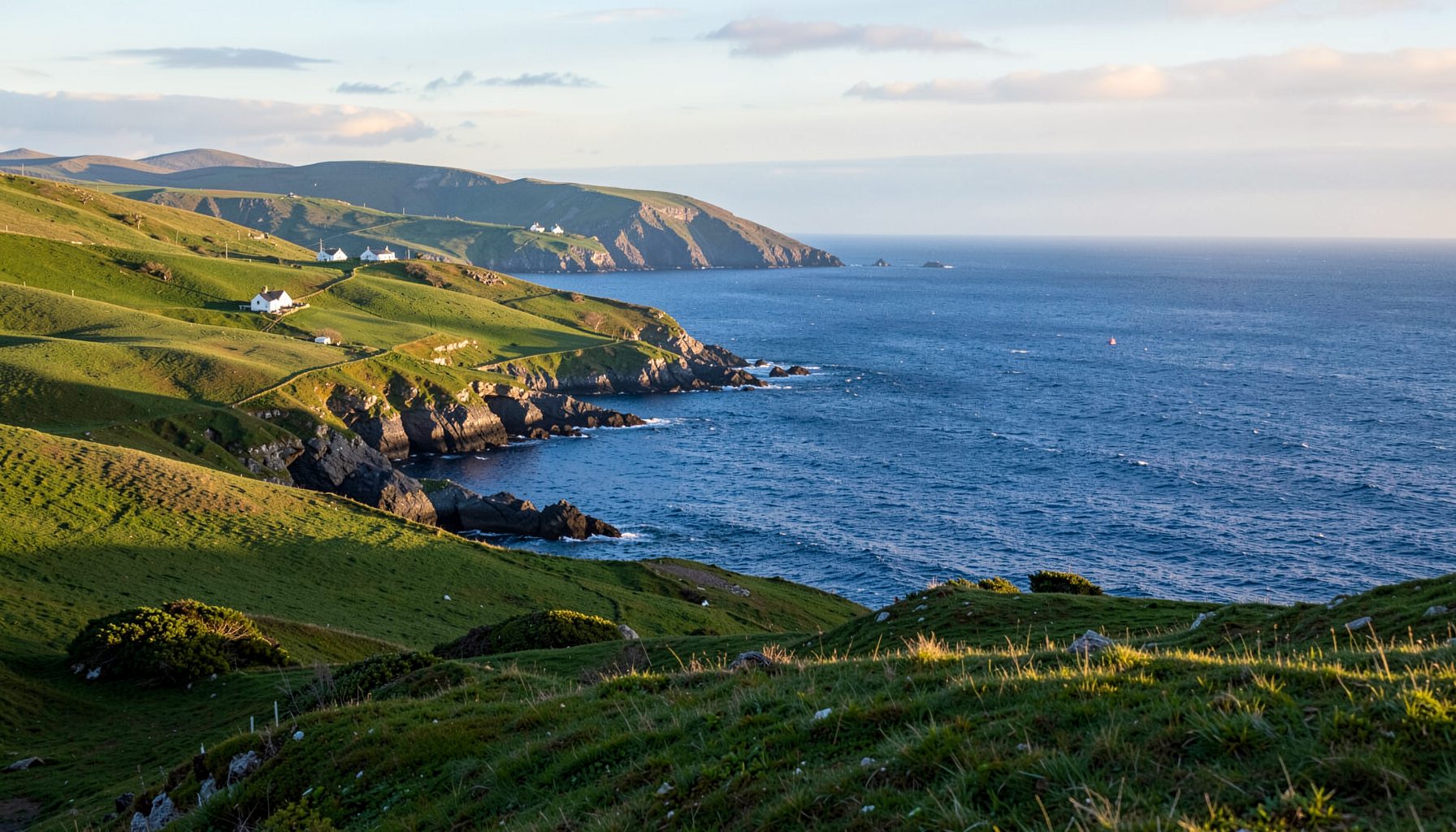
A ceramicist's life shaped by sea clays on the Skellig Coast
The Atlantic wind carries salt spray across the Skellig Coast, where the Iveragh Peninsula bends between Kells and Castlecove. Along this stretch of County Kerry, the rhythm of life moves with the tide, and a small but determined community of makers draws directly from the landscape. Among them, ceramicists work with raw clay pulled from coastal banks and weathered cliffs, turning geological memory into vessels, tiles, and sculpture.
Local clay bodies here carry minerals, kelp ash, and the faint iron-red of ancient seabeds. For the makers who settle into this remote corner of southwest Ireland, working with sea clays is a daily act of attention — to weather, to geology, and to the traditions of handcraft that long predate modern studios. The resulting work tends to be earthy, mineral, and deeply rooted in place.
Australian visitors who follow craft trails of their own — from the studios of Byron Bay to the Saturday makers' markets of Sydney's inner west, or the kiln rooms of Melbourne's Brunswick — often recognise something familiar in this exchange between maker and shoreline. Sea-based clays appear across both hemispheres, and the questions a potter asks on the Skellig Coast echo those asked in coastal New South Wales or along Tasmania's wild east coast.
Finding clay where the land meets the tide
The search for workable clay begins at low water. On the Skellig Coast, this means scrambling down to sheltered coves where freshwater streams meet the Atlantic and deposit fine silts. Local ceramicists return with buckets of grey-blue slip, sometimes mixed with crushed shell and decaying seaweed. The clay is laid out on plywood sheets to dry, broken into chunks, and then soaked again before sieving.
Wild Atlantic clays are famously unpredictable. They may carry too much salt, too much organic matter, or excessive silica grit. A ceramicist on the Iveragh Peninsula learns to read the colour, smell, and plasticity of each batch, blending in commercial ball clay or kaolin when the raw material refuses to behave. Seaweed ash, fired and crushed, occasionally replaces feldspar in a glaze recipe, pulling the finished surface closer to the surrounding headlands.
Coastal potters elsewhere share this same experimental relationship with place. By contrast, makers working in inland Australian studios near Bendigo or Adelaide rely on mined kaolin and stoneware blended in commercial depots, far removed from a shoreline collection walk. The Skellig potter's clay is heavier, more mineral, and often fired at lower temperatures because the body matures unevenly. The trade-off is a finished surface that feels unmistakably local.
| Property | Skellig Coast sea clay | Australian coastal clay (Byron, Tasmania) | Commercial inland kaolin blend |
|---|---|---|---|
| Source | Stream mouths, sheltered coves | Coastal cliffs, river estuaries | Mined and blended |
| Colour | Grey-blue to rust | Pale grey to red-brown | White to cream |
| Plasticity | Long, sticky, variable | Medium, variable | Predictable |
| Iron content | High | Variable, often moderate | Low |
| Typical firing range | Cone 6–8 | Cone 6–10 | Cone 6–10 |
| Surface character | Earthen, mineral, irregular | Earthen to smooth | Smooth, bright, uniform |
A studio shaped by salt and weather
The studios tucked behind cottages from Portmagee to Cahersiveen tend to be modest, often built into old stone outbuildings or purpose-built sheds with deep eaves. Salt is the constant enemy. Metal tools rust quickly, glazes pit if humidity climbs too high, and unfired work must be covered overnight against the Atlantic damp. A typical week involves several sessions at the wheel, two or three hand-building days, and at least one kiln firing when the wind drops.
Wheel-throwing on the Skellig Coast produces forms shaped by both clay and muscle memory. Bowls rise taller than inland equivalents because the local body has a long, sticky plasticity; plates flatten with more pressure because of the high iron content. Hand-built vessels, including coiled jugs and slab-built tiles, absorb the regional palette of bog brown, slate grey, and the orange bloom of kiln oxidation.
Australian ceramicists working in humid climates, particularly around Cairns or the subtropical edges of southeast Queensland, share some of these studio headaches. The same tendency for clay to sour and glazes to crawl in damp conditions shapes their routines. Yet where a Brisbane-based maker can drive to a well-stocked supplier for tests and adjustments, the Skellig potter orders materials by courier from Cork or Dublin and waits days for delivery.
Firing with the Atlantic's memory
Firing decisions on the coast lean towards wood and gas. Electric kilns are used for bisque work because they tolerate humidity and offer predictable temperatures, while final firings often happen in small wood-fired kilns built from secondhand brick. The aesthetic goal is a soft, irregular surface — flashes of ash, blushes from salt vapour, and the gentle darkening that comes from long, smoky reductions.
Glaze recipes for sea clay bodies favour local ash and iron. Blends of kelp ash, whiting, and silica produce a satin surface in pale green or warm cream. A bolder line of work uses iron oxide to pull deep rusts and blacks that echo the local cliffs after rain. Because the clay body itself contains so much iron, glazes must be tested slowly; one batch can look entirely different from another, even within the same kiln load.
In comparison, Australian makers working in coastal environments, particularly those inspired by the salt-glaze traditions of German and English potters, often install soda kilns or simple salt-firing setups. Studios at St Peters in Sydney use atmospheric firings that mimic some of the surface effects prized on the Skellig Coast. The chemistry differs — Australian clays tend to vitrify at higher temperatures — yet the appetite for unpredictability is similar.
Heritage, folklore, and the ceramic line
The Skellig Coast carries an unusually layered heritage. Skellig Michael, the UNESCO World Heritage Site offshore from Valentia Island, holds an early Christian monastery whose monks lived in beehive huts of dry stone. They shaped no clay of their own, but the island's geology — clay-rich slates, thin seams of weathered shale — has long drawn local builders and potters. Folklore along the coast speaks of "fairy clay" dug at certain tides, and older residents recall household pots made from local sources during periods of rural hardship.
Modern ceramicists on the Skellig Coast position their work within this longer arc. Some reference monastic simplicity in restrained forms; others draw on the curvilinear shapes of currachs (traditional fishing boats) and the rounded profiles of vernacular cottages. A handful collaborate with regional historians and the Kerry County Museum to ensure that older techniques — such as pit firing and the use of kelp ash as a flux — are documented for the next generation.
Australian parallels exist, particularly among Indigenous ceramicists and the communities along the Murray River who developed clay traditions long before European settlement. The work of makers like Judy Watson, or the intergenerational practice of Tiwi potters, demonstrates that clay in Australia is also a cultural document, not merely a raw material. Visitors familiar with these traditions tend to approach the Skellig Coast ceramicists with sharpened curiosity about provenance and process.
Selling, teaching, and the slow economy of place
Commercial life for a Skellig Coast ceramicist runs at a different pace than for urban makers. Sales come through weekend markets in Cahersiveen, selected galleries in Killarney, and the steady flow of summer visitors who follow the Ring of Kerry. Online orders reach across Ireland and into the United Kingdom, with shipping arranged through small parcel services rather than large freight contractors.
Workshops are central to the local craft economy. One-day hand-building sessions for visitors, longer courses for serious students, and school outreach programmes anchor the year's calendar. The audience often includes travellers from continental Europe, North America, and a steady flow of Australian visitors who have read about the region before arriving. Teaching keeps the studio financially viable and feeds the wider network of rural makers who share kilns, clay, and firing space.
For Australian ceramicists, the equivalent ecosystem includes craft fairs at the Royal Exhibition Building in Melbourne, weekend markets at The Rocks in Sydney, and the design-led retail networks of Adelaide's JamFactory. Consumer protections such as the Australian Consumer Law provide clear frameworks around refunds, warranties, and country-of-origin labelling, which shape how small studios present their work online. Skellig Coast makers operate under EU consumer rules and Irish revenue guidelines — including the reduced 13.5% VAT rate applied to most handmade craft — which offer their own structural advantages. Both systems recognise that authentic regional production benefits from clear, fair trading rules.
Whether the studio sits above Ballinskelligs Bay or in a Brunswick warehouse, the daily rhythm of a ceramicist working with sea clays is shaped by weather, geology, and an unhurried conversation with the tide. The Skellig Coast invites visitors to slow down, watch the kilns, and carry a small piece of the Atlantic home.
Visit the Skellig Coast during the summer season, drop into a Cahersiveen market, or book a half-day hand-building workshop with a coastal ceramicist to feel the clay beneath your own hands.