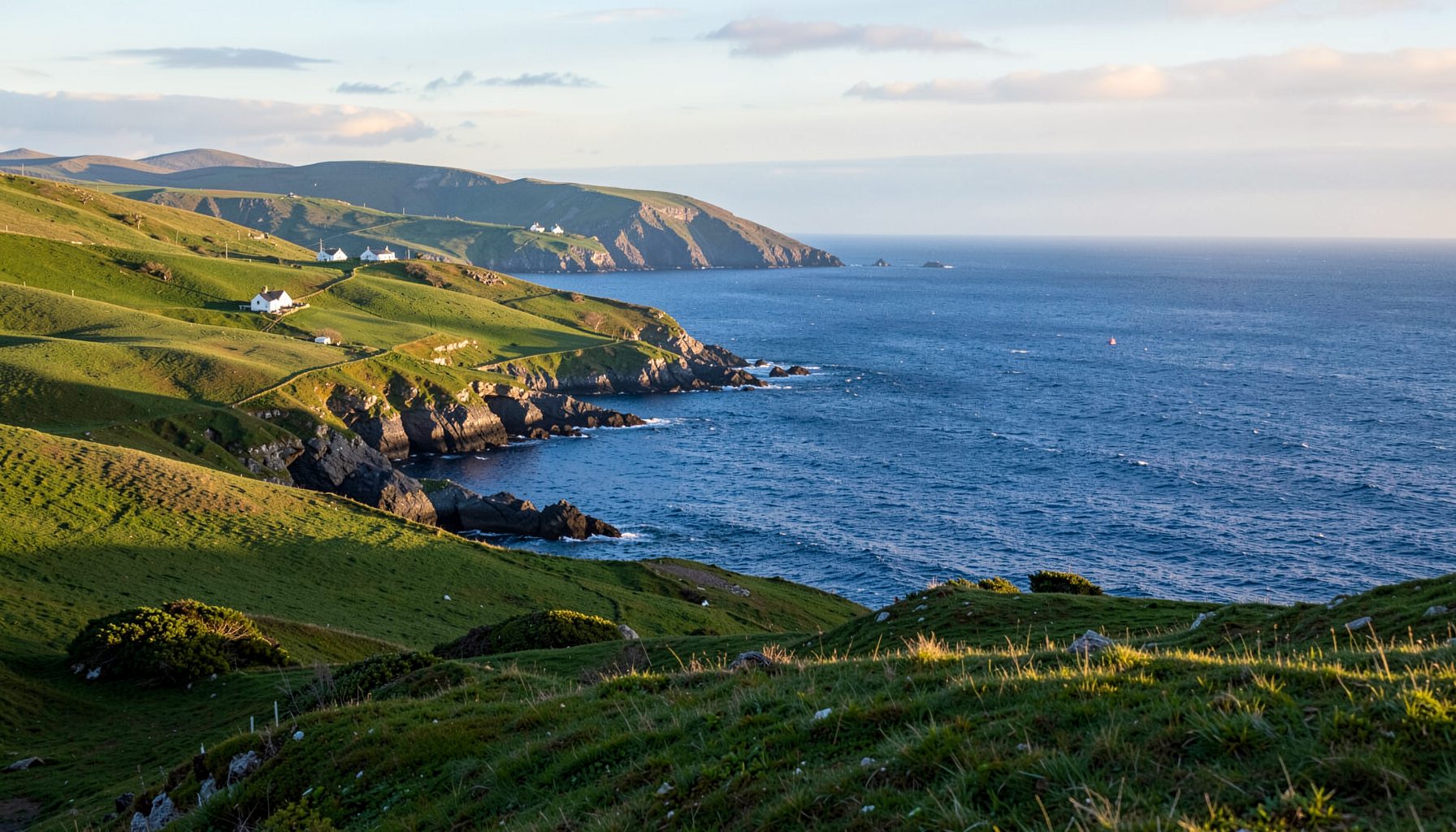
A Boat Builder’s Working Life on the Skellig Coast
A boat builder on the Skellig Coast works where land, sea and weather set the timetable. From Kells through Cahersiveen, Portmagee and Valentia Island to Castlecove, the workshop is connected to fishing grounds, sheltered coves, island crossings and generations of practical knowledge. Timber, fibreglass, rope and marine paint all have their place, yet the finished vessel must suit the Atlantic water outside the door.
The life of a local boat builder in the Skellig region is shaped by more than construction. It includes repairing a family’s small fishing boat, checking an outboard before a trip, discussing a hull design with a heritage group and helping a young person understand why a traditional craft moves safely through a rough swell. The work sits between skilled trade, coastal service and cultural stewardship.
For visitors from Australia, the setting may recall a quieter version of places such as Hobart, Port Fairy or the fishing communities around Fremantle, although the scale and weather are distinctly Irish. Here, a boat can be part of a livelihood, a community event, a rescue tradition or a story about the Skellig Islands. The builder’s workshop becomes a place where these strands meet.
Where the tide sets the schedule
A working day rarely follows a rigid nine-to-five pattern. A calm forecast can create a rush of jobs before the next change in wind, while a wet or stormy spell may shift attention from launching and sea trials to sanding, laminating and careful indoor repairs. Tide times matter when a boat needs to be moved, lifted or tested, and spring weather can alter plans in a few hours.
The region’s geography adds to the practical demands. A builder may serve customers from remote coves, island communities and villages linked by narrow roads. Delivering a finished boat or collecting a damaged one requires planning around trailers, ferry arrangements and suitable launching points. A repair that looks simple at the water’s edge can involve several trips between the slipway and the workshop.
Many boats are modest in size, built for local conditions rather than display. Small punts, currachs, dinghies and open fishing boats need to be stable, easy to handle and reliable in salt water. Their owners often know exactly how a vessel behaves in a particular bay, which gives the builder valuable information during design and repair.
Timber, fibreglass and inherited skill
Traditional boatbuilding begins with materials, but it depends on judgement. Timber must be selected for strength, flexibility and resistance to moisture. The grain, age and condition of a plank can affect how it bends around a frame. A builder learns to read these qualities through repeated handling, not simply from a manual or measurement chart.
Modern materials have changed the trade without removing its older knowledge. Fibreglass can extend the life of a hull and make maintenance easier, while marine plywood, epoxy and stainless-steel fittings offer dependable solutions for many repairs. Even so, a boat still needs a shape that suits its purpose. A vessel made for sheltered water should not be treated like one expected to face open Atlantic conditions.
Traditional currach construction is especially valuable as a lesson in economy and adaptation. The light frame, covered exterior and flexible form reflect a long understanding of local waters and available resources. Today’s builder may use power tools, digital plans and modern coatings, yet the central question remains familiar: how can this boat carry people safely and perform well in its environment?
A workshop built around practical decisions
The workshop is usually a place of constant movement. There may be a hull resting on supports, oars against a wall, rolls of cloth waiting for resin and a collection of carefully labelled fasteners. The smell of timber, paint and fuel sits alongside the sounds of planing, drilling and sanding. Cleanliness and ventilation are essential, especially when working with resins, solvents and dust.
A customer may arrive with a problem that cannot be described in technical language: the boat feels low at the stern, water gathers near a fitting, or the engine vibrates more than it used to. The builder investigates the symptoms, checks the structure and explains what should be repaired immediately. A trustworthy quote distinguishes essential safety work from cosmetic improvements.
The working week can include tasks such as:
- measuring a damaged frame and removing weakened timber
- replacing worn rivets, fittings, rails or transom sections
- preparing a hull for antifouling, repainting or relaunching
- arranging a sea trial with the owner in suitable weather
It also includes less visible responsibilities:
- ordering materials before seasonal demand peaks
- keeping tools maintained and the workshop safe
- recording repairs so future owners understand the boat’s history
- advising customers about storage, bilge care and winter preparation
For someone used to Australian boating, the rhythm has familiar elements. A boat owner in Sydney or Brisbane may book a service before summer, while a Skellig Coast owner often thinks about the months when wind, rain and short daylight make launching less appealing. In both places, prevention is cheaper and safer than waiting for a minor leak or loose fitting to become a serious failure.
Customers, markets and the coastal economy
A local builder serves several kinds of customer. Commercial fishermen need dependable equipment and quick, practical repairs. Leisure users may want a lighter dinghy for exploring an inlet. Community groups can require boats for demonstrations, rowing activities or heritage displays. Families sometimes bring in an old vessel that has emotional value even when replacing it would be easier.
The local economy is closely connected. A repair may involve a nearby engineer, sailmaker, chandlery, trailer operator or marine electrician. A boat launched for a community programme can support instructors, volunteers and local suppliers. During the busier visitor season, the builder may also hear questions about boat trips, island access and maritime history, even though the workshop itself is not a tour business.
The Cahersiveen market story offers useful context for understanding this local pattern. Markets bring together producers, craftspeople, residents and visitors, creating the kind of informal network in which a boat builder may find customers, exchange advice or hear about an upcoming community project. Trade on the Skellig Coast is often personal and connected rather than anonymous.
There is a clear comparison with Australia’s regional markets, from Hobart’s Salamanca Market to weekend stalls in regional Victoria. A direct sale is important, but so are conversations, reputation and repeat custom. In a small Irish coastal community, a builder’s workmanship is visible every time a repaired boat leaves a harbour, which makes trust one of the most valuable business assets.
Heritage that remains in use
Boatbuilding heritage is strongest when boats remain part of everyday life. A restored craft that is safely rowed, sailed or used in a local programme teaches more than one displayed behind a rope. It shows how tools, materials and local knowledge respond to weather, work and community needs.
The Skellig region’s maritime story is linked to islands, fishing, pilgrimage, transport and survival. Skellig Michael is best known as a UNESCO World Heritage Site and a Star Wars filming location, yet the wider coastal landscape also contains less celebrated knowledge: how people moved between inlets, maintained boats through winter and worked with limited resources. A builder helps preserve these practical stories through each frame repaired and each hull completed.
Learning hubs, outdoor programmes and cultural initiatives can give younger residents an opportunity to see the trade at close range. Measuring timber, preparing a surface or identifying safe lifting points can make heritage tangible. It can also reveal that traditional skills are technical disciplines requiring patience, accuracy and an understanding of materials.
For an Australian audience, this may be comparable to the preservation of wooden working boats in Tasmania or the continuation of Aboriginal and coastal craft knowledge through community-led teaching. The comparison should be made respectfully: each tradition belongs to its own people and environment. The shared point is that living skills survive when communities have reasons to practise them.
A trade with a future
The future of boatbuilding on the Skellig Coast will depend on balance. Traditional methods need time, suitable timber and experienced mentors, while modern customers expect efficient repairs, clear pricing and materials that withstand demanding conditions. Environmental responsibility is becoming more significant too, particularly in the handling of resins, paint, treated timber and old fibreglass.
Training can happen through apprenticeships, school visits, maker spaces, marine courses and supervised work on community boats. A young person may begin by sweeping and organising tools, then learn to sharpen an edge, read a plan, prepare a joint and understand why a repair has to be completed in a particular order. Confidence grows through repetition and careful correction.
| Aspect | Local boatbuilding | Mass-produced replacement |
|---|---|---|
| Design | Adapted to local water, use and owner | Usually based on standard specifications |
| Repair | Individual faults can be assessed and repaired | Damaged parts may be replaced as modules |
| Heritage | Carries regional techniques and stories | Reflects broad commercial production |
| Customer relationship | Built through local reputation and repeat contact | Often managed through a distributor |
| Environmental choice | Existing boats can be repaired and retained | New materials and transport are required |
A skilled builder may never produce a large number of boats each year, but output is not the only measure of value. Keeping a fishing vessel working, restoring a community craft or helping an owner understand safe maintenance strengthens the wider coastal system. The workshop contributes to local resilience in a way that is easy to overlook from outside.
The boat builder’s day ends with familiar routines: tools are cleaned, wet gear is hung up, materials are covered and the next tide or weather window is checked. Somewhere nearby, a repaired hull may be resting on a trailer, ready for its return to the water. That quiet preparation is part of the Skellig Coast’s living heritage.
Explore the villages, waterways, learning initiatives and maritime stories of the Skellig Coast to see how local skills continue to shape community life. Support regional makers, attend a heritage event, and take time to understand the people and working traditions behind the coastline’s most recognisable places.