Waterville Lake Hotel And Its Famous Guests
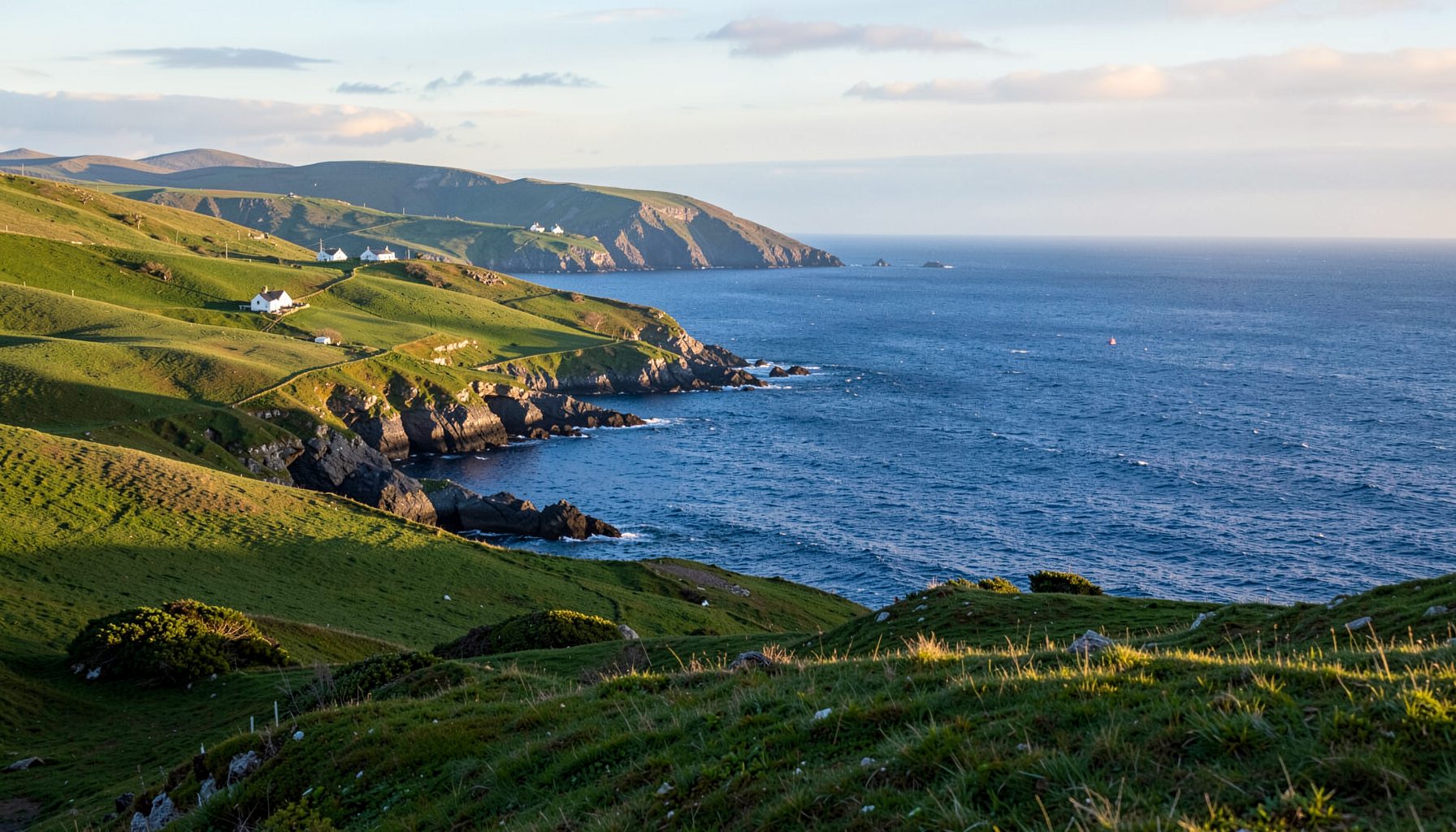
On the edge of Ballinskelligs Bay, Waterville developed as a small seaside settlement, a fishing community and a stopping place for travellers exploring the Iveragh Peninsula. Its position between the Atlantic Ocean and Lough Currane gave the village a distinctive appeal: visitors could enjoy coastal scenery, mountain landscapes, angling, boating and the social life of a traditional Irish resort.
The Waterville Lake Hotel belongs to this story of changing travel. It reflects the period when improved roads, rail connections and touring holidays brought visitors from Dublin, Britain and further abroad to County Kerry. The hotel became part of the local hospitality tradition that still shapes Waterville, alongside the Butler Arms Hotel, cafés, pubs, galleries and community businesses.
Its best-known association is with Charlie Chaplin, whose family returned to Waterville for many summers. Yet the broader history includes Victorian holidaymakers, artists, political figures, golfers and modern film and entertainment personalities. The hotel’s story is therefore connected to both the everyday life of the village and the international reputation of the Skellig Coast.
| Period | Role in Waterville’s story | Notable associations |
|---|---|---|
| Nineteenth century | Growth of coastal tourism and hotel accommodation | Victorian touring, fishing and scenic travel |
| Early twentieth century | Waterville as a resort and stop on the Ring of Kerry | Angling, boating, social visits and motor touring |
| 1950s–1970s | International recognition through returning visitors | Charlie Chaplin and his family |
| Late twentieth century | Expansion of celebrity, sporting and cultural tourism | Golfers, actors and entertainers |
| Today | Heritage, community life and visitor information | Chaplin heritage, Lough Currane and the wider Skellig Coast |
A Hotel Shaped By The Coast
Waterville’s location explains much of its early success as a holiday destination. Lough Currane lies immediately behind the village, while the Atlantic opens out in front of it. Travellers could combine sea air, lake fishing and mountain views without moving far from their accommodation. In the nineteenth century, that combination was a strong attraction for visitors seeking health, recreation and picturesque scenery.
The hotel trade grew as travel around the Ring of Kerry became easier. Roads remained demanding by modern standards, but touring parties, private car owners and organised excursions gradually made the peninsula more accessible. A lakeside hotel offered a comfortable base for exploring the coast, visiting nearby villages and arranging fishing trips on Lough Currane.
Historical references to the Waterville Lake Hotel are sometimes mixed with accounts of other Waterville establishments, particularly the Butler Arms. Hotel names, ownership and functions changed over time, and local records do not always describe the same building in identical terms. That is why the wider setting is important when tracing the hotel’s development.
Victorian Visitors And The Rise Of Tourism
In the Victorian and Edwardian periods, visitors were drawn to Kerry by its dramatic landscapes and the growing fashion for scenic travel. The Skellig coast appealed to people who wanted something wilder than an established spa town. Waterville provided a compact village setting where guests could hire boats, fish, walk along the shore and travel towards Cahersiveen, Sneem or the mountain passes.
The lake was a particularly valuable feature. Lough Currane has long been known for salmon and trout fishing, and visiting anglers contributed to the local economy. Guides, boatmen, car drivers, shopkeepers and hotel staff all benefited from the seasonal trade. This pattern remains familiar today, although the visitor economy now includes heritage tours, outdoor activities, food businesses and digital information services.
For Australian visitors, the scale of the landscape can be surprising. Waterville is much smaller than Sydney, Melbourne or Brisbane, yet it occupies a setting with the visual drama Australians may associate with the Great Ocean Road, Tasmania’s west coast or parts of regional New South Wales. The difference is that Irish villages often place historic pubs, churches and homes close together, creating a very walkable centre.
From Grand Tours To Motor Touring
The arrival of motor touring changed the way people experienced the Ring of Kerry. Instead of depending entirely on horse-drawn transport or organised excursions, visitors could follow scenic roads at their own pace. Waterville became a natural overnight stop, positioned on a route that linked several of the peninsula’s major viewpoints and coastal settlements.
Hotels had to serve both the social expectations of traditional guests and the practical needs of motorists. Dining rooms, lounges, local information, fishing arrangements and access to the road all became part of the experience. A hotel was more than a bed for the night: it was a meeting place where visitors heard about weather, road conditions, fishing prospects and village events.
This role helps explain why the history of the Waterville Lake Hotel cannot be separated from the history of the town. Its guests encountered a working community rather than an isolated resort. The hotel relied on local suppliers and employees, while its visitors supported shops, transport operators, pubs and activities across the area.
Charlie Chaplin And His Waterville Summers
Charlie Chaplin is the name most strongly associated with twentieth-century Waterville. The silent-film star first visited in 1959 with his wife, Oona, and their children. The family returned for several summers, creating a personal connection with the village that has lasted well beyond Chaplin’s death in 1977.
Chaplin valued Waterville for its privacy, scenery and unhurried atmosphere. He could walk, fish and spend time with his family away from the intense public attention surrounding his film career. Local stories describe him as approachable and courteous, although the community also understood the importance of giving a famous guest room to enjoy ordinary life.
The Chaplin connection is commemorated by the bronze statue on the seafront, which depicts him in a familiar pose with walking stick and bowler hat. The annual Charlie Chaplin Comedy Film Festival has further developed the relationship between the actor and the village. These events connect film heritage with local participation, bringing screenings, performances and visitors into the centre of Waterville.
Other Famous Names And Public Figures
Chaplin’s visits made Waterville internationally recognisable, but he was not the only well-known person linked with the area. The hotel tradition attracted artists, politicians, sportspeople and entertainment figures who appreciated the scenery and relative seclusion. Accounts of visitors can vary according to whether they refer to the Waterville Lake Hotel, the Butler Arms or other local accommodation.
The Butler Arms Hotel is especially important in the public memory of celebrity visits. Its own history reaches back to the late nineteenth century, and it has long been associated with Chaplin and other prominent guests. This is why popular accounts sometimes use the names of Waterville hotels interchangeably, even though they represent separate establishments and periods of ownership.
The wider celebrity history also includes visitors connected with golf and international entertainment. Waterville Golf Links, established on the coast and later recognised as a leading links course, brought another stream of famous guests to the district. Their presence strengthened Waterville’s profile among travellers interested in sport, landscape and luxury touring.
For the Australian market, this blend has a familiar appeal. Australians often plan European holidays around famous drives, golf courses, film locations and heritage towns, just as visitors might combine the Great Ocean Road with a regional food trail or a Sydney cultural weekend. Waterville offers those interests in a smaller, more local setting.
The Hotel In Local Memory
Hotels are often remembered through stories rather than complete architectural records. A guest’s arrival, a fishing trip on the lake, a conversation in the lounge or an unexpected meeting with a film star can become part of community memory. These stories help explain why historic accommodation matters even when buildings have been altered, renamed or repurposed.
In Waterville, the hotel story sits alongside memories of fishing families, seasonal workers, musicians, shopkeepers and people who travelled the coast before mass tourism. The famous names attract attention, but the enduring character of the place comes from the relationship between visitors and residents. Hospitality was a local skill shaped by weather, distance and the need to make travellers feel welcome.
This perspective also prevents the past from becoming a simple celebrity narrative. Chaplin’s visits are valuable because they reveal something about Waterville’s atmosphere: a quiet coastal village capable of offering privacy, beauty and genuine community contact. The same qualities continue to attract visitors who may know little about the hotel’s history before arriving.
Preserving The Waterville Story Today
The heritage of the Waterville Lake Hotel should be read as part of a larger Skellig Coast landscape. Nearby attractions include Lough Currane, the Atlantic shoreline, the Kerry Dark Sky Reserve and routes towards Valentia Island, Cahersiveen, Portmagee and the Skellig Islands. The area’s history includes monastic heritage, maritime travel, fishing, farming and modern tourism.
Skellig Michael, a UNESCO World Heritage Site and a filming location for the Star Wars saga, has brought new international attention to the region. Visitors often arrive because of the island, then discover that the mainland communities provide much of the context: boat operators, heritage interpreters, cafés, accommodation providers, community groups and local guides.
Preservation also depends on responsible visiting. Weather can change quickly, roads are narrow in places and access to offshore sites is controlled by conditions and conservation requirements. Australian travellers accustomed to booking around school holidays, using Australian dollars and covering long distances by car should allow extra time for Irish roads and check local transport arrangements before setting out.
The strongest way to experience Waterville’s hotel history is to combine the known record with the living village. Walk the seafront, look for the Chaplin statue, learn about local businesses and speak with community organisations when opportunities arise. The past remains most meaningful when it is connected to the people and places that continue the story.
Plan a visit to Waterville as part of a wider journey through the Skellig Coast. Explore its lake and shoreline, discover the heritage of the Ring of Kerry, and use local community information to understand the area beyond its famous views. The history of its hotels is an invitation to slow down and see how travel, landscape and village life have shaped one another across generations.