Valentia Island's Slate Quarries and the Stone That Built an Empire
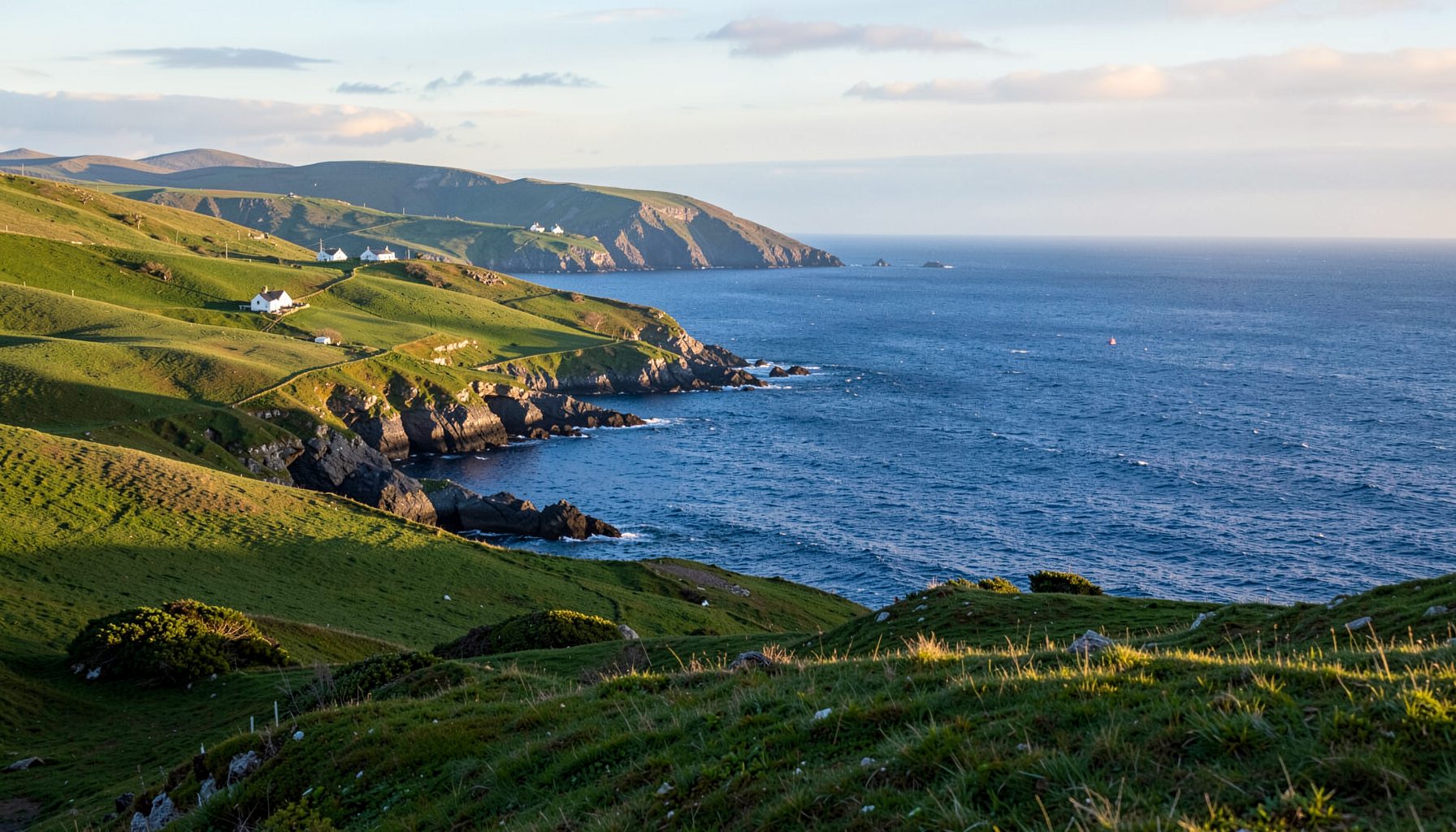
Off the southwestern edge of Ireland's Iveragh Peninsula, reachable by a bridge that hums with Atlantic wind, Valentia Island guards a remarkable nineteenth-century story cut into its cliffs. The slate quarries here, abandoned above the slate-grey waters of Beginish Island sound, once fed building sites across Britain and shaped the lives of thousands of workers. For an Australian audience accustomed to the mining heritage of Broken Hill, Ballarat and the Tasmanian highlands, the Valentia workings offer an unexpected kinship: a story of stone, skill and migration that resonates far beyond the Ring of Kerry.
The quarries opened in the early 1800s and produced slate of exceptional quality, distinguished by its dark blue-grey colour and ability to be split into thin, durable layers. At their peak, the workings were among the most productive in the British Isles, and the stone they yielded travelled by sea to harbours from Cork to Liverpool. Visitors arriving on Valentia today can trace the coastal tracks that once carried blocks to the waiting schooners, and the same harbour stones still serve the small fishing fleet that works from the island's pier.
What makes the Valentia slate especially striking is the role it played in some of the most ambitious building projects of the Victorian age. In an era when Australian colonies such as Victoria and New South Wales were also booming with construction of their own, the quarry's reputation stretched across the British world. That connection to global building ambition gives the site a relevance well beyond its bog-streaked, heather-grazed setting.
The quarry's story, though, is not only about stone. It is also about the workers who cut it, the engineers who organised it and the quiet pivot that happened when slate gave way to a different kind of cable in the 1860s. Walking the headland paths now, visitors can sense both chapters in a single landscape.
The opening of the quarry and its early ambitions
Valentia slate was first quarried in a small way in the early nineteenth century, but it was the granting of a lease in 1816 that marked the real beginning of industrial-scale extraction. A local landlord, aided by English backers, recognised that the island's exposed beds of fine-grained slate could rival the famous quarries of North Wales. Within a decade, dozens of men were employed on the western cliffs, and a small settlement of quarrymen had grown around the workings.
The slate itself was prized for its colour and its cleanness of split. Whereas much Irish slate of the period was coarse and uneven, the Valentia stone could be cut into uniform roofing slates and into larger slabs suitable for billiard tables, school desks and cemetery surrounds. That versatility, combined with the reliability of the nearby sheltered harbour at Knightstown, allowed the operation to flourish through the 1820s and 1830s.
Transport was the constant challenge. Blocks had to be dragged by pony along tracks cut into the hillside, then lowered onto small boats that ferried them out to larger vessels anchored in the sound. The system was laborious, and during winter gales ships often waited weeks for a safe loading. Nonetheless, by the late 1830s Valentia slate was a recognised name among builders in London, Cork and beyond, and its reputation helped fuel continued investment.
Slate that roofed an empire
The most famous single contract won by the Valentia quarry involved the rebuilding of the Palace of Westminster in London after the fire of 1834. Charles Barry's new Houses of Parliament demanded enormous quantities of durable roofing material, and the Valentia operation secured a major share of the order. Shipments continued for years, and the distinctive dark tiles still cap the building today, blending into the London skyline just as they once did when unloaded from Kerry schooners.
This imperial reach has a familiar echo for visitors from Australia. The Victorian architecture of central Melbourne, the sandstone-and-slate roofs of Sydney's older civic buildings, and even parts of Adelaide's nineteenth-century streetscapes drew on similar networks of imperial trade. Welsh slate, in particular, was used across the Australian colonies, and many of the quarrymen who supplied it emigrated to places like Castlemaine, Bendigo and the copper districts of South Australia. The Valentia story therefore sits within a wider British-world industry that shaped towns from Cardiff to Kalgoorlie.
By the 1840s, Valentia was exporting not only roofing slates but also flagstones, kerbstones and chimney pieces. Craftsmen on the site learned to cut, split and dress stone with a precision that impressed visiting architects. The quarry's owners built modest houses for skilled workers and imported machinery to improve ventilation in the deeper cuts, foreshadowing the more mechanised mining that would transform Australia during its own gold rushes.
Working lives inside the rock
Quarrying on Valentia was physically punishing. Men began before dawn, descending narrow ladders into the open cuttings with only candles and lanterns for light. The work was seasonal at first, with the busiest months running from spring through early autumn, but as demand grew, year-round shifts became common. Wages were paid partly in cash and partly in kind, and the quarry company ran a small shop that supplied tea, tobacco and basic groceries.
Communities formed around these rhythms. Children helped sort smaller stones, and women took in washing and ran lodging houses for travelling masons. Songs in both Irish and English drifted across the site during breaks, and friction sometimes flared between native islanders and English-speaking managers imported to oversee production. Despite the hardships, the quarry offered steady employment at a time when rural Kerry offered little else, and it kept many families from emigrating during the worst years of the post-Famine decades.
Australian readers will recognise echoes of this pattern in the histories of their own mining towns. Whether in the slate districts of Tasmania, the goldfields of Ballarat or the opal fields of Coober Pedy, immigrant communities built schools, chapels and friendly societies on the back of hard rock. The Valentia quarry, smaller and earlier than most of those, is nonetheless part of the same human story of migration, skill and adaptation to a tough environment.
The cable station and a new chapter
The quarry's working life began to fade in the mid-nineteenth century as cheaper Welsh slate flooded the market and shipping costs rose. By the 1850s, output had fallen sharply, and many of the experienced cutters had already drifted away. What saved Valentia from complete economic collapse was a technology that had nothing to do with roofing.
In 1857 the island became the European terminus of the first successful transatlantic telegraph cable, laid from Foilhommerum Bay to Heart's Content in Newfoundland. A second cable followed in 1865, and a third in 1866. The old quarry roads, already cut deep into the cliffs, were repurposed to carry cable drums down to the landing point, and former quarry workers found new employment as cable jointers, electricians and linesmen. Valentia's place in world communications was assured.
For visitors interested in the broader heritage of the Skellig Coast, this pivot from stone to signals is one of the most rewarding threads to follow. The cable station at Foilhommerum is now a small museum, and the path there passes both disused quarry faces and the foundations of the cable engine houses. Reading the landscape in this way brings together two seemingly different industries and reveals how a single stretch of coast reinvented itself across a single generation.
What remains on the island today
Most of the Valentia quarry closed for good in the early twentieth century, although small-scale extraction continued for local building work for some decades afterwards. The main cutting is now a dramatic gash in the hillside, partly flooded and edged by crumbling stone walls. Interpretation panels, installed with support from local heritage groups, explain the history, and walking trails link the quarry to the cable station and to the nineteenth-century viaduct that once carried slate across a small valley.
The island's heritage status is increasingly recognised, and the quarry is one of several sites along the Skellig Coast that benefit from UNESCO attention through the listing of nearby Skellig Michael. Visitors who come for Skellig's monastic ruins often find themselves spending an extra day exploring Valentia, drawn by the slate story and by the cable station. Cross-ferry connections to Portmagee and overland routes through Cahersiveen make the site accessible for those touring the Ring of Kerry.
Heritage tours in the area typically combine the quarry with the Glanleam Marble Factory, the slate-cutters' cottages and the island's nineteenth-century lighthouse. Local guides, many of whom can trace their own ancestry to quarry families, give a vivid sense of working life underground. For Australians planning a wider trip that might also include Ireland's other slate regions, the Valentia site offers an accessible and well-signposted starting point.
Come and trace the path from stone to signal along one of Ireland's most striking coastlines. Plan your visit to Valentia Island through the Skellig Coast information hub, where you can find walking maps, ferry timetables and listings for heritage events running throughout the season. Whether you arrive from Sydney, Hobart or further afield, the slate quarry's story is one that waits patiently to be read in its Atlantic setting.