Manor houses and big houses around Kenmare Bay through the centuries
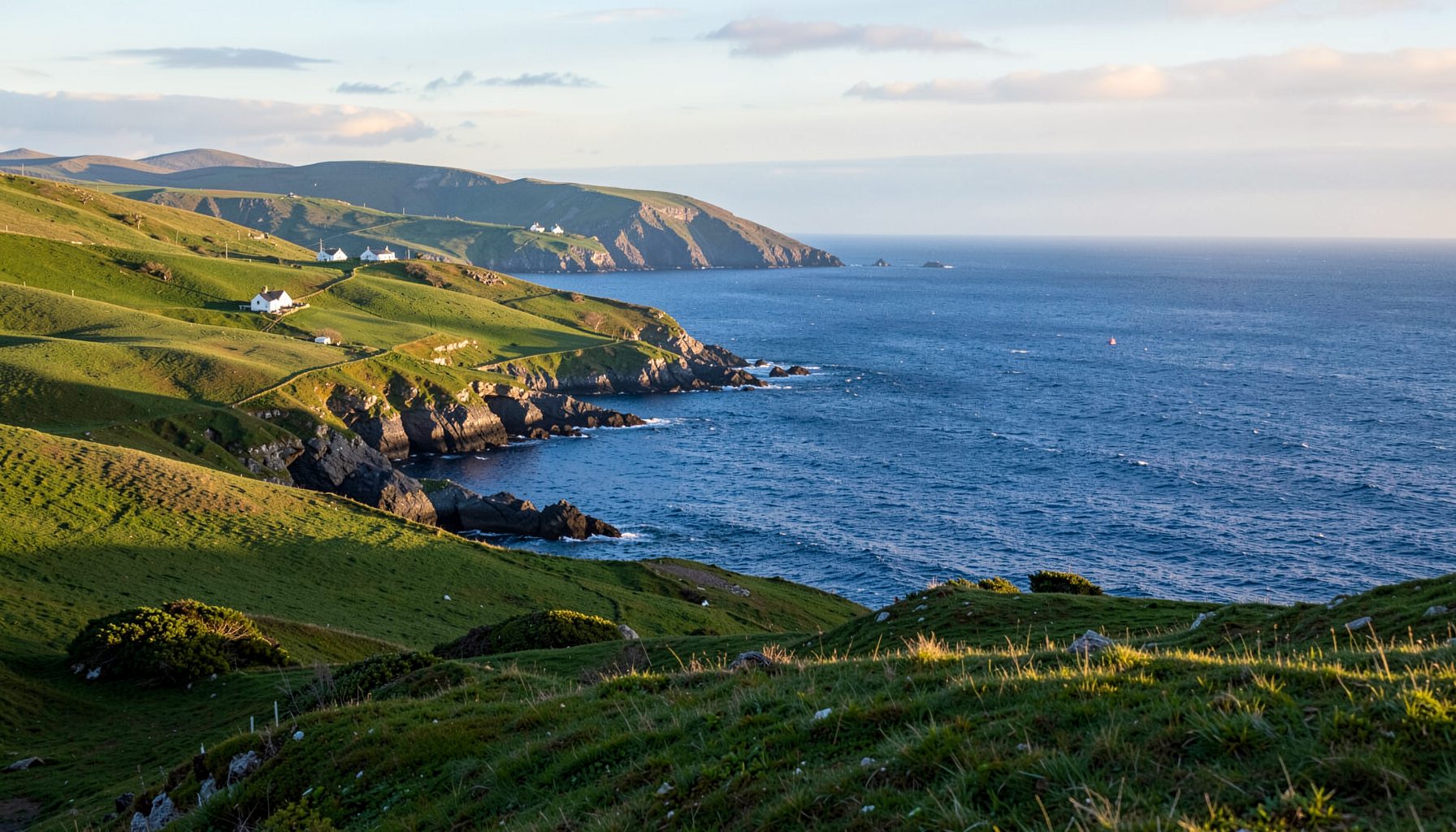
The Iveragh Peninsula cradles Kenmare Bay in a broad sweep of stone, water, and heather, and scattered along its shores sit the remnants of estates that once shaped life in this remote corner of Kerry. These big houses, as locals still call them, range from fortified tower houses clinging to rocky outcrops to sprawling Victorian mansions set behind stone walls and rhododendron hedges. Walking past their gated drives today, visitors encounter a layered history written into every limewashed façade and overgrown avenue.
For travellers arriving from Australia, the manors around the bay offer a chance to trace the roots of a diaspora that shaped cities like Melbourne, Sydney, and Adelaide. Hundreds of thousands of Australians carry Kerry surnames, and many make the long journey via Singapore or Doha to walk the lanes their forebears left behind. The bay's estates tell stories of landlords and tenants, of famine and emigration, themes that resonate strongly in Australian colonial history, where grand homesteads such as Rippon Lea in Elsternwick rose on similar patterns of land, labour, and inherited wealth. It is the kind of heritage travel that suits the Australian appetite for slow, meaningful journeys, the sort of trip where having a yarn with a local publican matters as much as ticking off the big sights.
Plantation foundations and early strongholds
The story of the big houses begins not with elegance but with confiscation. During the Elizabethan era, the Desmond Rebellions led to the systematic seizure of land across Munster, and the shoreline of Kenmare Bay was divided among English Protestant settlers brought in to plant the territory. Tower houses such as Dunkerron and the older fort at Blackwater were adapted or rebuilt by newcomers who needed defensible homes in a contested landscape. The Browne family, elevated eventually to the title Baron Kenmare, established their seat near the bay's head and held it for over three centuries.
These early holdings were working estates rather than pleasure grounds. Their owners drew income from cattle, fisheries, and the rents of tenant farmers who scratched a living from the thin mountain soil. The contrast between the household's relative comfort and the hardship of the cabins just beyond the demesne wall set a pattern that would define Kerry life for generations. Australian visitors familiar with the layered inequalities of colonial pastoral runs will recognise the dynamic immediately, though the Irish version carried the added weight of religious division and penal laws that limited Catholic landownership well into the nineteenth century.
The heyday of the Anglo-Irish gentry
By the late eighteenth century, a new confidence had settled on the Protestant gentry of Kerry. The Penal Laws were easing, trade was expanding, and the British connection brought both capital and fashion. The Petty-Fitzmaurice family, the Marquesses of Lansdowne, became the dominant landowners along the bay through marriage and purchase, and their influence shaped the town of Kenmare itself, which was laid out on a grid of streets that still bears their imprint. Their principal seat, Kenmare House, stood at the heart of a demesne that employed dozens of servants and tradesmen.
This was the golden age of the Irish country house, when families travelled between London, Dublin, and their Kerry estates with the ease of later commuters. They commissioned architects from the Pale, filled their libraries with Enlightenment volumes, and hosted hunts and assemblies that filled the county's social calendar. The wealth flowed from the land, of course, but also from timber, mining, and later, tourism itself, as the Romantic movement encouraged wealthy Victorians to seek the sublime in places like Killarney and the Ring of Kerry. The Lansdowne influence remained strong into the early twentieth century, long after most Anglo-Irish families elsewhere had sold up or departed.
Architecture, gardens, and the designed landscape
What survives around the bay reflects the taste of successive generations. The earliest buildings follow the defensive vernacular of tower houses, with thick walls, narrow windows, and corner turrets. Later additions introduced Georgian symmetry, sash windows, and cut-limestone doorcases that signalled belonging to a wider European polite culture. By the Victorian period, architects were called in to remodel older houses in the Scottish Baronial or Italianate styles, adding battlements, conservatories, and sprawling ranges of servants' quarters.
Landscape design followed a parallel arc. The formal gardens of the Georgian gentry gave way to the sweeping parkland of the Romantics, with artificial lakes, follies, and carefully framed vistas across the bay. Derreen House, south of Kenmare, remains the most spectacular survivor, its woodland garden covering more than twenty hectares with Himalayan rhododendrons, tree ferns, and giant Californian redwoods planted by the fifth Marquess of Lansdowne in the 1870s. For visitors used to the manicured colonial gardens of places like the Fitzroy Gardens in Melbourne, Derreen offers a wilder, more theatrical version of the same nineteenth-century impulse to tame nature through careful design.
Famine, land war, and social upheaval
The Great Famine of 1845 to 1852 fell hardest on the tenants of the big houses, not on the families who owned them. Around Kenmare Bay, as across Kerry, landlords struggled with collapsing rents, mounting poor rates, and the terrible choice between charity and eviction. Some, like the Kenmare estate, undertook major relief works and supported emigration schemes that eventually depopulated entire townlands. Others cleared tenants to consolidate holdings into larger, more profitable farms. The experience echoes in Australian memory of drought and rural depopulation, though the Irish catastrophe was swifter and more total.
The Land War of the 1870s and 1880s transformed the political landscape. The rise of the Land League, agitation by figures such as Michael Davitt, and a series of landmark acts in Westminster gradually shifted ownership from landlord to tenant. By the early twentieth century, many of the old families had sold their Kerry estates, broken by taxation, debt, and the simple arithmetic of a changing economy. The manor houses entered a long, slow decline that accelerated after independence.
Decline, burning, and the long quiet
The War of Independence and the Civil War left their mark on the great houses of Kerry. Several were occupied by republican forces, some were burned as symbols of British rule, and others were simply abandoned as families retreated to England or found cheaper houses elsewhere. The Lansdowne connection survived longer than most, but by mid-century the great days were over. The original Kenmare House was demolished, Dromore Castle fell into ruin, and only a handful of estates remained in continuous family occupation.
The second half of the twentieth century brought a new relationship with these buildings. Some were converted into hotels, guest houses, or private homes, while others were left to crumble in the rain. Heritage bodies, local communities, and a handful of dedicated owners began the slow work of preservation. Derreen's garden, for instance, is now managed by the Office of Public Works and opens to the public throughout the season, a quiet triumph of conservation that keeps a fragile landscape alive.
The big houses today: heritage, ruins, and renewal
Modern visitors to Kenmare Bay find a landscape dotted with fragments rather than fully intact estates, but that partial survival has its own appeal. Dromore Castle still rises above its lake, roofless and atmospheric, while the grounds of the old Lansdowne demesne frame the southern approach to Kenmare town. Derreen's gardens offer a day of gentle walking among exotics, and the town itself holds a fine heritage trail that explains the origins of its broad streets and stone bridges.
For travellers planning their time, a few suggestions help bring the story together and connect the bay's historic houses with the wider heritage of the region.
Ways to explore the historic estates
- Spend a full morning at Derreen House and its woodland garden, allowing time for the longer rhododendron walks.
- Drive the Roughty valley to view Dromore Castle from the lake shore, then continue to the ruins at Dunkerron.
- Walk the Kenmare Heritage Trail, which links the town's Georgian architecture to the broader history of the Lansdowne estate.
- Visit the Kerry County Museum in Tralee for context on landlordism, famine, and the Land War before exploring the bay.
- Book a guided heritage tour with a local historian who can read the landscape and its surviving buildings.
The story of the manor houses and big houses around Kenmare Bay is not really about bricks and mortar. It is about the people who built them, the communities who worked their fields, and the descendants who scattered across the world, from Boston to Brisbane. Many Australian visitors arrive carrying fragments of this story in family names and oral tradition, and the bay offers a place to piece those fragments together. To learn more about the communities and heritage sites of the wider region, take a closer look at about the Skellig Coast and start planning a journey that brings centuries of history within reach.