The history of local landlord estates and their impact
Across the Skellig Coast, landownership shaped far more than the appearance of a few large houses. From Kells and Cahersiveen to Waterville, Valentia, Ballinskelligs and Castlecove, estates influenced rents, roads, harbours, markets, housing, employment and access to natural resources. Their history is closely connected with the wider story of the Iveragh Peninsula, where small farms and scattered villages developed alongside large holdings controlled by landed families.
The word “estate” can suggest a single mansion surrounded by parkland, but an Irish landed estate was usually a complex economic and social organisation. It might include town plots, farms, mountain commonage, bogland, woodland, fishing rights and houses occupied by tenant families. Agents collected rents and managed leases, while tenants cultivated the land, paid charges and carried much of the practical responsibility for improving it.
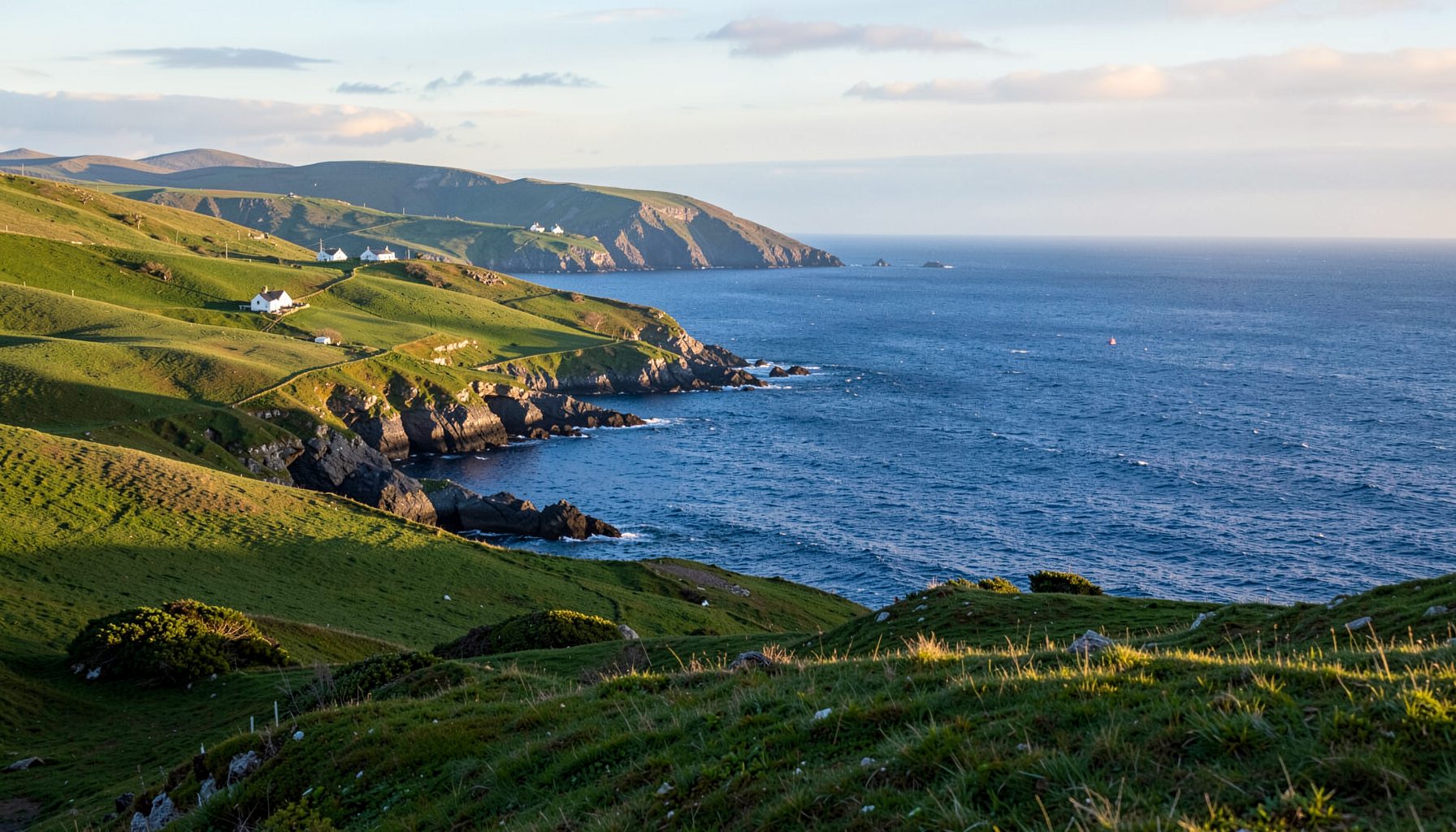
This legacy is visible in surviving demesnes, estate walls, planned streets, old leases, ruined cottages and local place names. It is also present in family memories and community debates about ownership, eviction, poverty and land redistribution. Understanding these estates helps explain why certain settlements grew where they did and why the rural landscape of the Skellig Coast has such a distinctive character.
Landownership before the great estates
The medieval and early modern land system in Kerry was shaped by Gaelic lordships, English administration, military conflict and successive confiscations. Families connected with the MacCarthy and O’Sullivan territories held influence across parts of south-west Ireland, while religious houses and smaller landholders also possessed property. Political control changed repeatedly, especially during the Tudor reconquest and the seventeenth-century wars.
The Cromwellian and Williamite settlements transformed ownership patterns. Land was confiscated from Catholic and Gaelic families and granted or sold to new Protestant proprietors. These changes created the foundation for many later landlord estates. Ownership was rarely simple: a titled family might hold a large estate through inheritance, marriage or purchase, while middlemen and local agents managed individual farms and town properties.
By the eighteenth century, the system had become firmly established. Most rural families in the region did not own the land they worked. They held it through leases or yearly tenancies, often with limited security. Some leases were comparatively stable and allowed families to build houses or reclaim marginal ground. Others left tenants vulnerable to rent increases, arrears and the decisions of an absentee or financially troubled landlord.
The Kenmare and Lansdowne connections
The Kenmare estate was among the most significant landed interests in south Kerry. Associated with the Browne family, later the Earls of Kenmare, it extended across a substantial area around Kenmare and into parts of the wider region. The estate affected urban development, agricultural organisation and the management of woodland, roads and shore-related resources. Kenmare town’s layout and architectural character retain evidence of planned development under estate influence.
Further west, the Lansdowne estate became particularly important in parts of the Iveragh Peninsula. The Petty-Fitzmaurice family, whose principal title was the Marquess of Lansdowne, held extensive lands in Kerry. Their properties included rural townlands and holdings near areas now associated with Waterville and the southern coast. The estate’s administration influenced leases, rent collection, improvements and responses to hardship.
Valentia Island followed a somewhat different pattern, with ownership linked to the Knight of Kerry and other landed interests over time. Estate control there affected agricultural holdings, quarrying, communications and the relationship between the island’s settlements and its coastline. These estates were not identical in their policies or financial circumstances, so local experiences could differ sharply from one townland to the next.
How estate management shaped everyday life
Landlords and their agents had considerable influence over the physical organisation of the countryside. They could regulate the subdivision of farms, approve building work, encourage drainage or reclamation, and decide whether cottages, roads or bridges were constructed. Estate villages often had more regular plans than older settlements, with houses arranged along a main street or around a green.
The system could bring investment, especially when an owner believed that improvements would raise rents or strengthen the estate’s long-term income. New roads connected farms to markets, while piers and harbours supported fishing, trade and communication. Some landlords sponsored schools, churches, dispensaries or relief works. Estate workers, masons, carpenters, gardeners and boatmen might find employment connected with a demesne or local improvement scheme.
These benefits existed within a deeply unequal relationship. Tenants paid rent for land they had often reclaimed and improved themselves, and rent arrears could become a serious threat. Subdivision among growing families reduced the size of holdings, while poor soils and exposed weather limited productivity. A landlord’s willingness to grant a long lease could provide security; a short tenancy offered little protection when economic conditions changed.
Estates and the Great Famine
The Great Famine exposed the weaknesses of the rural economy with devastating force. On the Skellig Coast, as elsewhere in Kerry, many families depended heavily on the potato, had limited savings and occupied small holdings. Crop failure was followed by hunger, disease, emigration and the loss of livestock. Estate policies played an important role in determining how communities experienced this crisis.
Landlords varied in their response. Some funded relief, supported soup kitchens, advanced money for public works or tried to retain tenants through a period of falling rents and rising costs. Others were themselves heavily indebted and struggled to meet obligations connected with mortgages and estate management. Where landlords lacked resources or were absent, the burden on agents, local committees and public relief systems became especially severe.
Evictions occurred when rents went unpaid, though the scale and circumstances differed between estates. Some removals involved families whose holdings were consolidated into larger farms; others followed the closure of unviable cabins or the clearing of land. Assisted emigration was sometimes presented as a solution, but departure could be coercive in practice, particularly when people had no realistic means of remaining.
The demographic consequences lasted for generations. Townlands lost population, holdings were amalgamated and many families left for Cork, Dublin, Britain, North America or Australia. The empty cottages and abandoned fields associated with the famine period are part of the wider historic landscape around the Iveragh Peninsula.
Comparing estate influence across the region
Estate control was shaped by geography, ownership, local agents and the commercial potential of each district. A coastal holding with access to a harbour had different prospects from an upland farm, while an estate near a market town could collect income from shops and houses as well as agricultural leases.
| Area or estate connection | Main forms of influence | Likely local effects |
|---|---|---|
| Kenmare estate | Town planning, agricultural leases, roads, woodland and estate administration | A structured townscape, managed rural holdings and long-term investment in selected improvements |
| Lansdowne interests in Iveragh | Rent collection, farm leases, relief decisions and coastal or rural management | Different experiences of security, arrears and estate policy from one townland to another |
| Valentia Island holdings | Farming, quarrying, transport links and island administration | Connections between landownership, employment, settlement patterns and access to the coast |
| Smaller estates and sub-landlords | Subletting, local rent collection and household-level management | Greater variation in tenancy conditions, sometimes with heavy pressure on smallholders |
| Post-1900 transferred holdings | Sale and redistribution through land legislation and the Land Commission | The growth of owner-occupation, altered field patterns and a stronger connection between families and farms |
The table simplifies a complicated history. Estate boundaries changed, land could be mortgaged or sold, and the same family’s experience depended on the lease they held. Local research therefore needs to examine particular townlands rather than treating the whole Skellig Coast as a single estate landscape.
From landlord rule to owner-occupied farms
Pressure for land reform grew during the nineteenth century. Tenant-right campaigns, agrarian organisation and political movements challenged the authority of landlords and demanded fair rents, secure tenure and the right to sell an interest in a holding. The Land Acts of 1870 and 1881 introduced important protections, although they did not immediately end insecurity or inequality.
The Wyndham Land Act of 1903 made it easier for landlords to sell estates and for tenants to purchase their holdings with state-backed loans. The Congested Districts Board and, later, the Land Commission played major roles in reorganising land in poorer western districts. Farms could be enlarged, divided or transferred, and new owner-occupiers gradually replaced the old landlord-tenant relationship.
This transformation changed local identity as well as economics. A family that had rented a farm for generations could become its owner, making decisions about buildings, boundaries and inheritance without an estate agent’s approval. At the same time, land division sometimes produced small uneconomic holdings, while commonage and access arrangements could remain contentious.
Large houses and demesnes followed varied paths. Some remained private residences, some became institutions or public attractions, and others fell into ruin. Estate cottages were altered, demolished or absorbed into villages. The old system disappeared institutionally, yet its physical traces continued to organise roads, fields and settlement patterns.
Reading the landscape today
The most visible reminders of the landlord era include demesne walls, tree-lined avenues, gate lodges, estate cottages, planned streets and formal parkland. Less obvious evidence survives in rent books, maps, valuation records, lease documents, newspapers and oral history. A ruined house may tell only part of the story; the surrounding cottages and fields can reveal how the estate functioned as an economic system.
Local heritage work benefits from bringing several kinds of evidence together. The National Archives, the Valuation Office, the Landed Estates Court records and county archives can help establish ownership and tenancy. Church registers, graveyards, school records and census returns show how families lived through changes in population and landholding. Local historical societies and community groups often preserve knowledge that is absent from formal collections.
Useful starting points for exploring the estate landscape include:
- Compare historic maps with present-day roads, field boundaries and town plans.
- Record estate houses, gate lodges, walls, bridges and cottages before alterations remove details.
- Search valuation books, estate papers and Land Commission records for particular townlands.
- Collect oral histories about rent, emigration, farm purchase, commonage and local employment.
- Connect estate research with famine heritage, maritime history and the development of village services.
The aim is not to celebrate or condemn every landlord in identical terms. Some estates supported useful improvements, while the wider system rested on unequal ownership and could intensify hardship. A balanced account recognises both the investments that shaped local infrastructure and the human cost of insecure tenure, eviction and forced migration.
The history of local landlord estates remains part of the living identity of the Skellig Coast. Explore the villages, archives, historic buildings and community stories that preserve this past, and help make the region’s land and social history accessible to residents, visitors and future generations.