Holy wells and living traditions on the Skellig Coast
Across the Iveragh Peninsula, water has long been part of the sacred landscape. Springs rise beside roads, fields, church sites, townlands and rocky hills, often in places where local memory preserves a story even when the original chapel or settlement has disappeared. A holy well may be modest in appearance, yet its meaning can reach through many generations.
The history of the local holy wells and their traditions is therefore found in several kinds of evidence: folklore, place names, church records, archaeological remains, family memories and the customs still observed at particular springs. These sources do not always agree, but together they show how faith, healing, landscape and community life became closely connected.
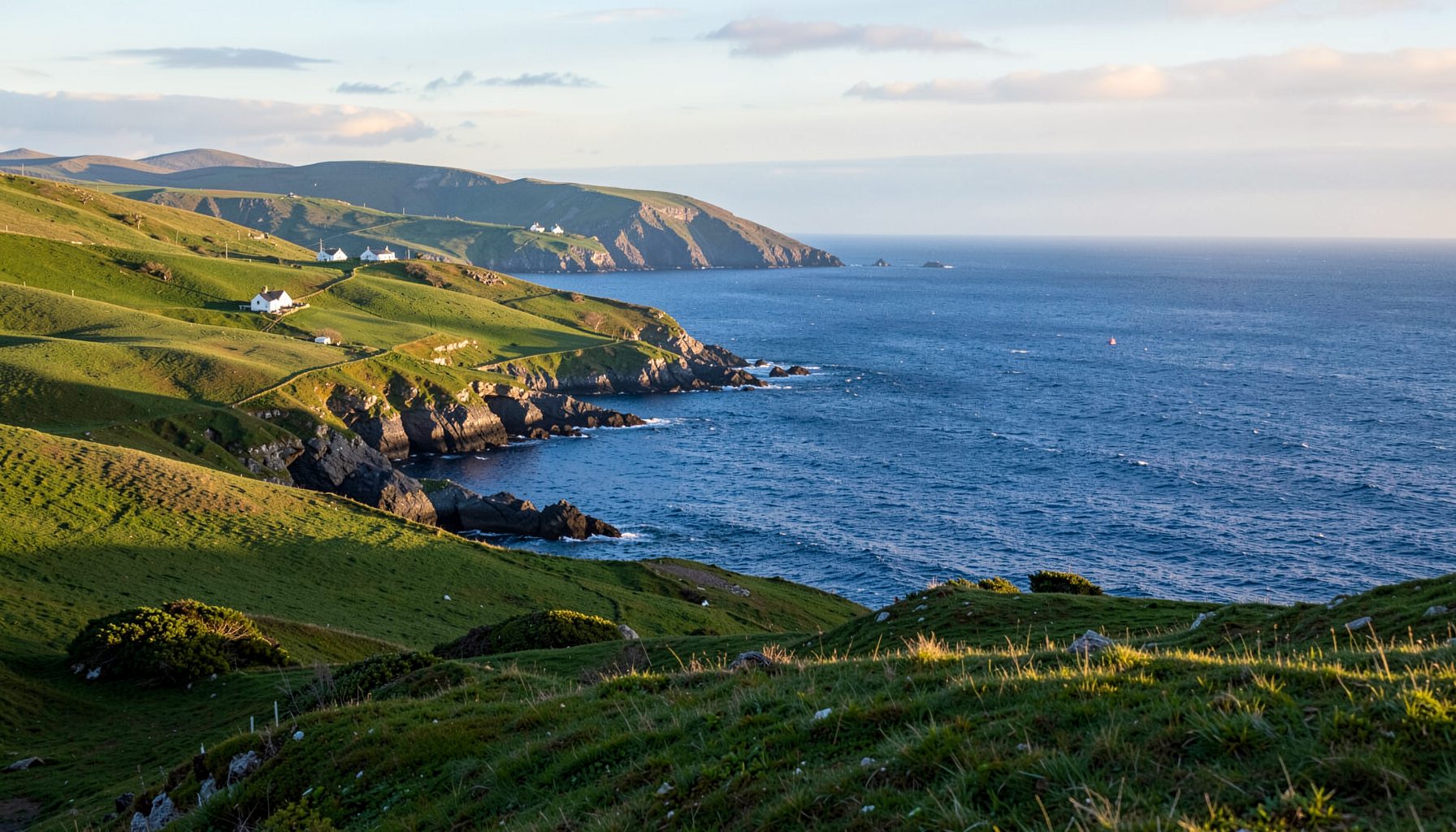
On the Skellig Coast, from Kells and Glenbeigh towards Waterville, Caherdaniel and Castlecove, these wells belong to a wider Irish tradition. Each one also has its own character. Some are associated with a named saint, some with a particular cure, and others survive mainly through the knowledge of people who know where the water is and how it should be approached.
Springs before saints
Water sources held significance in Ireland before Christianity arrived. A dependable spring was practical in everyday life, but it could also be regarded as a meeting place between the visible world and something more mysterious. Older ideas about sacred water were later incorporated into Christian practice, with many wells becoming connected to a saint, a local church or a feast day.
This process did not erase every earlier belief. Instead, customs changed gradually. A spring might receive a new Christian name while retaining an older association with fertility, protection or healing. The survival of these places reflects the ability of local traditions to adapt rather than a simple division between pagan and Christian practice.
The rugged geography of the Iveragh Peninsula helped preserve such customs. Isolated valleys, coastal townlands and scattered settlements allowed oral traditions to remain important. A well did not need a substantial monument to remain meaningful; directions, prayers and family stories could keep its identity alive.
Saints, cures and local memory
Many Irish holy wells are linked to saints whose lives are partly historical and partly shaped by popular devotion. A saint’s name may explain the well’s purpose, while the water’s reputation explains why people continued to visit. Eye complaints, skin conditions, sore limbs and childhood illnesses are among the cures traditionally associated with holy wells across Ireland.
Visitors often performed a pattern of actions known as a round or turas. This could involve walking around the well a set number of times, praying, taking water, or visiting nearby devotional features in a particular order. The exact practice differed from place to place. Local knowledge mattered more than a single national rule.
Offerings also formed part of the tradition. People might leave a small piece of cloth, a pin, a coin or another personal object, especially when asking for healing. Cloth tied to a nearby bush or tree was understood as carrying the illness or intention away from the person. Modern observers may see these actions as symbolic, but for families who inherited them, they represented a serious act of trust.
Feast days and seasonal visits
The calendar gave holy wells a strong connection to community life. Visits might take place on a saint’s pattern day, during a local pilgrimage, or at a seasonal turning point such as May, midsummer or the harvest period. In some places, the feast day became a social occasion as well as a devotional one, bringing neighbours together after prayers at the spring.
Pattern customs varied considerably. Some wells attracted large gatherings in earlier centuries, while others were visited quietly by individuals or families. A tradition could decline when population fell, roads changed or clergy discouraged older practices, then reappear when local people restored the site or renewed interest in heritage.
The annual rhythm also connected the wells to the working landscape. A visit might coincide with bringing cattle to summer pasture, tending fields or travelling between townlands. This helps explain why holy wells were often remembered through practical directions: beside a certain boreen, below a hill, near a field boundary or along an old route to the shore.
Reading the landscape around a well
A holy well should be understood as part of a wider setting rather than as an isolated stone structure. Nearby features may include a tree, a standing stone, a ruined church, a graveyard, a cross, a bridge or an old path. The relationship between these elements can reveal how people moved through the landscape and how religious practice developed over time.
Some wells are carefully built with stone walls, steps or a basin. Others are little more than a natural seep enclosed by a rough surround. A shrine, plaque or modern railing may have been added much later. These additions can protect a site, but they may also obscure its earlier appearance and make it difficult to distinguish ancient features from recent repairs.
Place names offer another valuable clue. Irish names containing words associated with wells, saints, churches or cures can preserve information after everyday use has faded. Yet translation should be treated carefully. A name may have several spellings, and a local pronunciation can carry details that are lost in an English version.
| Feature | What it may reveal | Why caution is needed |
|---|---|---|
| Saint’s name | Christian devotion or a local patron | The saint may have been attached to an older spring |
| Stone basin or lining | Deliberate improvement or protection | The visible structure may be relatively modern |
| Cloths or offerings | Healing customs and personal devotion | Practices differ between wells and periods |
| Feast-day gathering | A pattern tradition or community observance | Dates and customs may have changed |
| Irish place name | Older landscape memory | Translations and spellings can vary |
| Nearby church or graveyard | Religious importance of the locality | Association does not prove a direct connection |
From pilgrimage to heritage
The decline of some well customs was influenced by many changes: emigration, new medical services, altered farming practices, road construction and shifts in religious life. A well that once received regular visitors could become overgrown or difficult to reach. In other cases, the tradition survived within one or two families but was no longer widely practised.
Renewed interest in local history has brought many of these places back into public awareness. Community groups, schools, heritage projects and walking programmes can document a well’s location, stories and condition. Oral history is especially important because written records may mention only a name, while residents can explain the route, the feast day and the custom associated with the water.
This work should avoid turning a living tradition into a museum display. A holy well is not simply an attractive photo stop or an archaeological curiosity. It can remain a place of prayer, remembrance and private devotion. Responsible interpretation makes room for religious meaning as well as historical investigation.
Local events and heritage updates can help residents and visitors follow this wider conversation through the Skellig Coast’s local news, where community initiatives and regional activities are shared alongside information about the area.
Caring for water and memory
Holy wells are vulnerable to practical pressures. Runoff from roads or farmland can affect water quality, while drought, flooding and vegetation growth can alter the spring itself. Unmanaged footfall may damage banks, walls or nearby archaeology. Offerings made from plastic, synthetic fabric or metal can also create litter and harm wildlife.
Care begins with modest actions. Recording a site’s location, asking permission before entering private land and avoiding disturbance to stones or surrounding ground all help protect it. Water should not be consumed unless its safety is known. A spring may be culturally important without being suitable for drinking.
Documentation is equally valuable. Photographs taken over time, interviews with older residents, notes on local names and records of feast-day practices can create an archive for future generations. Such records should identify uncertainty rather than present every story as proven fact. Folklore, belief and archaeology each provide different kinds of knowledge.
Keeping the tradition meaningful
The future of holy wells depends on respect for both place and people. A visitor may approach a well as part of a walk, while another person may come to pray for a relative. Neither purpose needs to displace the other. Quiet behaviour, careful access and sensitivity around offerings are simple ways to acknowledge the site’s continuing importance.
Schools and local groups can make the tradition accessible through mapping, storytelling, field visits and discussions with community historians. Children can learn how to distinguish a natural spring from a built feature, how Irish place names preserve memory and why water quality matters. These activities connect heritage with environmental responsibility.
For anyone exploring the Skellig Coast, the most rewarding approach is attentive rather than hurried. Notice the path, the surrounding trees, the shape of the stonework and the stories attached to the place. A small spring may reveal as much about local identity as a celebrated monument.
Respectful ways to visit
- Learn the local name, history and access arrangements before setting out.
- Treat prayers, offerings and personal acts of devotion with discretion.
- Do not remove stones, cloths, coins or other objects from the site.
- Avoid drinking the water unless it has been officially tested and declared safe.
- Record stories accurately, credit local knowledge and leave the surroundings undisturbed.
The holy wells of the Skellig Coast connect natural springs with saints’ names, seasonal gatherings, healing customs and the changing lives of rural communities. Their stories are not fixed relics. They continue through careful remembrance, community care and the quiet decision to visit these places with respect.
Exploring their history is an opportunity to look beyond famous landmarks and discover the smaller sites that give the Iveragh landscape its depth. By supporting local documentation, attending community heritage events and sharing reliable knowledge, residents and visitors can help ensure that these wells remain part of the region’s living cultural landscape.