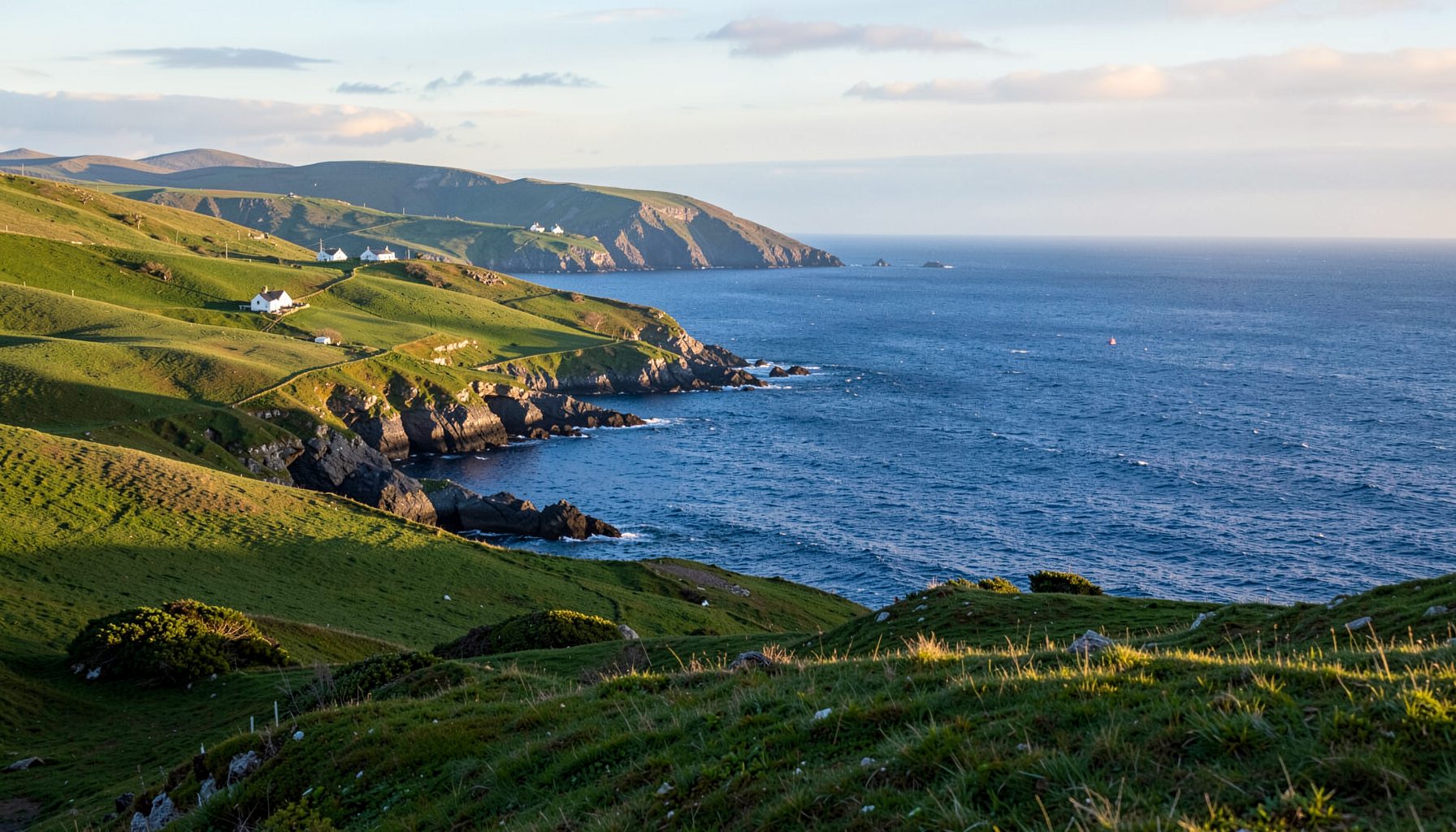
The Landlord Era and the Coastal Estates of the Skellig Coast
The stretch of road from Kells down to Castlecove traces a coastline once shaped by a small number of landowners. For generations, the fields, piers, and harbours along the Skellig Coast answered to estates whose owners lived far away, often in Dublin or London. The story of that landlord era, and the estates that anchored it, is one of the most powerful forces behind the landscape, surnames, and village plans that visitors still encounter today.
Understanding this history gives travellers from Australia a richer sense of place. Many Australians visiting the Iveragh Peninsula arrive with their own inherited stories of land, lease, and family migration, and the parallels between the Irish landlord system and the pastoral runs of New South Wales are closer than they first appear. Both regions passed through a phase where a handful of families held enormous influence over coastal communities, and both eventually saw those arrangements transformed by political pressure.
Origins of the Coastal Estate System
The estate structure along the Skellig Coast developed in the late 1600s and matured through the eighteenth century, when British rule reorganised Irish landholding around Protestant owners and long leases. Catholic families who had held ground for centuries were pushed into tenancy, paying rent to landlords who had acquired vast tracts through confiscation or marriage. On the Iveragh Peninsula, this shift was particularly visible because the terrain was difficult to farm in bulk and easier to manage as scattered holdings grouped under a single proprietor.
Most coastal estates were not the product of a single grand purchase but accumulated over decades. A landlord might begin with one townland inherited through an English relative, then absorb neighbouring holdings when tenants fell behind on rent or when smaller owners sold out during hard years. The result was a patchwork of properties stretching from the shoreline up into the hills, each with its own rent books, lease terms, and customs. Visitors who walk the Kerry Camino today often pass boundaries drawn centuries ago and never significantly redrawn.
Major Families and Their Holdings
A handful of family names dominated the Skellig Coast throughout the landlord era. The Blennerhassetts held land near Killorglin, the Fitzgeralds and Hicksons maintained influence further west, and around Sneem and Castlecove the Bland family and later the Deedes estate shaped the look of the villages, with neat rows of cottages, lime trees, and quays built to serve the linen, fish, and slate trades. Each family brought its own architectural preferences and business interests, leaving a layered imprint on the coast.
These landlords operated within a wider imperial economy. Wool, butter, and later corn were shipped from the small harbours to markets in Bristol and Lisbon, while rent payments in cash became the norm as the nineteenth century progressed. Australian readers will recognise a familiar pattern: the same combination of absentee ownership, commodity exports, and remote decision-making that defined the squatter aristocracy of the Darling Downs or the Western District of Victoria.
Life of Tenants and Cottiers
For ordinary people on the coast, the landlord era meant a constant negotiation with rent, weather, and the rhythms of the sea. Families held small plots of perhaps five to twenty acres, supplemented by fishing, seaweed gathering, and work on the landlord's demesne. Cottages were built from local stone, often whitewashed, with thatch held down by ropes in the fierce Atlantic winds.
Everyday habits revolved around the landlord's calendar as well as the natural one. Rent days brought people to market towns like Cahersiveen or Kenmare, where they paid in coin or, more often, in goods. Weddings, wakes, and religious festivals continued regardless of who owned the land above them, and the parish priest often served as a buffer between tenants and agents. Australian readers accustomed to the rhythm of a coastal town like Lorne or Batemans Bay will recognise the social function of these gathering days.
The Great Famine and Coastal Estates
The Great Famine of 1845 to 1852 hit the Skellig Coast with devastating force. Potato blight stripped the staple crop, and because so much of the available grain was exported under estate orders, relief was slow and uneven. Some landlords, including a minority of the Blennerhassetts, attempted large-scale soup-kitchen schemes and eviction relief, while others continued to clear tenants to consolidate holdings for grazing.
The human cost is still legible in the landscape. Abandoned house sites, known locally as deserted villages, can be traced in the hills above Caherdaniel and along the roads leading toward Waterville. Many families emigrated from these piers, some to Liverpool, some to Newfoundland, and a substantial number to Australia. The goldfields of the 1850s and the assisted-passage schemes that followed drew thousands from counties Kerry and Cork, which is why cities like Sydney, Melbourne, and Adelaide hold such large communities of Iveragh descendants.
Land Agitation and the End of the System
The final decades of the landlord era were turbulent. The Irish Land League, founded in 1879, organised tenants along the Skellig Coast as elsewhere, holding meetings, collecting rent into a common fund, and resisting eviction. Figures such as Michael Davitt travelled through Kerry villages, and the rhythm of agrarian agitation pushed Westminster toward a series of Land Acts. By the early twentieth century, the great estates had begun to fragment as tenants purchased their holdings under preferential terms.
The transition was not always smooth. Some estates were broken up quickly, others lingered as working farms under new owners. Land courts sat in Tralee to fix fair rents and adjudicate claims, leaving behind a thick archive of maps and witness statements. This legal reshaping has a curious modern echo in Australia, where state residential tenancy acts and the federal Foreign Investment Review Framework govern how land can be held, leased, or sold to outsiders.
Architectural and Landscape Legacy
The physical marks of the landlord era are easy to overlook but hard to avoid. Big houses such as Derrynane House and the demesnes around Sneem carry the geometry of designed landscape: walled gardens, tree-lined avenues, and stone gate lodges. Smaller features, including estate-built schools, coastguard stations, and the elegant Protestant churches at places like Kells, show where money was invested and where it was withheld.
Walking the Kerry Way or driving south from Killorglin, a visitor passes milestones, lime kilns, and bridge abutments that were all part of estate improvements. The neat terracing above some coves was created to give tenants a few extra acres of tillage, while the broader sweep of pasture above the cliffs reflects the consolidation that followed the Famine. Reading the coastline as a layered text, tied to a landlord decision, is one of the most rewarding ways to experience this region.
Remembering the Landlord Era Today
Heritage groups and family associations along the Skellig Coast now work to keep this period alive in public memory. Schools in Cahersiveen run projects on estate papers, and the Kerry Genealogical Research Centre helps descendants trace tenants as well as landlords. Events such as heritage weeks and the Skellig Coast food trails tie modern visitors to the older rhythms of tenancy and harvest.
Australian connections are a particular focus. Diaspora networks in Sydney and Melbourne regularly host talks from Iveragh historians, and twin-town links between places like Cahersiveen and suburbs in New South Wales have grown over the last decade. Anyone with Kerry ancestry can usually find a welcome at a local heritage centre, where staff trace nineteenth-century tenants through to the ships that carried their relatives to Australian ports.
Notable Coastal Estates and Their Owners
- Blennerhassett holdings near Killorglin and the northern Iveragh shore, held by the family from the seventeenth century onward.
- Bland and Deedes estates around Sneem, Castlecove, and the southern coastline, influential through the Famine years.
- FitzGerald properties stretching across the central peninsula, with strong ties to the Anglo-Irish gentry.
- Petriefe holdings along the western bays, often lost or sold after the Land War.
Landmarks That Tell the Story
- Derrynane House and its demesne, tied to the O'Connell family and the politics of Catholic emancipation.
- Coastguard stations at Valentia and along the south coast, built to protect imperial trade.
- The Protestant church at Kells and the lime kilns above the bays, symbols of estate investment priorities.
- Deserted cottage sites in the hills above Caherdaniel, silent markers of Famine-era clearance.
Planning a trip along the Skellig Coast offers a chance to walk through a landscape shaped for centuries by landlords and tenants working out a shared destiny. Pick up a heritage map from a visitor centre, book a guided walk through one of the demesnes, or join a genealogy workshop offered by community groups between Kells and Castlecove. The story of this coast is open to anyone willing to listen, and it begins wherever the road meets the sea.