The working history of Kells’ charcoal and lime kilns
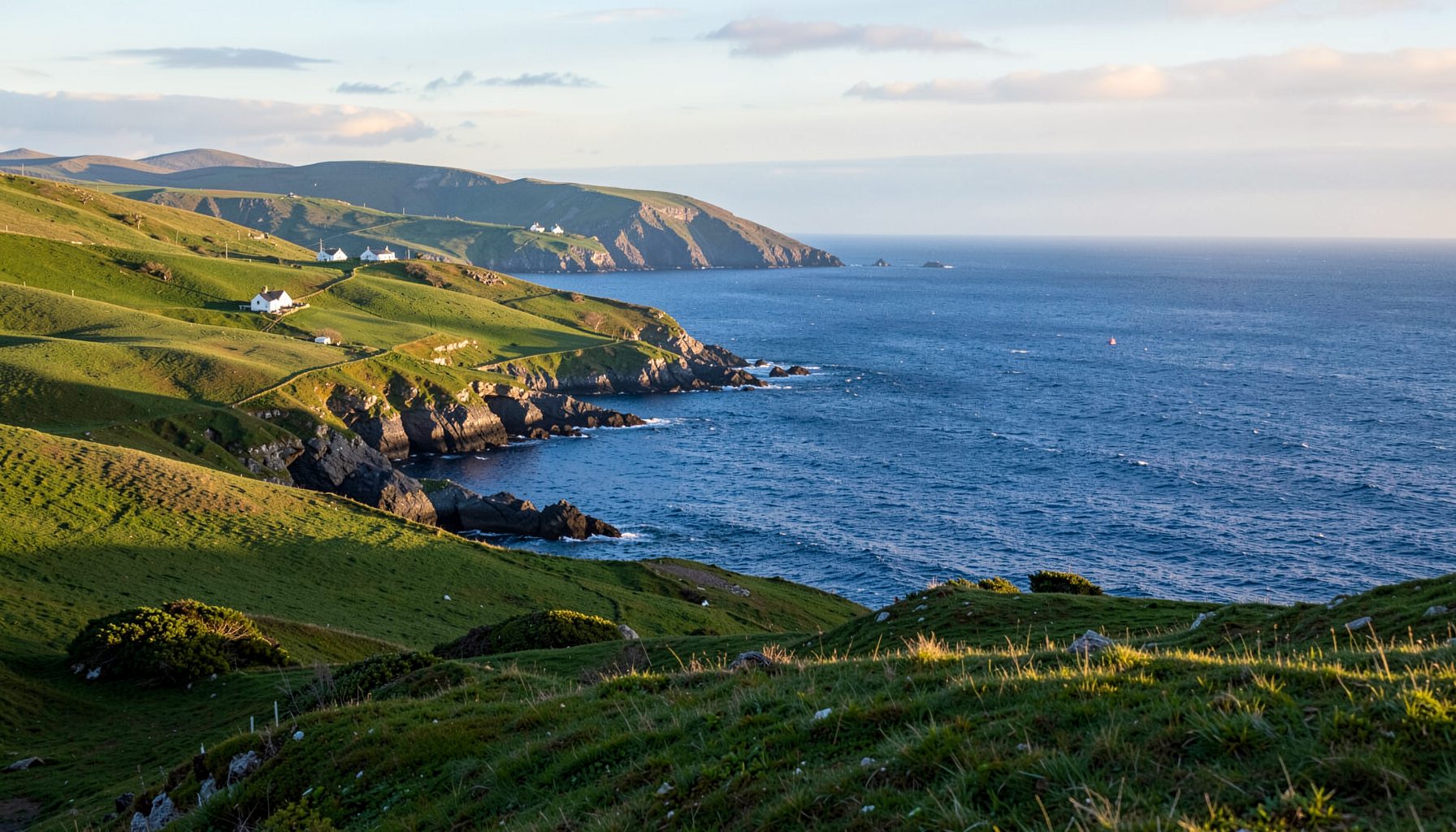
Near the northern edge of the Iveragh Peninsula, Kells is known for its coastal scenery, small community and views towards the Skelligs. Its history is also written into less dramatic structures: stone kilns, old tracks, field boundaries and the traces of industries that once supported everyday rural life.
The charcoal and lime kilns belong to a period when households and farms depended heavily on locally available fuel and building materials. Before modern agricultural suppliers, road transport and packaged fertiliser, burning wood and limestone could turn nearby natural resources into products with practical value.
These structures were part of a wider rural economy rather than isolated curiosities. Farmers, landholders, labourers, carters and builders all had a role in moving stone, cutting timber, tending fires and using the finished lime. The remains help explain how work, landscape and settlement were connected around Kells.
For visitors from Australia, the story has an immediate point of comparison. Rural communities across New South Wales, Victoria and Tasmania also developed local industries around timber, stone, lime and transport. The scale is different, but the underlying idea is familiar: a landscape becomes an economic resource through skilled labour and repeated seasonal work.
Why lime mattered to Kells farmers
A lime kiln was designed to heat limestone until it produced quicklime, a highly useful but caustic material. The stone was stacked inside a thick-walled chamber, with fuel arranged to create sustained heat. Once burned, the lime could be cooled and later mixed with water to make slaked lime.
On farms around Kells, lime was chiefly valued for improving acidic ground. Spread over fields, it helped correct soil conditions and supported the cultivation of grass, oats and other crops suited to the local climate. Lime was also used in mortar, whitewash and some forms of sanitation, so its importance reached beyond agriculture.
The process required judgement. Too little heat left the limestone partly burned; too much fuel could waste timber and damage the batch. Kiln workers needed to understand the behaviour of the fire, the quality of the stone and the timing of cooling. A kiln therefore represents practical knowledge as much as masonry.
The benefit could be felt well beyond the structure itself. Better-managed fields supported livestock, haymaking and household food production, while lime mortar helped maintain houses, walls and farm buildings. The kiln was a productive link between quarrying, farming and construction.
Charcoal, timber and controlled fire
Charcoal was made by heating wood with limited oxygen, driving out moisture and volatile compounds while leaving a light, carbon-rich fuel. This was commonly done in covered heaps or pits, where the burn had to be watched carefully. A small mistake could turn a valuable load into ash or allow the fire to spread into surrounding woodland.
The charcoal associated with the Kells area should be understood within this broader tradition of rural fuel production. Charcoal burned hotter and more cleanly than ordinary wood, making it useful for blacksmithing, metalwork and other tasks requiring intense heat. It could also serve domestic or craft purposes where a concentrated fuel was preferable.
The work was labour-intensive. Timber had to be cut and seasoned, the charcoal burn built and covered, and the finished material sorted, bagged or loaded for transport. Charcoal burners often worked in uncomfortable conditions, surrounded by smoke and required to remain near the burn for long periods.
Australian readers may recognise the principle from traditional charcoal production associated with rural forestry and bush industries, though Irish woodland conditions and landholding patterns were different. The comparison also needs care: controlled charcoal burning was a deliberate craft, while smoke and blackened timber left after a bushfire are not the same process.
Reading the kilns in the landscape
The surviving kiln structures are valuable because they preserve the relationship between raw material and finished product. Limestone had to be quarried or gathered nearby, fuel had to be sourced from woodland or scrub, and the completed lime needed a route to fields or building sites. Their position can therefore reveal something about access, slope, water, roads and available resources.
Some features may appear simple: a mound, a semicircular wall, a darkened interior or a hollow in the ground. Yet these details can distinguish a lime kiln from a charcoal-burning site, a collapsed field structure or a later alteration. Careful recording is important, especially where vegetation and weather have softened the original form.
The stones of Iveragh also carry a geological story that helps set these industries in context. The region’s dark coastal rocks and weathered surfaces influenced local building traditions, field walls and the supply of usable stone; the wider significance of that material is explored in the account of the black stones of Iveragh.
For heritage visitors, the kilns are best approached as part of a working landscape rather than as separate monuments. A wall, track or abandoned quarry may have supported the same chain of activity. Reading those connections adds depth to a walk through Kells and prevents the industrial remains from being treated as isolated ruins.
Trade, transport and changing markets
A kiln only made sense when there was a market for its output. Farmers needed lime at particular points in the agricultural year, builders needed mortar, and smiths needed fuel. Transport costs shaped everything. A product that was cheap to make could become expensive if it had to travel over poor roads or rough ground.
Before motor vehicles, movement depended on pack animals, carts, small boats and human labour. The coast and inlets of the Iveragh Peninsula could offer useful routes, but weather, tides and landing places imposed limits. Inland roads were often narrow and difficult, especially in wet conditions. Local production reduced the distance between source, kiln and customer.
By the nineteenth and early twentieth centuries, new fuels, improved roads and commercial suppliers began to change this system. Coal, imported materials and factory-made agricultural products could reach rural districts more reliably. Concrete, cement and modern fertilisers gradually reduced the everyday importance of traditional lime burning.
There is a useful Australian parallel in the shift from local quarries and small country suppliers to large hardware, agricultural and building markets. Someone buying garden lime at a Melbourne, Brisbane or Perth retailer is participating in a very different supply chain from a Kells farmer collecting a locally burned product, but both purchases reflect the same basic need to manage soil or construction.
Work and community memory
The history of the kilns is also social history. Written records may list land, rents, roads or agricultural improvements, yet they rarely capture every person who gathered fuel, broke stone, carried loads or maintained the fire. Oral tradition can preserve details that formal documents overlook, including place names, former paths and stories about dangerous or demanding work.
Such memories should be handled carefully. A local account may preserve a genuine tradition while combining events from different periods, or it may use “lime kiln” as a general name for several kinds of industrial remains. Comparing oral testimony with maps, archaeological surveys, estate records and physical evidence produces a stronger interpretation.
The seasonal rhythm of the work matters too. Farm labour already followed cycles of sowing, grazing, harvesting and winter maintenance. Kiln work had to fit around those demands, while charcoal burning required attention over several days. This points to a flexible economy in which people combined farming with carting, building, fishing, forestry or casual industrial work.
Community events and local learning projects can bring that history back into public view without turning it into a romantic story. Demonstrations, guided walks, school activities and recorded interviews can explain the techniques while acknowledging the hard labour and environmental pressures involved.
Protecting the story for future visitors
Kilns are vulnerable to collapse, uncontrolled vegetation, erosion and the gradual removal of stones for later walls. Coastal weather adds to the problem, while increased foot traffic can widen paths around fragile structures. Even a modest ruin benefits from basic care: clear interpretation, sensible access and a policy of leaving stones where they are found.
Visitors can help by staying on established routes, avoiding climbing on kiln walls and not collecting charcoal, stone or pottery fragments. Photographs and location notes are useful for community records, but exact information about vulnerable sites should be shared responsibly. Heritage is strongest when access and protection are planned together.
For people travelling from Australia, the journey may involve a long flight, a rental car and careful planning around Ireland’s narrow roads and changeable weather. The Kells landscape rewards a slower pace than a checklist-style tour. It sits within the wider Skellig Coast, where village life, coastal history, outdoor programmes and UNESCO heritage are closely connected.
The local market is likewise broader than sightseeing alone. Regional heritage supports cafés, guides, craft producers, community venues and small businesses, while residents benefit when visitors spend time respectfully in villages rather than passing through. Understanding the kilns adds value to that visit because it directs attention to the people and systems behind the scenery.
The charcoal and lime kilns of Kells deserve attention as evidence of ingenuity, labour and adaptation. Their story links fire, limestone, woodland, farming and transport, showing how a small community made use of its surroundings before modern supply chains transformed rural life.
Explore the Skellig Coast with that history in mind: look closely at field walls, old routes and working landscapes, and support local heritage initiatives that continue to record and share the past.