Kells Bay Gardens: A Living History of Exotic Plants
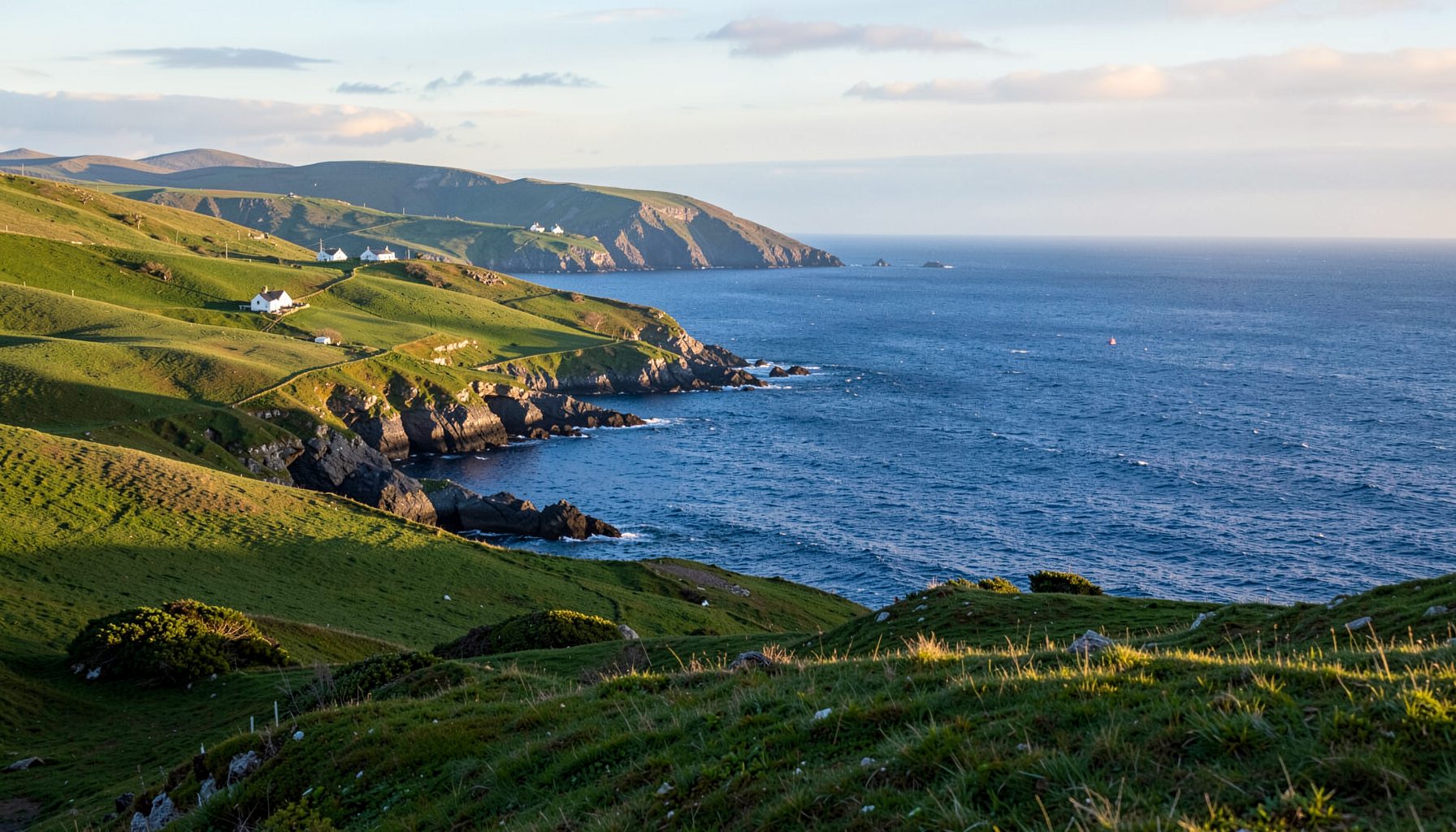
Kells Bay Gardens occupies a remarkable corner of County Kerry, where the Iveragh Peninsula meets the Atlantic. Set near the village of Kells between Cahersiveen and Glenbeigh, the estate combines a historic house, mature woodland, ornamental planting and views towards Dingle Bay. Its appeal lies in the way cultivated landscapes and wild coastal scenery remain closely connected.
For visitors from Australia, the garden offers an interesting comparison with familiar botanical landscapes at home. A Sydney or Brisbane garden may use subtropical planting for warmth, while Melbourne gardeners often work around cooler winters and drier summers. Kells Bay follows a different pattern: mild temperatures, frequent rain, ocean influence and sheltered valleys allow plants from distant parts of the world to thrive beside native Irish vegetation.
A Demesne Shaped By Sea And Stone
Kells Bay began as a country estate during the nineteenth century, when wealthy landowners created demesnes around large houses. These estates commonly included woodland walks, kitchen gardens, ornamental lawns, glasshouses and carefully arranged views. The landscape at Kells Bay reflects that tradition, though its setting is more dramatic than many inland estates because the grounds face the waters of the bay and the mountains beyond.
The house and gardens passed through periods of careful management and decline. Like many historic estates in Ireland, Kells Bay was affected by changing land ownership, economic pressures and the gradual disappearance of the large household workforce that once maintained formal grounds. Paths became overgrown, trees fell or reached maturity, and parts of the planting lost their original structure.
The modern garden emerged through a long programme of restoration rather than a single redesign. Existing trees, old boundaries and traces of earlier planting provided a framework for renewal. This approach matters because the place is not a newly assembled collection of exotic specimens; it is a layered landscape in which nineteenth-century ambition, natural regeneration and contemporary horticulture can still be read together.
Why The Iveragh Climate Matters
Kells Bay benefits from the relatively mild maritime climate created by the Atlantic and the North Atlantic Drift. Winters are generally less severe than in many inland parts of Ireland, while rain and humidity support lush growth. The estate’s sheltered position also protects delicate plants from the full force of coastal winds, creating conditions that can resemble a cool, damp temperate rainforest.
This explains the presence of large tree ferns, palms, bamboo, magnolias, rhododendrons and other plants associated with warmer regions. In Australia, many of these genera are familiar from botanic gardens or private collections, but the visual effect is different. A tree fern growing beside a creek in southern Queensland may be adapted to intense summer heat, whereas a specimen at Kells Bay develops within soft light, saturated air and comparatively cool conditions.
The garden also demonstrates how microclimates influence plant design. A south-facing bank, a hollow protected by mature trees or a wall that stores daytime warmth can make the difference between success and failure. Gardeners visiting from Melbourne or Canberra may recognise the importance of shelter, while those from Brisbane may notice that Kells Bay achieves luxuriant growth without relying on the same level of heat.
The Garden’s Exotic Plant Collection
The most memorable plants at Kells Bay are often those that create a sense of scale. Dicksonia antarctica, the soft tree fern native to southeastern Australia, forms part of the garden’s fern-rich atmosphere. Mature tree ferns provide tall trunks and broad fronds, producing a layered canopy above mosses, shade plants and damp woodland paths. Their presence creates a direct botanical connection between the Iveragh Peninsula and Australia’s cool, wet forests.
Large-leaved Gunnera adds another dramatic note. Often called giant rhubarb, Gunnera produces enormous leaves in favourable damp conditions and is well suited to the garden’s streams and wet ground. Rhododendrons and magnolias contribute seasonal colour, while bamboo brings movement and height. Palms and other evergreen species maintain structure through the Irish winter, when many deciduous plants have lost their leaves.
The collection is valuable because it shows exotic plants in a designed ecological setting rather than as isolated nursery specimens. Ferns, mosses, fallen timber, water and mature trees work together to create a rainforest-like mood. Visitors can observe how foliage texture, trunk form and canopy height influence the experience of a garden even when flowers are not at their peak.
The term “exotic” also needs context. It means plants introduced from another region, not plants that are automatically harmful or unsuitable. Kells Bay’s successful planting depends on responsible selection, monitoring and management. A species that behaves well in wet Kerry may become invasive in a warmer Australian catchment, where rainfall patterns, soil and natural competitors are very different.
Restoration And Interpretation
The restoration of Kells Bay Gardens has involved clearing neglected areas, reopening routes through the estate and establishing new planting while retaining significant mature specimens. This balance gives the garden its character. Visitors encounter designed viewpoints and carefully maintained beds, but also rough woodland, naturalised vegetation and places where the surrounding landscape remains dominant.
The garden’s history is easiest to understand by paying attention to transitions. Formal areas close to the house suggest the social life of the estate, while woodland paths reveal the practical and aesthetic value once placed on walking. Water features and bridges add movement through the grounds, and elevated viewpoints connect the private garden to the wider Skellig Coast landscape.
Kells Bay is also part of a broader regional story. The Iveragh Peninsula contains archaeological sites, coastal settlements, traditional communities and internationally recognised attractions such as Skellig Michael. Local initiatives, schools and community organisations help interpret this heritage for residents and visitors. The Skellig Coast’s local learning hubs provide useful context for understanding how education, culture and place-based knowledge support the region.
Visiting From Australia
An Australian visitor may be accustomed to planning a garden outing around a farmers market, a weekend coffee stop or a long drive between regional attractions. Kells Bay fits naturally into that style of travel, although the distances and weather require a different rhythm. The garden is best treated as part of a wider day on the Ring of Kerry or the Iveragh Peninsula rather than a quick stop between major cities.
Allow time for wet paths, changing cloud and cool temperatures even during an Irish summer. Waterproof footwear and a light rain jacket are more useful than relying on a forecast made several days earlier. In contrast with a hot-weather outing from Sydney or Adelaide, the main comfort issue may be damp ground and wind rather than sun exposure. Conditions can change quickly around the coast.
Australian plant enthusiasts should also resist the temptation to treat the garden as a source of planting material. Bringing seeds, cuttings, soil or plant fragments into Australia is controlled under federal biosecurity rules, including the Biosecurity Act 2015. State and territory weed legislation applies as well, and restrictions differ between New South Wales, Victoria, Queensland, Western Australia and other jurisdictions. Admire the plants, take photographs and purchase only through approved channels.
Practical Ways To Read The Landscape
The garden rewards slow observation. Rather than moving directly from one landmark to the next, notice how the planting changes with elevation, shelter and moisture. Compare the narrow trunks of tree ferns with the broad leaves of Gunnera, then look for the mosses and low-growing plants that occupy the spaces beneath them. These details reveal how the garden’s atmosphere is produced.
A visit can also be connected with local food and community life. Small Irish villages have a different trading pattern from the large urban markets of Melbourne or Brisbane, with opening times that may be seasonal and services spread across several settlements. Checking local information before travelling helps visitors combine the gardens with cafés, heritage sites, coastal walks and community events without assuming that every facility operates like a city attraction.
- Wear shoes with firm grip for woodland paths and damp ground.
- Allow extra time for photography, viewpoints and seasonal planting.
- Check opening arrangements and weather conditions before setting out.
- Keep dogs, bags and clothing clear of delicate planting areas.
- Follow Irish biosecurity guidance when returning to Australia.
The best way to appreciate the exotic collection is to see it as part of a living landscape. Kells Bay does not recreate an Australian forest, an Asian garden or a South American cloud habitat. Instead, it brings plants from several regions into conversation with Kerry’s rainfall, stone walls, woodland and sea air. The result is a distinctive garden shaped by both global horticulture and local geography.
Kells Bay Gardens offers more than a display of unusual plants. Its history records the rise, decline and renewal of an Irish estate, while its tree ferns, palms, bamboo and giant-leaved species show what a maritime climate can support. Add the garden to a Skellig Coast itinerary, approach it with time and curiosity, and use the visit as a starting point for exploring the wider heritage of the Iveragh Peninsula.