The Copper-Mining Heritage of Ireland’s Iveragh Peninsula
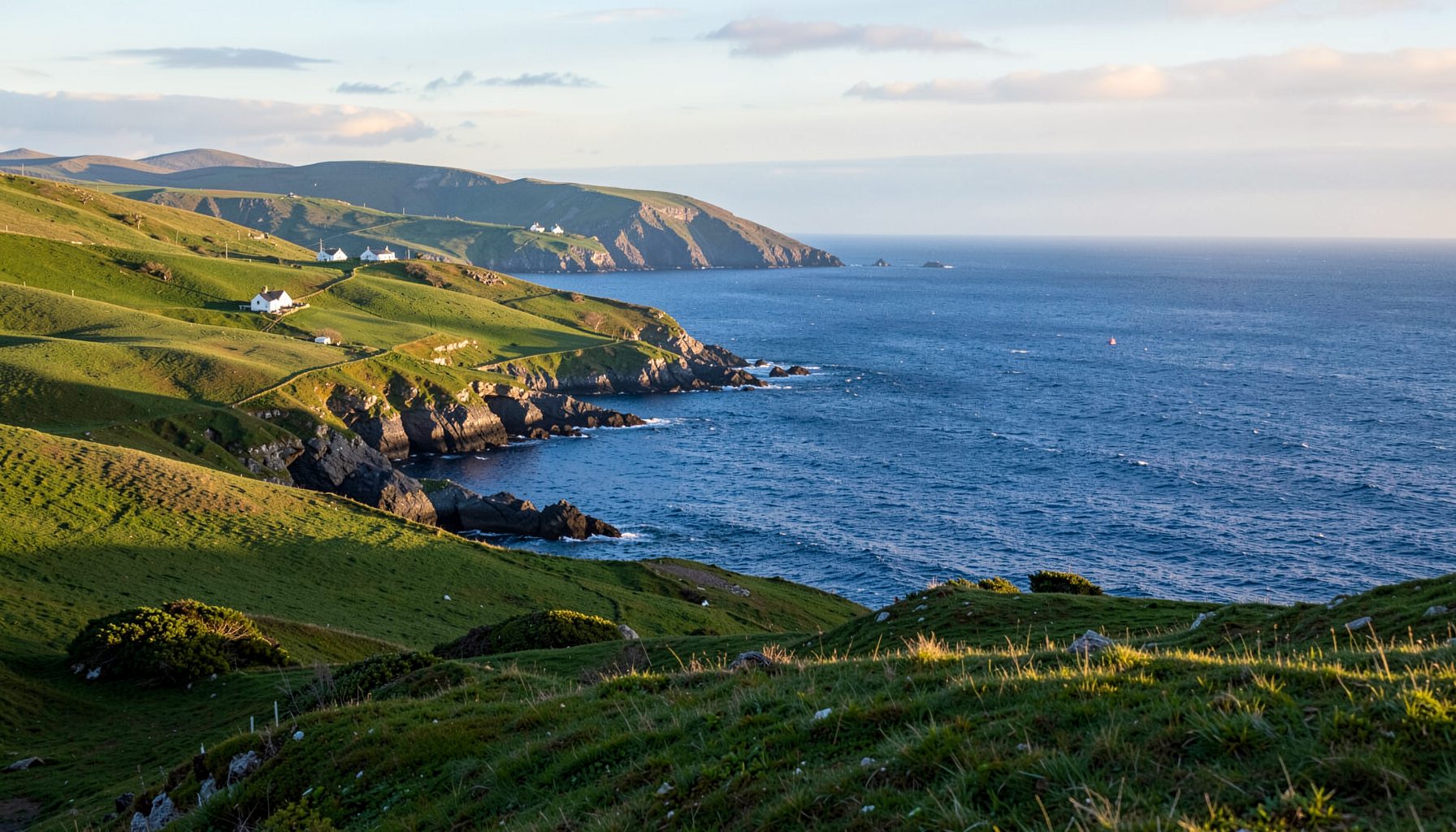
The Iveragh Peninsula is best known for Atlantic scenery, stone forts, island monasteries and the dramatic Skelligs. Yet beneath its hills and rocky headlands lies another story: a modest but significant history of copper prospecting and mining. Small workings, adits, spoil heaps and place names reveal how local communities once looked to the peninsula’s mineral wealth for employment and investment.
Copper extraction in Iveragh never reached the scale of the great industrial districts of Cornwall, Wales or County Wicklow. Its mines were generally small, difficult to operate and vulnerable to changing metal prices. Even so, they formed part of a wider network of nineteenth-century mining activity around Ireland’s south-west coast, linking remote Kerry communities with engineers, merchants and investors beyond the peninsula.
The best-known surviving example is associated with Valentia Island, particularly the coastal area around Foilhomurrum. Other mineral workings and exploratory sites have been identified across the Iveragh landscape, where copper-bearing rock occurred alongside deposits of slate, lead and other ores. These traces are valuable because they show how geology shaped local work and settlement.
For Australian readers, the story may feel familiar. The Iveragh mines resemble the smaller copper and gold ventures that appeared across Victoria, New South Wales and South Australia: ambitious schemes built around promising rock, local labour and distant markets. The difference lies in the setting. On Iveragh, mining was woven into a landscape of small farms, fishing villages, stone walls and exposed Atlantic weather.
A Peninsula Shaped by Mineral Geology
Iveragh’s underlying geology is complex. Devonian sandstone, slate, volcanic rocks and ancient fault lines create a varied mineral landscape, with copper-bearing veins appearing in particular rock formations. Water, pressure and heat over immense periods altered the rocks and concentrated minerals in narrow seams. Finding an ore-bearing vein was possible; following it profitably was much harder.
Copper ores were often mixed with other minerals and occurred in irregular pockets. This meant that a mine could appear promising during initial excavation but produce less valuable material as the workings extended underground. Miners had to remove large quantities of waste rock, drain water and transport ore over poor roads before it could be processed or sold.
The peninsula’s rugged coast helped expose geological formations. Cliffs and stream valleys offered natural opportunities for prospecting, while dark-stained rock or green and blue mineral traces could attract attention. In a landscape where farming incomes were uncertain, even a small discovery might encourage speculation.
Early Prospecting and Local Enterprise
Mining interest increased across Ireland during the eighteenth and nineteenth centuries as industrialisation created strong demand for copper. The metal was essential for brass-making, shipbuilding, machinery and electrical uses later in the century. Merchants and landowners therefore had an incentive to investigate mineral deposits in districts that had previously been considered too remote.
On Iveragh, mining ventures were usually modest compared with large British enterprises. A landowner might grant permission for prospecting, while local workers opened shallow shafts or drove short tunnels into a hillside. Capital could come from nearby merchants, absentee investors or small partnerships. Such arrangements were vulnerable to delays, poor management and sudden falls in the copper price.
Valentia Island became the clearest focus of this activity. The copper workings around Foilhomurrum Bay are generally associated with the early nineteenth century, with operations often dated to the period from roughly 1810 to 1830. The exact sequence of ownership and production is not always consistent in local accounts, but the remains confirm that mining was more than a brief geological curiosity.
The Workings Around Valentia Island
The Foilhomurrum area contains an important combination of industrial and communications history. Copper was extracted from workings close to the coast, while the island later became famous for the transatlantic telegraph cable connection. These stories belong to different phases, yet together they show how Valentia’s location connected a remote Kerry community to international commerce and technology.
Copper mining required hard physical labour. Workers used hand tools, blasting powder and simple lifting equipment to follow veins into the rock. Underground spaces had to be supported, and water had to be removed by pumps or manual bailing. Ore then needed to be sorted, broken and moved towards a landing place or road. Every stage was expensive when the mine stood far from a large industrial town.
The coastal position offered some advantages. Ore could potentially be moved by boat, avoiding sections of rough overland travel. However, Atlantic weather, tides and exposed landing places made marine transport unreliable. A mine could produce useful ore and still fail commercially if shipping, smelting or financing costs consumed the expected return.
Miners, Farmers and Seasonal Work
Mining did not replace agriculture across Iveragh. Most families continued to depend on small holdings, livestock, fishing, craft work or a combination of seasonal occupations. A man might work underground for part of the year and return to farm work when mining slowed. This flexible pattern was common in rural Ireland, where households needed several sources of income.
The arrival of a mine could bring wages into a district, along with demand for food, tools, carting, lodging and other services. Local shops and public houses might benefit when a working was active. At the same time, employment was uncertain. A flooded shaft, a failed investment or a collapse in copper prices could end work quickly, leaving families without the income they had come to rely on.
The social effects would have been familiar to communities around the Australian goldfields. Towns such as Bendigo and Ballarat grew around far larger mineral industries, but their histories also include temporary rushes, speculative companies and the movement of workers between rural occupations. On Iveragh, the scale was smaller, yet the same combination of hope, risk and adaptability shaped everyday life.
Why the Mines Declined
The main problem was economics. Small Irish mines faced competition from richer and more efficiently operated deposits elsewhere. As industrial mining expanded, investors preferred ventures that could deliver large quantities of ore through reliable transport networks. Remote workings with narrow veins struggled to compete, particularly when machinery and skilled engineering were expensive.
Transport remained a serious limitation. Before modern roads, moving heavy ore from the peninsula’s interior or western coast was slow and costly. Even at Valentia, proximity to the sea did not guarantee a dependable export route. Ore might require local processing, shipment to another port or sale through intermediaries, reducing the income available to the mine itself.
Water was another persistent obstacle. Underground workings below the water table needed drainage, and simple pumps were limited in capacity. Once a mine flooded or the richest section of a vein was exhausted, reopening it could require more capital than investors were willing to provide. By the middle and later decades of the nineteenth century, many small workings had been abandoned or left as occasional prospects.
Reading the Industrial Landscape Today
The remains of Iveragh’s copper industry are often subtle. An overgrown tunnel entrance, a line of spoil, a levelled platform or a fragment of masonry may be difficult to recognise without local knowledge. Vegetation and coastal weather gradually soften industrial features, while later farming activity can obscure shallow workings.
These places should be approached as archaeological evidence rather than as ordinary ruins. Old shafts can be unstable, hidden by grass or filled with water. Coastal cliffs and abandoned excavations are hazardous, particularly in wet or windy weather. Visitors should remain on established paths where available and avoid entering tunnels or climbing unstable ground.
The mining remains also add depth to better-known attractions. A visit to Valentia Island can connect geological history with the island’s slate industry, telegraph heritage and maritime culture. Nearby villages, local museums, heritage centres and community archives often preserve stories that are absent from formal monuments. Farmers’ markets and craft events provide another link between the historic landscape and the present-day local economy.
For visitors travelling from Melbourne, Sydney or Brisbane, Iveragh’s mining history offers a useful contrast with the large-scale heritage landscapes of the Australian outback and the Victorian goldfields. Here, industrial evidence is embedded in a living rural region rather than separated from farming, fishing and village life. Australian travellers familiar with National Trust properties, local historical societies and school visits to former mining towns will recognise the value of preserving these less spectacular sites.
The copper mines of the Iveragh Peninsula tell a story of geological possibility meeting practical limits. They attracted investment because the rocks offered signs of wealth, and they employed local people when mines were active. Their decline reflected distance, difficult transport, flooding, uncertain ore quality and the relentless competition of larger industrial districts.
What remains is a record of ambition and adaptation. The shafts and spoil heaps belong to the same cultural landscape as dry-stone walls, quays, slate workings, telegraph stations and farming settlements. Together, they show how communities on Ireland’s south-west edge responded to new technologies and markets while remaining closely tied to the land and sea.
Explore the Skellig Coast’s villages, heritage centres and outdoor landscapes to discover how mining fits into the wider history of Iveragh. Local archives, community groups and guided heritage initiatives continue to bring these overlooked stories into view, ensuring that the peninsula’s industrial past remains part of its living identity.