The History of Derrynane Strand And Its Dunes
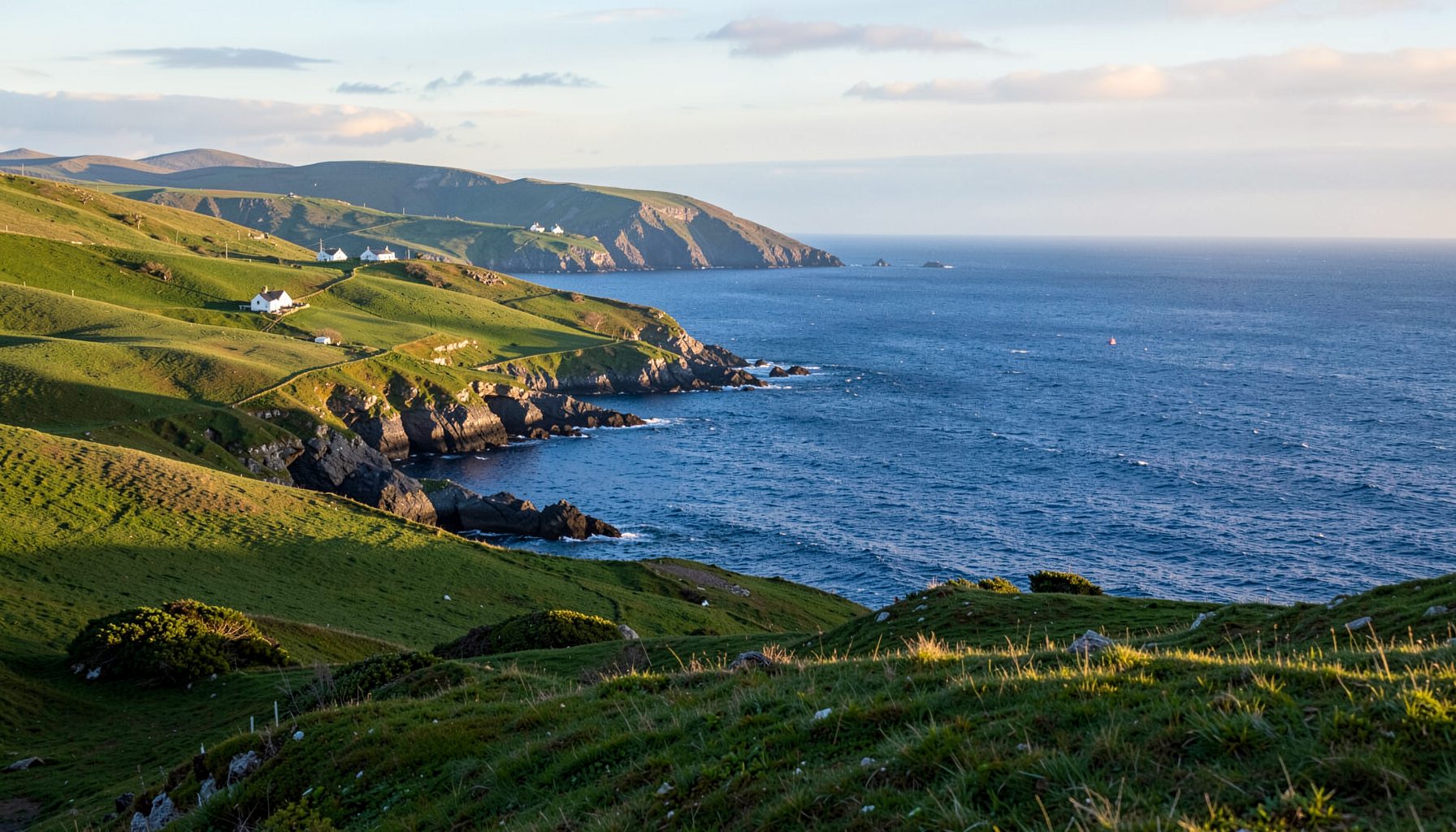
Derrynane Strand lies on the south-west coast of County Kerry, facing the Atlantic across a sheltered sweep of golden sand. The beach sits near Caherdaniel on the Iveragh Peninsula, within a landscape of rocky headlands, small islands, green fields and low coastal hills. Its calm appearance can make it seem timeless, yet the strand and its dunes are the result of changing seas, weather, settlement and human care.
For generations, this coast provided access to the sea, grazing land, walking routes and a setting for community life. Its best-known historical connection is with Daniel O’Connell, the nineteenth-century political leader remembered as “The Liberator”. Derrynane House, his family home, stands close to the shore and helps connect the beach with the wider story of Irish Catholic politics, landholding and national identity.
The dunes are equally important. They are not simply piles of sand behind the beach, but a living coastal system. Wind, tides and plants continually reshape them, while foot traffic, storms and rising sea levels place pressure on their stability. For Australian readers familiar with the shifting dunes of Noosa, Perth or the New South Wales coast, Derrynane offers a smaller but richly layered example of how beaches preserve both natural and cultural history.
A Shore Shaped By Time
Derrynane’s shoreline has been formed by the interaction of Atlantic waves, tidal currents and sediment carried along the coast. The beach is relatively sheltered by the surrounding headlands and islands, which helps create the broad strand for which the area is known. Sand accumulates above the high-water line, where wind can carry it inland and begin the formation of foredunes.
This process has never been fixed. Winter storms can remove large quantities of sand, expose darker layers beneath the surface and cut small scarps into the dunes. During calmer periods, marram grass and other coastal plants trap fresh sand, allowing new ridges to develop. A single visit provides only a snapshot of a landscape that may look subtly different after a season of Atlantic weather.
The Irish word “strand” is especially appropriate here because it suggests more than a recreational beach. In Irish coastal communities, a strand has traditionally been a working edge between land and sea. It could serve as a landing place, a route between settlements and a source of seaweed, shellfish and other resources. Derrynane’s history belongs to that wider pattern of everyday coastal use.
Derrynane House And The O’Connell Connection
Derrynane House was the ancestral home of Daniel O’Connell, who was born in 1775 and became one of the most influential political figures in modern Irish history. He campaigned for Catholic emancipation, achieved in 1829 when the law allowed Catholics to sit in the Westminster Parliament, and later pursued the repeal of the Act of Union. His political work reached far beyond Kerry, but Derrynane remained an important personal and emotional centre.
The house, gardens and surrounding estate give the beach a historical setting unusual for a rural strand. Visitors can see how the O’Connell family’s life was tied to the coastal landscape, while the nearby road, lanes and views across the bay reveal the geography that shaped local identity. Derrynane House is now managed as a heritage site, with the estate forming part of the protected landscape around the coast.
O’Connell’s story also reflects the unequal social structure of eighteenth- and nineteenth-century Ireland. A large house, tenant farms, estate workers, fishermen and smallholders existed within the same locality, but they did not share the same rights or economic security. Reading Derrynane through this wider lens prevents the beach from becoming merely a picturesque background to a famous individual.
For an Australian audience, the connection may be comparable to visiting a historic homestead near a coastal reserve in Victoria or New South Wales, where the landscape and the life of a prominent family are preserved together. The Irish setting is distinct, but the principle is familiar: local history becomes more meaningful when buildings, working land and shoreline are considered as one place.
Abbey Island And Earlier Settlement
At the eastern end of Derrynane Bay, Abbey Island adds another layer to the coastal story. The island is associated with an early Christian monastic site, traditionally linked with Saint Finian. The ruins visible today are from a later medieval church, but the location points to a much older pattern of religious settlement in the Skellig Coast region.
Access to the island depends on the tide. At low water, a sandy causeway may connect it with the mainland, while rising water restores its island character. This changing access is a reminder that earlier communities understood the coast through tides, weather and seasonal movement rather than through permanent roads and fixed visitor infrastructure.
The ruin is not an isolated monument. It belongs to a landscape that includes early Christian sites, holy wells, old field boundaries and routes across the peninsula. Across the Skellig Coast, religious communities often chose remote places that were difficult to reach but connected by sea. The same combination of isolation and access helps explain the importance of nearby Skellig Michael, although the two sites have their own histories and should not be treated as interchangeable.
How The Dune System Works
The dunes behind Derrynane Strand begin with sand deposited by waves and dried by wind. Marram grass is particularly effective at catching moving grains because its long leaves slow the wind near the ground. As sand gathers around the plants, the grass grows upwards through the deposits, creating low hummocks and ridges.
These ridges protect the land behind them from ordinary wave action, but they are not permanent walls. Storm surges may breach or flatten sections, and the dunes need room to move inland if the shoreline retreats. This natural mobility is one reason why cutting paths, driving vehicles over sand or repeatedly walking across fragile vegetation can cause lasting damage.
Australian visitors may recognise the principle from dune-care signs around the Gold Coast, the Mornington Peninsula or Western Australia. The difference is often in scale and climate: Derrynane’s Atlantic weather brings cool, wet conditions, while Australian dunes may face intense heat, bushfire risk and heavier pressure during summer school holidays. In both places, the vegetation that holds the sand together is easily damaged.
Important features of Derrynane’s dune landscape include:
- Marram grass binding wind-blown sand
- Low foredunes between the beach and inland ground
- Storm-cut faces that reveal changing sand layers
- Naturally shifting access routes near the shore
Plants, Wildlife And Coastal Care
Derrynane’s dunes support plants adapted to salt spray, exposure and poor, sandy soils. Marram is the most recognisable stabilising species, while other dune plants occupy different zones according to how much wind, salt and disturbance they can tolerate. Behind the active foredune, more sheltered areas can support a greater variety of grasses, herbs and low-growing plants.
The strand and shallow bay also provide habitat for shorebirds and marine life. Birds may feed along the waterline or rest above the high-tide mark, while the intertidal zone supports small creatures hidden beneath sand, stones and seaweed. The presence of wildlife can change with the season, tide and weather, so a quiet beach is not necessarily an empty one.
Conservation depends on keeping the dune system connected. Fences, boardwalks and marked paths can guide visitors away from vulnerable vegetation without excluding people from the beach. In Ireland, local authorities, landowners and community groups often have to balance public access with protection of habitats and archaeological features.
For visitors accustomed to Australian beach etiquette, the practical rules will feel familiar:
- Stay on established paths through dune vegetation
- Keep dogs under control near wildlife and nesting areas
- Leave shells, stones, plants and archaeological material in place
- Take rubbish away, including food packaging and fishing line
A Living Heritage For Today’s Visitors
The history of Derrynane Strand is best understood by moving slowly through the landscape. A visit to Derrynane House can establish the political story, while the walk towards the beach reveals the relationship between the estate and the sea. Looking across the bay to the islands, then noticing the dunes at close range, brings together the grand history of national politics and the quieter history of weather, work and local movement.
Conditions matter. The beach can feel bright and sheltered during a calm spell, yet the Atlantic changes quickly. Australian travellers should plan for cooler temperatures and sudden rain even in the warmer months, rather than relying on the expectations of a Sydney or Brisbane beach day. Irish summer daylight is long, but the water remains cold by Australian standards, and the tide can alter access to Abbey Island within a short period.
The surrounding area also benefits from the kind of community-focused tourism found at regional farmers’ markets and heritage events across Australia. Local produce, crafts, storytelling and walking programmes can give visitors a stronger sense of place than a brief stop for photographs. Checking current opening hours, tide information and local notices before travelling is particularly useful outside the main holiday season.
For people arriving from Melbourne, Perth or Adelaide, Derrynane may feel remote, but that remoteness is part of its value. There are no layers of urban development between the historical estate, the strand and the open Atlantic. The landscape remains legible: a house connected to land, a beach shaped by tides and dunes held together by plants.
Derrynane Strand is therefore more than a scenic destination on the Ring of Kerry. Its sand records coastal change, its dunes protect inland ground, Abbey Island preserves traces of early Christian life, and Derrynane House recalls a political movement that changed Ireland. Together, these elements create a cultural landscape where natural and human history remain closely joined.
Explore Derrynane with care, allow time for the tides and weather, and use local heritage information to understand what you are seeing. By staying on marked routes, respecting wildlife and supporting community-led cultural activity, visitors help protect this remarkable part of the Skellig Coast for the next generation.