Maritime Guardians: The History of Coast Guard and Lifeboat Services
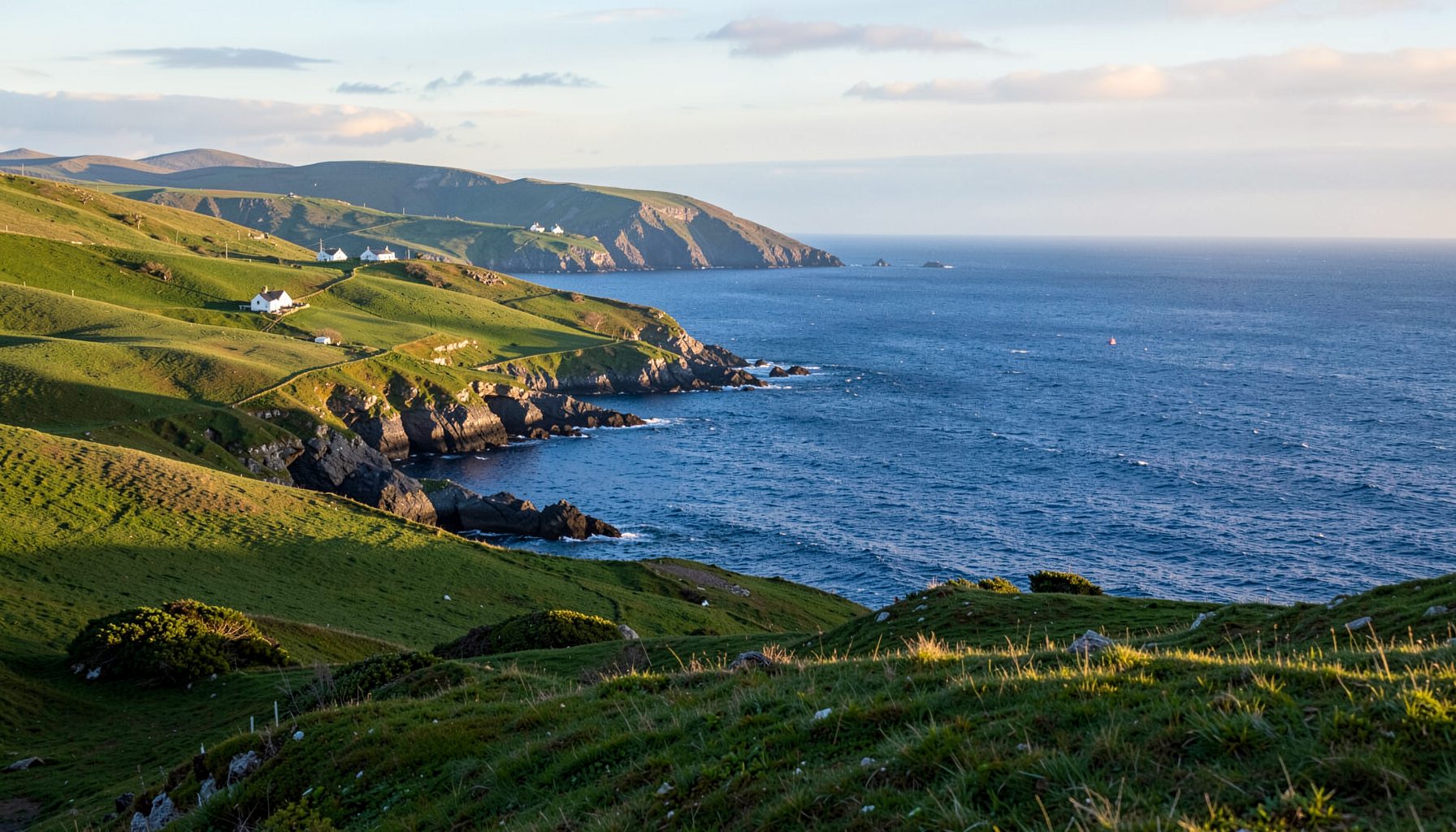
Along the rugged edge of the Iveragh Peninsula, where Atlantic swells crash against black cliffs and small harbours shelter currachs and trawlers, a quiet story of courage has unfolded for nearly two centuries. The Skellig Coast, stretching from Kells through Portmagee, Valentia Island, Cahersiveen and on to Castlecove, has long been one of the most exposed stretches of shoreline in Europe. Sailors have navigated past its headlands for centuries, and when vessels foundered, local men launched small wooden boats into mountainous seas to bring survivors ashore.
This tradition of rescue did not appear from nowhere. It grew out of a patchwork of voluntary associations, government-appointed coastguards, church-supported charities, and later, professional lifeboat crews. The story of those services is woven into the same fabric that produced the monastic settlement on Skellig Michael, a UNESCO World Heritage Site whose lonely silhouette still draws visitors and film crews to these waters.
Roots in Peril: The Birth of a Rescue Tradition
Before any organised service existed, rescue along the south-west of Ireland was improvised and dangerous. Local pilots, fishermen and clergy often led efforts to aid stricken vessels, relying on knowledge of currents, hidden rocks and narrow harbour entrances. There was no insurance, no telegraph and rarely any reward beyond gratitude and the occasional salvage claim. Shipwrecks could mean sudden wealth for a village if cargo washed ashore, but more often they meant tragedy, with bodies recovered by people who knew the victims by name.
The early nineteenth century brought a sharper awareness of the human cost of wreck. Press reports from Cork, Waterford and beyond began to highlight the dangers faced by coastal communities and the crews who tried to help. Charitable subscription lifeboats, funded by donations from churches, businesses and wealthy landowners, began to appear on the most dangerous stretches of shore. These boats, often named after benefactors, were operated by volunteer crews drawn from the same fishing communities that sailed the same waters in winter.
The Royal National Lifeboat Institution Comes to Ireland
The arrival of the Royal National Lifeboat Institution on the Irish coast in the 1850s transformed the character of local rescue. By the 1860s and 1870s, new pulling and sailing lifeboats had been stationed at Valentia, Cahersiveen, Portmagee and other points along the Iveragh Peninsula. The institution funded the boats, their maintenance and the training of crews, while local people supplied the muscle, the knowledge and the courage.
Stations followed a familiar pattern. A boathouse, sometimes of stone, sometimes of timber, was built near the water. A coxswain was appointed, and a crew of perhaps ten or twelve local fishermen stood ready for the maroon signal. When a wreck was sighted or a distress rocket fired, the crew launched into darkness, often in conditions that modern recreational sailors would never consider. The institution kept careful records of services rendered, lives lost, and silver medals awarded, and many of those records survive in archives today.
Watching the Atlantic: Coast Guard Stations on the Iveragh Peninsula
Alongside the lifeboat stations, a network of coastguard lookouts was established under British administration. The Coastguard Service, originally formed to prevent smuggling, was reorganised in the early nineteenth century to focus on maritime safety, salvage and the prevention of wrecking. Small detachments were posted at strategic points along the Skellig Coast, often occupying purpose-built cottages with clear views of the offshore approaches.
Their duties were varied and relentless. Watchkeepers logged every vessel that passed, recorded weather conditions, and signalled passing ships with flags and rockets. When a vessel ran into trouble, the coastguard coordinated with the lifeboat crew and local pilots, often riding on horseback along cliff-top paths to raise the alarm. After Irish independence, the service evolved under different banners, but the watch tradition continued, supported by local men who understood the rhythms of the Atlantic better than any map could convey.
Lifeboat Crews and the Heartbeat of Coastal Communities
The crews themselves were not professional seamen in the modern sense. They were farmers, fishermen, shopkeepers and postmen. Some had learned to sail before they could read. They trained in oar drills, sail handling, and later, navigation and engine maintenance. The boathouse became a focal point of village life, with launch practices often drawing curious onlookers and anxious families.
Tragedy was never far away. Several stations along the Iveragh Peninsula lost crew members to the very seas they sought to tame. Local memory, preserved in community newsletters, school projects and the oral traditions of older residents, still speaks of particular storms, particular boats and particular losses. The resilience of the survivors and the determination of the next generation to continue volunteering shaped a culture where service to others was simply expected.
Modern Operations and the Volunteer Spirit
Today, the responsibility for maritime safety along the Skellig Coast is shared between the Irish Coast Guard, community-run rescue groups and statutory services. Helicopters, fast rescue craft and modern communications have transformed the speed and scale of response, but the underlying principle remains the same. Local knowledge, quick reaction and skilled seamanship still save lives.
Volunteer involvement remains the backbone of many smaller stations, with fundraising, training and equipment maintenance carried out by members of the same communities that supplied crews in the 1800s. The transition from oar-powered pulling lifeboats to self-righting all-weather vessels and high-speed inflatables reflects technological progress, yet the spirit of readiness is unchanged.
A Shared Heritage: Linking Ireland and the Southern Hemisphere
Across the globe, similar volunteer traditions took root in other former colonies of the British Empire. Sydney received one of the very first purpose-built lifeboats in the southern hemisphere in the early 1800s, and the Australian Volunteer Coast Guard, formed later in the twentieth century, grew out of that earlier tradition. Volunteer Marine Rescue organisations now operate from places as far apart as Brisbane and Cairns, watching over busy commercial shipping lanes and popular recreational waterways.
Australian beach culture is anchored in another volunteer movement, Surf Life Saving Australia, which trains tens of thousands of members each year and patrols stretches of coast that see millions of visitors. The country also regulates commercial and recreational boating through the Australian Maritime Safety Authority, which works alongside state agencies to maintain safety standards. In a different hemisphere, these Australians face sun, sharks and sandbars rather than Atlantic gales, but the values of preparation, local knowledge and unpaid service echo the work of crews who once launched from Valentia and Portmagee.
A more personal link runs through migration history. Many Irish seafarers, including some who had served in coastguard or lifeboat roles, later sailed to Australian ports as crew, settlers or gold seekers. Their seamanship travelled with them, and in several coastal communities around Melbourne, Hobart and Sydney, the descendants of those Irish sailors carried maritime skills into new volunteer brigades, lifeboat crews and fishing fleets.
Visiting the Skellig Coast and Honoring Its Maritime Story
Travellers interested in tracing this heritage along the Skellig Coast may find it helpful to keep the following in mind:
- Visit the Valentia Island heritage sites, including the former coastguard station and related maritime exhibits.
- Walk the cliff paths near Portmagee and Cahersiveen to appreciate the view that watchkeepers once scanned.
- Time a visit to coincide with community maritime festivals, which often feature demonstrations and crew reunions.
- Support local fundraising efforts for lifeboat stations and coastguard volunteer groups during your stay.
- Take a boat trip out to Skellig Michael itself, where weather conditions made rescue work especially hazardous.
Plan a journey along the Skellig Coast and step into a landscape shaped by centuries of maritime courage. From historic lifeboat stations to modern rescue bases, every harbour tells a story worth hearing.