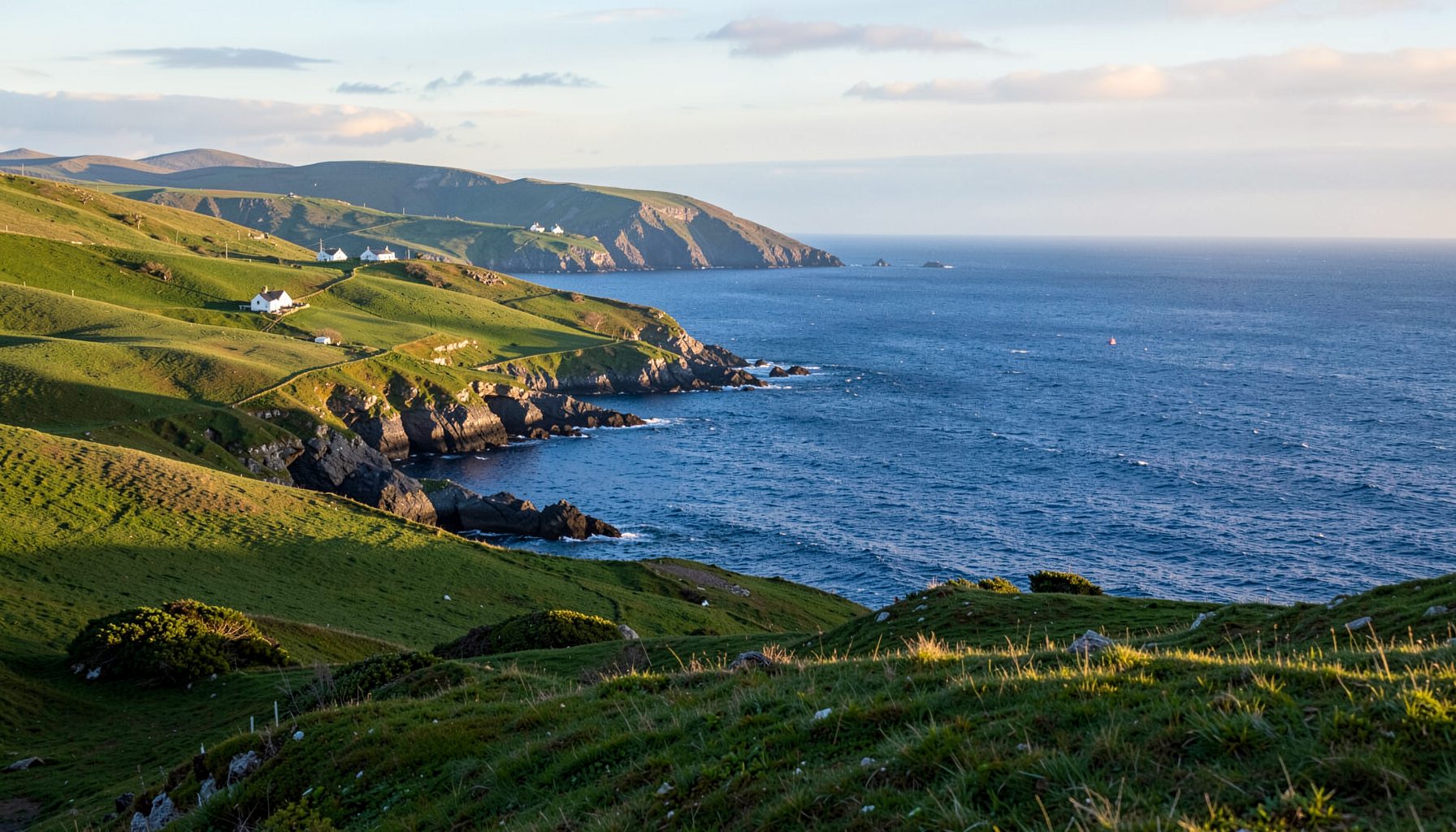
Dolphins and Whales Along Ireland's Skellig Coast
The first time you see the curved back of a whale slip beneath a swell, time seems to pause. Australians often plan whale watching holidays around Hervey Bay or the headlands near Eden on the New South Wales south coast, but on the far side of the world, Ireland's Skellig Coast offers encounters of equal power and intimacy, often with far fewer boats competing for the view.
Stretching along the Iveragh Peninsula in County Kerry, the Skellig Coast runs from Kells in the west to Castlecove in the south, with Valentia Island guarding its eastern edge and the jagged twin peaks of Skellig Michael rising from the deep water further offshore. The region is part of the celebrated Wild Atlantic Way and draws visitors for its cliffs, lighthouses, monastic heritage, and a surprising abundance of marine life just beyond the shoreline.
Travellers arriving from Sydney, Melbourne, or Perth via Dubai or Singapore on Qantas or Emirates routings will find a coastline that feels both familiar and utterly foreign. Below, the practical details of where to watch dolphins and whales, when to travel, and how to behave around these remarkable animals.
The Marine Visitors You Are Likely to Meet
The waters off the Iveragh Peninsula host an impressive mix of cetaceans. Bottlenose dolphins are seen almost year round, often hunting mackerel close to shore in small pods of five to fifteen animals. Minke whales appear from late spring through autumn, frequently lunge-feeding at the surface where baitfish are pushed up by diving gannets. Harbour porpoises, the smallest cetacean in European waters, are spotted by patient observers near Valentia Sound, particularly on calm mornings.
Larger visitors arrive with the seasons. Humpback whales, whose Atlantic population mirrors the famous East Australian humpback migration that funnels past Cape Byron each winter, pass the Skellig Coast twice a year. They head north towards their feeding grounds off Iceland and Norway in April and May, and return south with calves from August into October. Fin whales and even occasional blue whales have been recorded on the deeper shelf edge, although these encounters are reserved for those with patience, decent binoculars, and a knowledgeable skipper.
The contrast with home is fascinating. Australian humpbacks gather in the warm waters of the Coral Sea to calve, while their Atlantic cousins favour the sheltered bays around the Azores, the Caribbean, and the Cape Verde archipelago. Yet the rhythm of northbound and southbound travel is essentially mirrored, which makes the experience feel oddly recognisable to anyone who has watched whales from a boat at Tangalooma or off the coast of Eden.
Land-Based Viewing from Headlands and Harbours
One of the great pleasures of the Skellig Coast is that you do not need a boat to see dolphins. From a number of headlands, you can scan the swells with a pair of binoculars and watch pods arc through the surf. Bolus Head, reached by a narrow road just west of Kells, is perhaps the most famous vantage point. On a calm day with the sun behind you, dolphins are frequently spotted in the deep water beyond the stacks, and the occasional minke whale breaks the surface a kilometre or two further out.
St Finian's Bay, with its sweeping arc of sand and low cliffs, is calmer and easier to reach. It is popular with photographers who like the foreground of weathered rock and the dark blue Atlantic beyond. Portmagee, the small village that serves as the main departure point for boats to Skellig Michael, also offers excellent viewing from its stone pier. Locals there will often point to porpoises playing in the tidal race beneath the bridge to Valentia Island.
Further east, the viewing platforms near the Valentia Island lighthouse and the climb up to Geevagh provide long, unobstructed sight lines to the south. Castlecove, marking the eastern end of the Skellig Coast as it transitions into the broader Ring of Kerry, is another favourite spot. As at home in Australia, where places like Cape Solander and the Kurnell lookouts near Sydney draw weekend whale watchers, these headlands work best early in the morning when wind is light and glare is low.
Going Out on the Water
Boat trips remain the most reliable way to come close to whales, and the Skellig Coast has a small but well-regarded fleet of licensed operators. Most tours to Skellig Michael also keep a sharp lookout for dolphins and whales along the way, and skippers will often switch off engines and let curious pods approach. Several companies in Portmagee and Valentia offer dedicated marine wildlife trips that circle the Blasket Islands, slip past the puffin colonies of the Skelligs, and linger along the shelf edge where larger cetaceans are more likely.
Half-day and full-day options are usually available, with departures depending on weather and sea conditions. The boats are typically sturdy RIBs or small cabin cruisers, similar to the rigid inflatables used on tours off Jervis Bay or at Phillip Island. Smaller groups are easier on the animals, and operators that follow the Irish Whale and Dolphin Group's code of practice are worth seeking out. Booking ahead during the June to August peak is wise, especially for visitors whose travel dates are tied to a working holiday visa window or limited annual leave.
Linking a Wildlife Trip to Skellig Michael and the Blaskets
A dolphin or whale watching experience pairs naturally with the wider Skellig Coast itinerary. The boats that depart from Portmagee to land on Skellig Michael, the UNESCO World Heritage Site famous for its early Christian beehive huts and its cameo in the Star Wars films, cross exactly the same stretch of water that humpbacks and minke whales use during their migrations. Skippers will typically slow or stop for dolphins that approach the boat, and they keep a careful watch for blows on the horizon.
Further west, the Blasket Islands offer another excuse to get out on the water. Trips from Dunquin, just outside the Skellig Coast boundary, pass cliffs alive with seabirds and often encounter dolphins riding the bow wave. Visitors with limited time can combine a morning wildlife trip with an afternoon visit to Valentia Island, where the Tetrapod Trackway and the romantic ruins of the Transatlantic Cable Station add cultural depth to a day built around marine encounters.
When to Plan Your Visit
The season matters more than the precise week. Spring, from mid April through May, offers the chance of seeing humpbacks heading north, often in competitive groups where males chase females. Autumn, from late August through October, brings the southbound migration, frequently including mothers with newborn calves resting at the surface. Summer is the time for resident dolphins and minke whales, with the longest daylight hours and the most reliable weather windows.
July and August are the warmest months on the Skellig Coast, but the Atlantic remains cool, with sea temperatures hovering around fourteen to seventeen degrees. This is a stark change for Australians used to twenty-three degrees off Sydney in February. Pack accordingly, with fleeces, a windproof shell, and decent footwear even if you are only walking out to a headland. The shoulder months of May, June, and September often combine reasonable weather, fewer crowds, and good wildlife sightings.
How to Be a Responsible Wildlife Watcher
Irish law, like the Environment Protection and Biodiversity Conservation Act that governs marine mammal interactions in Australia, treats whales and dolphins as protected species. Irish whale watching guidelines echo those promoted by Australian authorities: stay at least one hundred metres from large whales, fifty metres from dolphins, and never approach a resting mother and calf. Cut engines when animals come to you, move away slowly if they show signs of disturbance, and never feed or attempt to touch them.
Operators on the Skellig Coast who are members of the Irish Whale and Dolphin Group adhere to these standards. Travellers booking through local providers in Portmagee, Valentia, or Cahersiveen should ask directly about the operator's policy before confirming. The same caution that Australian boaties apply when fishing near dolphins in places like Moreton Bay or Jervis Bay applies here, with the added need to be aware of strong tidal streams and Atlantic swells that move quickly.
Preparing for an Irish Coast Adventure from Down Under
Australians heading to Ireland for dolphin and whale watching usually arrive via Dublin and travel south by train, bus, or a hired car. The drive from Dublin to Kells or Portmagee takes around four to five hours, and many travellers break the journey with a night in Cork or Killarney. For those on a working holiday visa, the Skellig Coast is an easy add on to a longer Irish itinerary, with hostels and B&Bs dotted through every village.
Practical preparation matters. Travel insurance that covers marine activities is worth arranging before departure, and a light waterproof jacket should sit in the daypack alongside sunscreen, because the sun off the Atlantic can still burn through cloud cover. Binoculars of at least eight times magnification transform distant splashes into identifiable fins. Mobile coverage is patchy on the headlands, so download offline maps in advance.
Plan your trip with the rhythm of the tides, book a licensed wildlife operator in Portmagee or Valentia, and let the Skellig Coast show you its wild Atlantic heart. From the first dolphin sighting at Bolus Head to a minke whale off the Blaskets, the journey stays with you long after the flight home to Sydney or Melbourne.