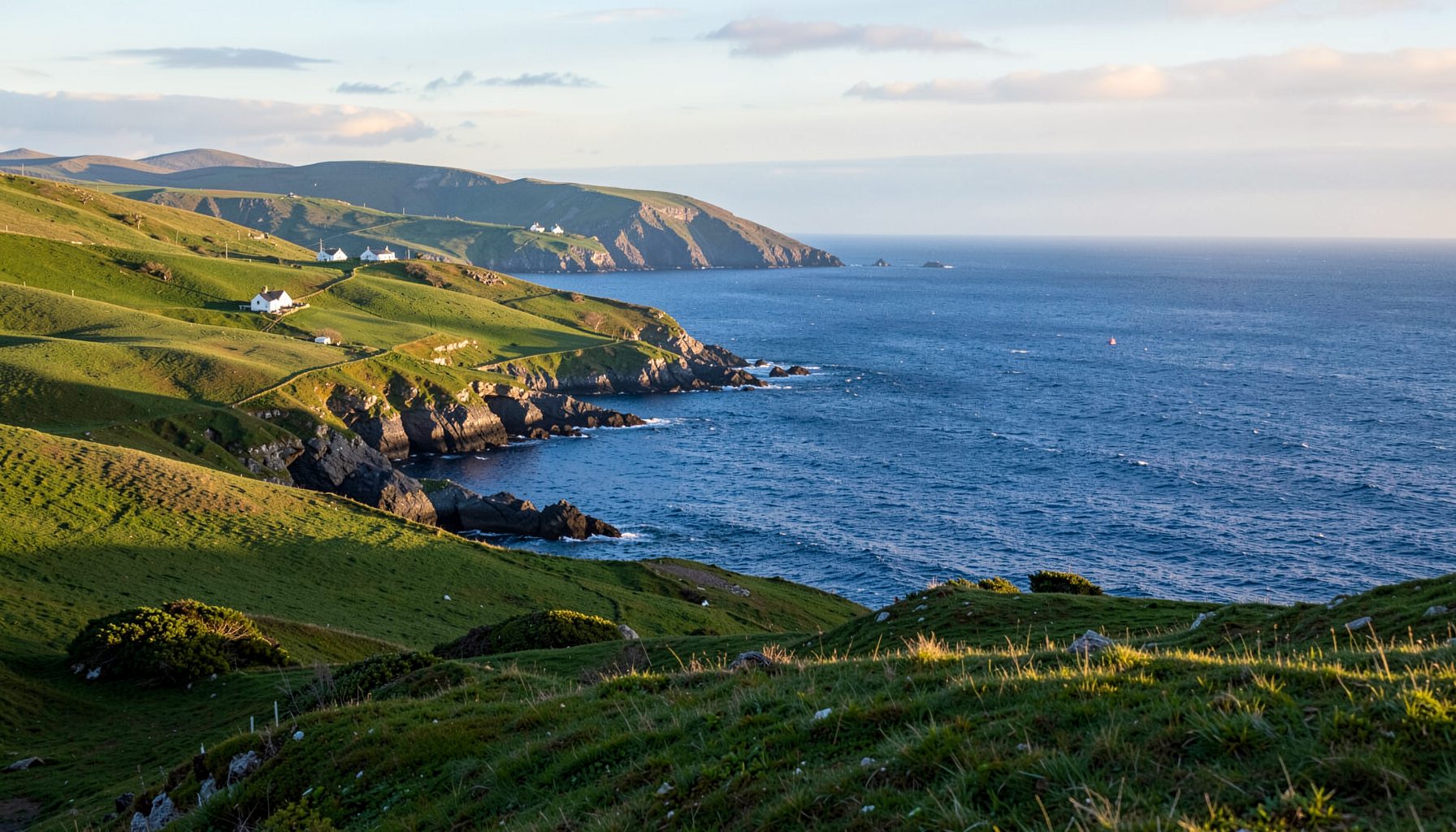
The Best Places for Stargazing on the Iveragh Peninsula
The Iveragh Peninsula is one of Ireland’s finest destinations for seeing a night sky largely free from artificial light. Stretching from Kells and Cahersiveen towards Castlecove, the peninsula contains remote coastal roads, mountain valleys, dark beaches and small communities where street lighting is limited. These conditions make the Kerry International Dark Sky Reserve an exceptional setting for observing stars, planets and the Milky Way.
Clear skies are never guaranteed on the Atlantic coast, yet the changing weather is part of the experience. A break in the cloud can reveal a remarkable number of stars within minutes, particularly around the new moon. The best locations combine a wide view of the horizon with safe access, limited nearby lighting and a place to wait comfortably for the sky to clear.
Stargazing here is also connected to the region’s heritage. Ancient stone monuments, island communities, sea cliffs and mountain passes create a powerful setting after dark. Visitors should treat these places carefully, leave no trace and remember that many viewpoints are reached by narrow roads or lie beside exposed coastline.
Why Iveragh has such dark skies
The Kerry International Dark Sky Reserve covers much of the Iveragh Peninsula and is recognised for the quality of its night-time environment. The reserve extends across a large rural area between the Atlantic coast and the mountains, with relatively little urban development. Villages such as Waterville, Caherdaniel, Portmagee and Ballinskelligs sit within a landscape where artificial light remains modest.
The reserve’s status reflects more than a low number of lamps. Clear horizons, limited industrial activity and local efforts to manage unnecessary lighting all contribute to the quality of the darkness. On a moonless night, the Milky Way may be visible as a pale band stretching across the sky, while brighter planets can often be identified without specialist equipment.
For the best view, allow your eyes 20 to 30 minutes to adjust after leaving bright lights. Keep phone screens dim or covered with red film, and avoid shining torches towards other people. A simple pair of binoculars can reveal the moons of Jupiter, lunar craters and star clusters, even when a telescope is not available.
Waterville and the western coast
Waterville is one of the most recognised bases for astronomy on the Iveragh Peninsula. Its position between Lough Currane and Ballinskelligs Bay gives it access to broad coastal views, while the village itself offers useful facilities before heading into darker surroundings. Areas away from the main centre can provide impressive views towards the southern and western sky.
The coast around Waterville is especially rewarding for watching the changing position of the Milky Way and for spotting bright planets over the Atlantic. Nearby roads and beaches must be approached with care at night, since some have limited parking, uneven ground or no pedestrian lighting. It is important to use official parking areas and avoid blocking entrances used by residents and emergency services.
Waterville’s connection with the Kerry Dark Sky Reserve has also supported local astronomy events and public interest in the night sky. Check community listings and seasonal programmes for guided observations, talks or dark-sky walks. These activities can help visitors understand what they are seeing rather than simply photographing a field of stars.
Ballinskelligs and the Skellig coast
Ballinskelligs is a strong choice for coastal stargazing, particularly around open areas with views across the bay. The beach, ruined abbey and surrounding landscape create a memorable setting, although the ruins themselves should be viewed respectfully and not treated as a place for climbing or late-night exploration. Conditions can change quickly, and sea spray, wind and wet sand are common.
The western outlook is useful for watching sunsets fade into a dark sky. On suitable nights, the horizon may remain clear enough to see bright stars emerging above the Atlantic before the rest of the sky becomes fully dark. The area can also be a good location for landscape astrophotography, with silhouettes of dunes, stone walls or the coastline adding context to long-exposure images.
Skellig Michael should not be treated as a night-time stargazing site. The UNESCO World Heritage Site is reached by boat, has strict visitor arrangements and is not open for casual after-dark access. Instead, enjoy views towards the Skellig Islands from permitted mainland viewpoints, where their outline can become a striking foreground beneath the stars.
Caherdaniel and Derrynane
The Caherdaniel area offers several excellent possibilities for observing the night sky, especially around Derrynane and the quieter roads leading inland. Derrynane Beach can provide a broad view over the sea, while the surrounding hills help shield some inland light. Visitors should check access arrangements and avoid assuming that every beach or car park remains open at night.
The landscape around Caherdaniel is particularly attractive for combining astronomy with local history. Derrynane House and the wider heritage of Daniel O’Connell are important parts of the area, while nearby stone structures and coastal paths show the peninsula’s long human story. These sites should be explored during daylight, with stargazing kept to suitable public areas after dark.
Because the coast is exposed, a sheltered viewpoint may be more comfortable than the beach itself. A clear southern or western horizon is valuable for planets, constellations and meteor showers, but a location with some protection from wind can make a longer observing session much more enjoyable.
Valentia Island and the northern shore
Valentia Island provides a varied night-sky experience, with coastal viewpoints, rural lanes and elevated ground looking towards Portmagee Channel and the Atlantic. Its position near the western end of the peninsula means that many locations have low levels of artificial light. Knightstown and other settled areas are brighter, so moving away from village lighting can make a substantial difference.
The island’s heritage adds depth to an evening visit. Valentia is associated with early transatlantic communications, fossil discoveries and maritime history, all of which can be explored by day. At night, the island’s open outlook is well suited to watching the Moon, bright planets and seasonal constellations.
Portmagee and the mainland viewpoints near the bridge can also be rewarding, but road safety is essential. Do not stop on the bridge, narrow bends or passing places to take photographs. Use a recognised parking area, keep reflective clothing or a small light available, and be aware that low cloud can obscure the stars even when nearby areas are clear.
| Location | Best features | Most suitable for | Points to consider |
|---|---|---|---|
| Waterville area | Coastal outlook and reserve facilities | First-time observers and guided events | Move away from village lights |
| Ballinskelligs | Atlantic horizon, beach and dramatic landscape | Milky Way viewing and photography | Wind, tides and uneven ground |
| Caherdaniel and Derrynane | Dark coastal setting and sheltered options | Longer observing sessions | Confirm access and protect private property |
| Valentia Island | Rural roads, island horizons and heritage | Planet watching and landscape images | Avoid stopping on narrow roads |
| Glen and mountain valleys | Very low local lighting and darker inland skies | Experienced observers and meteor showers | Weather changes quickly; use caution |
| Kells and the eastern approach | Accessible rural viewpoints | Shorter sessions near the peninsula’s edge | More local lighting than the far west |
Glen, mountain valleys and quiet inland roads
The valleys around Glen and the mountain roads between the southern coast and the interior can offer some of the darkest conditions on the peninsula. Inland locations may have less direct exposure to coastal wind, and a hillside can provide a natural shield from distant lights. They are often better suited to observers who are comfortable navigating rural roads and planning carefully before departure.
These areas are not formal observatories, and a dark road does not automatically mean it is a safe stopping place. Pull completely off the carriageway only where this is legally and physically possible. Never use a farm entrance, forestry gate, private driveway or passing place as an informal car park. A daytime reconnaissance is helpful, especially if you intend to bring a telescope or camera equipment.
Mountain weather deserves special attention. Cloud can gather rapidly around high ground, and mist may reduce visibility on the drive home. Bring warm waterproof clothing, sturdy footwear, food, water and a charged phone, while remembering that mobile coverage can be unreliable in remote areas.
Choosing the right night
The phase of the Moon has a major influence on what can be seen. A new moon gives the darkest conditions for faint stars and the Milky Way, while a crescent moon can add attractive foreground light to photographs. A bright full moon hides many dim stars but provides an excellent opportunity to view craters, mountain ranges and changing lunar features through binoculars or a telescope.
The clearest forecast is not always enough. Check cloud cover, visibility, wind, humidity and precipitation for both the observing location and the route home. Coastal weather can vary across short distances, so a cloudy view in Waterville may not mean the sky is closed everywhere on the peninsula. Give yourself time rather than driving rapidly from one viewpoint to another.
Seasonal highlights include Orion and the Pleiades in winter, the Milky Way’s brighter summer regions, autumn constellations and occasional meteor showers such as the Perseids and Geminids. The Northern Lights can sometimes be visible from Ireland during strong geomagnetic activity, but they are unpredictable and should be treated as an occasional bonus rather than the purpose of a trip.
Practical habits for responsible stargazing
A good night under the stars depends on preparation and consideration for local communities. Keep noise low, take all rubbish home and do not leave candles, fires or other sources of light behind. Avoid disturbing livestock, wildlife and nesting birds, particularly near beaches, cliffs and upland paths.
Use a red-light torch, carry spare batteries and tell someone where you are going if visiting a remote area. Binoculars, a star map and a reclining camping chair are often more useful than heavy equipment. Photographers should protect dark conditions by taking test shots with a dim screen and avoiding bright vehicle headlights.
Keep the following principles in mind:
- Check land access, opening times and parking arrangements before travelling.
- Choose a safe public viewpoint rather than stopping on a narrow rural road.
- Dress for cold, damp and wind, even during summer.
- Protect night vision by limiting white light and bright phone screens.
- Leave beaches, monuments, walls and habitats exactly as you found them.
The Iveragh Peninsula rewards patience. Some of the most memorable views may appear after a period of cloud, when the sky opens above the Atlantic and familiar hills become silhouettes. Visit a local heritage or community centre during the day, learn about the place you are in, then make the night sky part of a wider connection with the Skellig Coast.
Check local conditions and community information before setting out, choose a suitable public location, and give yourself time to look up. From Waterville and Ballinskelligs to Valentia, Caherdaniel and the quieter inland valleys, the peninsula offers many ways to experience one of Ireland’s most extraordinary natural landscapes after dark.