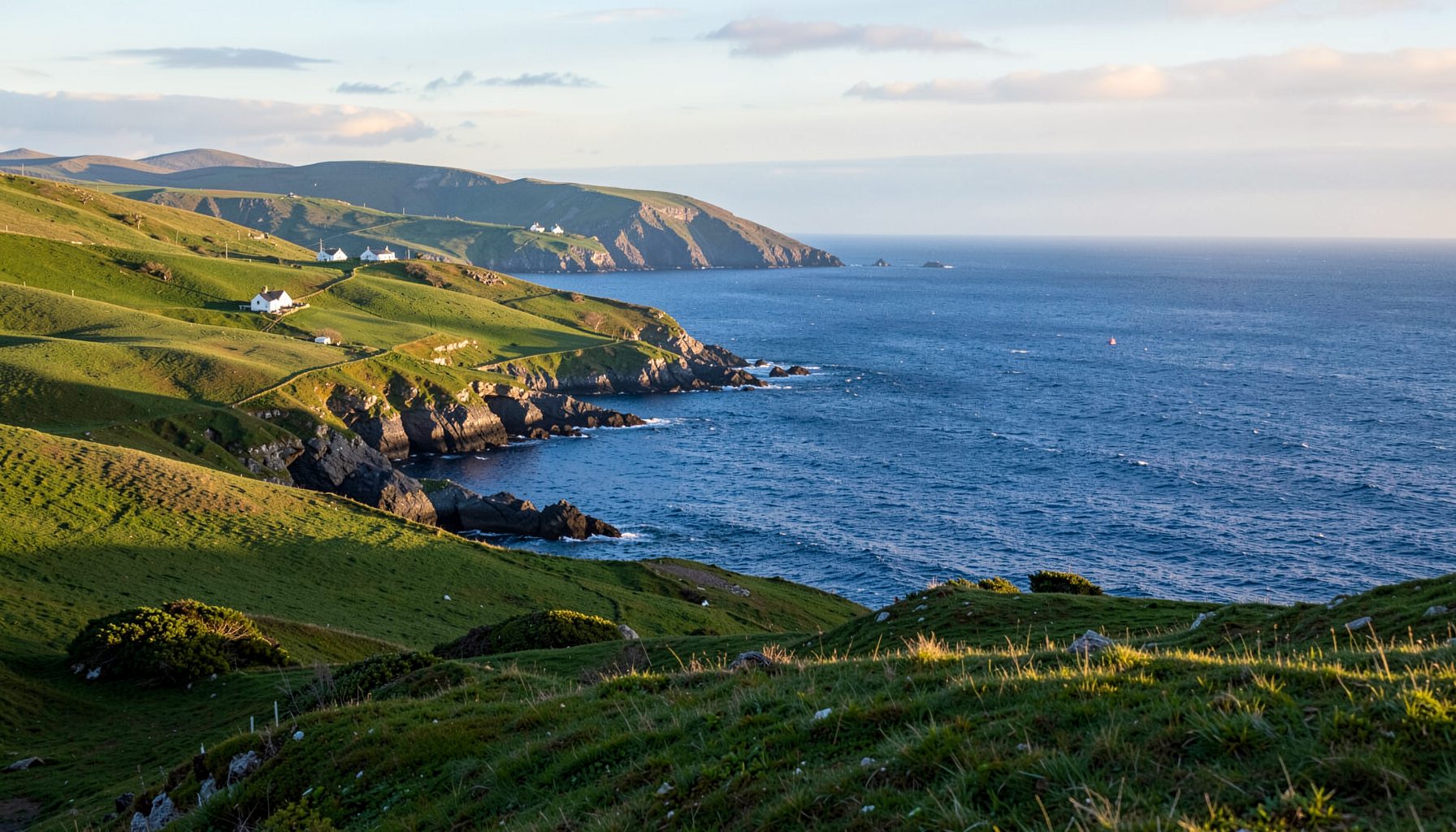
Best Sunrise Photography Spots On The Skellig Coast
The Skellig Coast is often associated with evening light: Atlantic sunsets, dark skies over the Skellig Islands and golden colour on the cliffs. Dawn offers a different character. The first light arrives across the Iveragh Peninsula, touching quiet harbours, mountain ridges, beaches and stone walls before the western ocean has fully brightened.
For photographers travelling from Australia, sunrise here may feel unusually early, especially during Ireland’s summer months. A visitor accustomed to dawn shoots around Sydney Harbour, St Kilda Beach or Noosa will find a quieter landscape, fewer artificial lights and much more changeable weather. The finest images usually come from choosing a sheltered viewpoint, checking access and allowing time for the sky to develop.
Reading The Coast Before Dawn
Much of the Skellig Coast faces west or south-west towards the Atlantic, so the sun does not generally rise from the sea. Instead, morning light appears over the inland hills and eastern side of the peninsula. This makes harbours, beaches and elevated viewpoints especially valuable: they provide a foreground while the rising sun illuminates the landscape behind it.
The best sunrise photography locations are not always the places with the most famous views. A modest pier can produce a stronger image than a dramatic cliff if it offers reflections, layered hills and a clear line of sight. Look for wet sand, seaweed patterns, moored boats, dry-stone walls and headlands that can catch the first warm light.
Conditions can change quickly. Low cloud may conceal the sun while turning the sky pink, then open for a brief shaft of light. Wind can create texture on the water, while a calm morning gives clean reflections. Use a reliable sunrise forecast, but treat it as a guide rather than a promise.
Valentia Island And Portmagee
Valentia Island offers several useful dawn viewpoints because its eastern and northern sides look towards the mainland and inland mountains. Around Knightstown, the harbour provides a peaceful foreground of boats, quayside buildings and Valentia Harbour. Across the water, the mainland hills can catch the first sunlight while the foreground remains in cool blue shadow.
The road towards the island’s higher viewpoints can reveal broader layers of coast and mountain. Geokaun Mountain is better known for expansive daytime and sunset views, yet its height can also work at dawn when clear weather gives long sightlines across the peninsula. Arrive with plenty of time, as narrow roads, gates and walking surfaces are difficult to negotiate in darkness.
Portmagee is especially effective for photographers who want a recognisable coastal scene without a long hike. The bridge and harbour area offer views towards the mainland, with boats, piers and water creating strong leading lines. Reflections are most useful on calm mornings, while mist over the hills can give the image a softer, more atmospheric quality.
Useful Dawn Viewpoints Around The Harbour
- Knightstown harbour and quays
- Valentia Harbour viewpoints
- Portmagee bridge and waterfront
- Elevated roads around Valentia Island
The Skellig Islands may appear as distant silhouettes from several locations, but they are west of the coast and are therefore usually backlit or side-lit at sunrise. Skellig Michael is a UNESCO World Heritage Site and a famous Star Wars filming location, yet it should be treated as a distant subject for a dawn landscape. Boat landings are regulated, weather-dependent and not arranged simply for an early-morning photo session.
Kells Bay And The Northern Inlets
Near the northern end of the Skellig Coast, Kells and its surrounding shoreline provide a more intimate setting. Kells Beach can work well when the tide leaves reflective sand, with headlands and offshore shapes adding depth to a wide-angle composition. The scene is less about a dramatic sun emerging from the horizon and more about gradual light spreading across the water and hills.
The area also suits photographers who prefer a quiet, natural foreground. Sea grasses, rocks, fences and low dunes can frame the rising light without making the image feel crowded. On some mornings, the cloud above the Atlantic remains grey while the land behind Kells turns gold, producing a subtle contrast that is easy to miss if you arrive after sunrise.
Take care with beach access before setting out. Some nearby lanes lead towards private land, houses or farm entrances, and parking is limited in rural areas. Keep gates closed, avoid blocking local access and do not assume that a place visible from the road is an unrestricted public viewpoint.
Ballinskelligs And Waterville Light
Ballinskelligs is a strong choice for photographers seeking a combination of beach, ruins and inland light. The old Ballinskelligs Castle and the remains of the abbey create distinctive foreground subjects, while the surrounding shoreline can glow as dawn reaches across the peninsula. At low tide, the beach gives more space for compositions, although wet stone and slippery seaweed require care.
The castle is a historic structure rather than a formal sunrise platform, so photography should respect barriers, fragile masonry and nearby residents. A telephoto lens can isolate the ruin against a pale sky, while a wider lens can include the beach, headland and changing colour. The nearby village and coastal roads can also offer quieter alternatives if the main beach is exposed to wind.
Waterville faces the Atlantic and is naturally associated with sunset, but its promenade and surrounding landscape remain worthwhile at dawn. Morning light can arrive from behind the inland hills, illuminating the town, shoreline and distant ridges. On a clear day, the contrast between cool ocean shadow and sunlit slopes creates a layered image rather than a conventional sunrise-over-water photograph.
Details To Watch For In Morning Compositions
- Castle ruins framed by wet sand
- Reflections in shallow tidal pools
- Sunlit ridges behind the coast
- Low cloud resting over the Atlantic
Waterville is also practical for visitors who want access to services after the shoot. Photographers can finish before the town becomes busy, then find breakfast or coffee when local businesses open. Opening times vary by season, so early risers should carry water and a small snack rather than rely on finding a café before dawn.
Derrynane And Caherdaniel
Derrynane offers a varied sunrise setting, with sheltered bays, islands, dunes and the historic landscape associated with Daniel O’Connell. The beach and surrounding shoreline can produce calm compositions when the tide is suitable, while nearby elevated roads reveal a broader view across the bay. Early light on the hills behind the water often gives the scene its strongest colour.
The area around Derrynane House includes managed grounds and heritage features, so access should be checked before a pre-dawn visit. Beaches and public roads may be accessible when visitor facilities are closed, but gates and seasonal restrictions still apply. A headlamp with a red-light setting can help preserve night vision and avoid disturbing other people.
Caherdaniel and Castlecove are particularly appealing when the sky is broken by cloud. Small coves and rocky points can catch warm light in short bursts, creating opportunities for telephoto images as well as wide coastal views. Castlecove’s sheltered shape also makes it useful on windy mornings when more exposed beaches are uncomfortable for tripod work.
The narrow roads between these communities can be challenging before daylight, especially for drivers unfamiliar with Irish driving customs. Vehicles travel on the left, rural roads may have no shoulders and local traffic can include walkers, cyclists, tractors and livestock. Drive slowly, use marked parking areas where available and never leave a tripod or vehicle obstructing a passing place.
Planning A Comfortable Dawn Shoot
Time is the most important part of a sunrise photography plan. Reach the chosen location at least thirty minutes before the forecast sunrise, and allow longer if the route includes an unfamiliar lane or a walk from a parking area. Blue-hour images made before the sun appears can be among the most atmospheric results of the morning.
An Australian visitor may need to adjust quickly to Irish seasonal daylight. In June, dawn arrives much earlier than many people expect, while winter mornings are later but colder and darker. Someone flying from Melbourne, Sydney or Brisbane may also be managing jet lag, so a short reconnaissance during daylight can make the actual shoot safer and more productive.
Weatherproof clothing matters even when the forecast looks mild. Atlantic wind can make a still morning feel cold, and light rain can arrive without much warning. A sealed camera bag, lens cloths, spare batteries and a compact rain cover are more useful than an oversized collection of lenses.
A Practical Sunrise Camera Kit
- Wide-angle lens for beaches and harbour scenes
- Telephoto lens for distant islands and lit ridges
- Sturdy tripod with a quick-release plate
- Headlamp, spare batteries and lens cloths
Use a graduated filter or exposure bracketing when the sky is much brighter than the foreground. Keep the horizon level, watch for clipped highlights and check the corners of the frame for fence posts or stray tripod legs. Long exposures can smooth water, but a faster shutter speed may better preserve moving cloud and the shape of breaking waves.
Local businesses are part of the photographic experience. In the Australian market, travellers often expect early coffee, card payments and broad opening hours, but small Irish villages operate on a seasonal rhythm. Carry euros as well as a bank card, check whether a café or service station opens early, and support local shops, galleries and heritage initiatives when they are operating.
Respecting The Coast At First Light
A sunrise image is never worth standing on an unstable cliff edge, crossing private ground or ignoring a tide warning. Coastal rocks can be slick, and darkness makes distance and depth difficult to judge. Stay behind barriers, keep away from wave-washed ledges and give yourself a safe route back before concentrating on composition.
The Skellig Coast is a lived-in region rather than a backdrop created solely for visitors. Residents, farmers, fishers and community groups use its roads and shorelines every day. Keep noise low near homes, avoid bright lights directed towards houses and leave no food packaging, tape or other equipment behind.
The same care applies to historic places such as Ballinskelligs Castle, Derrynane’s heritage grounds and religious sites. Do not climb fragile walls or move stones to build a composition. A respectful distance often produces a stronger photograph because the structure remains part of its real setting.
Plan a dawn outing from Kells to Castlecove, choose one area rather than rushing between several, and give the changing light your full attention. Visit the Skellig Coast’s community and heritage information sources before you travel, check local access and weather conditions, then set out early for the quiet colour that makes these shores unforgettable.