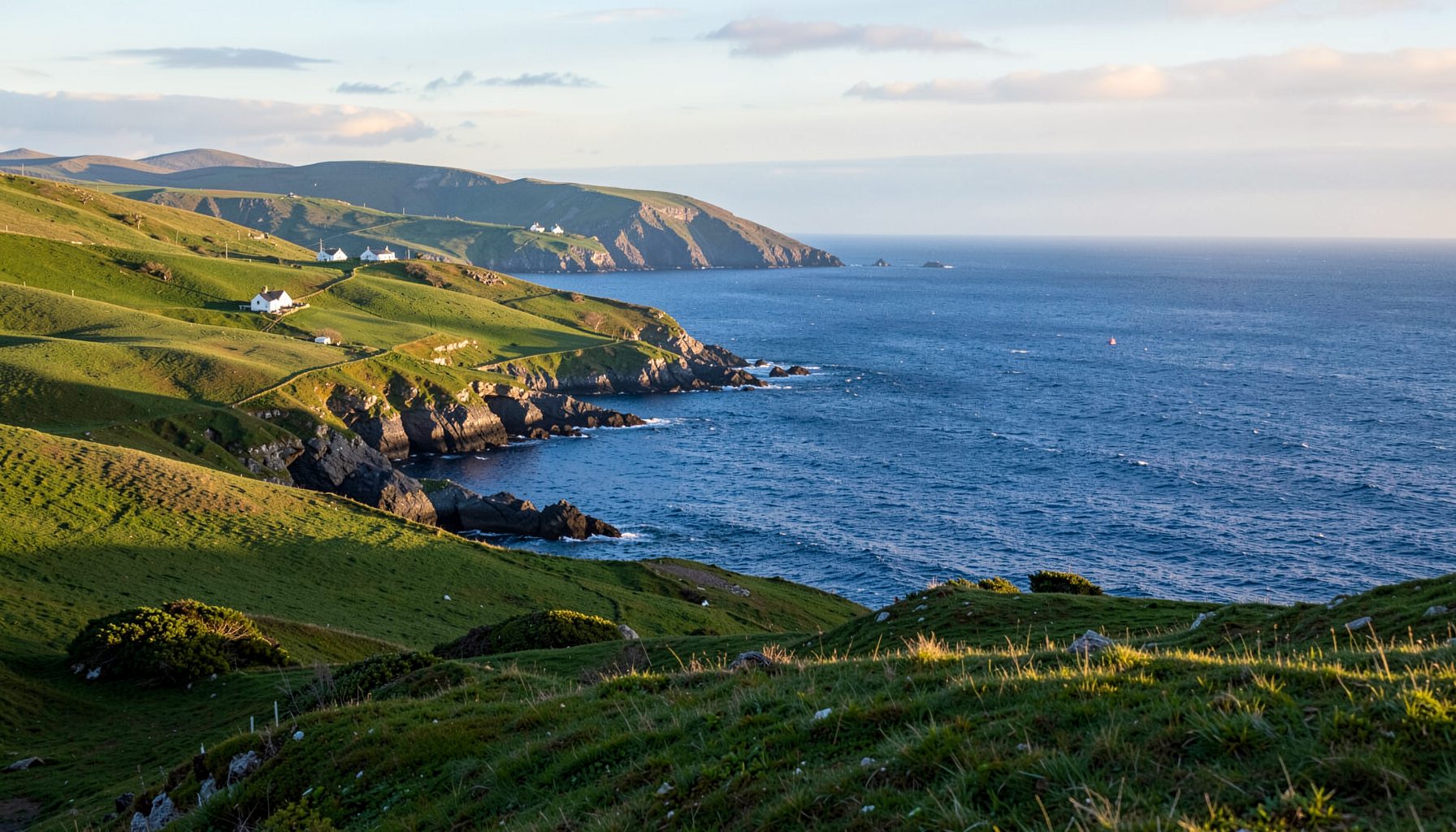
Casting Lines from the Edge of Iveragh: Shore Angling near Waterville
Waterville sits at the meeting point of sea and mountain on Ireland's southwest coast, ringed by cliffs and Atlantic breakers that drop away to a saltwater frontier shaped by centuries of storm and salt. From its stony bays and pier edges, anglers can drift a line into deep blue water without ever stepping into a boat, reaching into waters known for bass, pollock, mackerel, and the occasional determined wrasse. Shore angling here rewards anyone who reads the swell, learns the rhythm of the tide tables, and accepts that the wind will decide more than you expect.
For Australian travellers the appeal is immediate. Anyone who has flicked a soft plastic off the rocks at Lorne, tailed bream in the washes of Sydney Harbour, or queued at dawn for a spot on Port Phillip Bay will recognise the same patient pursuit here on the Iveragh Peninsula. The technique is universal — find structure, find a current line, hold the bottom — but the stage looks different, greener and wilder, with dry-stone walls replacing the timber pylons of a Melbourne marina. Bring a thermos, dress for four seasons in one afternoon, and the Atlantic does the rest.
Lough Currane and the sea angling tradition
Just inland of Waterville, Lough Currane remains one of Ireland's most celebrated sea-trout fisheries, fed by the Currane River as it tumbles down from the Caha Mountains and threads into Ballinskelligs Bay. From the lake shore near the village, casting at dusk with an intermediate line can pull sea-trout that flash silver beneath the surface during a hatch. The setting feels a long way from chasing Murray cod on a winter night or working a yellowbelly into a Gippsland billabong, yet the quiet hour spent waiting for a take is unmistakable.
Where the river meets the bridge near the village, drop a worm or prawn downstream on a light ledger rig and you may pick up a fresh-running specimen. Local permit rules apply, and rods are usually restricted to a single hook, mirroring the catch-and-release ethos many Australian anglers apply on pressured trout streams such as the upper Mersey. Treat each fish with a wet hand, a quick photo, and a return to the current.
Ballinskelligs Bay: rocks and quiet inlets
South of Waterville, Ballinskelligs Bay curves for several kilometres in a broad sandy crescent, fringed by headlands that fish better than the open beach. The rocky outcrops around St. Finian's Bay and the northern shoulders near the old castle hold bass through summer and the first autumnal chill. A flick of a metal lure or a long-casting plug worked slowly along the kelp edges often draws a take just before dusk.
Slip into the smaller inlets west of the bay during a settled spell and you can sight-fish for mullet cruising the margins, much like chasing yelloweye in a clear South Australian gutter. Work a small piece of breadflake under a tiny float and let the current carry the offering along. The clarity here is a reminder that the Atlantic is often gin-clear, especially after a calm morning, and a careful step along the intertidal shelves feels like a slow stroll across a Noosa rock pool at low tide.
Piers, harbours and markers worth knowing
The pier at Waterville itself gives newcomers an honest introduction to shore angling. Drop a weighted herring strip down among the mooring lines and you stand a strong chance of pollock or a few plump mackerel for the table. Newcomers and families are well served here, much as on a Queensland pontoon or the breakwater at Coffs Harbour. The cast does not need the full overhead of a surf beach, and the sloping walkway helps anyone unsteady on wet stone.
A short drive west, the harbour at Portmagee opens another reliable mark with deeper water close to the wall, particularly when a push of tide feeds hard against the structures. Use a two-hook flasher rig with mackerel strip or razorfish and work the rod tip steadily to imitate a wounded baitfish. From late spring onward, expect thornback rays, sometimes called maiden ray in older Irish fishing logs, which respond to a whole squid bait pinned to a wide-bend hook.
Tides, weather and the window of opportunity
The Atlantic coast obeys a tidal swing that can push water levels by more than three metres twice a day, exposing reefs that hold fish at high tide and then either smothering them in weed or stranding them in pools at low water. Plan a session around the last two hours of the flood, when bait pushes in with the rising sea and predatory fish lay up along the current edges. Slack water rarely produces, much as Australian anglers know the run-out tide at Noosa is where the flathead sit.
Weather rules everything. Gusts above 25 knots will pin most shore anglers back to the cafés and pubs around Waterville, and many marks can be sketchy in a building south-westerly. Watch the swell charts as closely as you would monitor a Southerly Buster crossing Bass Strait before a Tasmania trip, and aim for the gaps between frontal systems. A calm dawn with a soft offshore breeze, light cloud, and a falling pressure reading of two or three millibars often arrives a few times each month.
Heritage stones among the fishing grounds
The Iveragh coastline carries far more than rod-bending potential. Walking the cliff paths between marks you pass markers from Ireland's early Christian centuries that quietly watch over the same fishing ledges still worked today. The ancient ogham stones scattered along the Iveragh Peninsula speak of a seafaring heritage built on the harvest of these very waters, and pauses like this are part of any angling holiday worth its name.
Tucked into small laybys overlooking the cliffs, several stones bear inscriptions of an early alphabet cut by monastic communities who lived from the sea. Spending time at these old markers before or after a session feels less like sight-seeing and more like listening. Even a half-hour reading the inscriptions turns a coastal ramble into a layered conversation between fish, weather, and a much older Ireland.
Species worth targeting from the shore
Season and location decide what shows up, but a working knowledge of the residents saves fruitless hours. Spring and early summer bring mackerel in numbers, often within casting range of the smaller piers when a hint of north-westerly wind pushes baitfish shoreward. By midsummer, bass roam the surf edges and rocky points at first light, taking surface lures fished with a measured walk-the-dog retrieve.
Late summer and into early autumn, the pollock run thickens as young fish follow fry into the kelp. A small green-and-silver metal jig fished on a fast sink-and-twitch retrieve is the local pattern, and it is the closest European cousin to the work most Victorian anglers do on Australian salmon off the surf beaches near Warrnambool. Winter belongs to the cod and the more determined rays, often best sought in deep, dark water after dark from a stable mark with a heavy ledger rig and a whole squid or bluey bait.
Tackle, baits and timing worth packing
Pack a 9-foot spinning rod rated around 15 to 40 grams to cover most shore marks here without overworking you on the climb down, plus a second rod set up heavier for bait fishing into the deeper edges. Treat the footing with the same respect you would the basalt boulders of a Mornington Peninsula mark; wave-washed green weed is lethal, and a good pair of felt-soled boots makes the day. Australian visitors used to a state recreational fishing licence should note that Ireland runs differently: trout or salmon fishing on Lough Currane requires a local permit, while saltwater shore angling is generally free. A few euros in cash for the smaller pubs and bait stations never hurts, even though cards are widely accepted in the larger villages.
Aim each session around the last two hours of the flood when bait pushes in with the rising sea, and let the wind drop in the early morning rather than chasing the bite at midday when light and pressure flatten out.
- Two rods set up ready: one for light lure work around 20 grams, one heavier for bait fishing into the deeper edges.
- A small tackle wallet with enough lead to adjust to drift, snapper-style swivels, and a basic selection of wide-gap hooks from size 2 down to size 1/0.
- Lures: a couple of metal slugs in the 20- to 40-gram range, a soft plastic or two rigged weedless, and a single surface stickbait for calm evenings.
- Baits: frozen herring or mackerel strip, whole squid cut to suit, and a pack of ragworm, which travels flat and works for almost every species here.
- Tide times printed before leaving home, and a waterproof notebook to log catches, wind, and pressure for next season's plan.
Plan the trip around the late May to early October window for the best combination of settled weather and peak shore action, and you will find Waterville a generous base for a week of casting, walking, and watching the Atlantic do its patient work. Browse the rest of the Skellig Coast site for community events, village walks, and the heritage trails that turn a fishing holiday into something richer than the catch alone.