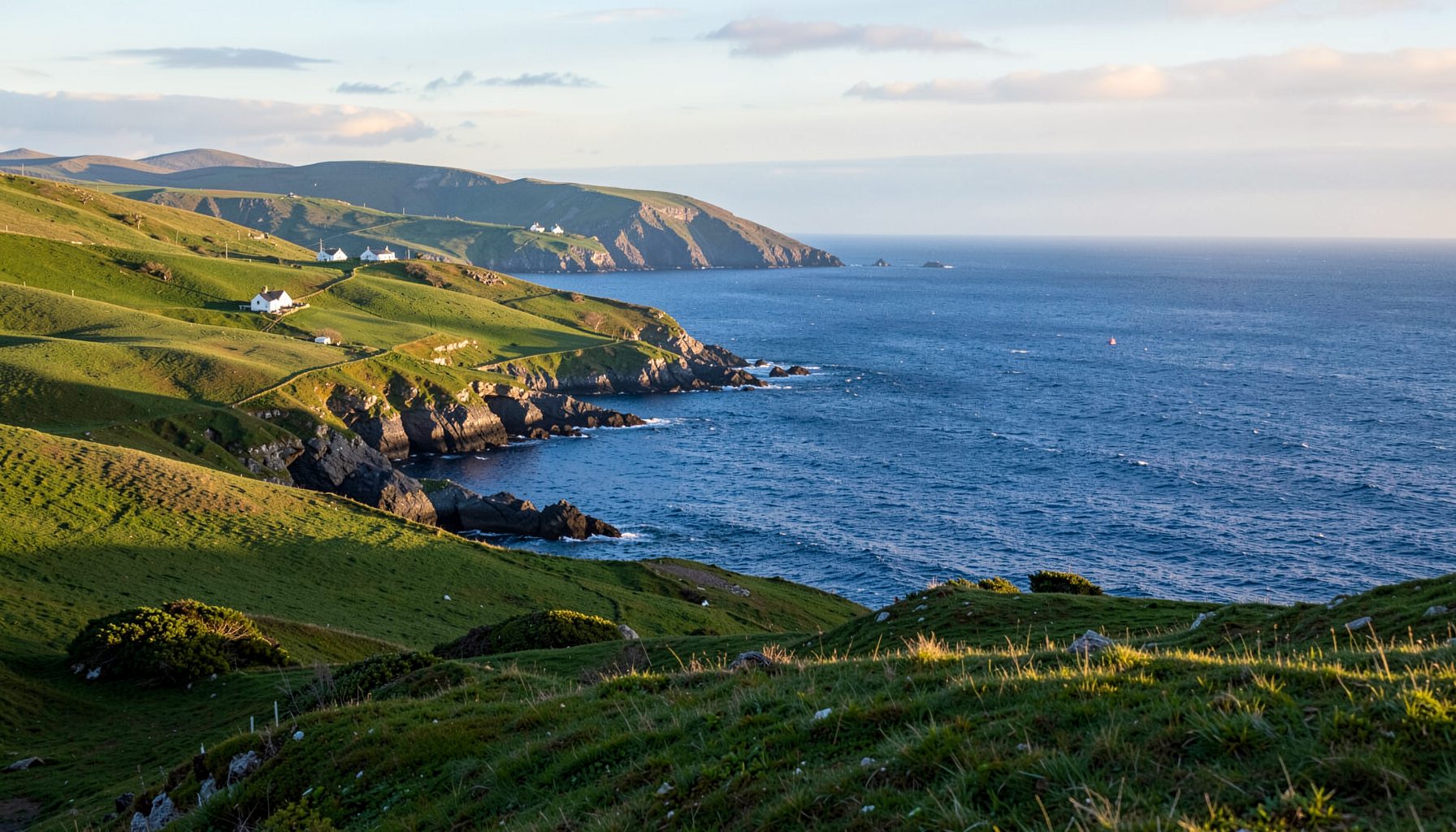
The best beachcombing spots along the Skellig Coast
The Skellig Coast offers a rich variety of shoreline for beachcombing, from broad sandy strands and sheltered coves to rocky ledges shaped by Atlantic weather. Along the route from Kells to Castlecove, each beach has its own character, geology and rhythm, with seaweed, shells, driftwood, polished stones and occasional signs of maritime history appearing after the tide retreats.
Beachcombing here is best understood as a slow, observant activity rather than a search for valuable objects. The pleasure lies in noticing colour, texture and movement: a band of pink granite, a whelk casing, a fragment of sea glass or the intricate holdfast of a kelp frond. A clear awareness of tides, wildlife and local customs helps keep these shore visits enjoyable and responsible.
Conditions change quickly on the Iveragh Peninsula. Wind can rearrange a beach overnight, while a spring tide may uncover areas hidden during a previous visit. The most rewarding outing often combines a little preparation with plenty of patience.
Kells Bay And The Northern Approach
Kells Bay is a gentle starting point for exploring the coast. Its shoreline includes sandy areas, shingle and rock pools, creating several small habitats within a relatively short walk. After rough weather, beachcombers may find driftwood, cuttlefish bones, mussel shells and smooth stones gathered along the strand line.
The bay also has strong links with the wider landscape of the Iveragh Peninsula. Views extend across the water towards the coast and islands, while the changing light makes the same stretch of shore feel different throughout the day. Walk above the high-water line where possible, taking care around soft ground and slippery rocks.
For a quieter search, visit outside the busiest part of the day and look along the upper beach rather than concentrating only on the water’s edge. Small discoveries are often easier to spot where seaweed has dried into uneven bands.
Reenroe And Ballinskelligs Beach
Reenroe Beach, near Ballinskelligs, is one of the most accessible places for a traditional sandy beach walk. Its open profile makes tide lines easy to read, and the beach can reveal a varied mix of shell fragments, rounded pebbles and marine vegetation. The wide view towards the Skellig coast adds a strong sense of place to even a short visit.
Ballinskelligs Beach offers a different kind of beachcombing experience, combining sand with historic features and a sheltered coastal setting. Nearby remains connected with McCarthy’s Castle and the former abbey remind visitors that this shore has long been part of local life. Finds should be observed rather than removed where they may have archaeological or historical significance.
The local learning centres can also provide useful context for understanding the area’s natural and cultural heritage. Beachcombing becomes more meaningful when a shell, stone or piece of driftwood is considered as part of a living coastal system rather than as an isolated souvenir.
| Shoreline | What to look for | Best conditions | Particular care |
|---|---|---|---|
| Kells Bay | Driftwood, shingle, seaweed and shell fragments | After a moderate swell and falling tide | Slippery rocks and uneven ground |
| Reenroe Beach | Pebbles, shells, sea glass and wrack lines | Low tide with good visibility | Keep clear of dunes and nesting areas |
| Ballinskelligs Beach | Sand-polished stones and marine debris | Early morning or quieter seasons | Respect historic structures |
| St Finan’s Bay | Shells, rock pools and unusual stones | Calm weather and a receding tide | Exposed Atlantic conditions |
| Waterville Beach | Shingle, rounded stones and driftwood | After wind from the open sea | Watch for changing water levels |
| Derrynane Beach | Shells, seaweed, pebbles and natural curiosities | Low tide in settled weather | Avoid disturbing wildlife |
| Castlecove Beach | Small shells, sea-worn stones and driftwood | Around low water | Do not climb unstable rocks |
St Finan’s Bay And The Atlantic Edge
St Finan’s Bay is a particularly atmospheric location for examining the meeting of land and sea. Its shore can produce shells, seaweed, rounded stones and fragments of marine life, while the exposed position means that beach material changes noticeably after storms. The bay’s connection with Skellig Michael gives the surroundings an additional layer of historical and spiritual significance.
This is a place where safety should take priority over collecting. Atlantic swell can arrive unexpectedly, and rocks become treacherous when coated with algae. Stay well back from breaking waves, avoid turning your back on the sea and leave narrow ledges alone if the tide is rising.
Look for natural patterns rather than rare objects. The spiral of a shell, the branching structure of coral weed or the colour contrast between quartz and darker rock can provide as much interest as anything carried home.
Waterville And The Inny Estuary
Waterville Beach and the nearby estuary provide a varied setting where freshwater and seawater influence the shoreline. Shingle, sand, driftwood and seaweed may accumulate in different zones, particularly after periods of wind. The estuary also attracts birds, so quiet observation is more appropriate than energetic searching in sensitive areas.
The village’s location on the Ring of Kerry makes the beach easy to include in a wider heritage or walking itinerary. Waterville’s connections with fishing, local settlement and coastal recreation help explain why the strand is more than a scenic viewpoint. Its character comes from the relationship between the village, the water and the surrounding mountains.
For the best visibility, choose a day with soft light and a falling tide. A small hand lens can help identify textures without requiring visitors to pick things up, while a notebook or photograph can record finds that should remain on the shore.
Derrynane And The Sheltered Coves
Derrynane’s beaches and coves are among the most rewarding places for a varied coastal walk. The area combines pale sand, low rocks, dunes and sheltered water, so different sections of shore support different materials. Shells, seaweed, smooth pebbles and driftwood are common possibilities, with the exact mix determined by recent tides and weather.
The landscape also carries deep historical associations through Derrynane House and Daniel O’Connell’s connection with the area. Natural and cultural heritage sit closely together here. Visitors should avoid disturbing old walls, stone features or anything that appears deliberately placed, since an apparently ordinary fragment may form part of a protected site or local story.
Derrynane is also a good place to practise low-impact beachcombing. Walk on established paths through dunes, keep dogs under control where required and leave living creatures, eggs, seaweed beds and rock-pool communities undisturbed.
Castlecove And The Southern Shore
Castlecove Beach provides a compact and scenic setting for a final stop along this stretch of the Skellig Coast. Small stones, shell pieces and driftwood may collect in the cove, while the surrounding rocks offer views of how the coastline has been shaped by wave action. Because the beach is relatively enclosed, it can feel calmer than more exposed strands, although conditions can still change quickly.
The cove sits within a landscape of historic routes, old stonework and Atlantic viewpoints. A short visit can therefore combine beach observation with a wider appreciation of the coast’s settlement history. Keep finds in their original setting when they appear connected to walls, structures or other signs of human activity.
At Castlecove and elsewhere, check the tide before walking around the shore. A route that is open at low water may become cut off surprisingly soon, especially near rock platforms and small inlets.
Responsible Beachcombing Practices
Good beachcombing protects the very features that make the Skellig Coast worth exploring. Take photographs, make sketches and identify finds where possible, but keep collecting to a minimum. Removing large quantities of shells, stones or driftwood can affect habitats and alter the character of a beach.
A practical approach includes:
- Check tide times, weather forecasts and daylight before setting out.
- Stay above the active waterline and never cross a narrow section with a rising tide.
- Leave living shells, crabs, starfish, seaweed beds and nesting birds undisturbed.
- Take rubbish home or use appropriate bins, while handling sharp or unfamiliar debris carefully.
- Keep any permitted keepsake small, common and clearly natural, and never remove archaeological material.
The strand line is an important feeding area for birds and a source of nutrients for coastal ecosystems. Driftwood may shelter insects, while seaweed supports invertebrates and helps replenish the beach. A responsible visitor therefore looks closely without treating the shore as a collection site.
Before travelling, consult local signage and follow access guidance for beaches, dunes, heritage properties and protected habitats. Community knowledge is valuable too, particularly when weather, seasonal wildlife or local events affect access.
Beachcombing along the Skellig Coast rewards attention more than distance. From Kells Bay to Castlecove, the shoreline offers a changing record of tides, geology, wildlife and human history. Plan around the sea, walk lightly and let the coast retain most of what it has gathered. Use a visit to support local communities, learn about the landscape and share its character respectfully with the next person who follows the strand line.