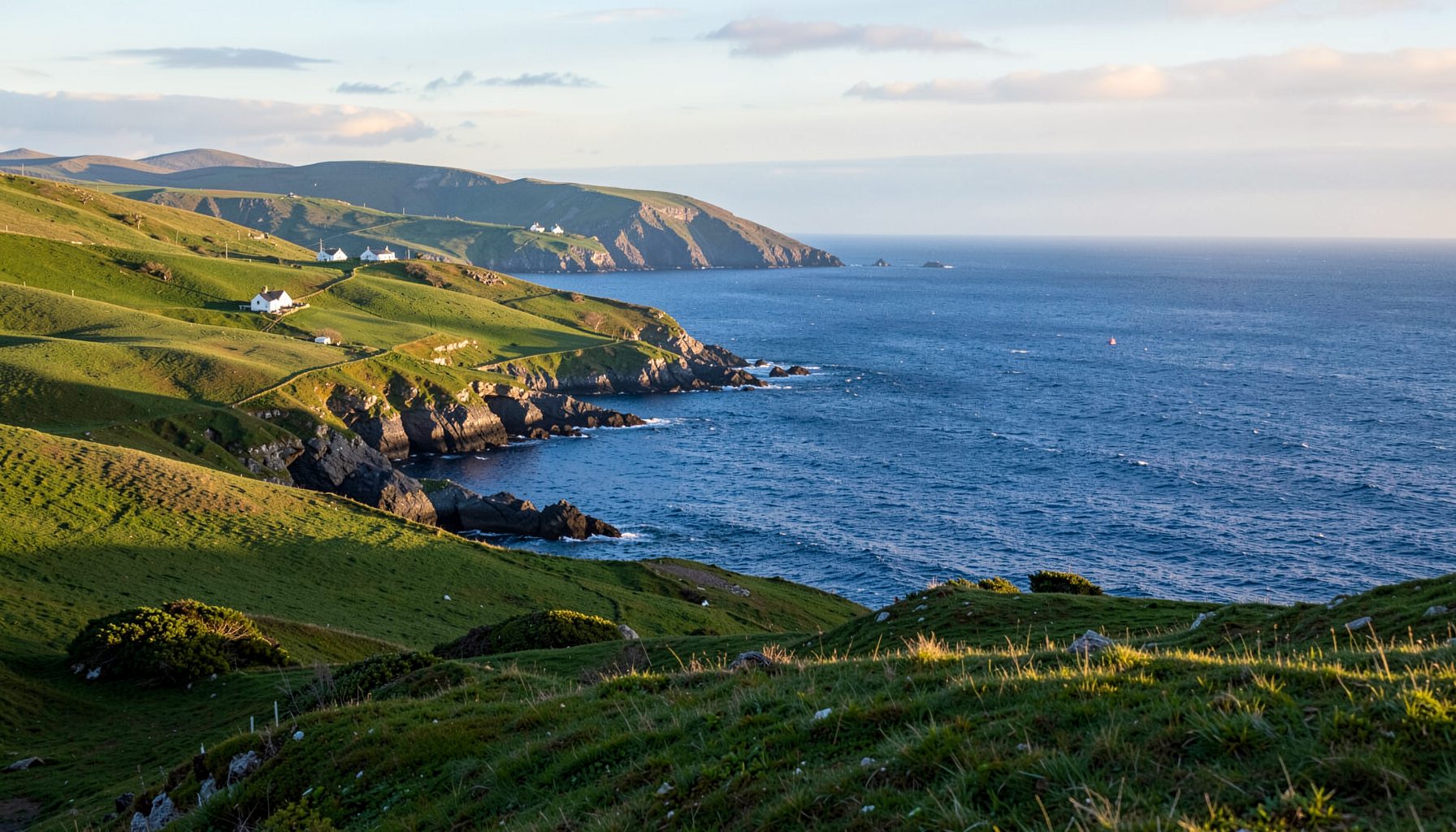
A Guide to the Wildflowers and Orchids of the Skellig Coast
From Kells to Castlecove, the Skellig Coast offers a remarkable botanical walk through Atlantic habitats. Short turf, damp fields, rocky headlands, roadside banks and sheltered valleys can all hold different plant communities within a small distance. The scenery may look rugged at first glance, yet its finest details often sit close to the ground.
For visitors from Australia, the seasonal rhythm takes some adjustment. Ireland’s main flowering period runs through the warmer months of the Northern Hemisphere, while Australian winter is often the best time to plan a trip around late spring and summer blooms in Kerry. Bring the same curiosity you would take on a bushwalk, but expect softer light, cooler temperatures, changeable rain and a flora shaped by ocean, peat and centuries of farming.
| Habitat | Plants to look for | Usual flowering period | What makes it distinctive |
|---|---|---|---|
| Coastal cliffs and short turf | Thrift, sea campion, bird’s-foot trefoil | April to August | Salt-tolerant plants growing in wind-pruned communities |
| Wet grassland and flushes | Heath spotted-orchid, common spotted-orchid, bog asphodel | May to August | Moist ground, rushes and acidic soils |
| Sheltered banks and calcareous grassland | Pyramidal orchid, bee orchid, oxeye daisy | June to August | More colourful displays where soils are less acidic |
| Dunes and sandy coastal ground | Sea holly, kidney vetch, harebell | June to September | Loose, well-drained soil and exposure to salt spray |
| Woodland edges and hedgerows | Foxglove, honeysuckle, meadowsweet | June to September | Vertical colour and later-season scent |
Reading the Coast’s Habitats
The most productive way to look for plants is to understand the ground beneath them. Salt marshes and shorelines favour compact species such as sea thrift, whose pink flower heads can form cushions above the tideline. Sea campion, scurvygrass and buckshorn plantain may occupy cracks and ledges where ordinary meadow plants would struggle.
Move inland and the vegetation changes quickly. The Iveragh Peninsula contains damp pasture, peatland, heath and small pockets of woodland. Acidic, waterlogged ground can support cotton grass, bog asphodel, tormentil and sundews, while better-drained fields may carry yellow rattle, buttercups and knapweed. A close look at soil, drainage and grazing pressure often explains why one field is bright with flowers and the next appears mostly green.
The coastline around the Skellig islands has its own restrictions and sensitivities. Seabird colonies, unstable edges and protected archaeological sites mean that a plant search should stay on established routes and viewing areas. A rare flower is never a reason to climb a cliff, cross a nesting zone or leave a marked path.
When Colour Appears
April and May bring some of the first strong displays. Primroses and lesser celandines brighten damp banks, while bluebells, wood sorrel and early purple-orchids can appear in sheltered places. On coastal turf, thrift begins to open as the weather settles, creating small pink patches against grey stone and green grass.
June and July are usually the richest months for a casual flower hunt. Foxgloves stand above hedges, oxeye daisies open in grassy margins and meadowsweet adds a creamy haze to wetter areas. The exact timing changes with altitude, exposure and weather, so a cool, windy spring may delay flowering compared with a sunny season.
By August and September, the palette becomes more muted but remains rewarding. Devil’s-bit scabious, yarrow, red clover and autumn hawkbit feed late-season insects, while autumn lady’s-tresses may appear as small spirals of white flowers in short grass. Australian visitors used to planning around a summer holiday should remember that Ireland’s daylight is long in June, but rain can arrive at any time.
Orchids Worth Watching For
Ireland’s native orchids are terrestrial plants, growing from underground tubers rather than hanging from trees as many Australians may picture when they hear the word orchid. They are often smaller than expected. The best approach is to scan a patch of grass slowly, then inspect any unusual flower spike without stepping into surrounding vegetation.
Heath spotted-orchid favours wet, acidic ground and may show purple-pink flowers with darker markings. Common spotted-orchid is more adaptable and can occur in grassland, dunes and woodland margins. Pyramidal orchid has a compact, cone-shaped flower head, while fragrant orchid produces a sweet scent that is easiest to notice in still weather.
The bee orchid is especially memorable because its lower lip resembles a bee. It is never guaranteed in a particular season, and individual plants can be easy to overlook among short turf. Frog orchid is another small and easily missed species, usually associated with open grassland. Records and local guidance are valuable because flowering sites can change with grazing, mowing and weather.
Orchid identification should rely on several features rather than colour alone. Examine the flower shape, leaf markings, height, habitat and flowering date. A phone photograph can help, but avoid lifting leaves or disturbing the soil to find a tuber. Some populations are vulnerable to trampling, and a flower that appears common in one field may be scarce across the wider coast.
Plants Of Cliffs, Dunes And Fields
Coastal wildflowers have practical adaptations to wind and salt. Thrift grows in tight cushions that reduce exposure, while sea holly holds its blue-grey leaves close to the ground. Kidney vetch, whose woolly flower heads can be yellow or red, thrives in dry grassland and sandy places. These plants can look modest beside Australian coastal banksias or coastal daisies, yet their relationship with the Atlantic is equally visible.
On richer grassland, look for bird’s-foot trefoil, common knapweed, red campion and meadow buttercup. Their flowers support bees, hoverflies and butterflies through the warmer months. Yellow rattle is particularly useful to notice because it partly suppresses vigorous grasses, helping a more diverse meadow community develop.
Hedgerows add another layer to the landscape. Hawthorn, blackthorn, honeysuckle and elder provide shelter for insects and birds, while foxglove brings tall spikes of purple to banks and woodland margins. Please remember that foxglove contains powerful toxins; it is a plant to admire, never taste or handle casually.
Walking Carefully In A Living Landscape
A good flower walk begins with practical clothing. Waterproof boots, a light rain jacket and warm layers are more useful than relying on a clear forecast. Australian visitors accustomed to strong ultraviolet light should still pack sunscreen and a hat, even under cloud, but the immediate concern on the Skellig Coast is often wind, wet grass and uneven ground.
Use gates and stiles rather than climbing walls, and keep dogs under close control around livestock and nesting birds. Leave flowers, mosses, fungi and stones where they are. On narrow paths, step aside carefully instead of widening the track around a wet patch. These habits are familiar to anyone who spends time on Australian national park trails, but the soft soils of Irish cliffs and peatlands can be especially quick to erode.
Binoculars are useful for combining botany with birdwatching, particularly near coastal headlands. A hand lens can reveal the markings on an orchid, while a notebook helps record habitat, date and abundance. Avoid walking across private fields unless access is clearly provided, and check local notices before setting out.
Recording What You Find
Plant recording is most useful when it includes enough detail for someone else to check the observation. Note the nearest village or headland, the type of ground, the number of plants and whether they are flowering. A photograph showing the whole plant is helpful; close-ups of leaves and flowers can then support identification.
Australian naturalists may already use iNaturalist Australia or local citizen-science groups, and the same careful approach works in Ireland. Digital records can contribute to a broader picture of flowering times and species distribution, especially as weather patterns shift. Do not publish the exact location of a vulnerable orchid colony if local recording guidance advises otherwise.
A regional information hub can add context that a plant app cannot provide. The Skellig Coast site brings together community knowledge, heritage information, learning opportunities and places across the coast, helping visitors understand that a flower walk takes place within a lived-in cultural landscape.
Making A Day Of Plant Watching
A rewarding route does not need to cover great distances. A village walk, a coastal viewpoint and a short section of open countryside may reveal more variety than a rushed drive between famous attractions. Allow time to stop, watch insects and compare the plants growing on exposed rock with those in a sheltered hedge.
Local conditions should shape the day. Check tides if a route approaches the shore, allow extra time after rain and expect mobile coverage to vary in rural areas. A packed lunch, drinking water and a paper map or downloaded route are sensible additions, particularly when travelling beyond the larger settlements of the Ring of Kerry.
Combine the botanical interest with the region’s wider heritage. The Skellig Coast includes historic villages, working farmland, coastal archaeology and views towards Skellig Michael, a UNESCO World Heritage Site and former filming location for Star Wars. Flowers are part of that story: they show how climate, geology, farming and sea exposure continue to shape the peninsula.
Plan a visit around a season rather than a single promised species, and treat every flower as part of a larger habitat. With quiet observation, suitable footwear and respect for access rules, a walk from Kells towards Castlecove can become a detailed natural history experience rather than simply a scenic outing. Use local information before setting out, record what you see responsibly and help keep these fragile coastal places flourishing for the next visitor.