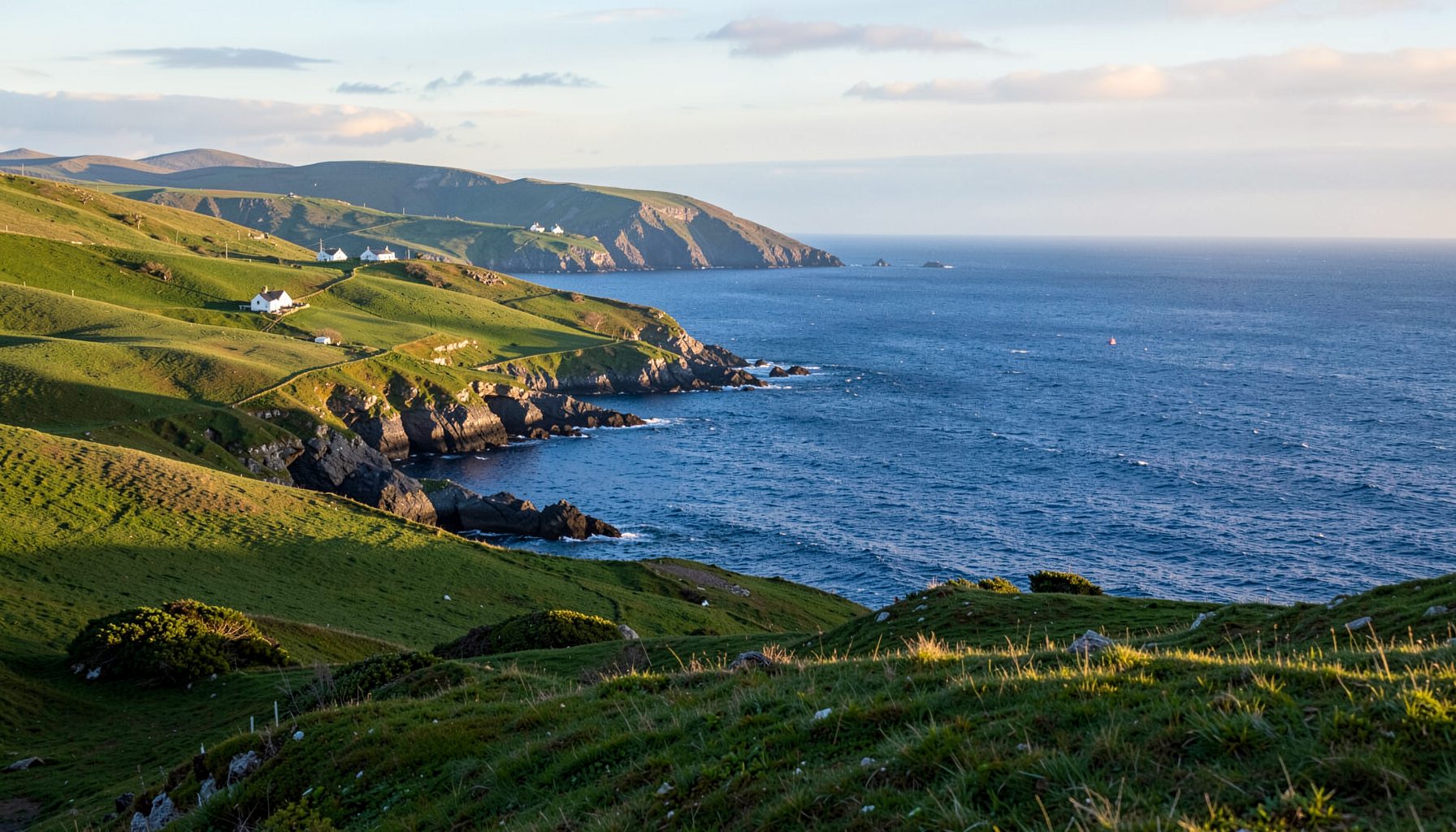
A Guide To The Wildflower Meadows Of The Ring Of Kerry
The Ring of Kerry is celebrated for its mountains, Atlantic coastline and famous viewpoints, yet its quieter grasslands hold a rich natural story. In summer, roadside banks, small fields, bog edges and coastal pastures can become carpets of colour, shaped by rain, salt air, grazing animals and traditional farming.
A wildflower meadow is more than an attractive patch of land. It can provide nectar for bees, shelter for butterflies, seed for birds and cover for small mammals. Many of the best examples are not formal gardens or marked attractions. They are working landscapes, community green spaces and uncultivated corners that reward patient observation.
Along the Skellig Coast, from Kells and Cahersiveen towards Waterville, Ballinskelligs, Portmagee and Castlecove, flowering plants appear in different habitats and at different times of year. Learning to recognise those settings makes a walk more rewarding while encouraging visitors to explore with care.
How The Kerry Landscape Shapes Wildflowers
The mild, wet climate of the Iveragh Peninsula supports a long growing season. Sheltered valleys can stay green through much of the year, while exposed headlands experience salt spray, strong winds and thin soils. These contrasts create a patchwork of plant communities rather than one uniform meadow landscape.
Management is equally important. Fields cut for hay later in the season can support a surprising variety of grasses and flowers. Light grazing may prevent scrub from taking over, while very intensive grazing can reduce flowering plants. Some verges and neglected corners become valuable pollinator habitats when they are left uncut during the main flowering period.
The result is a living combination of native wildflowers, grasses and ferns. A field with fewer flowers may still be ecologically important if it contains varied vegetation, damp hollows, old hedges or undisturbed margins.
Places To Notice Along The Skellig Coast
The most accessible displays are often found beside quiet roads, village approaches, churchyards, community gardens and walking routes. Around Kells and Cahersiveen, look at field boundaries, stream margins and grassy banks rather than focusing only on distant mountain views. Hedgerows can hold cow parsley, hawthorn blossom, honeysuckle and late-summer bramble flowers.
The Waterville and Ballinskelligs areas offer coastal grassland where thrift, sea campion and sorrel may appear among short turf. On exposed ground, plants tend to be low-growing and resilient. They cope with wind and salt by staying close to the surface, flowering quickly or developing tough leaves.
Near Portmagee and the approaches to Valentia Island, pockets of meadow habitat occur beside stone walls and lanes. In the direction of Castlecove, look for damp grassland around streams and wet hollows, where rushes, meadowsweet and purple loosestrife may grow. Access varies from place to place, so a visible flower display does not mean that a field is open to the public.
A Seasonal Flowering Calendar
Spring begins with fresh growth in banks and pasture. Primroses, dandelions, daisies, lesser celandine and cuckooflowers can appear from early in the season, while gorse brings strong yellow colour to rough ground and upland edges. Bluebells are more closely associated with woodland and hedgerows, but their presence adds to the seasonal character of rural lanes.
By June and July, meadow plants become more noticeable. Red clover, white clover, buttercups, oxeye daisies, yarrow, ribwort plantain and birds-foot trefoil are common sights in suitable grassland. Knapweed and scabious provide valuable nectar for bees and butterflies, especially where mowing has been delayed.
Late summer often brings the richest mixture. Devil’s-bit scabious, knapweed, self-heal, foxglove and purple loosestrife can remain in flower into August and September. In damp fields, meadowsweet creates pale, frothy clusters, while autumn hawkbit and lingering clovers extend the display. The exact timing changes with altitude, exposure and weather, so a meadow can look different from one week to the next.
Plants And Habitats To Recognise
Identifying a few species helps reveal how a meadow is managed. Yellow rattle, for example, is a semi-parasitic plant that draws some nutrients from grasses. Where it grows successfully, grass vigour may be reduced enough to give other flowers more room. Its small yellow blooms and rattling seed pods make it a useful sign of a more diverse meadow.
Foxglove is familiar on banks, clearings and rough grassland, especially where ground has been disturbed. It is attractive to long-tongued bumblebees but poisonous if eaten, so it should be admired rather than handled. Ragged robin favours damp ground, while sea thrift and sea campion indicate coastal influence. Heather and bell heather are associated more with heath and upland habitats than with lowland meadow, but they contribute important colour to the wider Ring of Kerry landscape.
| Habitat | Plants You May Notice | Best Season | What To Observe |
|---|---|---|---|
| Traditional hay meadow | Oxeye daisy, red clover, yarrow, knapweed | June to August | A varied mix of grasses and tall flowering plants |
| Damp grassland | Meadowsweet, purple loosestrife, cuckooflower, rushes | May to September | Moist hollows, streams and insect activity |
| Coastal turf | Thrift, sea campion, sorrel, scurvygrass | May to August | Low plants shaped by wind and salt |
| Hedgerow margin | Primrose, foxglove, honeysuckle, cow parsley | March to August | Shelter, berries, nesting sites and layered vegetation |
| Upland heath | Heather, bell heather, tormentil, gorse | July to September | Short vegetation, exposed slopes and pollinators |
Wildlife That Depends On Flowering Grassland
A meadow in bloom is also a feeding ground. Bumblebees are often the easiest pollinators to spot, moving between clover, thistles, foxgloves and knapweed. Solitary bees may be less conspicuous, while hoverflies contribute to pollination and can be identified by their patterned bodies and hovering flight.
Butterflies such as meadow brown, common blue, red admiral and small tortoiseshell may visit sunny grassland and sheltered verges. Moths are especially important after dusk, when pale flowers and their scents support nocturnal insects. A meadow with different heights of grass offers more habitats than a closely cut lawn.
Birds benefit from the seeds and invertebrates associated with meadow plants. Goldfinches may feed on thistle seeds, while insect-eating species use long grass and hedgerows for foraging. Small mammals and amphibians find cover in tussocks, stone walls and damp edges. These relationships explain why a modest field near a village can have considerable ecological value.
Enjoying Meadows Without Damaging Them
Many flower-rich fields on the peninsula are privately owned or actively farmed. Stay on public paths, established trails and clearly permitted areas. Avoid climbing gates, crossing walls or entering fields simply because flowers are visible. Dogs should be kept under close control near livestock, nesting birds and narrow paths.
Walking lightly protects both plants and the ground beneath them. Trampling can damage fragile vegetation, compact wet soil and disturb insects. Picking flowers also removes food and seed, while digging up plants can destroy a small population that has taken years to establish.
Useful habits for a responsible visit include:
- Photograph flowers from the path instead of collecting them.
- Keep dogs close to you around cattle, sheep and ground-nesting birds.
- Leave gates as you find them and never block farm entrances.
- Take food packaging and other waste home, including biodegradable items.
- Avoid lighting fires or using drones near wildlife, homes and livestock.
Binoculars and a small field guide are more useful than a large collection of equipment. A phone photograph can help with later identification, particularly when it includes the whole plant, its leaves and the surrounding habitat. Recording the month and location also builds a better understanding of seasonal change.
Community Stewardship And Local Heritage
Wildflower meadows connect natural history with the cultural landscape of the Ring of Kerry. Stone walls, bóithríns, old farm tracks and field patterns show how people have worked the land over generations. A flowering verge may be part of a traditional route between settlements, while a community garden can demonstrate modern approaches to pollinator planting and local education.
Schools, environmental groups, tidy towns initiatives and community organisations often play a role in protecting biodiversity. Their work may involve planting native species, delaying grass cutting, restoring hedgerows, managing invasive plants or creating interpretation for residents and visitors. Local libraries, learning hubs and heritage projects can provide useful context that is not available from a viewpoint sign.
The wider Skellig Coast also demonstrates how natural and cultural attractions overlap. Visitors travelling towards Skellig Michael, Valentia Island, the Kerry Cliffs or coastal villages can add a slower meadow walk to a day shaped by archaeology, maritime history and local stories. This encourages longer, more attentive visits rather than treating the landscape as scenery passed through by car.
Weather should influence every outing. A bright morning may reveal butterflies and bees, while a damp afternoon brings out the scent of grasses and meadowsweet. In exposed places, windproof clothing and sturdy footwear are practical essentials. On narrow rural roads, wear visible clothing and pause only where it is safe and legal to do so.
Use this guide as a starting point for noticing the small flowering spaces between the better-known landmarks. Choose a permitted path near one of the Skellig Coast communities, move at meadow pace and support the local groups and businesses that care for the landscape. Share respectful photographs, learn the names of a few native plants and let the next season find these habitats intact.