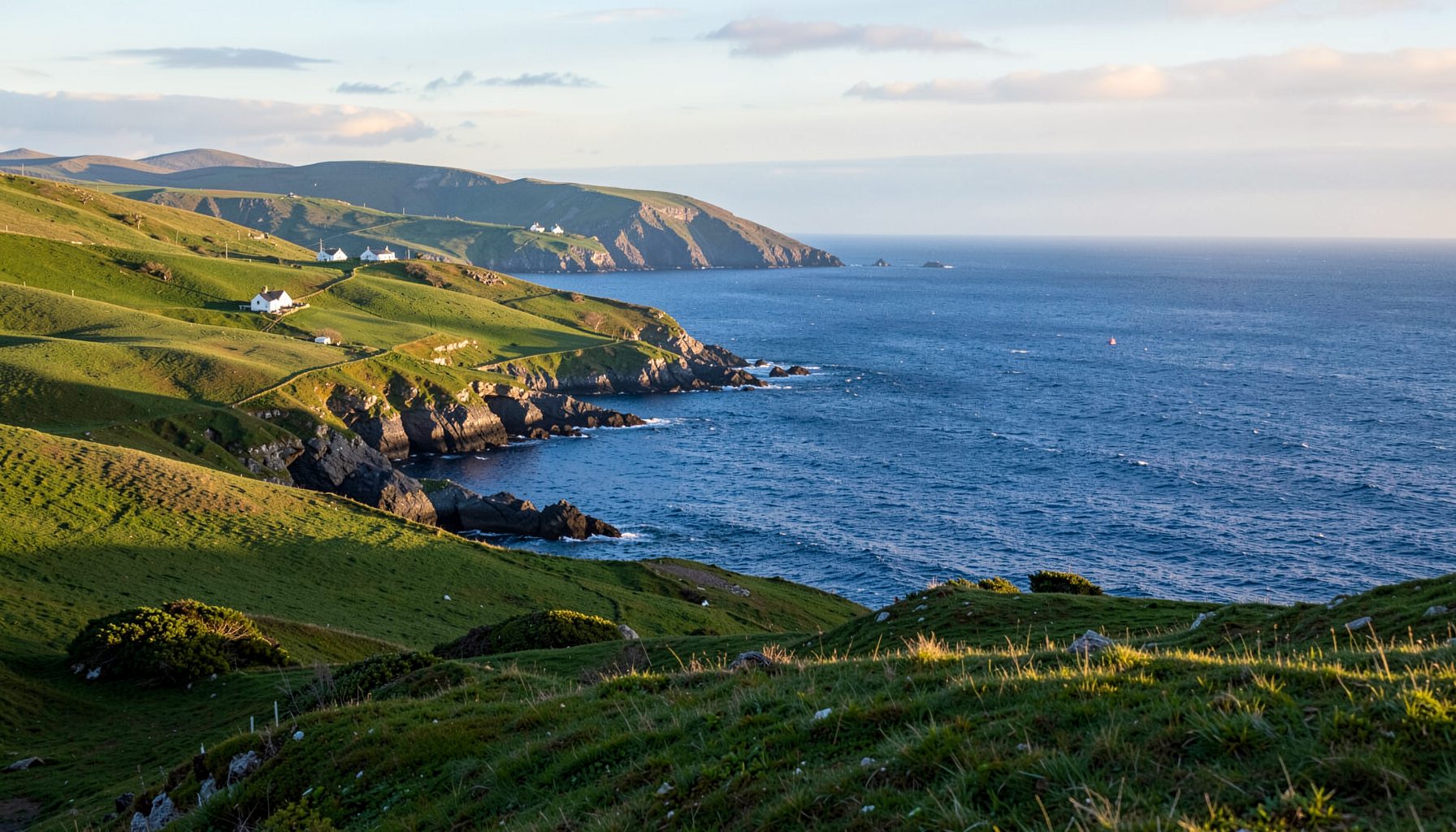
camping and bivouac etiquette along Ireland's Skellig Coast
The Atlantic edge of the Iveragh Peninsula draws travellers who want something quieter than a booked B&B and more honest than a serviced campsite. A bivouac on a grassy shelf above the surf, with nothing but a tarp and the sound of gulls, is one of the great pay-offs of visiting southwest Kerry. Yet that experience only survives if those who turn up behave like guests rather than accidental colonists of someone else's stretch of coast.
For Australians in particular, the Skellig Coast will feel familiar in spirit. The Iveragh shoreline has a kinship with the wild edges of Tasmania, the granite coastlines of Wilsons Promontory, and the long white beaches of Cape Le Grand. The legal and cultural settings, however, are not the same. Australian bush campers are used to a patchwork of state regulations, free-camp sites and a strong tradition of pitching a swag on Crown land. In Ireland, the rules around the right to roam are narrower, the population density is higher per kilometre of coast, and the relationship between visitor and small farming community is far more visible. Knowing the difference is the starting point of good etiquette.
Reading the rules before you reach the sand
Irish wild camping law is not the same as Scottish or Scandinavian legislation. In the Republic of Ireland there is no general statutory right to wild camp, and most coastal land is privately owned farmland, often with livestock. Pitching without permission can amount to trespass, even if the spot feels remote. A small number of designated areas along the Iveragh coast do permit lightweight overnight stays, and these are usually signposted or listed by the local authority. Outside of those marked sites, the assumption should be that you are a guest on working land.
Australians who have cut their teeth on the Bibbulmun Track, the Larapinta or the Heysen will know the value of reading the fine print before a trip. The same habit serves well here. Before heading out, check the Wild Atlantic Way guide for the relevant section, look up whether the stretch between Kells and Castlecove has any seasonal restrictions, and phone ahead to a farm if you plan to camp on agricultural ground. In Australia, the rule of thumb is to assume you can free-camp only where it is explicitly allowed; that rule transfers almost word-for-word to the Skellig Coast. If in doubt, the local coastal villages and towns listed along the route are the right place to ask, because the people who run the cafes and shops know exactly which fields are off-limits this season.
Picking a pitch that respects the land
A good pitch disappears into the landscape when you leave. That means choosing a site that has already been worn in by other walkers if one exists, setting up on bare ground or rock rather than fragile dune grass, and never camping on a machair-style meadow where the turf will take years to recover. Along the Iveragh coast, salt spray and Atlantic winds shape the vegetation, and the marram grass that holds the dunes together is easily killed by a single night of foot traffic. The same rule applies to the wildflower-rich clifftops above Derrynane and around Valentia, where a careless tent peg can open a wound that takes a decade to heal.
Australian walkers reading this will recognise the pattern from places like the track into Wineglass Bay, where boardwalks exist precisely because visitors kept walking on the regenerating fringe. The same logic applies here. Pitch late, leave early, and never assume that a flat, sheltered spot is fair game just because it looks untouched. If a field holds drystock or sheep, walk around it rather than across it, and treat any electric fence as live even if the farmer has told you it is off. Closing gates behind you is not optional politeness; it is the baseline of being trusted back onto the same ground next year.
Leave No Trace in a coastal setting
The Leave No Trace principles translate cleanly to the coast, but the specifics look a little different. Solid human waste should be buried in a small cat-hole at least sixty metres from any watercourse, or, ideally, packed out in a wag bag if the ground is too rocky to dig. Toilet paper goes in the bag too, never in the rocks above the tideline where it will end up in the sea. Washing is done with biodegradable soap well away from streams, and dishes are scraped clean before the final rinse so that food residue does not attract rats, foxes or, in the more remote sections, a curious pine marten to your pitch.
For Australians used to long stretches of remote bush, the temptation is to treat the coast as just another stretch of wilderness. It is not. A Skellig Coast campsite sits inside a working landscape of small farms, narrow boreens, and communities that depend on tourism done well. Anything you bury, drop or wash away eventually shows up in someone's drinking water or on their beach. Pack it in, pack it out, and treat the next camper as someone you actually want to meet on the trail tomorrow morning rather than as an abstract stranger.
Campfires, stoves and cooking by the sea
The short version is: do not light a fire unless you are certain it is allowed. Most of the Iveragh coast falls within Coillte or privately managed ground where fires are prohibited outside of formal sites, and the dry grasses of summer can turn a careless spark into a serious problem. A small gas or methylated spirits stove is the safer, lighter and quieter option, and it leaves no trace of ash in the sand. Even in winter, exposed coastal turf does not burn well and produces more smoke than heat, which makes for poor cooking and grumpy neighbours downwind.
This is one place where Australian practice lines up neatly with Irish expectations. Australian walkers on multiday routes have largely moved away from beach fires for the same reasons: total fire bans during summer, the risk of starting bushfires, and the slow damage to driftwood habitat. A compact stove, a small gas canister and a billy are now standard kit on the Australian Alpine walking tracks and on Tassie's Overland. If you do come across a fire ring left by a previous camper, leave it exactly as you found it. Building on top of old scars only deepens them, and the next person will assume the ring is fair use too.
Community, culture and quiet hours on the Iveragh
Wild camping on the Skellig Coast is not an off-grid activity in the Australian outback sense. A working farm is rarely more than a field away, and the road network between the villages is busier than the scenery suggests. Noise carries over water, so keep voices, music and the clatter of cookware low after dark. Ask before walking through a farmyard, and accept that a polite "no" from a farmer is final. Do not assume that a stile or a gap in a wall is an invitation; many are there for the farmer, not the visitor.
The reward for getting this right is being welcomed back. Locals remember respectful walkers and quietly steer future visitors towards them. Drop in for a pint, a coffee or a loaf of soda bread in the villages between Kells and Castlecove; small economies on the Iveragh depend on people who treat the place well. Pack your rubbish out, leave a donation at the community hall or the local tidy towns group where one exists, and remember that the most useful thing you can carry home is the quiet knowledge of how to behave on someone else's coastline. The next time you plan a trip along this stretch, take the time to walk into one of the villages, buy a coffee, and ask the locals what they would like visitors to know this season; that conversation is the most underrated piece of kit you can carry.