A Guide To The Traditional Boats And Currachs Of The Iveragh Coast
Along the Iveragh Peninsula, boats are part of the coastal landscape rather than objects kept apart from daily life. Their forms grew from narrow coves, exposed headlands, offshore islands and the practical needs of families who worked the water. A small craft could carry a person across a harbour, bring home a catch, reach a neighbouring island or support a journey to a sacred place.
The currach is the best-known traditional boat associated with this heritage. Often light enough to be carried by several people, it has a wooden frame covered with a waterproof skin, traditionally animal hide and later canvas treated with tar or paint. The design looks simple, yet it reflects generations of knowledge about balance, tides, wind and local materials.
For visitors from Australia, the closest comparison may be the way a familiar tinnie, dinghy or surf boat can represent much more than transport. In an Irish coastal village, a boat may carry family history, local vocabulary and memories of dangerous crossings. The scale is different from a Queensland fishing boat or a New South Wales harbour craft, but the connection between community and water is recognisable.
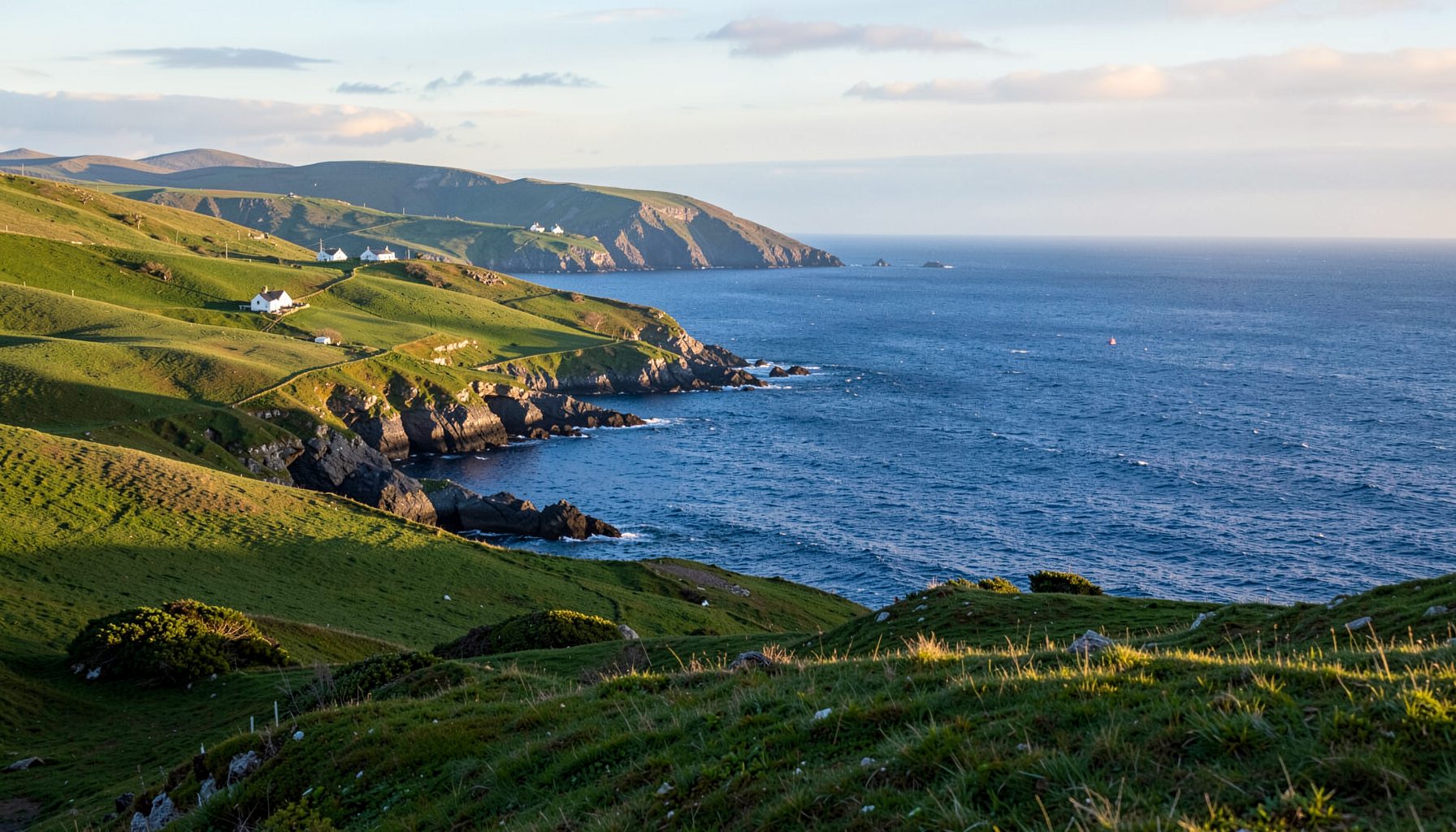
A visit to the Skellig Coast is therefore an opportunity to look beyond the dramatic scenery. Around Valentia Island, Portmagee, Ballinskelligs, Caherdaniel, Waterville and Castlecove, traditional boat culture helps explain how people lived on the edge of the Atlantic. It also adds meaning to journeys connected with Skellig Michael and the wider maritime history of Kerry.
Why Currachs Matter On The Atlantic Coast
The word currach covers several related types of Irish boat, and local versions are not identical. A Kerry currach was shaped by the waters where it was used, the materials available and the work expected of it. Some were small boats for inshore fishing, while others were built for carrying people or equipment between the mainland and islands.
The frame generally consisted of light wooden ribs and longitudinal laths. A covering was stretched over this skeleton and sealed to keep out water. The result was flexible and comparatively light, qualities that mattered when a boat had to be launched from a beach or hauled above the reach of the tide.
A currach could be repaired piece by piece, which made it suitable for communities where skilled labour and materials had to be used carefully. Its construction also encouraged a close understanding of the craft. Builders learned how much curve to give a rib, how to balance the hull and how to make the boat respond safely to oars.
Distinctive Features Of A Traditional Craft
The boats seen in museums, community displays and heritage demonstrations may differ in size and finish, but several features reveal their purpose. A visitor should look at the whole relationship between hull, oars and landing place rather than treating the currach as a single standard design.
- A light frame designed for easy handling
- A rounded, flexible hull suited to coastal water
- Oars used from a seated or kneeling position
- A waterproof covering maintained through regular repairs
Traditional boats were often built for particular shores. A craft used inside a sheltered bay did not face the same conditions as one working near exposed rocks or crossing open water. The bow and stern, the height of the sides and the rowing arrangement could all reflect local practice.
The word naomhóg is also heard in parts of western Ireland for a traditional canoe-like craft, although naming customs vary by district. It is useful to ask a local guide or heritage volunteer what a particular boat was called in its own community. Local terminology can be as valuable as the vessel itself.
Boats Of Valentia And The Skellig Coast
Valentia Island has a particularly strong maritime identity. Its position at the western edge of the Iveragh Peninsula placed it close to fishing grounds, island routes and Atlantic weather. Nearby Portmagee developed around a narrow passage and remains associated with boat travel towards the Skelligs.
Traditional craft were used in waters where cliffs, reefs and shifting conditions demanded careful navigation. A boat did not need to be large to be useful. It might carry fishing gear, baskets, nets or creels, while a larger vessel could support longer journeys and heavier loads.
Along the coast towards Ballinskelligs, Waterville and Caherdaniel, local boats were connected with both work and transport. Small harbours, slipways and landing beaches formed part of a practical network. Many of these places are still best understood by noticing where boats could be launched, sheltered or drawn ashore.
Fishing, Island Travel And Sacred Journeys
Fishing was central to coastal life, with boats used for species such as mackerel and for setting pots for lobster and crab. The work demanded knowledge of underwater ground, tide lines and seasonal conditions. A boat’s value came from its reliability and suitability for a particular task, not from its size or appearance.
Boats also carried people to islands and remote places. Before modern tourism, access to the Skellig Islands was a demanding undertaking shaped by weather and sea state. Religious journeys to Skellig Michael belong to a much older history, when the island’s monastic community depended on difficult maritime connections.
The sea could be generous, but it was never entirely predictable. Families remembered drownings, damaged boats and sudden storms alongside successful fishing trips. This mixture of respect and necessity remains important when interpreting the coastline today. The currach represents ingenuity, yet it also points to the risks carried by earlier generations.
Reading The Coast Through Local Knowledge
A traditional boat makes more sense when viewed beside the landscape that shaped it. Notice the sheltered coves around Portmagee and Valentia, the open Atlantic approaches, and the small beaches where a light craft could be dragged clear of the waves. These physical details explain why boat designs were adapted rather than copied uniformly.
For Australian visitors, the comparison with a coastal “tinnie” can be helpful, although the technology and history are very different. Someone used to launching a boat near Hobart, Cairns or the Mornington Peninsula will recognise the importance of wind, swell and changing tides. On the Iveragh Coast, however, Atlantic weather can alter plans quickly, and a calm-looking inlet does not guarantee safe conditions beyond its shelter.
It is also worth listening to local speech. Words such as slip, strand, pier, harbour and currach carry practical meaning, while place names often preserve links to landscape and history. A local storyteller, museum volunteer or community organiser may explain a boat more vividly than a formal label can.
Places To Explore Maritime Heritage
There is no single attraction that tells the entire story of Iveragh’s boats. Maritime knowledge is spread through local museums, heritage centres, harbours, festivals, community projects and conversations with people who still work around the water. Checking opening times before setting out is important, particularly outside the main summer season.
Valentia Island’s heritage resources can help place local boat culture within the island’s wider story. Portmagee is a natural setting for understanding routes towards the Skelligs, while villages along the coast offer views of working shorelines and traditional landing places. The Skellig Experience Visitor Centre, where open, provides useful context for the islands and their maritime history.
For Australian travellers, the regional tourism model may feel familiar in some ways and different in others. The Skellig Coast works largely as a self-drive destination: visitors combine community attractions, national heritage sites and independent operators rather than buying one all-inclusive package. A good day may involve a heritage visit, a coastal walk and a harbour stop, with each activity booked or checked separately.
Useful Stops And Experiences
- Local heritage centres and maritime displays
- Harbour walks around Valentia and Portmagee
- Community festivals featuring traditional boats
- Interpretive resources connected with Skellig Michael
Boat displays should be treated as working heritage, even when a vessel is no longer used for fishing. Look for signs of construction, repair and adaptation. A patched covering or replaced timber is evidence of care and continued knowledge, not a flaw to be overlooked.
Visiting The Coast With Care
The Iveragh coastline is exposed, and conditions can change faster than visitors expect. Australian travellers accustomed to planning around heat, UV levels and bushfire warnings should apply the same seriousness to wind, swell, rain and tide times here. Bring warm waterproof layers even in summer, and do not assume that a sheltered beach is safe for swimming or launching a small craft.
Trips to Skellig Michael are weather-dependent, and access is controlled to protect the site and manage safety. Not every visitor will land on the island, and a boat journey may be cancelled when conditions are unsuitable. That uncertainty is part of the maritime reality rather than a failure of planning.
When visiting a working harbour, keep clear of slipways, ropes, vehicles and fishing equipment. Ask before photographing people, boats or private yards. The relaxed “no worries” attitude common in Australian coastal towns is welcome, but local permission still matters when heritage and active workspaces overlap.
Practical Details For A Respectful Visit
- Check weather, tide and attraction information before travelling
- Wear sturdy footwear near rocks, piers and uneven ground
- Follow instructions from boat crews and harbour staff
- Support local museums, guides and community events
Learning about currachs is strongest when it supports the people who maintain that knowledge. Buying a local publication, paying an entry fee or attending a community-led event helps keep maritime stories visible. It also ensures that the boats are understood as part of living culture, not merely as picturesque items for photographs.
A currach links the workshops, harbours and islands of the Iveragh Coast. Take time to see how its shape answers the demands of the Atlantic, then explore the villages and heritage places that keep those connections alive. Check local information before travelling, respect the sea and support the community organisations sharing Kerry’s boat-building story.