A Guide to Tide Pools and Marine Life Identification
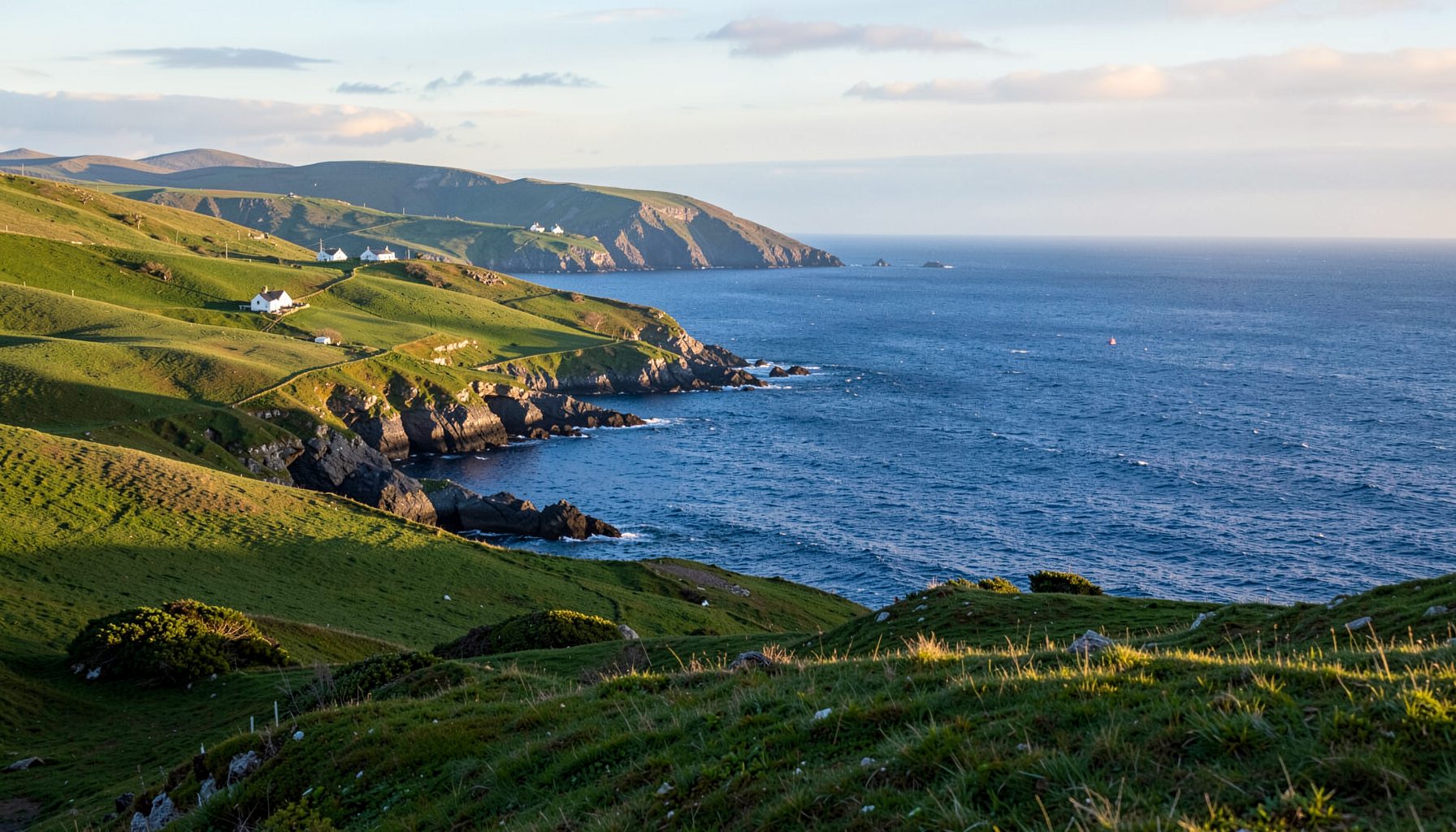
Along the Skellig Coast, the falling tide reveals a small marine world between Kells and Castlecove. Rock shelves, sandy corners and shallow pools shelter seaweeds, shellfish, anemones, small fish and tiny crustaceans that are easy to miss unless you slow down. The best discoveries often appear around Ballinskelligs, Waterville, Derrynane, Caherdaniel, Portmagee and Valentia Island, where Atlantic water meets a rugged coastline shaped by wind and swell.
For visitors from Australia, this is a different kind of rock-pool experience. The water around Ireland is cold year-round, daylight changes sharply with the seasons, and Atlantic waves can reach seemingly sheltered ledges. A pool that looks calm in the morning may be covered by a surge later in the day. Treat the shore as a living habitat and a changing environment rather than a collection site.
Reading the Coast Before You Climb
Tide pools are easiest to understand as a series of zones. The upper shore is exposed to air for longer, so it favours hardy animals such as limpets, periwinkles and barnacles. Lower pools remain wet for more of the tidal cycle and may contain beadlet anemones, prawns, small crabs, sea lettuce and young fish. A pool’s position, depth, shade and connection to the sea all influence what lives there.
Check the tide forecast before setting out, using a reliable local source and allowing time for the walk back. A falling tide gives you access to the greatest number of pools, but do not continue towards isolated rocks as the water rises. Keep well away from cliff edges, wet seaweed and narrow channels. The Skellig Coast is exposed to Atlantic weather, and a bright spell does not remove the risk from swell.
Wear footwear with firm grip, warm layers and clothing that can handle spray. Australian visitors accustomed to Sydney or Melbourne rock platforms may find Irish coastal temperatures surprisingly low, even during summer. Gloves can help with cold water and rough surfaces, but they should never encourage handling animals or reaching into cracks where hidden spines and claws may be present.
A Simple Way to Identify What You Find
Begin with the broadest clues: animal or seaweed, attached or mobile, hard-bodied or soft-bodied, and found high or low on the shore. Shape is useful, but texture and behaviour are often more reliable. A limpet has a single conical shell and clings tightly to rock, while a periwinkle has a rounded spiral shell and may gather around seaweed or damp crevices.
Colour can change with wetness, age and sunlight, so avoid identifying a species from colour alone. Look at the shell’s ridges, the number of arms on an anemone, the arrangement of seaweed fronds and the way an animal moves. A beadlet anemone may appear as a dull red, green or brown lump when the tide is out, then expand its tentacles underwater. Bladder wrack is recognisable by paired air bladders, while serrated wrack has toothed edges and no air sacs.
| What you notice | Likely group | Useful identification clue |
|---|---|---|
| One cap-shaped shell fixed to rock | Limpet | Low cone, strong grip and radiating lines |
| Small rounded spiral shell | Periwinkle | Coiled shell, often among wrack |
| Soft blob that expands in water | Sea anemone | Tentacles emerge when submerged |
| Fronds with paired air bubbles | Bladder wrack | Flexible brown seaweed with air bladders |
| Fast-moving animal with claws | Shore crab | Flattened body, sideways movement |
| Tiny fish in a shallow pool | Blenny or goby | Hides beneath ledges and darts between stones |
| Long shell with a rough, toothed edge | Dog whelk | Predatory sea snail, often near mussels |
Use a field guide covering Ireland and the north-east Atlantic rather than relying solely on an Australian marine-life app. Species found in a Queensland rock pool may have completely different shapes and names from those on the Iveragh Peninsula. A close photograph of the whole animal, its habitat and a scale reference such as a coin can make later identification much easier.
Seasonal Life in Irish Rock Pools
Spring and summer bring longer daylight and more visible activity. Seaweeds grow vigorously, shore crabs move through crevices, and shallow pools may contain juvenile fish and prawns. Look beneath the edge of bladder wrack for periwinkles and small amphipods, but replace the seaweed exactly as you found it. It provides shade, moisture and protection from predators.
Autumn storms can rearrange seaweed and deposit shells, while winter shorelines may look quieter but still hold resilient life. Barnacles remain attached to exposed rocks, anemones contract into small shapes, and limpets continue grazing microscopic algae. Empty shells do not always mean the animal has died; some may be occupied by hermit crabs, so leave them in place.
The coast also has cultural and ecological value beyond what can be seen in a pool. The Skellig Coast’s wider landscape includes ancient settlement, pilgrimage routes, working harbours and the internationally recognised Skellig Michael. Marine observations should sit within that sense of place. Respect local access arrangements, private land boundaries, protected areas and any notices about nesting birds or sensitive habitats.
For an Australian comparison, think of a rock platform near Sydney or the Great Ocean Road where the tide exposes a distinct community of animals, but replace warm-water expectations with Atlantic species and colder conditions. Sunscreen, hats and water are still sensible, though Irish weather may make windproof clothing more important than a rash vest. Follow local fishing and collecting rules; a shell or crab that seems insignificant can still form part of a protected habitat.
A Compact Field Checklist
A good identification session is brief, observant and low-impact. Bring only the equipment that helps you see clearly, record evidence and remain safe. A phone camera, pencil and notebook are usually more useful than a bucket or net.
Before stepping onto the shore
- Check tide times, swell, wind and the route back
- Wear grippy footwear and warm, waterproof layers
- Tell someone where you are going and when you expect to return
- Learn local restrictions on collecting, fishing and access
Record what you observe
- Photograph the animal or seaweed in its habitat
- Note the pool’s depth, shore level, shelter and nearby species
- Record shell shape, texture, movement and distinctive markings
- Leave rocks, seaweed and living creatures undisturbed
Avoid turning over large stones, and never leave a rock resting on an animal. If you lift a small loose stone to look underneath, return it gently to its original position. Do not touch anemones, crabs or unfamiliar organisms simply to test a reaction. Observation through clear water is safer for you and better for the shore community.
Explore Carefully and Share What You Learn
The most rewarding coastal discoveries come from repeated observation. A pool visited at low tide in June may look completely different after autumn rain, a high swell or a change in seaweed cover. Photographing the same location over time can reveal seasonal patterns and help community groups, schools and local learning hubs build a clearer record of marine life.
Keep public paths, beaches and harbours clean, and take every item back with you, including food packaging and fishing line. Do not remove specimens from the Skellig Coast for souvenirs or home aquariums. If you find an injured animal, unusual die-off or suspected pollution, report it to an appropriate local authority or marine conservation organisation rather than handling it.
Use your next visit to Ballinskelligs, Derrynane, Waterville, Caherdaniel or Valentia Island as a chance to look closely, move carefully and learn the names of the shore’s quieter residents. Share responsible observations with local schools, visitor information services or community projects, and help keep the coastline welcoming for wildlife and people.