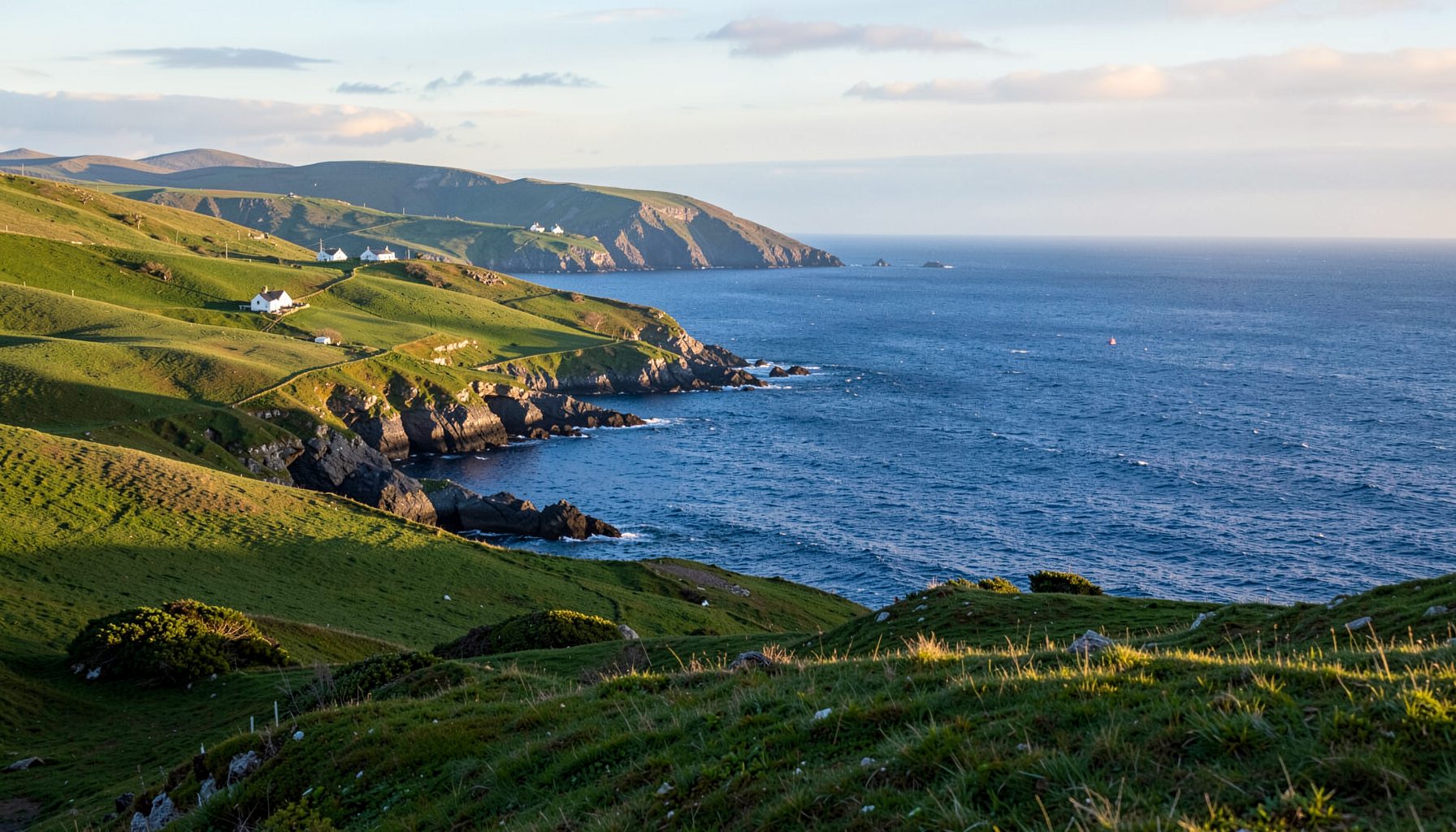
Spring Blooms and Wild Garlic Along the Skellig Coast
From Kells to Castlecove, spring brings a fresh layer of colour to the Iveragh Peninsula. Hedgerows brighten with primroses, bluebells and gorse, while damp woodland floors become scented with wild garlic. Along the coast, flowering plants appear beside stone walls, boreens, streams and open hillsides, creating a seasonal landscape that feels especially vivid after the darker months.
For visitors travelling from Australia, the timing can feel unfamiliar. Ireland’s spring runs from March to May, while Sydney, Melbourne, Brisbane and Perth are moving through autumn. The best displays depend on shelter, rainfall, altitude and exposure to Atlantic winds, so a flexible itinerary is more useful than a fixed promise about flowering dates. This guide to the springtime blooms and wild garlic of the coast explains what to notice and how to enjoy it responsibly.
Where The Coast Turns Green
Early spring usually begins with small, close-to-the-ground flowers. Primroses appear in grassy banks and woodland margins, often forming soft yellow patches among moss and fallen leaves. Lesser celandine adds another bright note in wet places, while violets may hide beneath hedges and along quiet lanes. Their modest size rewards slow walking rather than hurried sightseeing.
As April advances, bluebells emerge in sheltered woods and shaded verges. Their blue-violet flowers can create a hazy carpet beneath hazel, ash and sycamore, particularly where the ground remains moist. The colour is often mixed with stitchwort, sorrel and fresh fern fronds. A woodland near Caherdaniel or Castlecove may look entirely different from an exposed hillside only a short distance away.
Gorse provides a stronger splash of yellow and can flower for much of the year, with its coconut-like scent especially noticeable on mild days. Blackthorn blossom arrives before many trees develop their leaves, making its white flowers stand out against dark branches. On coastal paths, these native and long-established plants frame views towards islands, coves and the open Atlantic.
The Skellig Coast community includes local villages, learning hubs and cultural initiatives, and these connections help place seasonal nature within the wider life of the region. A spring walk is therefore more than a search for flowers: it can also reveal how residents care for paths, celebrate heritage and share knowledge about the peninsula.
Following The Seasonal Calendar
March can be changeable, with bright mornings followed by rain, hail or strong wind. Look for primroses, catkins, early gorse and the first leaves returning to hedgerows. On a clear day, low coastal sunlight can make even a short route rewarding, but exposed headlands may feel much colder than sheltered valleys.
April is often the most reliable month for a varied display. Bluebells become more prominent, wild garlic develops its white flower heads, and woodland paths take on a fresh green tone. Rainfall is part of the process: damp soil supports lush growth, and brief showers can make the colours appear more intense when the sun returns.
By May, many woodland flowers are at their peak or beginning to fade, depending on the year. Hawthorn blossom may whiten the hedges, campion and buttercups brighten grassy places, and cow parsley rises along verges. The longer daylight makes it easier to combine a flower walk with a visit to a village, heritage site or local community event.
Australian visitors may need to recalibrate their expectations. A Melbourne autumn guide or a Sydney seasonal calendar will not predict conditions here, and Ireland’s Atlantic weather can vary from one side of the peninsula to the other. Checking a local forecast, allowing extra time and carrying a waterproof layer are more dependable than relying on the month alone.
The Scent And Shape Of Wild Garlic
Wild garlic, also called ramsons, is one of the most recognisable spring plants on the Skellig Coast. Its leaves appear in damp, shaded woodland and beside streams, followed by delicate white flowers held in loose, star-like clusters. The plant often grows in broad patches, and its strong savoury scent rises when leaves are brushed by passing walkers.
The fragrance is the easiest way to identify a large stand, but scent alone should never replace careful identification. Several plants can share similar habitats, and young leaves may be confused by people without botanical experience. The safest approach is to observe wild garlic in place, using a reputable field guide or local naturalist rather than picking a sample to examine later.
Wild garlic is edible when correctly identified, and its leaves, flowers and bulbs are used in cooking. That fact does not make every patch available for harvesting. Plants beside public paths may grow on private land, within protected habitats or in areas where removal is discouraged. Picking flowers also reduces food and seed resources for insects and future growth.
For an Australian audience accustomed to weekend farmers markets in Melbourne, Adelaide or Brisbane, the distinction between cultivated produce and wild plants is important. Buy local garlic products from a legitimate stall or producer when available, and treat roadside displays as part of the living landscape rather than a free pantry.
Walking Through Sensitive Habitats
Spring flowers are easily damaged when people leave the path for a better photograph. Bluebell bulbs can be crushed beneath boots, and repeated trampling can compact soil around tree roots. Keeping to marked routes protects plants while also reducing erosion on steep ground, especially after heavy rain.
Dogs should remain under close control, particularly near nesting birds, grazing animals and narrow coastal paths. Livestock can be unsettled by unfamiliar dogs, and seabirds may be nesting on cliffs or offshore islands. Follow signs, gates and local instructions, and leave gates as you find them.
Foraging requires particular restraint. Ireland’s Wildlife Act 1976 and related conservation rules protect wild species and habitats in various circumstances, while national parks, nature reserves and landowners may apply additional restrictions. Do not remove bulbs, dig plants or gather large quantities of leaves. A photograph, sketch or recorded scent is a better souvenir.
Visitors returning to Australia should also avoid packing plant material, soil or seeds. Australia’s Biosecurity Act 2015 supports strict controls designed to protect agriculture and ecosystems from pests and diseases. Even a small handful of leaves can create problems at the border, so enjoy wild garlic during the visit and leave it in Ireland.
Making A Thoughtful Spring Day
A satisfying flower walk does not need to be long. Choose a sheltered woodland or village lane in the morning, when the air is cool and scents are clear, then allow time for a coastal viewpoint later in the day. Spring light changes quickly, so a route with both woodland and open shore offers variety if clouds move across the peninsula.
Wear shoes with good grip, as muddy verges and wet stone can be slippery. Bring a refillable water bottle, a light waterproof jacket and a small rubbish bag for anything you carry in. Australian travellers may instinctively reach for high-factor sunscreen even on a cool day, and that remains sensible: reflected light from water and pale cloud can still cause sun exposure.
A quiet walk can be paired with a stop at a local café, craft venue, museum or community noticeboard. Farmers markets and village events may operate on particular days rather than daily, so check current local information before setting out. Supporting local producers helps keep seasonal food traditions and community activity visible beyond the main tourist months.
For a simple, low-impact day among the coastal flowers:
- Start with a marked path through woodland, meadow or a sheltered lane.
- Look closely at colour, leaf shape, scent and habitat without picking plants.
- Pause at gates and viewpoints instead of widening the track around muddy sections.
- Keep dogs close, respect grazing land and follow site-specific notices.
- Take photographs and memories home, never wild bulbs, soil or plant cuttings.
Spring also offers a different perspective on famous places. The Skellig Islands, Skellig Michael and the surrounding coastline are best understood as parts of a living cultural and natural setting, not isolated photo stops. Weather and sea conditions can affect boat travel and access, so the mainland’s flower-rich paths provide a rewarding alternative when offshore plans cannot go ahead.
The season is at its finest when experienced patiently: a yellow primrose in a stone wall, a bluebell beneath a beech tree, or the unmistakable green scent of ramsons beside a stream. Plan a spring visit around local guidance, walk lightly through the habitat and make the Skellig Coast part of an Ireland itinerary shaped by nature, community and heritage.