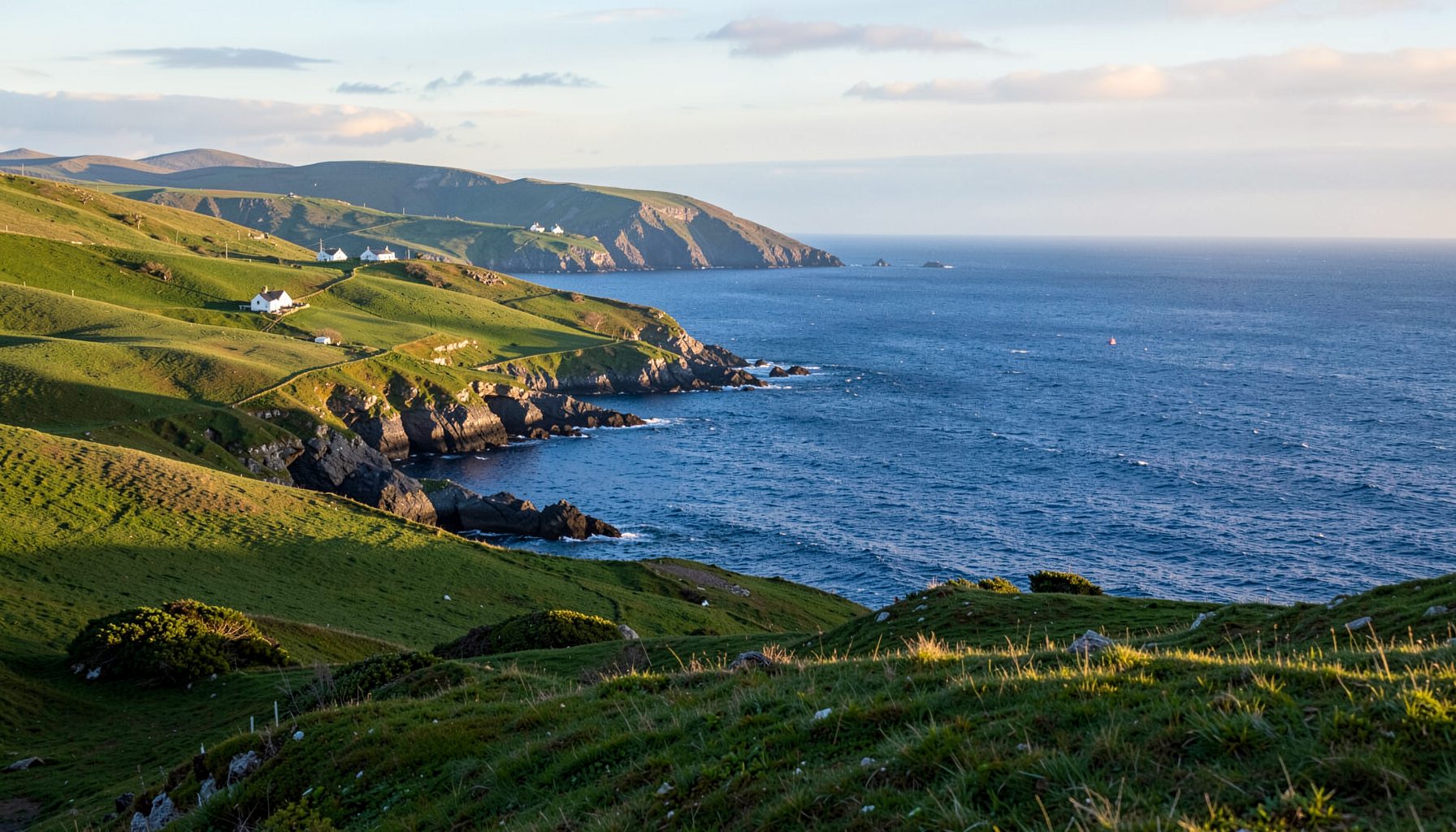
Seaweed Harvesting Traditions Along the Skellig Coast
Along Ireland’s south-western coastline, seaweed has long been part of everyday life rather than a fashionable food trend. Families gathered plants from rocks and strandlines for cooking, garden fertiliser, animal feed and small-scale trade. On the Skellig Coast, stretching from Kells towards Castlecove, the shore supplied materials that were practical, local and closely tied to the rhythm of the Atlantic.
This tradition belongs to a wider coastal culture shaped by fishing, farming, boatbuilding and seasonal work. Seaweed collecting required an understanding of tides, weather, rock platforms and the behaviour of individual plants. A person did not simply arrive at the beach and cut whatever was within reach; the best harvest depended on timing, restraint and knowledge passed between generations.
For visitors from Australia, the practice may bring to mind edible sea vegetables sold at Sydney farmers’ markets, native sea plants used by First Nations communities, or the careful way people read tides around Tasmania and the Great Ocean Road. The Irish tradition has its own history and cultural setting, and learning about it is a valuable way to understand the communities of the Iveragh Peninsula.
Where Shoreline And Community Meet
The Skellig Coast is a landscape of coves, reefs, exposed headlands and small beaches. Places around Portmagee, Valentia Island, Ballinskelligs, Waterville and Caherdaniel have developed with the sea as a constant presence. Seaweed was collected close to home, often by people who already knew which shore was safe at a particular stage of the tide.
The work connected households across the coastal villages. One person might gather the crop while others washed, sorted and spread it to dry. Older residents could identify plants by colour, texture and smell, while children learned through observation and simple tasks. These memories form part of the social history of the area, alongside stories of fishing grounds, storms and crossings to offshore islands.
A useful way to see how the coastline’s settlements relate to one another is through the area’s coastal villages, where local geography and community life are closely linked. The locations named on a map are more than visitor stops; each has its own relationship with nearby rocks, bays and working shores.
The Seaweeds Traditionally Gathered
Dulse is one of the best-known edible seaweeds associated with Ireland. Its flat, reddish fronds were traditionally rinsed and eaten fresh or dried for later use. Some people enjoyed its salty, savoury taste as a snack, while others added small amounts to meals. Dulse could be collected by hand from exposed rocks when the tide allowed safe access.
Carrageen moss, also called Irish moss, is a delicate red seaweed that became especially valued for its thickening qualities. Once dried and simmered, it could help set milk-based puddings, jellies and traditional preparations. Its culinary role makes it a useful example of how coastal families found food value in plants that might look unremarkable to an untrained eye.
Wrack and kelp had broader household uses. Clean seaweed could be spread across fields as a soil improver, bringing organic matter and minerals back to farmland. In some coastal areas, seaweed was also used as bedding or feed, although the suitability depended on the plant, its condition and local custom. The harvest was therefore judged by purpose, not simply by quantity.
Tides, Tools And Seasonal Knowledge
Traditional gathering usually relied on simple equipment: a knife, hook, basket, sack or barrow. The tools were suited to working by hand and moving carefully across slippery stones. Harvesters aimed to remove usable portions while leaving the holdfast or base attached, allowing the plant to grow again when conditions were favourable.
Tide tables were essential. A low spring tide could reveal rocky shelves that remained covered during ordinary low water, but the same conditions could create strong currents and difficult routes home. Wind direction mattered just as much. A calm-looking beach could become dangerous when a swell wrapped around a headland, particularly on the Atlantic-facing side of the peninsula.
That practical awareness has a familiar parallel for Australians who plan rock fishing near Sydney, explore tidal platforms around Melbourne’s coast, or walk exposed beaches in Western Australia. Checking tide and weather information, wearing suitable footwear and telling someone where you are going are sensible habits in both countries. The Irish tradition developed from necessity, yet it also reflects a deep respect for changing coastal conditions.
From Household Use To Commercial Interest
For many generations, seaweed served the needs of the household first. A family could gather enough for the kitchen, garden or animals without treating the shore as an unlimited resource. Drying was important because it reduced moisture and allowed plants to be stored for weeks or months. Seaweed was commonly spread on rocks, walls, nets or clean ground where air movement helped the process.
As demand grew for carrageenan, fertiliser and other marine products, seaweed became part of wider commercial networks. This shift brought income to some coastal communities, but it also raised concerns about access, ownership and overharvesting. The history is therefore more complex than a simple story of traditional practices continuing unchanged.
Modern interest in sea vegetables has opened new possibilities for small producers, chefs and food educators. Australian consumers may recognise a similar pattern in the growth of kelp products, seaweed seasoning and native ingredients at markets in Brisbane, Melbourne and Adelaide. Yet commercial popularity needs to be balanced with local rights, ecological limits and the knowledge of people who have worked on the shore for decades.
Caring For The Shore
Seaweed is part of a living marine environment. It provides shelter for small creatures, supports food webs and helps protect sections of the coastline from erosion. Removing too much, cutting plants too low or disturbing fragile rock pools can damage habitats that are easily overlooked during a quick visit.
Responsible gathering begins with understanding whether collection is permitted in a particular place. Some areas may be managed for conservation, while other shores have customary or private access arrangements. Visitors should never assume that a scenic cove is available for harvesting simply because seaweed is visible there.
Cleanliness is equally important. Plants washed up near roads, harbours or areas affected by pollution should not be eaten. Seaweed intended for food must be correctly identified, gathered from clean water and handled hygienically. Commercial sale involves additional food-safety responsibilities, so an informal beach collection should not be treated as equivalent to a regulated product.
The same principle applies in Australia, where protected marine areas, Indigenous cultural rights and local fisheries rules vary between states and territories. A visitor from Perth, Canberra or Hobart should approach Irish coastal customs with the same care they would show at home: learn the local rules, avoid taking more than needed and leave the shore as undisturbed as possible.
Practical Ways To Learn And Participate
The most rewarding way to explore this heritage is through local interpretation, community events and guided activities. A knowledgeable guide can explain the difference between edible and inedible species, demonstrate traditional drying methods and describe how harvesting fitted into family life. Museum displays, oral histories and coastal education programmes can add detail that is difficult to discover from a scenic lookout alone.
Visitors should treat seaweed as part of the region’s cultural landscape rather than as a souvenir to collect casually. A short walk beside the shore, followed by a local talk or food demonstration, often provides a better understanding than removing plants without context.
- Check local access, conservation and harvesting regulations before touching or taking seaweed.
- Study the tide forecast and weather conditions, and avoid exposed rocks during swell or poor visibility.
- Learn species identification from a qualified local guide rather than relying on photographs alone.
- Take only a modest amount from a healthy population, leaving attached plants and wildlife habitat intact.
- Choose local events, heritage projects and community-run learning activities that support the area directly.
Community-led learning also creates a respectful connection between residents and visitors. Someone arriving from Australia may be accustomed to weekend farmers’ markets, coastal walks and food festivals, but the Skellig Coast invites a slower form of attention. Listening to local stories, asking before photographing working areas and buying approved products from nearby makers all help keep the tradition connected to present-day communities.
Seaweed harvesting on the Skellig Coast reveals how closely food, farming, weather and settlement have always been connected. Dulse, carrageen moss, wrack and kelp each carry a different story, from household cooking to field improvement and coastal commerce. The tradition is best understood through the people and places that maintain its memory, rather than through the plants alone.
Explore the Skellig Coast’s villages, heritage resources and community activities before your visit, and use that knowledge to experience the shoreline with care. By supporting local interpretation and respecting the living coast, visitors can help ensure that this practical and distinctive tradition remains part of the region’s future.