A Guide to the Seals and Seabirds of Puffin Island
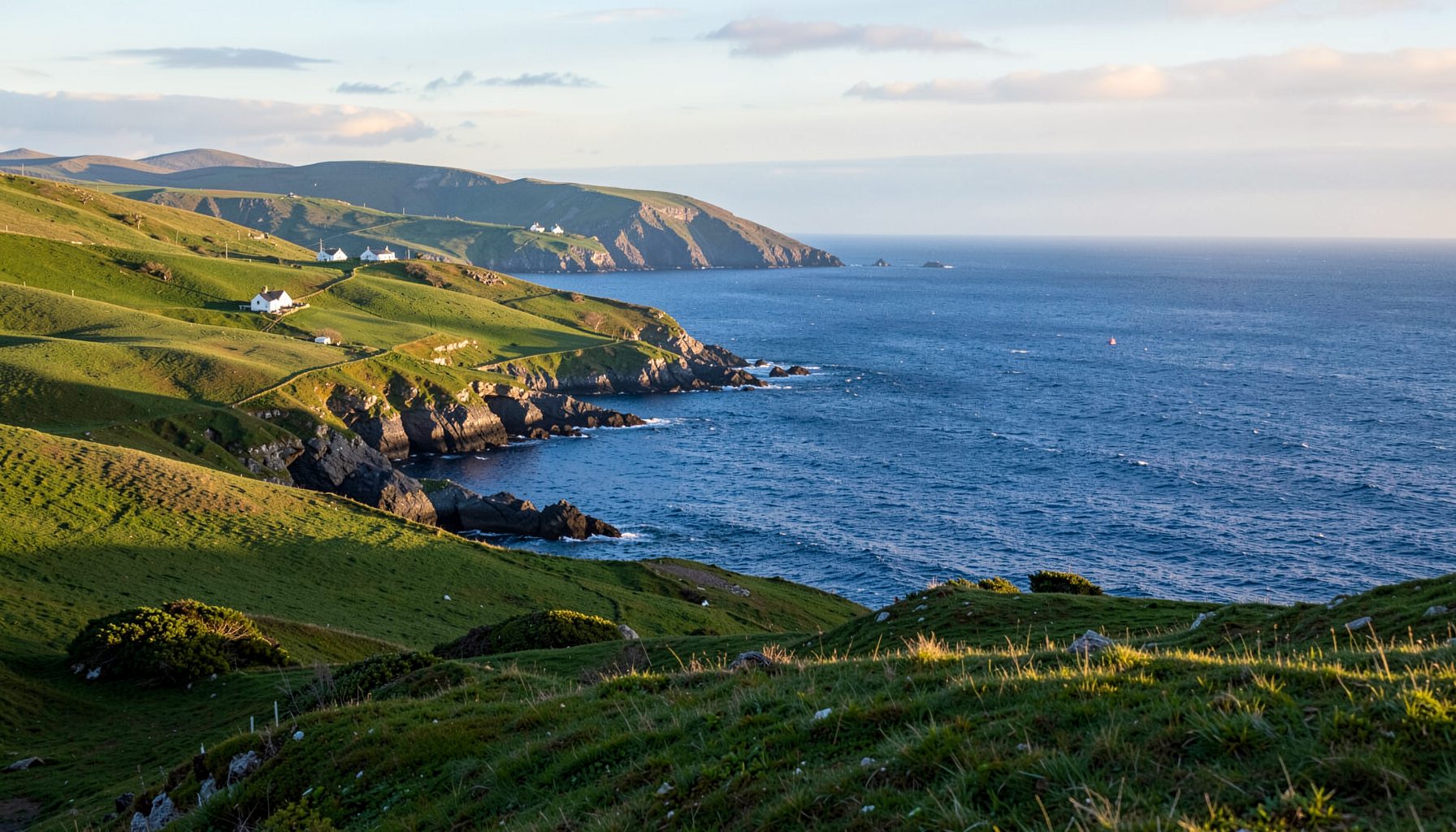
Puffin Island sits among the exposed islands and sea cliffs of County Kerry’s Skellig Coast, where Atlantic weather shapes every wildlife encounter. The island’s name points to its most famous residents, yet puffins share this rugged setting with grey seals, razorbills, guillemots, fulmars, kittiwakes and other ocean-going birds.
For visitors arriving from Australia, the experience can feel wonderfully different from a penguin walk on Phillip Island or a seal encounter along the Great Ocean Road. There are no guaranteed sightings, fixed viewing platforms or calm-water assumptions here. Wildlife watching depends on tides, swell, wind, light and the patience to let the sea reveal what is present.
The Island’s Coastal Wildlife
Puffin Island is part of a wider marine landscape rather than an isolated attraction. Its cliffs, ledges, offshore rocks and surrounding waters provide nesting, resting and feeding habitat for several species. The island is best appreciated from a responsible distance, usually from a boat, because seabird colonies are vulnerable to disturbance during the breeding season.
The dark cliffs can appear almost empty until binoculars reveal movement: a puffin carrying nesting material, a guillemot packed tightly beside its neighbours, or a seal surfacing below the boat. These quick glimpses are part of the appeal. Wildlife is free to move with the tide, and a quiet sea passage may be followed by a sudden burst of activity.
The surrounding Skellig Coast also connects this experience with a much broader heritage landscape. Ancient monastic sites, fishing communities and modern conservation work all form part of the story. Visitors interested in coastal walking traditions can place the island experience alongside this coastal route guide, while remembering that a boat-based wildlife visit demands different preparation.
Grey Seals Beneath The Cliffs
Grey seals are the seal most likely to attract attention around exposed Atlantic islands. Adults have broad heads, powerful necks and irregular darker markings. Males can be substantially larger than females, while younger seals may look smoother and more silver-grey. Their faces can seem expressive, but they are wild marine mammals, not animals waiting to interact with visitors.
A seal may be seen lying on a rocky ledge, known as hauling out, or surfacing beside a boat with only its head above water. It may disappear for several minutes before reappearing somewhere else. This behaviour is normal. Seals spend much of their time feeding, travelling and resting at sea, so an empty rock does not mean the colony has moved away.
Harbour seals may also occur in Irish coastal waters, although sightings around open Atlantic islands are often associated with grey seals. Identification from a moving boat is not always straightforward. Size, head shape, coat pattern and the location of the animal can help, but a photograph taken from a distance is preferable to a close approach.
Puffins And The Seabird Colony
Puffins are usually the headline species because of their colourful bills and upright posture. Their bills become particularly vivid during the breeding season, when pairs return to nesting areas and may use burrows in soil or turf above the cliffs. Outside that season, adults spend much of their lives at sea and can be harder to find.
A puffin colony is rarely a quiet, postcard scene. Guillemots may crowd narrow ledges, razorbills hold their position among them, and fulmars glide close to the cliff face. Kittiwakes add their sharp calls, while gannets may pass farther offshore with long, deliberate wingbeats. Manx shearwaters and storm petrels are more likely to be noticed as fast-moving shapes over the water, especially in suitable conditions.
The best way to distinguish species is to focus on shape and flight before colour. Razorbills and guillemots are dark, compact seabirds that use rapid wingbeats close to the water. Puffins have a stockier body and a conspicuous bill when seen nearby. Fulmars have a stiff, gliding flight, while gannets look larger and more streamlined, often plunging dramatically into the sea.
Seasons, Weather And Sightings
Spring and early summer are often productive for seabird watching because many species are returning to breed. Birds may be carrying nesting material, displaying, calling or travelling regularly between the cliffs and feeding grounds. This is also a sensitive period, so boat operators generally maintain a careful distance and adjust their route if conditions or wildlife behaviour require it.
Late summer can bring a different rhythm. Some young birds are becoming independent, and adults may be less obvious around nesting sites. Autumn weather can be changeable, with stronger winds and larger swells. Winter trips may offer dramatic light and a sense of solitude, but fewer operators run services, and rough conditions can cancel departures.
Irish Atlantic weather can shift quickly, even when the morning looks settled. Australian visitors accustomed to checking a Bureau of Meteorology forecast should also examine local marine conditions and the operator’s departure notice. A sunny day in Killarney does not guarantee a comfortable crossing near the Skellig Coast. Bring warm layers, waterproof outer clothing and protection for cameras and phones.
Watching Without Disturbing Wildlife
The most valuable wildlife encounter is one that leaves no visible trace. Stay seated or remain where the crew directs you, keep voices low near nesting cliffs and never throw food into the water. Do not use drones, play bird calls or attempt to attract seals closer. Noise and sudden movement can cause birds to leave ledges or seals to abandon a resting place.
A long lens or binoculars will produce better memories than a risky approach. Avoid leaning over rails to obtain a closer photograph, and follow instructions if the boat changes course. Operators may reduce engine speed, keep a wider berth or leave an area altogether when birds or seals show signs of disturbance.
Signs of stress can include repeated head lifting, nervous movement, alarm calls, flushing from a ledge or a seal entering the water sooner than expected. Pups and young birds deserve particular care. Never attempt to touch an animal on shore, even if it appears alone or vulnerable; contact a local wildlife authority or the boat crew instead.
Planning A Wildlife-Focused Visit
Puffin Island trips are generally arranged through local boat operators serving the Skellig Coast, with departure points and schedules varying by season, tide and sea conditions. Check whether the outing is primarily a wildlife cruise, a sightseeing journey or a transfer connected with another island visit. Landing may not be available, and a cruise can be cancelled at short notice.
For Australians, the most practical approach is to build flexibility into a longer Ireland itinerary. A traveller flying from Melbourne or Sydney may already be managing jet lag, connecting flights and changes between Dublin, Kerry and the south-west. Allowing an extra day around the boat trip is sensible, particularly if the visit is planned during the busy Australian winter escape period from June to August.
Local tourism works differently from a guaranteed wildlife park experience. A boat seat may be reserved, yet the wildlife itself cannot be booked. Ask about accessibility, toilet facilities, motion-sickness advice, luggage restrictions and the expected duration on the water. In everyday Irish conversation, “grand” can mean that conditions are acceptable, but it is still wise to read the actual marine forecast and listen carefully to the skipper’s guidance.
| Wildlife | Where You May See It | Best Clues | Visitor Approach |
|---|---|---|---|
| Grey seal | Rocky shores, sea caves and water below cliffs | Large head, mottled coat, slow surfacing | Watch quietly from the boat |
| Puffin | Cliff turf, ledges and open water | Bright bill, rounded body, fast wingbeats | Use binoculars and avoid nesting areas |
| Guillemot | Narrow cliff ledges and sea surface | Dark body, pale underside, dense colonies | Keep distance from ledges |
| Razorbill | Ledges and coastal water | Thick bill with pale markings | Look for compact flight close to water |
| Fulmar | Air currents beside cliffs | Stiff-winged gliding and broad head | Observe without attracting birds |
| Gannet | Offshore water and open sky | Large white bird, black wing tips, plunge-diving | Scan beyond the island |
Practical Ways To Prepare
- Choose a reputable local operator that explains wildlife distances and follows marine conservation guidance.
- Pack waterproof layers, a warm hat, sunscreen and sunglasses; Atlantic glare can be strong even on a cool day.
- Bring binoculars, a charged phone and a dry bag rather than relying on close-up photographs.
- Take motion-sickness medication only as advised by a pharmacist or medical professional, and follow the product directions.
- Leave extra time in the itinerary in case wind, swell or tide changes the departure schedule.
- Use the toilet before boarding and carry water and a small snack, as facilities on or around the island may be limited.
- Treat every sighting as fortunate, whether it is a full puffin colony or a single seal surfacing beside the boat.
A visit to Puffin Island rewards attention more than expectation. The most memorable moment may be a puffin vanishing into the grass, a seal watching from a wave-washed rock, or a line of gannets crossing the horizon. By travelling prepared and observing quietly, visitors help protect the same wildlife that makes the Skellig Coast special.
Explore the Skellig Coast’s communities, heritage and coastal experiences to place your wildlife cruise within the wider story of Ireland’s Iveragh Peninsula. When the sea, weather and wildlife align, Puffin Island becomes more than a destination on a map: it becomes a close encounter with a living Atlantic landscape.