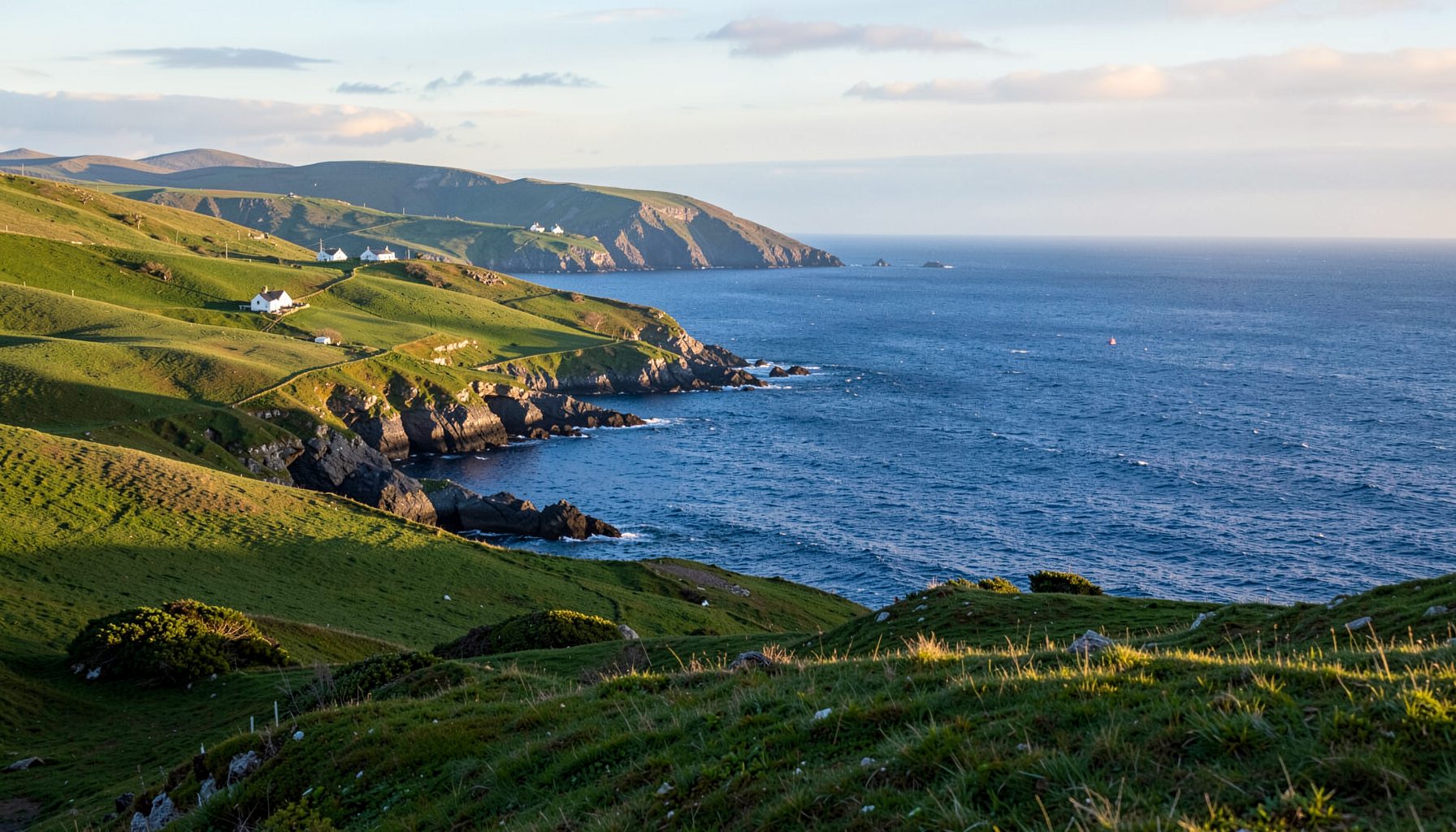
A guide to the pilgrim path to Skellig Michael
Rising from the Atlantic about 12 kilometres off the coast of County Kerry, Skellig Michael is one of Ireland’s most remarkable heritage sites. Its stone monastery sits high above the sea on a sharp pyramid of rock, reached by a steep flight of ancient steps. For centuries, the island was associated with prayer, solitude and endurance; today, the ascent is also a carefully managed visit to a UNESCO World Heritage Site.
The journey begins well before the first step. Visitors must travel by boat from the Iveragh Peninsula, usually from ports near Portmagee or surrounding coastal communities, and then climb a rugged path exposed to wind and weather. Understanding the island’s history, access rules, wildlife and physical demands will help visitors approach the Skellig Michael pilgrimage path with respect and realistic expectations.
What the pilgrim path represents
The monastic settlement on Skellig Michael was established by early Christian monks, probably between the sixth and eighth centuries. They chose an isolated sea stack where they could live a disciplined life of prayer, work and contemplation. The island’s remoteness was central to its spiritual purpose: reaching the monastery required a demanding sea crossing followed by a strenuous climb.
The monks built small, dry-stone beehive huts, a church, terraces, retaining walls and water-management features. These structures were made without mortar and have survived Atlantic storms for more than a thousand years. The settlement is often described as a pilgrimage destination, but modern visitors should remember that the climb is an archaeological route rather than a purpose-built walking track.
The path begins near the landing place and rises through a series of narrow, uneven steps. At the summit, the monastery appears suddenly among the stone terraces, with views across Little Skellig and the open Atlantic. The physical effort is part of the experience, yet the route is not designed to recreate a religious pilgrimage in a formal modern sense. It is a protected historic landscape that visitors enter briefly and carefully.
Reaching Skellig Michael from the mainland
Landing trips operate from the Skellig Coast during a limited seasonal period, generally in the warmer months when sea conditions and daylight are more favourable. Places are limited, and a boat journey does not guarantee a landing. The skipper and site authorities make the final decision according to swell, wind, visibility and other safety factors.
Travellers should arrange an authorised landing trip well ahead of time, particularly for weekends and the main summer period. Operators are based in local coastal communities, and their schedules can change quickly when Atlantic weather moves in. A boat may still sail around the islands without landing, giving passengers views of Skellig Michael and Little Skellig, but that is a different experience from climbing the monastery path.
The crossing can be rough even when the harbour looks calm. Seasickness medication, taken according to medical advice before departure, may be useful. Wear warm layers and secure loose belongings, because conditions on the water can be cold and spray-filled. Australian visitors accustomed to planning around heat in cities such as Brisbane or Perth may need to prepare more for wind, rain and sudden temperature changes than for sun alone.
Portmagee, Valentia Island and nearby villages provide the practical mainland setting for the visit. Accommodation, food and transport are supplied by small local businesses, so the summer rush can affect availability. Allow extra time before and after the boat trip rather than connecting it tightly to a long drive or flight.
Walking the ancient ascent
The climb from the landing point to the monastery involves roughly 600 ancient steps, often described as about 618. They are irregular, steep and worn, with sections where there is limited protection from a fall. There are no modern conveniences along the route, and the exposed setting can make the climb feel harder than the distance suggests.
Good footwear is essential. Walking shoes or boots with secure soles are more suitable than sandals, fashion trainers or smooth-soled shoes. Bring a small amount of water, but avoid carrying bulky bags. There are no shops, cafés or reliable toilet facilities on the island, and visitors must carry all personal items back to the mainland.
The route is generally unsuitable for anyone who has significant mobility difficulties, a serious fear of heights or a medical condition that makes steep climbing unsafe. Children need close supervision, especially near exposed edges and the monastery structures. Take regular pauses in safe places, keep to the marked route and do not climb on walls, huts or unstable stones.
Australian visitors may recognise the value of a hat, sunglasses and sunscreen from everyday habits in Sydney, Melbourne or Adelaide. On Skellig Michael, those items still matter, but they should be combined with a waterproof jacket and warm layers. The Atlantic can change from bright sunshine to cold rain quickly, and a clear forecast is never a promise of calm conditions.
Wildlife and heritage protection
Skellig Michael is important for both cultural heritage and seabird conservation. Little Skellig supports a major gannet colony, while Skellig Michael is associated with puffins, razorbills, guillemots and other nesting seabirds. During the breeding season, birds use ledges and crevices close to the visitor route, making quiet and careful behaviour essential.
Keep a respectful distance from birds and never attempt to touch, feed or photograph them at close range. Do not leave food, plastic, tissues or other waste behind. Dogs, drones and unauthorised equipment are not appropriate for a protected offshore monument, and access restrictions may apply under the rules of the Office of Public Works and conservation authorities.
The monastery is protected under Ireland’s national monuments legislation, including the National Monuments Acts. That legal protection is why visitors must not remove stones, scratch surfaces, enter closed areas or walk beyond barriers. The site’s survival depends on thousands of small choices made by visitors, boat crews and conservation workers.
A responsible visit also means accepting that some areas may be closed. Weather damage, nesting birds, unstable masonry or conservation work can affect access. Treat official instructions as part of the pilgrimage experience rather than an inconvenience. Preservation takes priority over completing every part of the route.
Planning the journey from Australia
Most Australian travellers will reach Ireland through Dublin, with onward travel by air, rail, bus or hire car towards County Kerry. Flights from Sydney, Melbourne, Brisbane, Perth and other Australian cities usually involve at least one connection, and the total journey can be lengthy. After arriving in Ireland, allow time to recover from the flight before attempting a demanding coastal excursion.
Ireland drives on the left, as Australia does, which can make a hire car easier for Australian motorists than destinations that drive on the right. The roads around the Iveragh Peninsula can be narrow, winding and busy in summer, however. Large vehicles are inconvenient on some rural lanes, and journey times are often longer than the map suggests. Plan around daylight and avoid rushing from the airport to a scheduled boat.
The local market is strongly seasonal. Summer is the busiest period for boat trips, cafés, small shops, guided experiences and accommodation, while winter services are more limited. Carry a bank card and some euro for small purchases, and remember that prices in euros will move against the Australian dollar. Booking several local services early is sensible, but leave flexibility for weather cancellations.
Australian citizens should check current Irish entry requirements, passport validity rules and travel advice through official Australian and Irish government sources before departure. Travel insurance should cover outdoor activities, weather-related disruption and medical care. Irish conservation law and site regulations apply once visitors arrive, regardless of their nationality.
If a landing is cancelled, use the time to explore the Skellig Coast mainland. Portmagee, Valentia Island, Caherdaniel, Waterville, Sneem and Castlecove all contribute to the region’s cultural landscape. Local heritage centres, walking routes, galleries, community events and coastal viewpoints can provide a meaningful alternative while protecting the island from unnecessary pressure.
The pilgrim path to Skellig Michael is demanding, weather-dependent and deeply rewarding when approached with patience. Arrange an authorised boat trip, prepare for an exposed climb, follow conservation instructions and allow local conditions to shape the day. Learn about the island before setting out, then travel lightly and leave the stone monastery, seabirds and Atlantic landscape as you found them.