Medieval Churches Along Ireland’s Skellig Coast
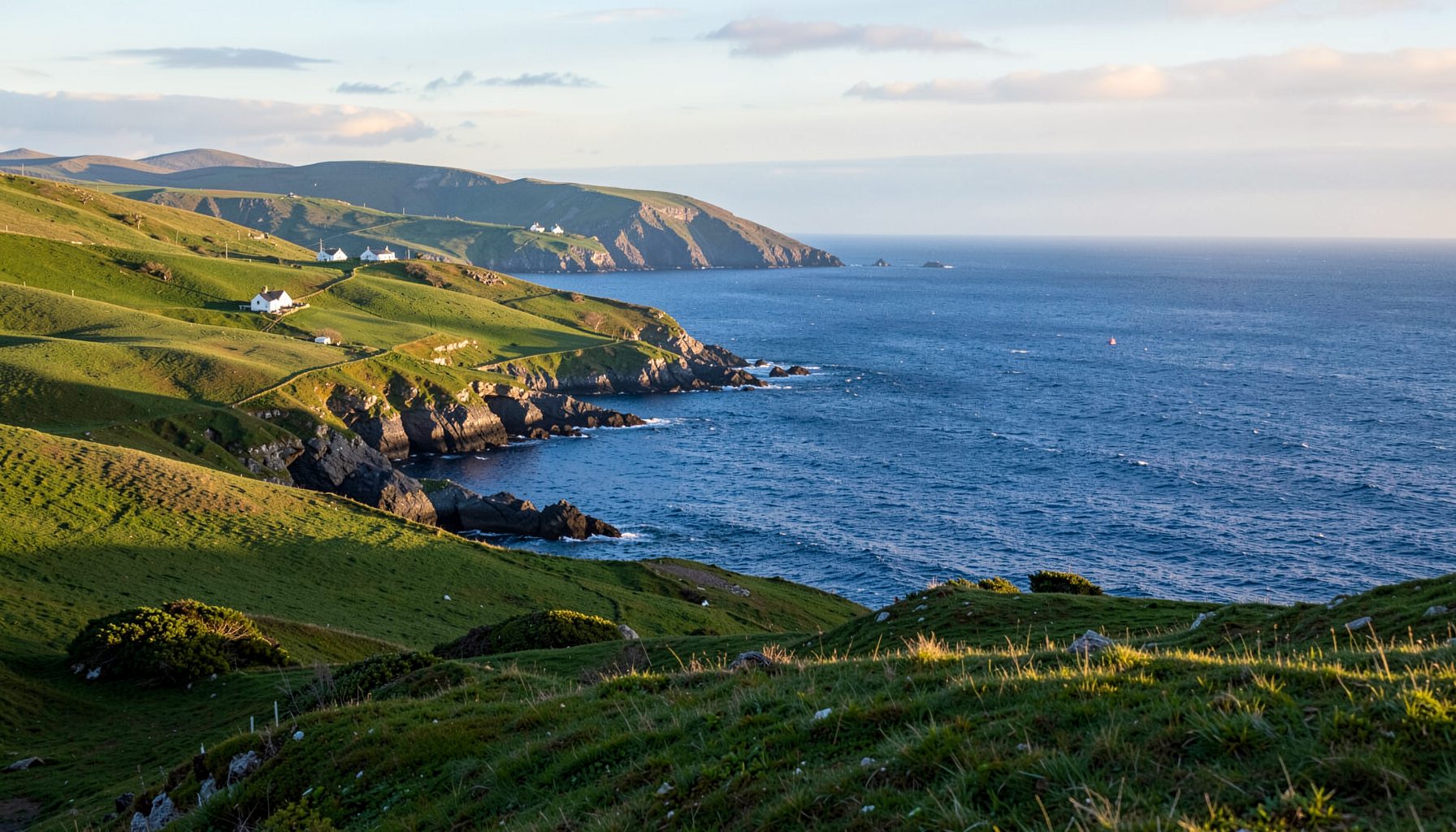
The Skellig Coast is best known for dramatic Atlantic scenery, Skellig Michael and the winding roads of the Iveragh Peninsula. Yet its religious heritage is just as revealing. Medieval churches, monastic settlements and early Christian foundations show how faith, farming, fishing and seafaring shaped communities from Ballinskelligs to Caherdaniel.
These places are rarely grand in the way of European cathedral cities. Many survive as roofless stone ruins, small burial grounds or foundations partly absorbed into the landscape. Their value lies in their setting and continuity: a church beside a strand, a monastery on an island, or a cluster of graves still visited by local families.
For visitors travelling from Australia, the Skellig Coast offers a heritage experience that feels intimate rather than packaged. A journey from Dublin or Cork involves time on the road, and weather can alter plans quickly, but that slower pace suits the region. The reward is a closer look at Ireland’s medieval past, interpreted through coastlines, townlands and living communities.
Skellig Michael And Its Monastic Churches
Skellig Michael is the most famous religious site on the coast and the clearest expression of early medieval island monasticism. The monastery stands on a steep Atlantic rock west of the Iveragh Peninsula, where monks created terraces, beehive huts, crosses, cisterns and places of worship from local stone.
The principal church, commonly called St Michael’s Church, belongs to the later development of the monastery. Its exact building history is complex, as the settlement changed over several centuries, but the site is generally understood as an early medieval foundation with significant construction and adaptation between roughly the sixth and twelfth centuries. The smaller St Michael’s oratory and other devotional structures are part of the same remarkable complex.
The climb is strenuous, exposed and uneven. There are hundreds of stone steps, no handrails across much of the route and no shelter once visitors are on the rock. Boat landings depend on sea conditions, while access is controlled through authorised landing tours rather than ordinary drop-in tourism. Skellig Michael is also a UNESCO World Heritage Site and a filming location associated with Star Wars, but its religious and archaeological importance predates modern screen culture by many centuries.
Ballinskelligs Abbey And The Coastal Monastic Tradition
Ballinskelligs Abbey is one of the most accessible medieval religious ruins in the area. The remains stand near the beach and are associated with Augustinian canons, with the foundation traditionally dated to the early thirteenth century. Its position reflects the coast’s long connection with Skellig Michael: religious communities moved, developed and established new bases as maritime conditions and political circumstances changed.
The surviving stonework gives visitors a useful sense of a medieval religious house without the physical demands of Skellig Michael. Pointed openings, fragments of walls and the arrangement of the ruin suggest a place built for worship and communal life. The sea, dunes and nearby coastline are part of the story, not simply a scenic background. Ballinskelligs was a working landscape in which monastic activity existed alongside agriculture, fishing and local settlement.
Allow time to walk quietly around the site and read any official interpretation provided locally. The ruin is exposed to Atlantic weather, and its masonry requires care. Visitors should avoid climbing walls, entering unstable areas or disturbing the surrounding ground. A visit can be paired with Ballinskelligs beach and the wider cultural landscape, creating a fuller picture of how medieval religious sites fitted into everyday coastal life.
Small Churches, Graveyards And Place Names
Across the Skellig Coast, the medieval record is often preserved in less obvious forms. A ruined church may be little more than a few walls, while a graveyard can contain carved stones, fragments of medieval masonry or later memorials that show the site remained significant after the original building fell out of use. Irish place names beginning with cill, meaning church, often point to this deep religious geography.
Near Caherdaniel, the ruined medieval church traditionally associated with St Crohane is an example of the smaller ecclesiastical sites scattered through the peninsula. The structure is modest beside the monumental remains of Skellig Michael, but that modesty is important. Parish churches and local chapels served communities rather than pilgrims seeking a dramatic destination, and their locations often reflect old settlement patterns, water access and agricultural land.
Church Island on Lough Currane, near Waterville, adds another layer to the story. It is an early Christian island site rather than a conventional medieval parish church, and its remains are connected with the tradition of St Finian. Access is generally by boat and must be arranged locally, with conditions dependent on the lake and the operator. Sites such as this remind visitors that the region’s Christian heritage developed across islands, valleys and lakes as well as beside the open Atlantic.
How To Read The Ruins In Their Landscape
A medieval church was rarely an isolated monument. Its surroundings could include a settlement, fields, a burial ground, a route to the shore and places associated with saints or local traditions. On the Skellig Coast, the relationship between stone buildings and the sea is especially strong. A church may have served residents, travellers, pilgrims or communities connected by boat, even when roads were limited or absent.
Look for practical details during a visit. Examine the thickness of walls, the shape of doorways and windows, the way builders used local sandstone or slate, and the position of the church in relation to higher ground and water. Later repairs can be as informative as medieval features. A blocked opening, reused stone or grave marker may show how a building continued to matter after formal worship moved elsewhere.
Weather helps explain the character of these ruins. Atlantic wind and rain have softened exposed masonry, while vegetation can hide foundations and make surfaces slippery. Comfortable footwear is essential, and visitors should treat graveyards as active places of remembrance rather than simply archaeological attractions. Photography is welcome where permitted, but a quiet approach is appropriate, particularly when local families are visiting graves.
Planning A Heritage Visit From Australia
Australians will recognise one useful feature of travelling here: Ireland drives on the left, as Australia does. The roads are narrower and more winding than many visitors expect, especially around the Ring of Kerry, so journey times should be judged by the map rather than by Australian highway habits. A route from Dublin or Cork to the Skellig Coast can take most of a day once stops, traffic and mountain roads are included.
For Australians flying internationally, Dublin is usually the simplest major gateway, while Cork can suit an itinerary that includes the south-west. From either city, a hire car offers flexibility, although regional bus services, local guides and community-run activities can be valuable alternatives. The final approach to remote churches may involve walking over uneven ground, and some island sites require advance booking or a locally operated boat.
Timing matters in the Australian market. Families often plan around summer school holidays, while couples and mature travellers may prefer the shoulder seasons of May, June, September or October. Longer daylight can make summer attractive, but the busiest period also brings greater pressure on roads and popular boat trips. A wet-weather plan is sensible: combine an outdoor ruin with a heritage centre, library, local exhibition or community event rather than assuming every day will be clear.
The language of local travel is relaxed, and you may hear advice about an “arvo” walk or be told “no worries” when plans need to shift. That friendliness should not disguise the need for preparation. Pack waterproof layers, allow extra time, carry offline directions and check access information before leaving. Mobile coverage can be patchy, and some sites have no toilets, shops or interpretation on the spot.
The Skellig Coast is a community region as well as a tourism destination. Local businesses, heritage groups and learning hubs help preserve and explain the area, while visitors contribute most positively when they spend time in villages such as Waterville, Ballinskelligs and Caherdaniel. Buy locally where possible, follow access signs and leave stonework, wildlife and memorials undisturbed.
Medieval churches are best understood through patient observation. Visit Skellig Michael for its extraordinary monastic architecture, Ballinskelligs for its accessible coastal ruin, and smaller church and island sites for the quieter history of local devotion. Use the Skellig Coast’s community information, heritage resources and event listings to build a respectful itinerary, then share the region’s stories with others who value living landscapes as much as famous landmarks.