A guide to the local sheep farming traditions
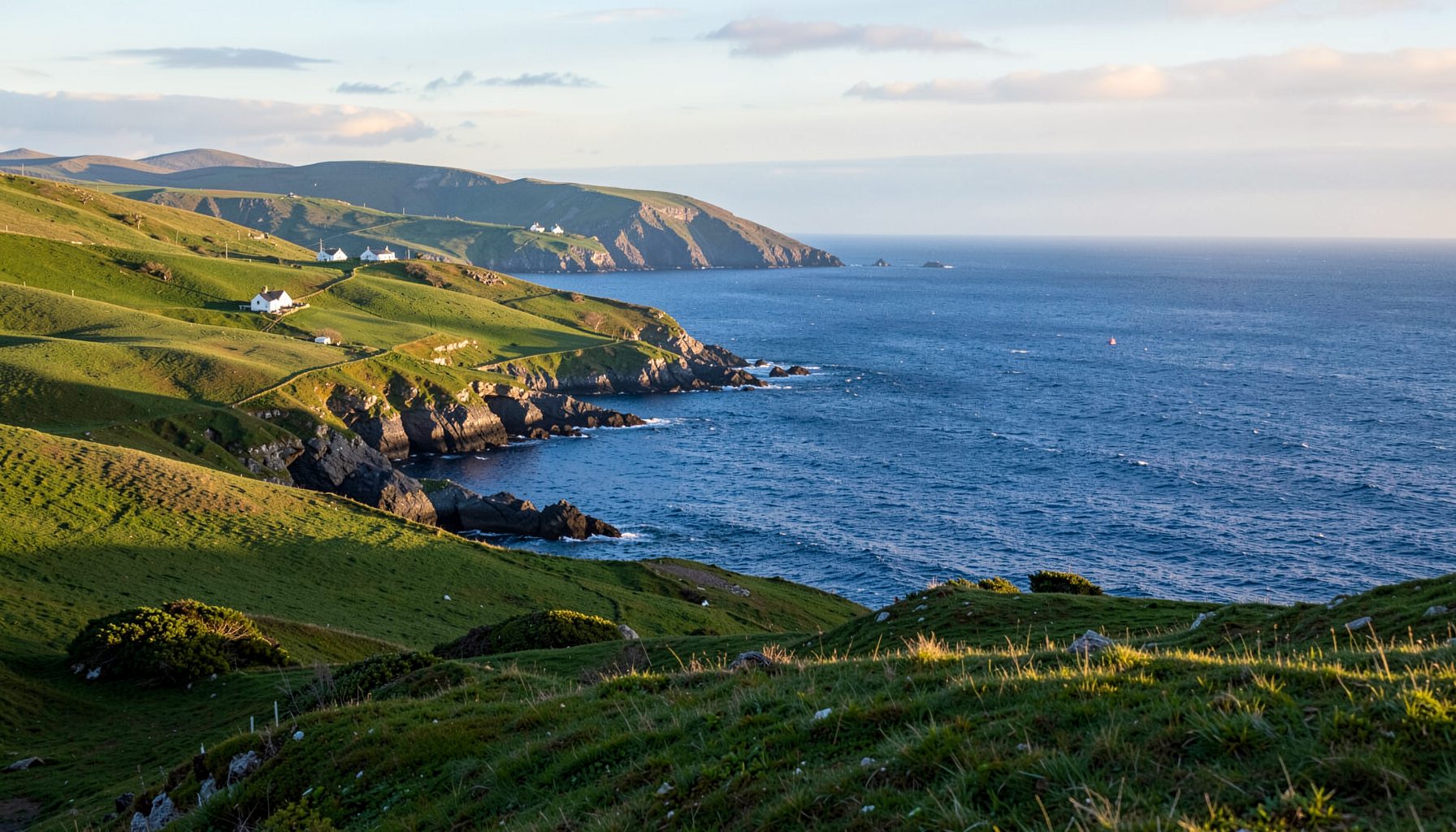
Across the Skellig Coast, sheep farming is closely tied to the shape of the land. From Kells and Cahersiveen towards Waterville, Ballinskelligs and Castlecove, small fields, steep hills, exposed headlands and upland commonages create conditions that favour hardy hill sheep. The animals are part of the working landscape, sharing space with stone walls, bogland, streams and coastal roads.
Local flock management has developed around weather, altitude and available grazing rather than a single farming model. A farmer may keep sheep on enclosed pasture near the home place, move others to rougher upland ground, or rely on commonage rights shared with neighbouring holdings. These arrangements link present-day agriculture with older patterns of land use across the Iveragh Peninsula.
Sheep also contribute to the region’s cultural character. Their care requires detailed knowledge of seasons, terrain and animal behaviour, while the annual cycle brings families and neighbours together for gathering, lambing, shearing and market work. Understanding that cycle gives visitors a deeper appreciation of the countryside beyond its scenic appearance.
Where sheep fit the coastal landscape
The Skellig Coast is a demanding environment for livestock. Atlantic rain, strong winds and rapidly changing weather can affect grazing conditions, especially on exposed hills. Sheep breeds and crosses kept in these areas must cope with wet ground, steep slopes and limited shelter. Their ability to forage over rough vegetation makes them well suited to land that would be difficult to use for intensive cattle or tillage farming.
Improved grassland around farmsteads provides richer grazing at important times of year, while upland areas offer heather, grasses and other hardy plants. The balance between these grazing zones helps farmers manage vegetation and maintain an active agricultural presence in remote places. Well-managed grazing can prevent scrub from taking over open ground, though stocking levels must be suited to each habitat.
Commonage is especially important in parts of the Iveragh landscape. Several farmers may have recognised grazing rights on shared mountain or hill ground, with local customs and formal rules shaping how that land is used. Commonage management calls for cooperation, since decisions about access, fencing, drainage, animal health and stocking can affect every shareholder.
The farming year from lambing to shearing
The busiest period begins around lambing, usually in late winter and spring, although dates vary according to breed, altitude and the farmer’s system. Ewes may be brought to sheltered fields or sheds where they can be monitored closely. Newborn lambs need warmth, sufficient colostrum and careful observation, particularly during cold or wet spells.
After lambing, ewes and lambs gradually return to pasture. Farmers check body condition, watch for illness and make sure vulnerable animals receive additional feed when grass growth is slow. Tagging and record keeping are part of responsible flock management, supporting traceability and helping farmers make decisions about breeding and replacement stock.
As the year progresses, lambs grow on spring and summer grass. Sheep are gathered for routine tasks such as checking hooves, treating parasites, administering vaccinations and separating groups. Gathering a hill flock can involve several people, trained sheepdogs and considerable physical effort, especially when animals are spread across rough ground.
Shearing generally takes place in late spring or summer, when the fleece can be removed safely and sheep are less exposed to cold weather. The work requires speed and skill, since a good shearer handles the animal efficiently while reducing stress and avoiding cuts. Although wool prices may be modest, the fleece remains a visible reminder of the traditional relationship between sheep, craft and rural work.
Breeds, crosses and local knowledge
There is no single sheep breed that defines every farm along the coast. Hill farmers often choose hardy breeds or crosses that can thrive in wet, windy conditions and travel over uneven ground. Scottish Blackface sheep are widely associated with Ireland’s hill country, while Cheviot and other hardy breeds may appear in breeding programmes. Many flocks use crossbreeding to combine resilience with improved lamb growth or carcass quality.
The choice of ram is an important annual decision. A farmer may select a ram for maternal qualities, easier lambing, fleece, conformation or the ability to produce suitable store or finished lambs. Local conditions matter as much as market requirements: a fast-growing animal still needs to cope with the farm’s terrain and climate.
Practical knowledge is often learned through observation and repetition. Experienced farmers recognise an individual ewe by her behaviour, notice changes in gait or appetite and understand which areas of a commonage different groups prefer. They also know how weather affects lambing, when a hill is safe to cross and how sheep are likely to move when gathered.
This knowledge complements veterinary advice, agricultural training and modern record systems. Traditional methods are not fixed in the past; they continue to evolve as farmers respond to animal welfare standards, climate pressures, changing markets and new approaches to pasture management.
A working tradition shaped by place
| Part of the farming cycle | Typical work | Why it matters on the Skellig Coast |
|---|---|---|
| Lambing season | Monitoring ewes, assisting births and pairing lambs with mothers | Sheltered ground and close checks help protect animals from Atlantic weather |
| Spring grazing | Moving ewes and lambs onto suitable pasture | Fresh grass supports milk production and lamb growth |
| Flock gathering | Bringing sheep together from fields or commonage | Enables health checks, tagging, treatment and selection |
| Shearing | Removing the fleece and inspecting the animal | Supports welfare and preserves a long-standing rural skill |
| Summer and autumn management | Weaning, breeding selection and pasture rotation | Helps maintain flock condition and prepare ewes for winter |
| Winter care | Providing shelter, forage and regular observation | Reduces risks during rain, wind, frost and limited grass growth |
The table shows a rhythm rather than a strict timetable. Weather, farm size, altitude and market plans can shift each task. A low-lying holding may begin lambing earlier than a hill farm, while a farmer with upland grazing may delay certain movements until conditions improve.
Flock management also has an environmental dimension. Grazing animals can help keep grassland open and shape the appearance of upland habitats, but sensitive bogs, dunes and coastal areas require careful stewardship. Farmers may work with advisers or local initiatives to protect water quality, reduce erosion and support biodiversity while continuing to produce food.
Skills carried through families and communities
Sheep farming traditions are sustained by social relationships as much as by individual effort. Neighbours may help gather animals, share equipment, exchange advice or provide assistance during lambing. Local marts, agricultural shows and discussion groups create further opportunities to compare breeding results, discuss prices and maintain connections between farms.
Sheepdogs are central to many hill-farming systems. A well-trained dog can move a flock across ground where vehicles cannot travel, reducing pressure on both people and animals. Training takes patience and a close understanding of how sheep respond to movement, sound and distance. The partnership between farmer and dog is a practical skill with deep cultural significance.
Children and younger family members often encounter farming through small responsibilities: feeding animals, checking fences, helping with tagging or watching a dog work. Some will continue on the family farm, while others carry this knowledge into agricultural contracting, veterinary work, tourism, environmental management or community projects.
The wider heritage of the area can be explored through the Skellig Coast resource, which connects local communities, cultural initiatives and landscape stories. Sheep farming belongs within that wider picture, alongside fishing, stone masonry, language, music, pilgrimage routes and the maritime history of the peninsula.
Pressures and changes on modern farms
Small sheep farms face several economic pressures. The value of lamb and wool can fluctuate, while fencing, feed, transport, veterinary care and machinery all add to costs. Remote holdings may also face longer journeys to marts, suppliers and professional services. For many families, sheep farming is combined with other employment or enterprises.
Changing weather patterns create another layer of uncertainty. Heavy rainfall can damage ground and make gathering difficult, while periods of drought reduce grass growth. Warmer, wetter conditions may also influence parasite burdens and disease risks. Farmers respond through pasture planning, careful monitoring, breeding choices and collaboration with agricultural advisers.
Public understanding matters because farming takes place in a landscape visited by walkers, cyclists and sightseers. Gates should be left as found, dogs kept under close control and signs respected, particularly where sheep are lambing. Vehicles should remain on permitted roads and pull-in areas, since an unexpected approach can scatter a flock or create a road hazard.
Local food initiatives and community events can help keep attention on the value of farming. Buying regional produce where available, learning about seasonal work and supporting rural organisations all contribute to a stronger connection between residents, visitors and the working landscape.
Ways to engage respectfully with farming heritage
Visitors and local residents can support the tradition through simple, practical choices:
- Keep dogs on a lead near sheep, especially during lambing, and never allow them to chase livestock.
- Close every gate securely and avoid climbing over walls or entering fields without permission.
- Choose guided walks, farm visits or community events that explain local land use responsibly.
- Buy local lamb or wool products when their origin is clearly identified and the opportunity is available.
- Share photographs and stories in ways that respect farmers’ privacy, working routines and property boundaries.
These actions help protect animal welfare while making rural recreation more considerate. They also recognise that the landscape is a workplace, not simply a backdrop for leisure.
A local sheep flock represents adaptation: animals suited to the hills, farmers attentive to weather, and communities that continue to share skills. Explore the communities and heritage of the Skellig Coast, learn how its farms contribute to the landscape, and include respectful engagement with working countryside in your next visit to the Iveragh Peninsula.