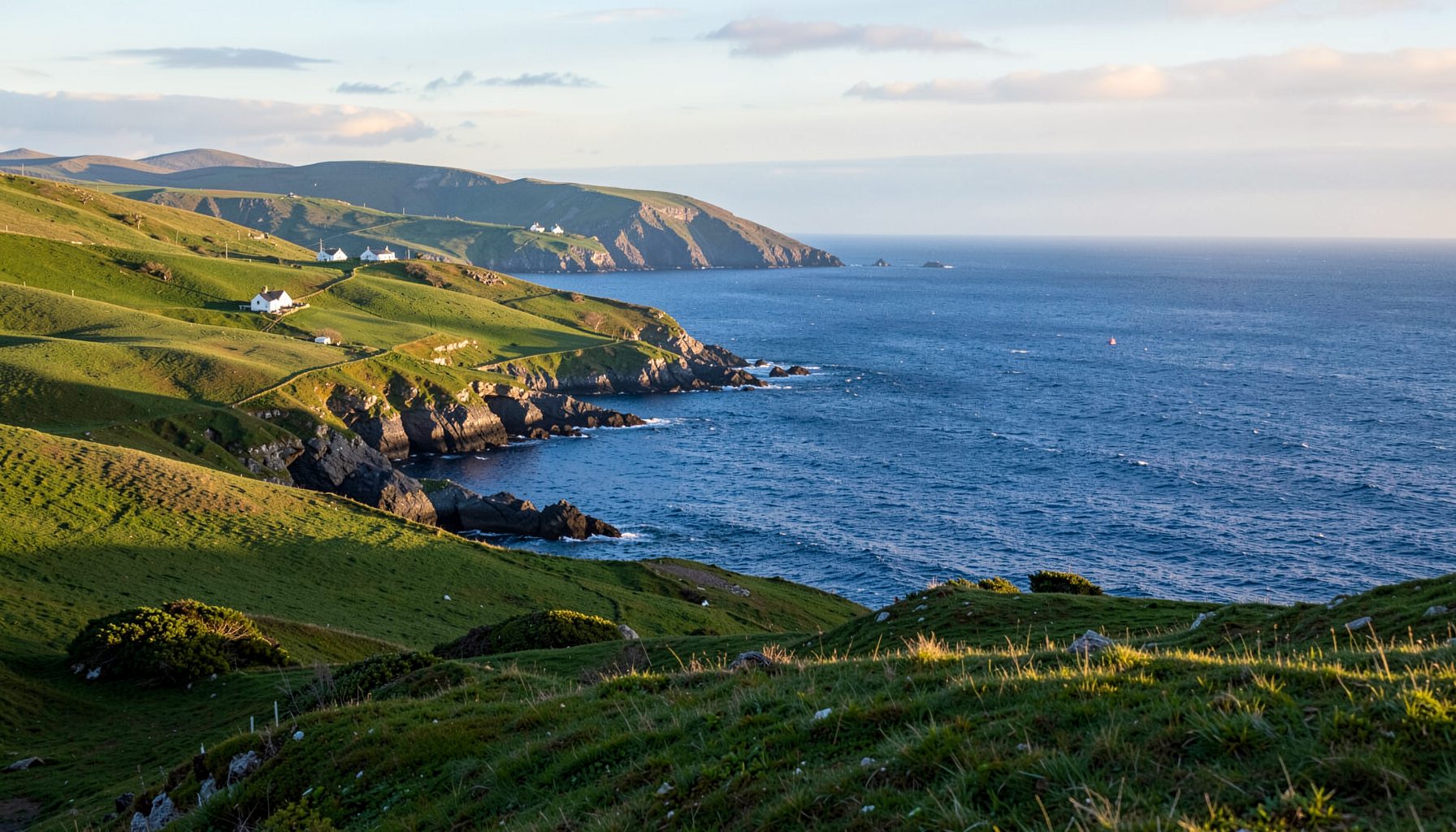
A Guide to the Local Heritage Centres and Museums
The Skellig Coast is best understood through the stories held in its small museums, visitor centres, historic houses and community-led exhibitions. From prehistoric stone forts to transatlantic communication, the region’s heritage reflects a landscape shaped by the Atlantic, migration, faith, politics, fishing and farming.
The main sites stretch from Kells and Glenbeigh through Cahersiveen, Valentia Island, Waterville, Caherdaniel and Kenmare. Some are formal museums with curated exhibitions, while others interpret a historic building, archaeological landscape or local tradition. Together, they offer a fuller picture of the Iveragh Peninsula than any single attraction can provide.
Opening dates and visiting arrangements vary, particularly outside the summer season. It is sensible to check each venue’s current information before setting out, especially when planning a trip around guided tours, ferry connections or community events.
Start with the Skellig story on Valentia Island
The Skellig Experience Visitor Centre at the eastern end of Valentia Island is the key place to learn about Skellig Michael before visiting the islands. Its interpretation explains the monastery, the monks who lived on the exposed rock, the island’s wildlife and the demanding sea journey involved in reaching the UNESCO World Heritage Site.
Exhibitions and audio-visual displays help visitors understand why Skellig Michael is significant as both an early medieval monastic settlement and a place of extraordinary natural heritage. The centre also provides useful context for the wider Skellig Coast, including the role of Valentia Island as a departure point for boat trips and a historic Atlantic community.
A visit here is especially valuable for anyone unable to land on Skellig Michael. Sea conditions, conservation controls and seasonal arrangements mean that access to the island is limited. The visitor centre offers a considered alternative, placing the archaeological remains within their religious, maritime and environmental setting rather than presenting them as an isolated landmark.
Explore science and communication in Valentia
Valentia Island Heritage Centre in Knightstown focuses on the island’s distinctive contribution to global communications. Valentia was associated with the successful transatlantic telegraph cable, which connected Ireland with Newfoundland in the nineteenth century and transformed the speed at which information could cross the Atlantic.
The heritage centre presents this achievement alongside local geology, archaeology, maritime history and everyday island life. The telegraph story is particularly striking because it links a remote Irish island with major changes in international business, journalism, diplomacy and personal communication.
Valentia’s heritage can also be explored beyond the indoor displays. The island’s slate quarries, lighthouse at Cromwell Point, coastline and historic villages add physical context to the exhibits. A visit to the centre works well when combined with a walk or drive that shows how geography influenced settlement, industry and transport.
Step into political history in Cahersiveen
Cahersiveen Heritage Centre is housed in the Old Barracks, an unusual castellated building associated with the British military presence in the town. Its exhibitions examine local history, the Fenian movement and the political background of nineteenth-century Ireland. The building itself gives the visit much of its character, with its defensive appearance reflecting the unsettled atmosphere of the period.
Cahersiveen is also closely connected with Daniel O’Connell, the nineteenth-century campaigner known as “The Liberator”. Nearby places associated with his life, including the Daniel O’Connell Memorial Church and the wider Carhan area, help visitors place his political work within the community where he was born.
The heritage centre is a useful starting point for understanding Cahersiveen as more than a gateway to the Skellig islands. Its location on the Iveragh coast made it part of networks involving military administration, emigration, local politics and sea travel. Walking through the town after visiting the centre can reveal further details in streetscapes, plaques and historic buildings.
| Heritage venue | Main themes | Best suited to | Location and planning note |
|---|---|---|---|
| Skellig Experience Visitor Centre | Skellig Michael, monastic life, wildlife and sea travel | First-time visitors to the Skellig Coast | Valentia Island; check seasonal opening and boat information |
| Valentia Island Heritage Centre | Transatlantic telegraph, geology, archaeology and island life | Visitors interested in science and communications | Knightstown, Valentia Island |
| Cahersiveen Heritage Centre | Local politics, the Old Barracks and the Fenian period | Those exploring nineteenth-century Irish history | Cahersiveen; combine with town heritage sites |
| Derrynane House | Daniel O’Connell, family history and historic estates | Families and visitors interested in political heritage | Derrynane; grounds and access can be seasonal |
| Kerry Bog Village Museum | Traditional cottages, turf, farming and rural life | Visitors seeking folk and social history | Near Glenbeigh; allow time for an outdoor visit |
| Kenmare Heritage Centre | Town development, archaeology and local community history | Visitors exploring the Kenmare area | Kenmare town; opening arrangements may change seasonally |
Discover O’Connell country at Derrynane
Derrynane House, near Caherdaniel, was the home of Daniel O’Connell and his family. The National Park setting brings together a historic house, collections, gardens and the surrounding coastal landscape. The site is important because it presents political history through domestic life: family relationships, education, faith, landholding and the routines of an influential Irish household.
The house offers a more personal perspective on O’Connell than a political biography alone. Objects, furnishings and rooms help explain the environment in which he lived and worked, while interpretation places his Catholic Emancipation campaign and parliamentary career within the wider history of nineteenth-century Ireland.
Derrynane is also an example of heritage connected to landscape conservation. The estate, shoreline and nearby walking routes show how cultural and natural history overlap on the Iveragh Peninsula. Visitors should allow time for the grounds rather than treating the house as a short indoor stop. Weather-appropriate clothing is useful, and opening times should be checked before travelling.
Find everyday life in the region’s folk museums
The Kerry Bog Village Museum near Glenbeigh presents a reconstruction of a nineteenth-century rural settlement. Traditional thatched cottages, farm buildings and displays about turf cutting illustrate how families lived and worked in the days before modern roads, electricity and mechanised agriculture changed the countryside.
Its strength lies in showing ordinary life rather than focusing on famous individuals or major political events. The buildings help explain how people used peatlands, stored food, cared for animals and adapted to the wet Atlantic climate. For children, the open-air layout can make social history easier to understand than a display case alone.
Kenmare Heritage Centre provides another community-scale view of the past. Its interpretation reflects the development of Kenmare and the surrounding region, including local archaeology, settlement and social history. Kenmare’s heritage is also visible in its planned streets, market traditions, stone buildings and connections with the Beara and Iveragh landscapes.
These smaller venues are valuable because they preserve details that may not appear in national museums: domestic tools, local industries, family memories and changes in village life. They are often best enjoyed at an unhurried pace, with time to notice building materials, place names and the relationship between the museum and the town around it.
Read the landscape as an outdoor museum
Some of the most important heritage on the Skellig Coast is not held indoors. The region contains prehistoric forts, standing stones, early Christian sites, famine-era buildings, old roads, piers and town landmarks. Sites such as Cahergall and Leacanabuaile near Cahersiveen show how archaeology can be read directly in the landscape.
Cahergall is a well-preserved stone ring fort, while Leacanabuaile includes the remains of an early medieval settlement. Their thick drystone walls, enclosed spaces and elevated positions offer clues about defence, community life and farming. Visitors should stay on established paths, avoid climbing fragile masonry and follow signage at each site.
The Skellig Coast’s church ruins and monastic associations require similar care. Skellig Michael is protected because of its exceptional archaeological value and vulnerability, while other historic sites may have uneven ground, exposed coastlines or limited facilities. Heritage tourism works best when it respects the physical fabric of the place as well as the stories it tells.
Local information hubs, libraries, walking programmes and community events can add depth to a self-guided visit. A talk by a local historian or a heritage walk may reveal connections between a museum collection and the field monuments, harbours or townlands nearby.
Make heritage part of a wider day
A museum visit can anchor a broader itinerary without turning the day into a race between attractions. Cahersiveen pairs naturally with its Old Barracks, nearby ring forts and coastal viewpoints. Valentia Island combines the Skellig Experience with the telegraph heritage centre, Knightstown and the island’s geological and maritime sites.
Derrynane can be approached as a full cultural and landscape visit, incorporating the house, gardens, shoreline and the wider Caherdaniel area. Kenmare Heritage Centre works well alongside the town’s historic streets and local craft traditions, while the Kerry Bog Village Museum offers a different perspective on the rural communities around Glenbeigh.
Useful recommendations for planning a heritage-focused visit include:
- Check opening hours, admission arrangements and seasonal closures before travelling.
- Allow extra time for ferries, narrow roads, walking routes and changing Atlantic weather.
- Combine one indoor venue with an outdoor site to connect exhibits with the landscape.
- Support community museums, local guides and heritage events where possible.
- Treat archaeological remains, historic interiors and protected wildlife habitats with care.
The museums and heritage centres of the Skellig Coast provide more than information for a day out. They connect monastic settlement with modern tourism, local politics with national history, and rural traditions with the changing Atlantic economy. Visit the Skellig Coast information hub to explore local attractions, community events, walking programmes and heritage stories, then build an itinerary that gives each place time to speak for itself.