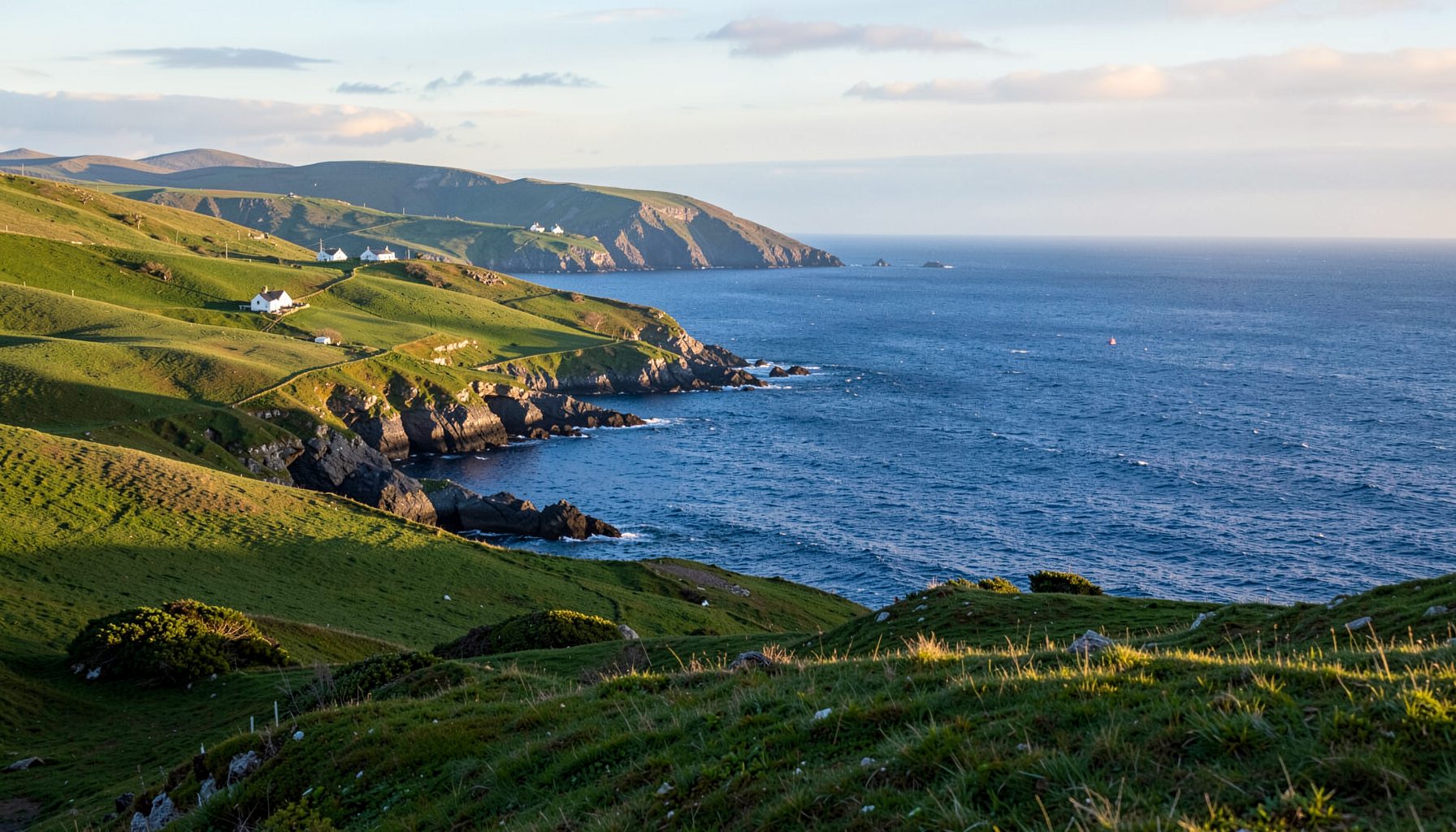
A guide to local fisheries and sustainable practices on the Skellig Coast
Along the Skellig Coast, fishing is closely tied to the shape of the land. From Kells to Castlecove, small harbours, rocky headlands and exposed Atlantic waters have supported families, seasonal work and local food traditions for generations. The coastline sits on the Iveragh Peninsula, where sea conditions can change quickly and access to fishing grounds depends on tides, weather and boat size.
The local fishery is a mixture of commercial activity, small-scale boats, shellfish gathering and community knowledge. Lobster and crab are important examples, while line-caught fish and other seasonal species may enter local markets depending on regulations and availability. These fisheries operate within Irish and European rules designed to protect breeding populations, habitats and the long-term viability of coastal communities.
For Australian visitors, the scale may feel familiar in places such as Tasmania, South Australia or coastal New South Wales, where working harbours sit alongside tourism and conservation. The terminology differs slightly: people in Ireland often say “the boats,” “the fleet” or “the fishery,” while an Australian seafood buyer may more often ask about local catch, quota or accreditation. Understanding that connection helps visitors make responsible choices along the Skellig Coast.
Fishing grounds and coastal character
The waters around the coast include rocky reefs, kelp-covered areas, sandy seabeds and deeper offshore ground. These habitats provide shelter and feeding areas for shellfish and finfish, but they are also vulnerable to disturbance. Strong Atlantic swells, narrow inlets and limited harbour infrastructure mean that fishing here is generally shaped by local conditions rather than industrial scale.
The coast near Portmagee, Valentia Island, Ballinskelligs and Caherdaniel reflects this working landscape. A harbour may serve several purposes at once: launching boats, landing catch, supporting marine tourism and providing a visible link to local heritage. Fishing is therefore part of a wider coastal economy that includes boat trips, food businesses, schools, festivals and outdoor programmes.
Small-scale fishing can have a lower fuel use and a more selective catch profile than large trawling operations, although sustainability depends on the method, vessel, stock and management system. A modest boat is not automatically sustainable, so responsible purchasing still requires attention to how seafood was caught and whether it was legally landed.
Who fishes and how local supply works
Fishing activity on the Skellig Coast includes independent operators and small businesses working within national licensing and European Common Fisheries Policy requirements. The Sea-Fisheries Protection Authority oversees compliance in Ireland, while the Department of Agriculture, Food and the Marine manages licensing, conservation measures and fisheries policy. Quotas, minimum landing sizes, gear rules and seasonal restrictions can change as scientific advice develops.
Catch usually moves through a short but carefully regulated chain: a boat lands seafood, the catch is recorded, and it may then be sold through a buyer, processor, restaurant or fishmonger. Traceability matters because it connects the final product with its species, location, fishing method and legal landing record. A local label can be useful, but “local” should not be treated as a complete sustainability guarantee.
Visitors may see seafood advertised as fresh, seasonal or caught nearby. These descriptions are valuable when supported by clear information. Ask where the seafood was landed, which species it is, and whether it was caught by pot, net, line or another method. A reputable seller should be able to explain the source without making vague claims about being “green.”
Seasonal species and marine habitats
Pot fisheries for lobster and crab are closely associated with the rocky Atlantic coast. Pots can be more selective than some mobile gear because they are placed in defined locations and may allow undersized animals or non-target species to be returned alive. Their impact still depends on the number of pots, rope arrangements, seabed conditions and careful handling.
Protection of breeding animals is a key part of shellfish management. Berried lobsters and crabs carrying eggs are generally returned, while marked or “v-notched” lobsters receive special protection. Minimum sizes help ensure that animals have had an opportunity to mature before harvest. These measures work best when fishers, regulators and buyers all respect them.
Finfish availability changes with season, weather and market demand. Mackerel, pollock and other species may appear at different times, but availability should never be assumed from a general list. Marine Institute surveys and official fisheries advice provide a better guide to stock condition than a seafood display alone. Healthy kelp, clean water and undisturbed nursery areas are also part of the fishery’s future.
Rules that protect the stock
Sustainable fisheries depend on practical rules that can be enforced. These may include licensing conditions, catch limits, gear restrictions, closed areas, minimum sizes and requirements to record landings. Inshore fishers are also affected by marine planning, protected areas and measures intended to reduce interactions with seabirds, dolphins and other wildlife.
Discard reduction is another important concern. Returning unwanted catch to the sea can cause injury or mortality, particularly when fish are brought up from depth. Selective gear, accurate targeting and careful release procedures reduce that risk. Lost pots and ropes can continue fishing, a problem known as ghost fishing, which is why gear marking and retrieval are important.
For Australian readers, this may resemble the way fisheries are managed through state and Commonwealth arrangements, such as rules applying to the Great Barrier Reef, Western Australia’s rock lobster fishery or Tasmania’s inshore waters. The agencies differ, but the principle is familiar: local access is balanced with stock assessments, protected habitat and compliance. Seafood certification schemes can add useful information, though they should complement, rather than replace, official regulation.
Choosing seafood with care
The most responsible choice is often the species that is abundant, legally landed and caught with a relatively selective method. Choosing a range of species can reduce pressure on a single popular catch. Eating seasonal seafood also makes it easier for restaurants and retailers to work with what local boats can supply, rather than relying on a constant menu.
Ask for specific answers rather than relying on broad marketing language. “Caught in Ireland” is different from “caught off the Skellig Coast,” and “wild” does not describe the fishing method. A restaurant that identifies the species and source is generally giving customers stronger information than one that simply lists “local seafood.”
| Choice or claim | What it can tell you | What to check |
|---|---|---|
| Locally landed | The catch may support nearby fishers and businesses | The actual landing port and species |
| Pot-caught shellfish | Often a more selective method for lobster and crab | Gear loss, rope management and legal size |
| Seasonal seafood | Reflects natural availability and may reduce reliance on imports | Whether the species is currently in season |
| Certified seafood | An external scheme has assessed defined standards | The scope of certification and fishing method |
| Farmed seafood | Production conditions are controlled rather than wild-caught | Feed, disease management, escapes and origin |
| “Fresh” seafood | It may have been recently handled or landed | Date, transport distance and storage conditions |
Community knowledge and marine stewardship
Sustainability is also cultural. Fishers carry detailed knowledge of tides, reefs, weather patterns and species behaviour, while residents, schools and community groups often contribute through beach cleans, shoreline monitoring and educational activities. These forms of participation help connect marine protection with daily life rather than treating conservation as a distant policy issue.
Visitors should treat working harbours as active places, not just scenic viewpoints. Keep clear of vehicles, ropes, gear and loading areas, follow signs, and avoid handling pots or buoys. When taking photographs, give people space and do not block access roads or slipways. Small actions make a difference in communities where tourism and fishing share limited infrastructure.
The Skellig Coast’s heritage also includes maritime stories, traditional skills and changing relationships with the sea. Local museums, heritage projects, learning hubs and community events can provide context that a quick stop at a viewpoint cannot. Listening to local interpretation is one of the best ways to understand why marine protection matters to people who depend on the coast.
Practical ways to support responsible fishing
Australian visitors are accustomed to checking country-of-origin labels, consulting the Australian Marine Conservation Society’s GoodFish guidance and asking fishmongers about sourcing. Those habits transfer well to Ireland, with one adjustment: local Irish fisheries operate under different species names, regulations and certification systems. A fish called pollock here should not be treated as equivalent to Australian pollock-like species, and familiar names such as snapper, flathead or whiting do not describe the same catch.
When buying seafood in a village, at a restaurant or from a retailer, use clear questions and favour businesses that provide precise answers. Avoid purchasing undersized shellfish or any protected animal, and never take live marine life from the shore as a souvenir. These recommendations support both the ecosystem and the local market:
- Choose legally landed, seasonal seafood and ask for the species, landing place and fishing method.
- Prefer restaurants and fishmongers that provide traceable information instead of broad “sustainable” claims.
- Respect harbour working areas, fishing gear, wildlife and access restrictions.
- Support local heritage events, marine education programmes and community-led coastal projects.
- Use official Irish fisheries guidance when checking regulations, rather than relying on social media or old travel advice.
Sustainable fishing on the Skellig Coast is a shared responsibility between fishers, regulators, residents, businesses and visitors. Explore the coastline through its communities and heritage, learn from local marine initiatives, and make informed seafood choices that keep value connected to the people and waters of Iveragh.