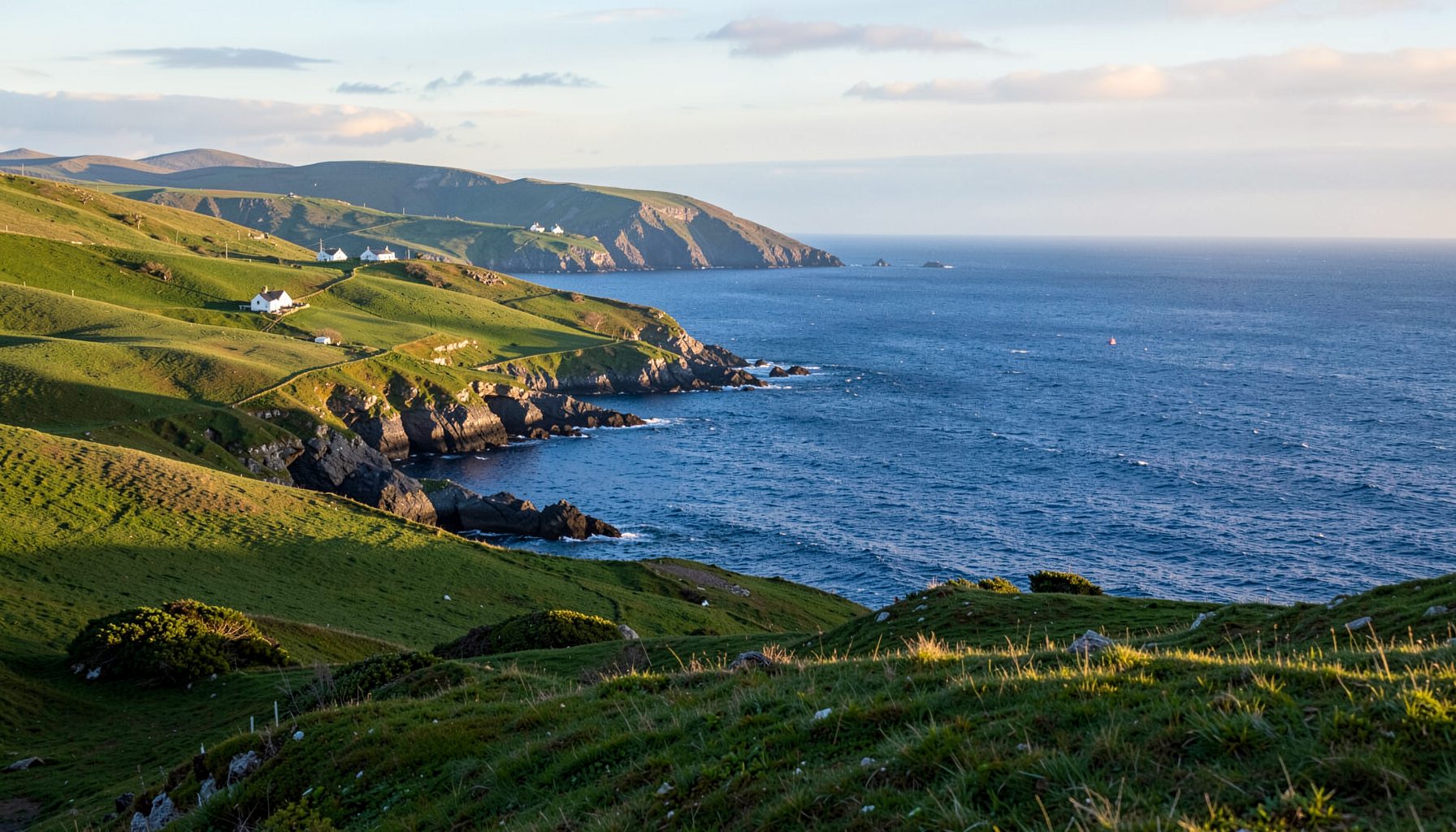
Summer on the Skellig Coast: A Guide to Festivals and Coastal Feasts
For travellers from Melbourne, Sydney, Brisbane or Perth who are used to spending December on the sand, the idea of a European summer in July feels delightfully upside down. The Skellig Coast, sweeping along the Iveragh Peninsula in County Kerry, comes alive during the warmest months with village fairs, traditional music gatherings and seafood-led celebrations that reward anyone willing to swap antipodean summer for an Atlantic one. Stretching from Kells in the east to Castlecove in the south, this stretch of the Ring of Kerry has long been a meeting point of farming families, fishermen and pilgrims, and its modern festival calendar reflects that layered heritage.
The community events of the season are not large-scale productions. They are intimate, locally-run affairs where a parish hall might host a céilí one evening and the same stage welcomes a visiting storyteller the next. Visitors who arrive with patience and curiosity will find that the coastline reveals itself not just through scenery but through the people who gather there to mark the turning of the year.
The Rhythm of a Coastal Summer
The festival season on the Skellig Coast unofficially begins in late May and runs until early September, mirroring the long twilight hours that locals call the white nights. As in Salamanca on a Saturday morning or at Queen Victoria Market in Melbourne, the calendar is shaped by the rhythm of food, weather and community gatherings, only here the tempo is set by the tides of Kenmare Bay and the cupla focal that drifts from open pub doors.
Visitors who plan around the calendar will discover that no two weeks look the same. One weekend might bring a heritage week with walks to early Christian sites, the next a rowing regatta off Valentia Island, and a third a village garden show judged on blackberries, wild fuchsias and home-baked brack. The compact geography of the peninsula makes it easy to base yourself in one spot and travel to several events, much as Australians hop between regions for the Bathurst 1000 or a long weekend of regional shows.
Puck Fair and the Ancient Tradition of Village Fairs
No discussion of festivals on the Skellig Coast is complete without Puck Fair in Killorglin, widely regarded as one of Ireland's oldest surviving street fairs. Held each August from the 10th to the 12th, it dates back to at least the early seventeenth century, with folklore linking it to a goat that warned a settlement of an approaching army. A wild billy goat is crowned King Puck, lifted onto a stand above the town square, and the streets fill with livestock traders, amusements, craft stalls and late-night trad sessions.
The fair operates on a structure familiar to anyone who has wandered through regional shows back home, from the Royal Queensland Show in Brisbane to Tasmania's Agfest. There are judging rings, family amusements, street food vendors and a strong undercurrent of agricultural pride. The difference is that the central character is a goat rather than a prize bull, and the closing ceremony involves the animal's quiet descent back to its mountain pasture.
Music, Sessions and the Sounds of the Ring of Kerry
Music is the connective tissue of coastal Kerry life, and the summer months are when it spills outdoors. From Sneem to Cahersiveen and on through Waterville, pubs run live trad sessions throughout the season, often without a posted schedule. Listeners settle in with a pint of stout and let the fiddles, uilleann pipes, concertinas and bouzoukis take care of the rest. These are the equivalent of the free afternoon gigs you might stumble across at Brisbane's South Bank or Melbourne's Federation Square, only they come with peat smoke and the sound of the Atlantic rolling in beyond the door.
A highlight of the calendar is the Ring of Kerry Summer Music Series, a touring programme that brings established acts to village halls and coastal venues throughout July and August. Past line-ups have included award-winning harpists, sean-nós singers and ensembles that blend traditional material with contemporary influences. Many concerts are paired with a local supper, where the menu might feature Kerry lamb, Atlantic chowder or soda bread fresh from the griddle. Tickets are inexpensive by Australian standards and venues are small, so advance booking is wise.
Food from Land and Sea at Summer Feasts
The food traditions of the Skellig Coast come into full expression during summer, when farms, gardens and fishing boats deliver their peak produce. Coastal villages host seafood festivals that celebrate the morning's catch, with chefs and home cooks alike turning freshly-landed mackerel, crab, lobster and hake into platters served at long communal tables. Inland communities lean on dairy and lamb, hosting agricultural shows that double as feasts of farmhouse cheese, butter and rustic tarts.
Visitors familiar with Australia's appetite for al fresco eating will recognise the same instinct, though the ingredients are unmistakably Irish. A beachside barbie in Sydney may feature prawns and snags, while a Skellig Coast summer feast might pair smoked salmon with brown bread, mussels steamed over open flame and a salad of samphire gathered from nearby rocks. Markets such as the Kenmare Market and the Cahersiveen Farmer's Market anchor the food calendar, much as Adelaide Central Market or Fremantle Markets do in Western Australia, drawing both locals and visitors each weekend with seasonal goods and ready-to-eat fare.
Heritage Days and Skellig-inspired Events
The presence of Skellig Michael, the UNESCO World Heritage Site that doubles as a Star Wars filming location, casts a long cultural shadow over the region. Boats depart from Portmagee and Valentia Harbour throughout summer, and several villages host themed days that explore the island's monastic history alongside modern pilgrimage stories. Heritage Week in mid-August brings guided walks to beehive huts, ogham stones and the abandoned stone village of Fahan, with historians and storytellers on hand to interpret the landscape.
For visitors from Australia, where convict archaeology and Aboriginal heritage walks form a parallel tradition, the experience of tracing early Christian history along sea cliffs offers a meaningful counterpoint. The Skellig Coast has begun to weave its modern identity into these old narratives, hosting photography exhibitions, astronomy evenings tied to the famously dark skies above the island, and storytelling nights where local writers share folklore that draws on selkies, sea monsters and vanished islands.
Family-friendly Festivals and Community Days
Families travelling with children will find that the festival programme is welcoming at every age. Sneem's family festival features puppet shows, face painting and traditional games, while Portmagee's harbour days include boat-building demonstrations and crab-catching competitions. Many towns run their own pattern days, the local saint's feast that doubles as a community holiday with parades, bunting and family lunches served in marquees along the main street.
The cost of attending is modest, and the welcome is genuine. Unlike some of Australia's ticketed summer festivals, where entry for a family can climb into the hundreds of dollars, most events on the Skellig Coast operate on a hat-pass or small admission model. Children often get in free, and the main expenses are food, drink and the occasional craft purchase. Travellers who arrive expecting the scale of something like Sydney's Vivid or Brisbane's Riverfire will be pleasantly surprised by the intimacy of these gatherings, where the same faces return year after year and newcomers are folded into the crowd by the second evening.
Getting There and When to Visit
Reaching the Skellig Coast from Australia typically means flying into Dublin or Shannon, then driving or taking the train to Kerry. The direct route from Shannon Airport brings visitors through Listowel and over the mountains to the coast in under three hours, an attractive option for those who want to skip Dublin entirely. Internal flights to Kerry Airport from Dublin are short and reasonably priced, especially if booked well ahead of the European holiday season.
Accommodation ranges from B&Bs and guesthouses to self-catering cottages and a handful of small hotels. Booking in advance is essential during festival weeks, particularly around Puck Fair, when Killorglin fills up quickly. Travellers from Australia should also remember that their home summer and the Irish summer sit on opposite calendars, making July and August the natural choice for those seeking warm, long evenings rather than the cooler shoulder months of spring and early autumn.
Begin your journey by checking the local festival calendars in early winter, when Irish tourism boards release their summer programmes and accommodation listings open. Line up two or three anchor events around a base village, leave room for spontaneous trad sessions, and let the coast do the rest. A summer on the Skellig Coast rewards travellers who trade big-ticket spectacles for shared tables, harbour sunsets and the kind of community welcome that turns a first visit into a recurring tradition.