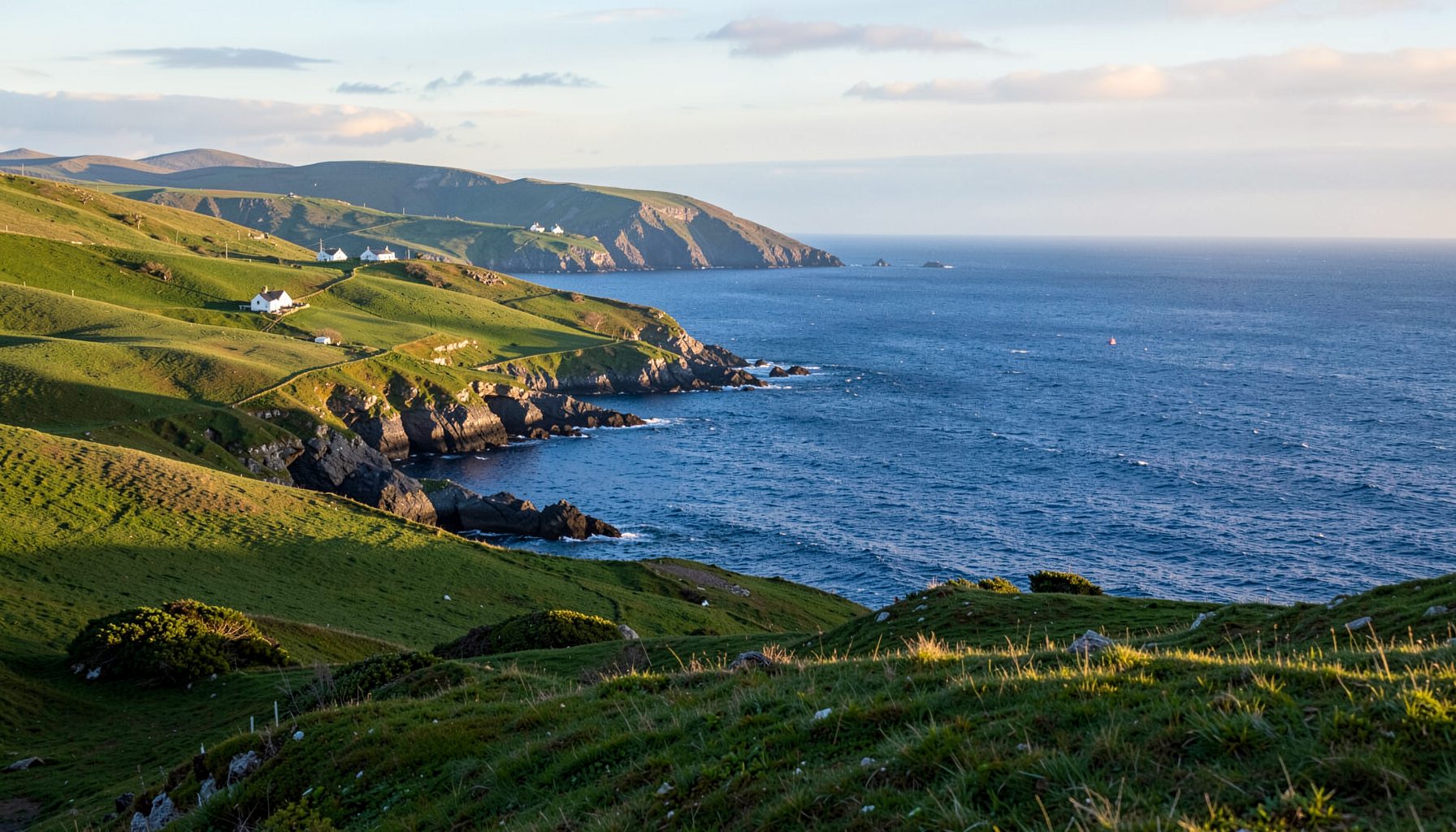
A guide to the local boglands and their ecology
Across the Iveragh Peninsula, boglands form a quiet but vital part of the landscape. They stretch over upland slopes, fill hollows between rocky ridges, and appear beside roads, walking routes, farms and coastal valleys from Kells towards Castlecove. Their colours change with the seasons, from russet heather and golden grasses to vivid mosses, dark pools and delicate white cotton grass.
These peatland habitats are living systems rather than empty moorland. They store carbon, hold rainwater, support specialised plants and insects, and preserve traces of past environments within layers of slowly formed peat. In a wet Atlantic climate, the bogs also help shape the character of the Skellig Coast, linking mountain, river, farmland and shore.
Understanding a bog requires attention to water. When the ground remains saturated, plant material decomposes very slowly and accumulates as peat. When drainage, fire or heavy pressure changes that balance, the bog can lose its ecological function. A respectful visit therefore begins with knowing what makes these places distinctive and how local communities can help care for them.
What makes a bog a bog
Peat develops where waterlogged conditions limit the oxygen available for decomposition. Mosses, grasses, sedges, roots and other organic material build up year after year, sometimes creating deposits several metres deep. The surface may look firm, but it can conceal saturated ground, pools and unstable hollows.
Atlantic blanket bog is especially characteristic of exposed western Ireland. It can cover broad upland areas where rainfall is high and evaporation is limited. The peat layer may spread across slopes rather than occupying a single basin, producing a soft, open landscape interrupted by rocky outcrops, streams and patches of heath.
Not every wet patch is the same. Valley mires, flushes, wet heath and peaty grassland may occur beside blanket bog, each with different water movement and plant communities. Small changes in slope, mineral content, shelter and grazing can create a surprising variety of habitats within a short distance.
Plants adapted to wet, acidic ground
Sphagnum mosses are among the most important bog-forming plants. Their leaves can hold many times their weight in water, helping keep the surface wet while the lower layers gradually become peat. Different sphagnum species produce varied shades of green, yellow, red and copper, especially when viewed closely in good light.
Bog cotton, with its soft white seed heads, is a familiar summer plant. Deergrass, purple moor grass, cross-leaved heath and ling heather add structure and colour, while bog asphodel produces small yellow flowers and orange-toned leaves later in the season. In wetter pools, sedges and rushes mark places where water remains close to the surface.
Some bog plants are specially adapted to nutrient-poor conditions. Sundews supplement their limited mineral intake by trapping tiny insects on sticky leaves. Their presence is a reminder that the apparent simplicity of a moorland surface conceals intricate relationships between plants, water chemistry, insects and microorganisms.
Wildlife among the moss and heather
Boglands provide feeding, nesting and sheltering habitat for birds such as skylarks, meadow pipits, snipe and red grouse. Raptors may hunt above the open ground, while ravens and smaller passerines use rocky edges and nearby scrub. The importance of a particular bog often extends beyond its visible boundary because birds move between peatland, farmland, woodland and coast.
Invertebrates are equally significant. Dragonflies and damselflies patrol pools and drains, while moths, beetles, spiders and solitary bees use the vegetation at different stages of their lives. Healthy peatlands also support specialist species that may disappear when the ground becomes drier or the plant cover is simplified.
Red deer, mountain hares and foxes can pass through upland bogs, and frogs use wet hollows for breeding where conditions allow. The best way to observe wildlife is to slow down, keep dogs controlled, avoid nesting areas and use binoculars rather than approaching animals. Quiet behaviour protects the habitat while making small details easier to notice.
Peatlands, water and the climate
A functioning bog acts like a natural sponge. Sphagnum and peat absorb rainfall, release water gradually and help reduce sudden changes in stream flow. This role matters in a region where intense Atlantic rain can arrive quickly, followed by periods of drying weather. Healthy peatlands can improve water quality by filtering runoff and retaining sediment.
Peat is also a major carbon store. The plants growing at the surface remove carbon dioxide from the atmosphere, and the waterlogged ground slows its return through decomposition. If peat is drained or exposed, oxygen enters the soil and decomposition accelerates, releasing stored carbon. Erosion can carry peat into streams, damaging water quality and stripping away a resource that took centuries to form.
The comparison below shows how common peatland conditions differ in their ecological character and management needs.
| Habitat or condition | Main features | Ecological value | Common concerns |
|---|---|---|---|
| Intact blanket bog | Wet, continuous peat cover with pools and mosses | Carbon storage, water regulation and specialist wildlife | Drainage, wildfire and excessive grazing |
| Wet heath | Heather, sedges and grasses on shallow or moderately wet peat | Nectar sources, nesting cover and upland diversity | Burning at the wrong time and habitat drying |
| Bog pool or flush | Open water or permanently damp vegetation | Dragonflies, amphibians and wetland plants | Trampling, infilling and pollution |
| Cutover bog | Areas altered by turf cutting or peat extraction | Can recover into wet habitat with careful restoration | Exposed peat, erosion and invasive vegetation |
| Drained or eroding peatland | Cracked, gullied or drying surface with flowing peat sediment | Reduced ecological function | Carbon loss, poor water quality and fire risk |
How land use has shaped the boglands
People have long used peatlands for fuel, grazing, travel and gathering materials. Turf cutting, where practiced, created visible patterns in the landscape and formed part of household economies. Tracks across uplands connected settlements, summer grazing areas and neighbouring valleys. These histories are part of the cultural landscape and should be considered alongside ecological goals.
Drainage ditches can lower the water table, allowing peat to dry and oxidise. Repeated burning may remove mosses and alter the balance between heather, grasses and young trees. Heavy grazing can prevent natural regeneration, while undergrazing in some places may allow scrub to spread. None of these effects is identical everywhere, so restoration decisions need local knowledge and careful monitoring.
Community experience is especially valuable in understanding how a particular wetland has changed. Local residents, landowners, conservation groups and volunteers often hold detailed knowledge of water movement, old paths, wildlife sightings and traditional practices. The Skellig Coast’s local people and communities are an important part of that wider understanding, connecting environmental care with the lived heritage of the peninsula.
Caring for boglands on a visit
Many bogs have no formal path, and a surface that looks open may contain deep channels or hidden water. Staying on established tracks where possible reduces erosion and protects fragile plants. Waterproof footwear helps visitors avoid widening paths by walking around puddles, while walking in small groups limits pressure on soft ground.
Fire is a serious risk on dry peat and heath. A small flame can spread underground or move rapidly across vegetation in windy weather, so campfires, disposable barbecues and discarded cigarettes have no place on open bogland. Dogs should remain under close control, particularly during the bird breeding season and wherever livestock are present.
Good practice is simple:
- Keep to marked routes and avoid crossing wet ground unnecessarily.
- Take all litter home, including food scraps and biodegradable items.
- Do not pick plants, remove peat, disturb archaeological features or collect stones.
- Keep dogs close and follow local signs about livestock and seasonal wildlife protection.
- Report fires, blocked drains, severe erosion or damaged paths to the relevant local authority or land manager.
Reading the landscape with care
A bog can reveal its history through subtle signs. A narrow, bright-green strip may follow a flush where groundwater reaches the surface. Dark pools can indicate old water channels, while exposed peat banks show layers of vegetation accumulated over time. Heather height, grass cover and the presence of young trees can suggest how grazing, burning and drainage have influenced the site.
Weather changes the experience dramatically. Mist softens ridgelines and highlights the closeness of water, while clear days show how upland peatlands connect with sea cliffs, islands and mountain passes. Rain can transform a firm-looking route into hazardous ground, so local forecasts, daylight hours and navigation should be considered before setting out.
The boglands also offer a different way to approach the heritage of the Skellig Coast. They are part of the same regional story as stone walls, field systems, monastic remains and coastal settlements. Protecting these habitats keeps open a record of climate, land use and biodiversity that cannot be recreated once the peat has been lost.
When visiting, choose a route suited to your experience and leave enough time to return safely. Observe rather than disturb, and treat every pool, moss bank and peat edge as part of a connected system. Small decisions made by many visitors can reduce pressure on vulnerable ground and support the people who care for it year-round.
Spend time with the boglands of the Skellig Coast slowly: follow a recognised path, notice the plants at your feet, watch the water and learn how the landscape holds both natural and human history. Share responsible visiting practices with others and support local conservation and community initiatives so these remarkable peatlands remain living habitats for generations to come.