A guide to local art studios and galleries on the Skellig Coast
The Skellig Coast is best known for dramatic headlands, stone churches, island heritage and the Atlantic views around the Iveragh Peninsula. Yet its creative life is just as distinctive. From community arts spaces and working studios to exhibitions in converted buildings, the region offers many ways to encounter painting, sculpture, ceramics, photography, textiles and traditional craft.
The area from Kells to Castlecove does not function like a conventional gallery district. Creative venues are spread through villages, townlands and coastal roads, and some operate as studios, retreat centres, pop-up exhibition spaces or workshop venues rather than permanent commercial galleries. Their character is closely connected to local landscapes, language, history and community life.
Opening hours can change with the season, especially outside the main summer period. A little planning helps visitors distinguish between a public exhibition, a studio that welcomes visitors by appointment and a craft shop featuring work by several makers. The result is a more rewarding and respectful way to explore the region’s artistic identity.
Where creative work meets the landscape
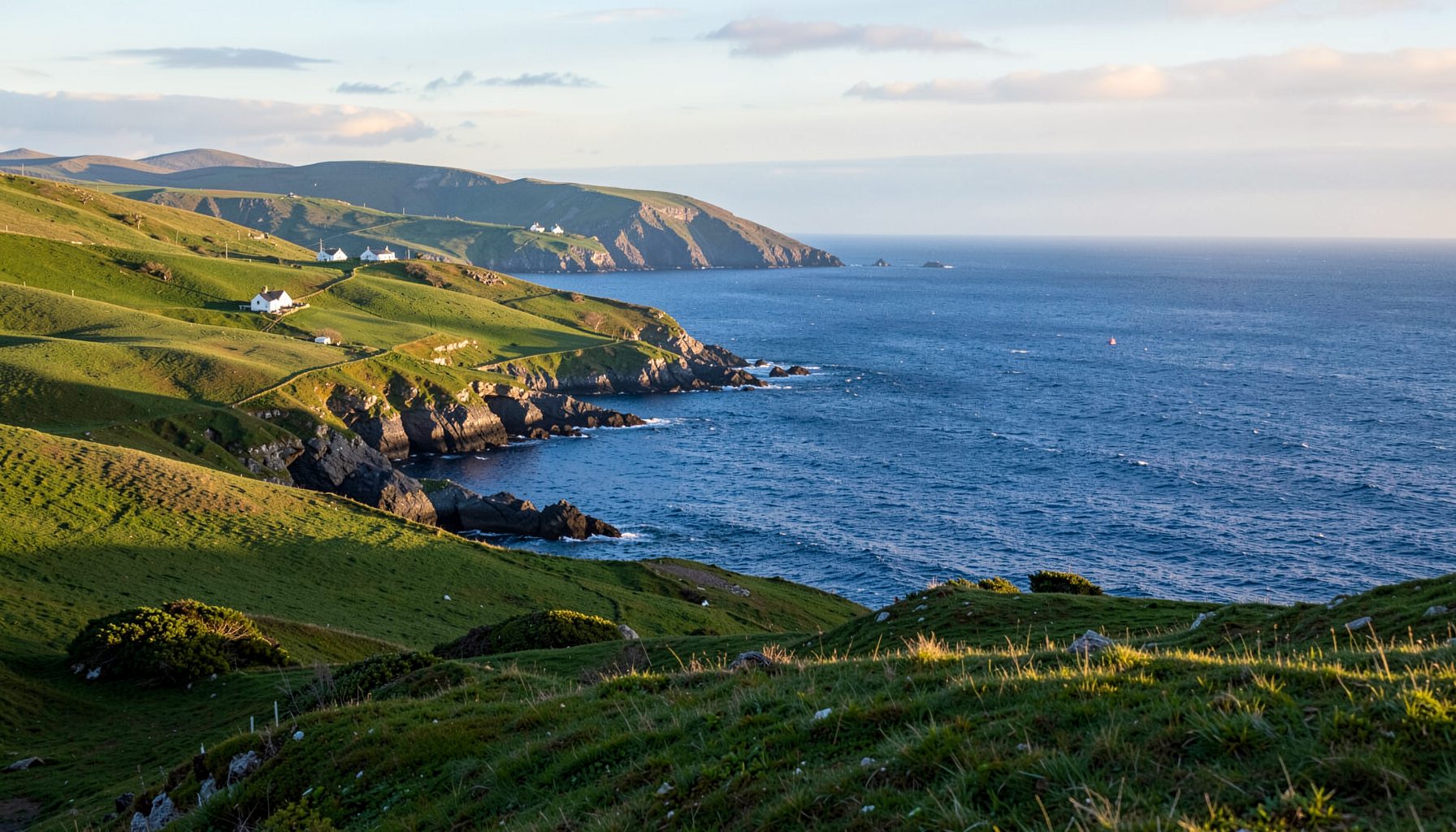
Light is one of the strongest influences on artists working along the Skellig Coast. The Atlantic weather changes quickly, moving from clear horizons to mist, rain and intense colour within minutes. Artists respond to the sea, mountain ridges, offshore islands, bogland, stone walls and quiet roads in different ways, producing work that ranges from direct landscape painting to abstract studies of texture and atmosphere.
The landscape around Ballinskelligs, Valentia Island, Portmagee, Waterville, Caherdaniel and Castlecove has also shaped photography and film. The Skelligs, in particular, carry layers of religious, archaeological and popular cultural meaning. Skellig Michael is a UNESCO World Heritage Site and a Star Wars filming location, but local artists often approach it through wider themes of pilgrimage, isolation, weather and memory.
A gallery visit can therefore provide more than an indoor break from sightseeing. It can offer another interpretation of a place already encountered on a walk, boat trip or scenic drive. Look for how artists use colour, scale and materials to express the character of the coast rather than expecting every exhibition to provide a literal view.
Studios, galleries and community arts spaces
The local creative scene includes several different kinds of venue. A working studio may display finished pieces beside tools, sketches and unfinished projects. This gives visitors a chance to understand process, whether the maker works in clay, wool, wood, paint, glass, metal or mixed media. Some studios sell directly, while others focus primarily on production and open only at set times.
Community arts centres and cultural initiatives often have a broader remit. They may host exhibitions, talks, classes, residencies, concerts or youth programmes. Cill Rialaig Arts Centre near Ballinskelligs is an important example of a place where artistic practice is linked to the preservation and renewal of a historic rural settlement. Its programme and access arrangements should be checked before travelling, as activities can vary through the year.
In towns such as Cahersiveen and Waterville, exhibitions may appear in cultural venues, community buildings, cafés or seasonal spaces. Valentia Island also has a strong connection with local history, geology and maritime culture, creating a natural setting for makers and visual artists. The best approach is to treat the whole coast as a network of small creative locations rather than searching for one central art quarter.
Choosing the right kind of visit
The right venue depends on the experience you want. A public gallery is usually the easiest choice for a short visit, while a studio visit may provide a more personal conversation with the maker. Workshops require advance booking and may involve several hours of practical work, making them better suited to visitors who want to create something rather than simply browse.
| Venue type | What you may find | Best for | What to check |
|---|---|---|---|
| Public gallery | Curated exhibitions, paintings, photography and sculpture | A focused cultural visit | Current exhibition and opening hours |
| Working studio | Finished work, tools, materials and demonstrations | Meeting makers and buying locally produced pieces | Whether visits are walk-in or appointment-based |
| Community arts centre | Exhibitions, workshops, talks and local projects | Families, learners and repeat visits | Programme dates, accessibility and booking |
| Craft shop or collective | Ceramics, textiles, jewellery, woodwork and gifts | Finding several local makers in one place | Origin of each item and seasonal hours |
| Artist residency or retreat site | Exhibitions connected with visiting and local artists | Understanding creative exchange and place-based work | Public access and event schedule |
| Cultural or heritage venue | Art alongside archaeology, history and storytelling | Linking creative work with regional heritage | Exhibition details and admission arrangements |
This variety also affects how visitors should shop. Some pieces are inspired by the Skellig Coast but made elsewhere, while others are produced by artists living in the region. Both can be worthwhile, but asking about provenance helps support local makers and gives a clearer sense of what you are taking home.
Places and themes to explore between Kells and Castlecove
Kells and the northern approach to the Iveragh Peninsula introduce a quieter, rural side of the region. Here, the visual language of the coast often appears in landscape painting, photography, handmade textiles and small-scale craft. The surrounding countryside rewards slow travel, so allow time for a studio sign, open workshop or local exhibition that may not feature prominently in a general tourist guide.
Cahersiveen is a useful cultural stopping point because it combines town services, heritage attractions and access to the wider coast. Local exhibitions and community events may be arranged around festivals, school projects or seasonal programmes. A visit to the town can be paired with nearby historical sites, creating a fuller picture of how contemporary creativity grows from local stories.
Valentia Island and Portmagee offer strong connections with seafaring, exploration and island life. These themes appear in paintings, maps, photography, sculpture and craft objects. The island’s geology and coastal formations provide another source of inspiration, while Portmagee’s role as a gateway to the Skelligs brings questions of navigation, pilgrimage and tourism into the cultural conversation.
Further west, Ballinskelligs and the area around St Finian’s Bay are associated with monastic heritage, traditional settlements and the Cill Rialaig arts project. Waterville has long attracted artists and visitors drawn to its sea views and open skies. Caherdaniel and Castlecove add sheltered bays, historic estates, stone structures and walking routes to the mix. Confirm exact venues locally, since a rural exhibition may be temporary or linked to a particular event.
How to make the most of a studio visit
A studio visit works best when treated as an encounter with a working environment rather than a retail stop. Makers may be preparing for an exhibition, firing a kiln, finishing a commission or teaching a class. If a phone number, email address or social media page is provided, contact the artist before setting out. This is particularly important in winter and on days with poor weather.
Ask whether the work is made locally, whether materials are sourced in Ireland and whether the artist offers shipping. Large paintings, framed prints and ceramics can be difficult to carry during a driving holiday, while smaller pieces may travel easily. A maker can often explain care instructions, packaging options and the story behind a technique.
Photography should be approached with the same courtesy as in any exhibition. Some artists permit photographs of the room but not individual works. Avoid touching pieces unless invited, and keep children close in studios containing tools, wet materials or fragile objects. These small considerations help preserve the welcoming atmosphere that makes independent creative spaces special.
Buying art with a sense of place
A locally made object can become a meaningful reminder of the Skellig Coast when its connection to the region is clear. Look for artist information, a place of production, material details and an explanation of the work’s inspiration. A hand-thrown cup, woven item, print or small sculpture does not need to depict Skellig Michael to carry a strong sense of place; the connection may be found in its colours, textures or method.
Original art is not the only way to support the local creative economy. Buying a print, postcard, book, piece of jewellery or small craft item can make regional work accessible at different budgets. Attending a ticketed workshop or exhibition also helps sustain community programmes, especially where venues rely on a combination of sales, grants, memberships and event income.
Choose work because it speaks to you rather than because it appears to be a predictable souvenir. A contemporary piece may express the coast through abstraction, while a traditional craft item may reflect skills passed between generations. Both have a place in the cultural life of the peninsula.
Practical ways to plan an art-focused day
- Check current opening times before leaving, particularly from October to April and on Sundays or public holidays.
- Group nearby stops together and allow extra time for narrow roads, viewpoints, weather changes and unexpected conversations.
- Bring a notebook or use a digital map to record artists, exhibitions and local craft traditions you want to explore later.
- Ask about provenance, shipping and care when purchasing ceramics, textiles, paintings or other substantial pieces.
- Pair a gallery or studio with a heritage site, walking route or community event to understand the wider story behind the work.
Turn a coastal visit into a creative one
Begin with the local event listings and cultural information available in the communities you plan to visit, then contact individual venues where necessary. Build an itinerary that leaves room for a small gallery, a working studio or a temporary exhibition, rather than treating art as an afterthought between major attractions.
Take time to speak with makers, support work that is genuinely connected to the region and share the venues you discover with fellow visitors. By seeking out the Skellig Coast’s studios, galleries and community arts projects, you help keep its creative life visible while experiencing the peninsula through more than scenery alone.