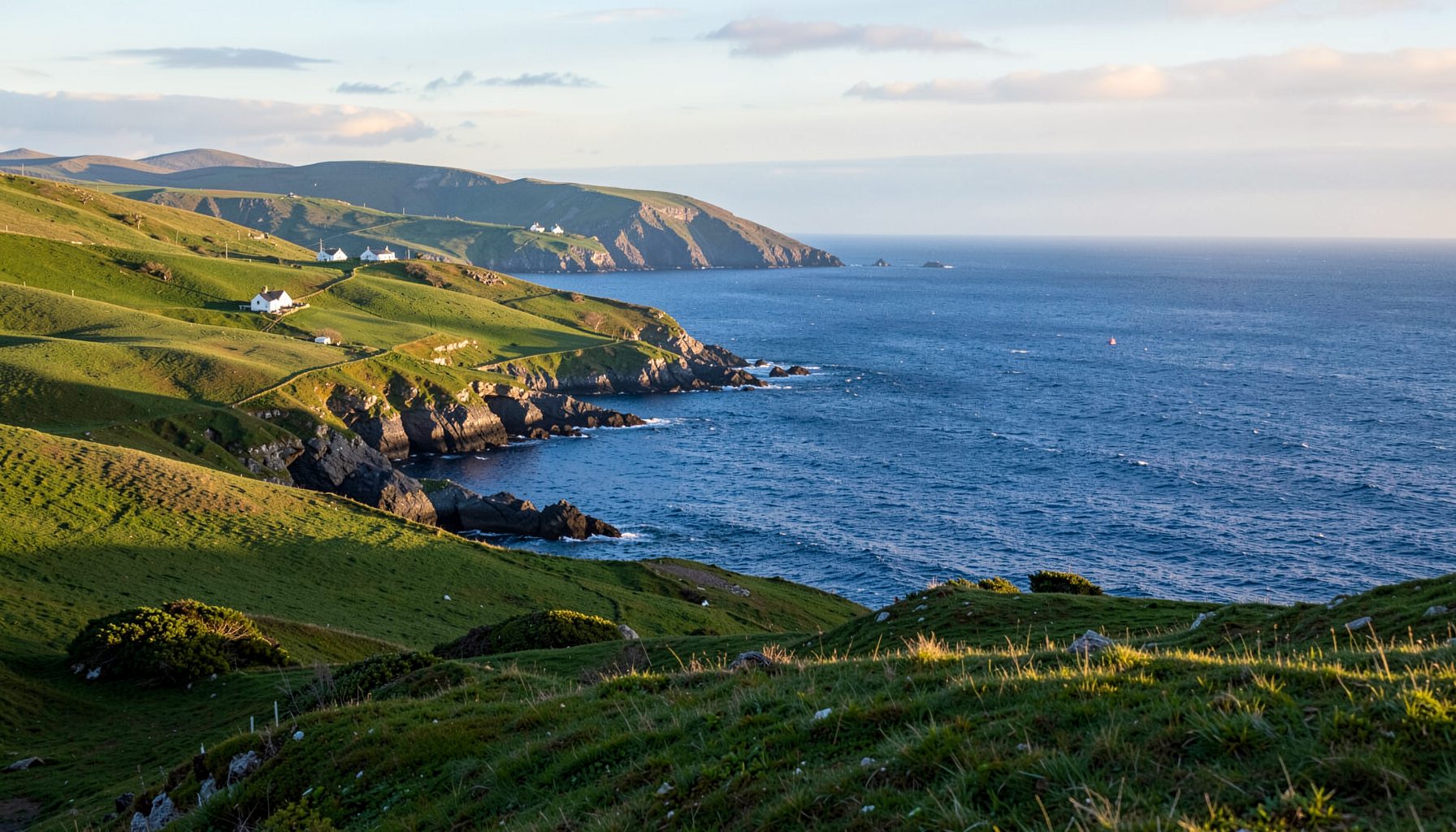
A Heritage Guide Along the Skellig Coast
The coast from Kells to Castlecove gathers an unusually rich record of Irish life into a relatively short stretch of the Iveragh Peninsula. Stone forts, monastic islands, famine-era roads, maritime stories and the homes of political leaders all sit within reach of villages on the Ring of Kerry. Heritage centres and visitor sites make those layers easier to understand before you head out to see them in the landscape.
For Australian visitors, this is a region best explored at a measured pace. Distances can look modest on a map, yet narrow roads, sheep crossings, weather changes and scenic stops add time to every journey. Think of the route less like a quick drive between Sydney and Canberra and more like a sequence of local discoveries, where each village offers a different piece of the story.
Starting At Kells And The Iveragh Coast
Kells is a useful eastern starting point for a heritage journey because it introduces the character of the coast before the larger visitor attractions appear. The area combines rural settlement, sea views and access to the broader Ring of Kerry route. It is also a reminder that local history is not confined to a single museum building: churches, piers, townlands, old roads and ruined structures all contribute to the cultural landscape.
As you travel west, keep an eye out for community information boards and small local displays. These often explain placenames, former industries, archaeological remains and the connections between villages. The Skellig Coast communities guide is a helpful companion for understanding how settlements from Kells onwards fit together, rather than treating each stop as an isolated attraction.
Cahersiveen’s Political And Military Past
Cahersiveen is one of the principal heritage stops on this part of the peninsula. The town is strongly associated with Daniel O’Connell, the nineteenth-century political leader known as “The Liberator”. The Daniel O’Connell Memorial Church, built in nearby Carhan, reflects his influence and remains an important landmark for understanding Catholic political history in Ireland.
The town also provides access to the impressive stone remains of Ballycarbery Castle and the nearby Cahergall and Leacanabuaile forts. Cahergall is particularly striking, with its carefully built circular walls and terraced interior. These sites show how defensive architecture changed over many centuries, from early ringfort communities to later tower houses. Wear suitable footwear, as uneven ground and wet grass are common.
Cahersiveen’s heritage story also reaches into the nineteenth-century military presence at the old barracks, now associated with local historical interpretation. The town is a practical place to pause for food, supplies and orientation. Australian travellers used to large supermarket runs should remember that smaller Irish villages may have limited opening hours outside the main season.
Valentia Island And The Atlantic Connection
A bridge connects Valentia Island with the mainland at Portmagee, making the island one of the most rewarding detours along the route. The island’s heritage includes early Christian remains, slate quarrying, fishing, farming and the development of transatlantic communications. Its geological history is also significant, with rock formations that help explain the deep age of the landscape.
The Valentia Island Heritage Centre, located at Knightstown, interprets the island’s past through local stories and historical exhibits. One of the best-known themes is Valentia’s role in the first successful transatlantic telegraph cable connection in the nineteenth century. That achievement linked Ireland with Newfoundland and changed the speed at which news and commercial information could cross the Atlantic.
The island’s maritime identity remains visible in its harbours and coastal viewpoints. Weather can change rapidly, particularly when Atlantic wind moves across the exposed shore. Visitors from Melbourne or Hobart may recognise the brisk coastal conditions, but even Australians accustomed to dramatic weather should bring waterproof layers rather than relying on a warm forecast from inland Kerry.
The Skellig Experience And Monastic Heritage
Near Portmagee, The Skellig Experience Visitor Centre offers an accessible way to learn about Skellig Michael and the wider Skellig Islands before considering a boat trip. Displays explain the island’s early monastic settlement, wildlife, geology and maritime dangers. This background is valuable because Skellig Michael is more than a scenic destination or a Star Wars filming location: it is a remarkable religious and archaeological site shaped by isolation.
The monastery’s beehive huts and stone terraces were created by early Christian monks who lived in an exceptionally demanding environment. Reaching the island involves a boat journey and a steep climb over ancient steps, with access governed by weather and conservation requirements. Boat operators and landing permits are separate practical matters, so visitors should check current arrangements well before travelling.
The centre is especially useful for families and for anyone unable to land on the island. It places the Skelligs within the living culture of the coast, including seafaring traditions and local knowledge. During Australian school holiday periods, such as June or September breaks, demand can rise even when the Irish season is quieter, so advance planning is sensible.
Waterville And The Memory Of Kerry’s Coast
Waterville is closely connected with the sea, tourism and the memory of visitors who made the village internationally known. The town’s most famous modern association is with Charlie Chaplin, who spent holidays there with his family. A statue and annual festival recall that connection, while the seafront and village streets show how the place developed as a coastal resort.
Heritage in Waterville also includes the broader story of fishing, farming and travel along the old road network. The town sits between the Atlantic and the mountains, and its setting helps explain why the coast attracted both seasonal visitors and permanent communities. Local interpretation is often strongest when paired with a walk, allowing the physical landscape to add meaning to the names and dates.
The town is well placed for a refreshment stop, but opening times vary by season. Australian travellers should factor in the difference between a busy summer weekend in a coastal town and a quieter winter weekday, when some cafés, galleries and smaller attractions may close. Checking local listings on the day can prevent a long detour for a venue that is not operating.
Derrynane And Daniel O’Connell’s Home
Derrynane is one of the most important heritage destinations between Waterville and Castlecove. Derrynane House was the home of Daniel O’Connell and is now part of a national historic property surrounded by gardens and parkland. The house helps place his public career within the context of family life, landholding and the coastal community where he spent much of his time.
The estate also gives visitors a chance to connect political history with the natural environment. Paths lead through landscaped grounds towards Derrynane Beach, while the surrounding coastline reveals the sheltered bays and islands that shaped local travel and trade. The combination of house, gardens, shoreline and archaeological remains makes the site more than a conventional museum visit.
For Australian visitors, Derrynane can feel refreshingly different from a formal urban heritage property such as Melbourne’s Como House or Sydney’s Elizabeth Bay House. The setting is open, windswept and closely tied to working landscapes. Allow extra time for walking, and bring a jacket even on a bright day because Atlantic weather can arrive quickly.
Staigue Fort And The Stone-Built Landscape
Staigue Fort lies inland from the coastal road near Castlecove and is among the finest surviving examples of an early medieval stone fort in Ireland. Its massive dry-stone walls and internal terraces demonstrate careful construction without mortar. The fort was probably built between the late Iron Age and early medieval period, although its precise date and original function remain subjects of archaeological discussion.
The approach to Staigue matters as much as the structure itself. The narrow lane, fields and low hills create a strong sense of place, showing how defensive sites were embedded within ordinary rural territory. At the fort, examine the wall construction and stairways closely, while taking care on damp stone and uneven surfaces.
Nearby Castlecove is a fitting final stop for this stretch of the Skellig Coast. The village and surrounding shoreline bring together the region’s defining themes: small-scale settlement, historic routes, Atlantic exposure and a continuing relationship with the sea. Visitors should avoid climbing on fragile walls or removing stones, as conservation depends on treating these monuments as protected places rather than photo props.
Planning A Meaningful Heritage Day
A full day can cover several highlights, but two days will allow a more rewarding pace. A practical sequence might begin at Cahersiveen, continue to Portmagee and Valentia Island, then follow the coast through Waterville towards Derrynane and Castlecove. The reverse direction works just as well, especially if accommodation or transport arrangements place you closer to Kenmare.
Driving is the most flexible option, although the roads require concentration. Ireland drives on the left, as Australia does, yet the road width and bends can be a surprise for drivers used to broad Australian motorways. Take particular care at passing places, allow local traffic to move through, and never assume that a short kilometre count equals a short travel time.
Heritage centres often have seasonal schedules, admission charges or temporary closures. Confirm details through official sources before setting out, and carry a small amount of practical gear: walking shoes, rain protection, water and an offline map. A modest local purchase from a village shop or craft outlet also supports the communities that preserve and interpret this heritage. Travel slowly, listen to local stories and let the route from Kells to Castlecove unfold as a connected cultural journey.