Hedgerow Mushrooms And Fungi Of Kerry
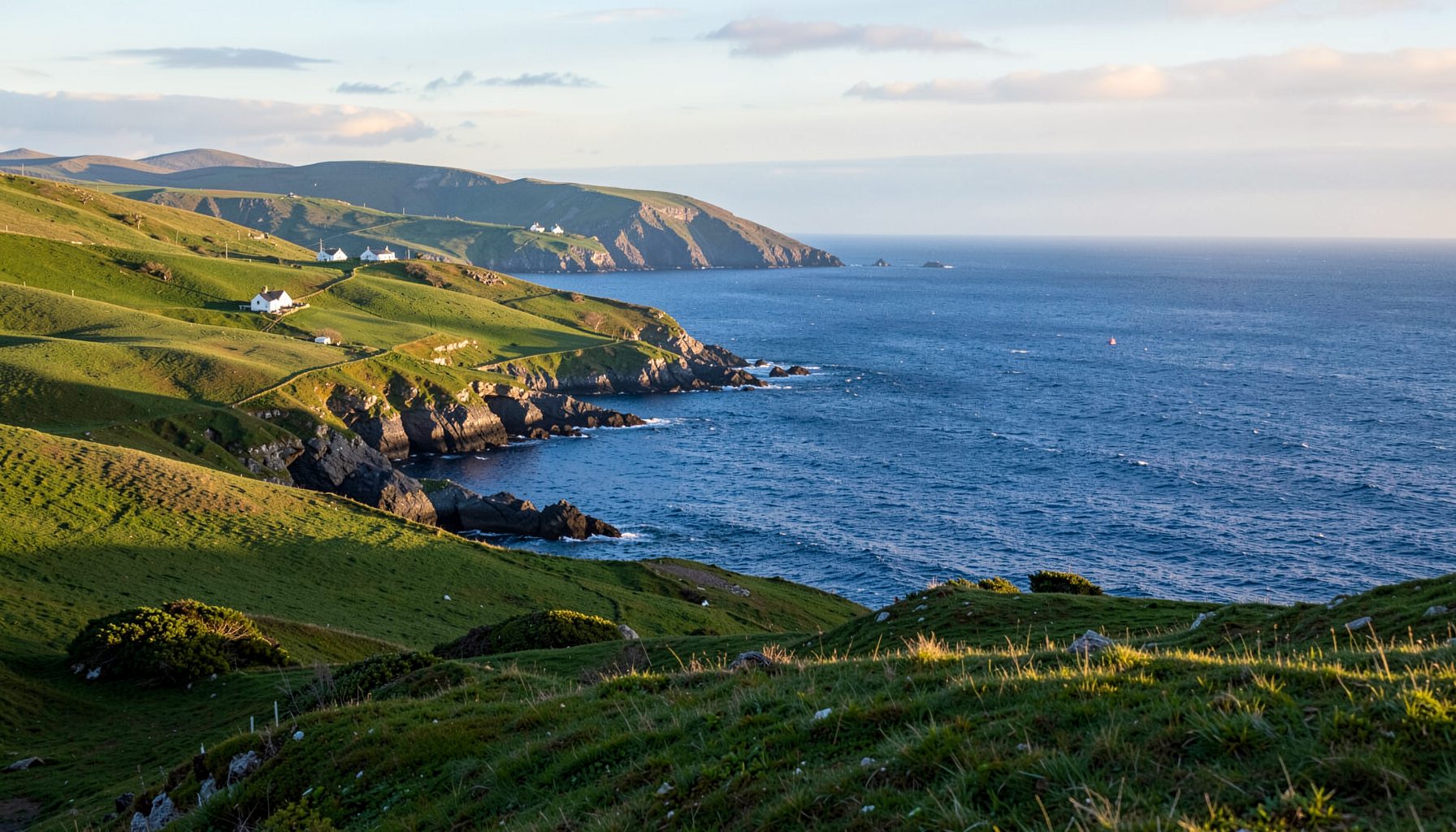
Kerry’s hedgerows are living boundaries rather than simple lines between fields. Hawthorn, blackthorn, hazel, holly, willow, gorse and fuchsia shelter mosses, lichens, insects and an extraordinary range of fungi. After Atlantic rain, the banks along lanes from Kells to Castlecove can appear almost transformed, with pale caps in the grass, bracket fungi on old timber and tiny cups glowing beneath leaf litter.
For visitors from Australia, the experience can feel very different from spotting fungi in the Dandenong Ranges, Tasmania or the jarrah forests of Western Australia. Kerry’s mild, damp climate and ancient field systems create ideal conditions for fruiting bodies, particularly in autumn. This guide focuses on recognition, habitat and responsible observation, rather than treating wild fungi as food.
| Fungi or group | Where you may find it | Best feature to observe | Important caution |
|---|---|---|---|
| Fly agaric (Amanita muscaria) | Birch edges, grass and mixed woodland | Red cap with white scales | Poisonous; never handle casually or eat |
| Shaggy inkcap (Coprinus comatus) | Lawns, verges, disturbed grass | Tall white cap that dissolves into black ink | Young specimens are easily confused with other inkcaps |
| Common puffball (Lycoperdon perlatum) | Mossy banks, woodland margins | Pear-shaped body with a textured surface | Identification changes as it matures |
| Scarlet elf cup (Sarcoscypha species) | Damp leaf litter and buried branches | Bright red cup in winter or early spring | Small and easily overlooked |
| Turkey tail (Trametes versicolor) | Fallen hardwood and old stumps | Thin, banded fan-shaped brackets | Tough, woody and not a culinary mushroom |
| Honey fungus (Armillaria species) | Roots, stumps and stressed trees | Clusters of caps and dark rhizomorphs | Can damage living trees and is difficult to identify safely |
Reading Kerry’s Hedgerow Habitats
A hedgerow may contain several miniature habitats. The sunny southern face dries more quickly and can support grassland species, while the shaded northern side holds damp moss, liverworts and decomposing leaves. At the base, buried twigs and old roots provide food for saprotrophic fungi, which return nutrients to the soil. Living trees support mycorrhizal fungi, whose underground networks exchange minerals and water for sugars produced by photosynthesis.
The ground beneath a hedge also reflects local geology. On the Iveragh Peninsula, acidic peatland, sandstone, exposed rock and pockets of richer soil can occur within a relatively short walk. A bank near the coast may be wind-pruned and salt-exposed, while a sheltered lane inland can support taller hazel and ash. These differences help explain why two nearby hedges can produce entirely different fungal communities.
Look closely at the relationship between a mushroom and its surroundings. A cap growing from a buried tree root has a different ecological story from one emerging in short pasture. Brackets on a living ash tree may indicate an internal decay process, while brackets on a fallen branch are part of normal decomposition. Photographs of the habitat, host tree and surrounding vegetation are often as useful as a close image of the cap.
Seasonal Signs To Notice
Late summer and autumn are the main seasons for conspicuous mushrooms in Kerry. Warm soil followed by rain can bring up field mushrooms, puffballs, inkcaps and colourful woodland species. September and October often offer the greatest variety, although the timing changes with temperature, rainfall and grazing patterns. Wet weather may produce a flush of fruiting bodies, then wind can flatten them within days.
Winter should not be dismissed. Scarlet elf cups can appear among damp leaf litter, while wood-decay fungi remain visible on logs and stumps throughout the colder months. Some bracket fungi persist for years, adding new growth rings each season. In spring, look for delicate cups, tiny discs and fungi on last year’s dead stems rather than expecting the abundance of large autumn caps.
A practical field notebook can record date, weather, location type, host plant, cap colour, underside structure and smell without touching the specimen. Australia’s fungi enthusiasts often use a similar approach in local reserves around Melbourne or Hobart, where seasonal observations are valued more than collecting. A small ruler and a phone camera are more useful than a basket.
Recognising Common Shapes
Cap-and-stem mushrooms are the familiar form, but fungi also appear as shelves, clubs, crusts, cups, coral-like branches and puffballs. Shaggy inkcaps have elongated white caps covered in loose scales, usually rising from grass or disturbed soil. As they mature, the lower edge turns into a dark, liquid mass, a process called deliquescence. The common puffball is round to pear-shaped and often bears tiny spines that rub away with age.
Fly agaric is one of Kerry’s most recognisable mushrooms, especially where birch grows. Its red or orange-red cap may carry white remnants of the universal veil, but rain can wash many of them off. The colour and markings are not enough for safe identification, since related Amanita species can be highly poisonous. Treat its striking appearance as an observation opportunity, not an invitation to handle it.
Bracket fungi deserve equal attention. Turkey tail forms thin, overlapping fans with concentric bands of grey, brown, cream and sometimes blue-green. Artist’s bracket develops broad, woody shelves on trunks and can take a polished mark from a fingernail on its pale underside. Dead man’s fingers, a dark club-shaped fungus, commonly appears around buried or decaying hardwood. Shape, texture, spore surface and host tree together provide a stronger identification than colour alone.
Foraging And Identification Safety
Wild mushroom identification requires more than matching a photograph. Caps can change shape as they expand, colours vary with rain and age, and several unrelated species may share a similar silhouette. A reliable identification normally considers the underside, stem, veil remnants, spore print, smell, habitat and season. Even experienced naturalists may leave an uncertain specimen unidentified.
Do not eat a wild mushroom based on a website, social media post or a single visual feature. Poisonous species may resemble edible ones, and cooking does not remove every toxin. Children and dogs should be kept from tasting specimens, while hands should be washed after close examination. If accidental ingestion occurs in Ireland, seek urgent medical assistance and retain a photograph or sample when it can be done safely.
Responsible observation is especially important beside homes, farms and narrow rural roads. Stay on public paths, keep gates closed, avoid trampling wet banks and never remove fungi from a protected site without permission. A mushroom’s visible cap is only a small part of a much larger organism underground. Collecting every attractive specimen can reduce food and habitat for insects, slugs and other organisms that depend on it.
Australian visitors will recognise the value of checking local access rules, much as they would before gathering anything in a national park near Sydney or entering a fire-sensitive reserve outside Adelaide. Local custom matters in Kerry too: a quiet greeting at a farm gate, respect for working land and careful parking can make a walk more welcome.
Fungi In Local Heritage
Fungi belong to the cultural landscape as much as the physical one. Traditional rural knowledge often noticed whether a bank was good for grazing, fuel gathering, berries or shelter, even when fungi were not formally named. Hedgerows also carry traces of changing land use: an old field boundary may preserve veteran trees and decaying timber long after the original pattern of cultivation has disappeared.
The coastal communities of the Skellig Coast connect natural observation with stories, walking routes and built heritage. A walk through Portmagee, for example, can combine damp lanes and stone walls with an appreciation of how people moved through this landscape over generations. The Portmagee rope bridge history offers a useful reminder that local places are shaped by practical journeys as well as dramatic scenery.
Fungi also contribute to the character of sites associated with Skellig Michael and the wider Iveragh Peninsula, though visitors should observe strict access guidance around sensitive heritage and natural areas. The island’s exposed Atlantic conditions are unlike a sheltered hedgerow, yet both environments demonstrate how life adapts to wind, moisture, stone and limited soil. A fungus on a fallen branch can be as revealing of ecological change as a famous monument is of human history.
Community groups, schools and learning hubs can make fungal recording accessible without turning it into a collecting exercise. A seasonal display of photographs, a guided walk led by a qualified naturalist or a workshop on woodland decomposition can connect residents and visitors with the living landscape. The result is a richer understanding of Kerry’s biodiversity, grounded in care rather than consumption.
Take this guide on a quiet walk between the villages and coves of the Skellig Coast, and record what you see without disturbing it. Compare photographs across the seasons, learn the names of local trees and share reliable observations with a community nature group or regional recording project. Kerry’s hedgerow fungi are small, temporary signs of a much larger ecological story; noticing them carefully is a meaningful way to support the landscape that hosts them.