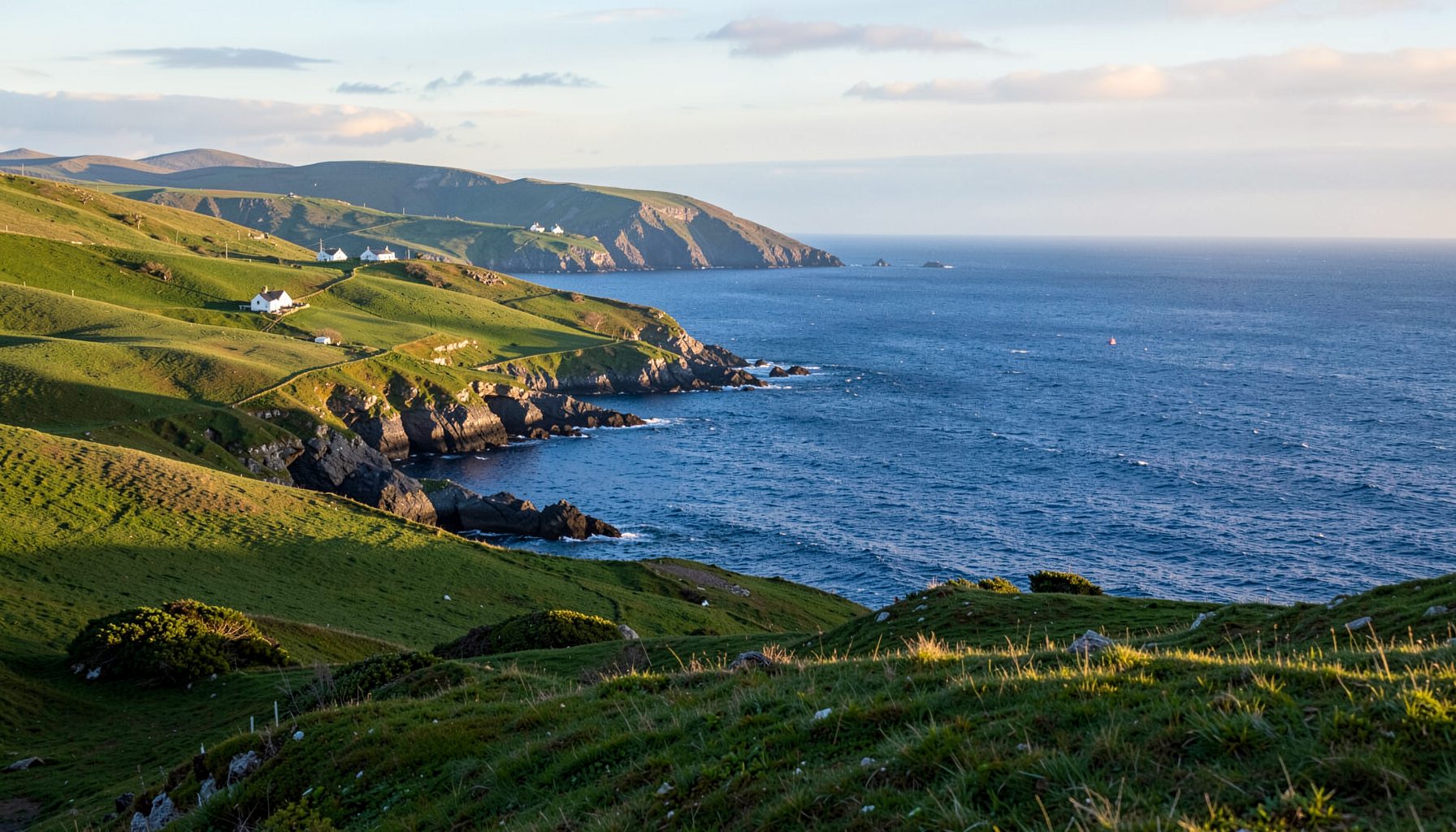
Cotswold and Kerry sheep breeds along the Iveragh Peninsula
For centuries, the rocky slopes and boggy lowlands of Ireland's Iveragh Peninsula have shaped two distinct sheep populations whose fleeces once clothed communities from Cahersiveen to Waterville. Travellers tracing the Ring of Kerry today often notice the sturdy horned ewes grazing on headland walls without realising these are descendants of one of Europe's oldest landraces. The Kerry sheep, sometimes called the Kerry Hill of Ireland, has wandered this Atlantic fringe since medieval times, while the Cotswold, a longwool breed imported by English landowners in the nineteenth century, left a quieter genetic trace in scattered flocks along the Skellig Coast.
Australian readers familiar with the bustling wool stores of Melbourne's Docklands or the auction rings at the Australian Wool Exchange will recognise the deep commercial value of longwool fleeces. Both the Cotswold and Kerry sheep produce wool that sits in a different category from the fine Merino clip that dominates the trade out of Sydney and Adelaide. Their coarser, longer fibres have found a renewed market among hand-spinners, natural dyers, and the kind of craft practitioners who gather at regional events such as the annual Cahersiveen community arts week, where textile workshops draw visitors from across Munster and beyond.
The story of how these two breeds arrived on the same peninsula, sometimes grazing within sight of one another, reveals layers of trade, gentry fashion, and rural economy. Understanding their differences helps locals, visitors, and wool enthusiasts appreciate why certain yarns behave the way they do, and why a Cotswold crossbred fleece might turn up in a Waterville market stall alongside a pure-bred Kerry lamb's wool.
Both breeds belong to the broader family of British and Irish hill and longwool sheep, yet their modern fortunes diverge sharply. While Australian shearers and wool classers work with millions of Merinos each season, the numbers of registered Cotswold and Kerry sheep in Ireland remain modest, making careful stewardship of the remaining flocks a priority for heritage farms along the Skellig Coast.
Roots of the Cotswold in the English Cotswolds
The Cotswold takes its name from the limestone hills of Gloucestershire in south-central England, where medieval Cistercian monks developed a flock prized for its long, lustrous fleece. By the fifteenth century, these sheep were sometimes called the Cotswold Lion because of their imposing size and the heavy curls of wool that hung from their frames. Wealthy wool merchants built the famous stone manor houses of the region with profits that travelled as far as the wool markets of Calais and the textile hubs of Florence.
When Anglo-Irish landowners imported the breed during the Georgian era, the Cotswold's tolerance for damp pastures and its ability to thrive on rougher grazing made it an attractive proposition on the Iveragh Peninsula. Estates around Kenmare and Sneem maintained Cotswold flocks into the early twentieth century, crossbreeding them with native Irish ewes to improve wool length and carcass weight. Few pure-bred Cotswolds remain in Kerry today, though several farmers on the Skellig Coast preserve small heritage flocks as living archives of that gentry-farming past.
Visitors from Tasmania or Victoria who breed longwool sheep of their own will appreciate the parallels with heritage Romney and Lincoln flocks, both of which share common ancestors with the Cotswold. The fleece of a pure-bred Cotswold can grow to thirty centimetres in a year, with a staple length prized by weavers producing heritage blankets and rug yarn.
The Kerry sheep's Atlantic heritage
The Kerry, by contrast, is a product of the peninsula itself rather than an import. Hardy, white-faced, and small-boned, this breed has adapted to the salt-laden winds that sweep across Valentia Island and the steep inclines behind Portmagee. Archaeological evidence suggests that similar horned sheep grazed the western seaboard of Ireland as far back as the Bronze Age, and the modern Kerry retains the alert stance, sure-footedness, and thrift of those early populations.
Traditional crofters valued the Kerry for its lean meat rather than for premium wool, since its fleece is comparatively short and coarse. The breed's ability to rear twins on meagre mountain pasture made it indispensable during the economic hardships of the nineteenth century, when many Skellig Coast families depended on small holdings for survival. Even today, descendants of these original flocks can be spotted along the boreens near Ballinskelligs, where they continue to graze roadside walls and abandoned lazy beds.
For Australian travellers who have toured the rugged sheep country west of Adelaide or the high country of the Australian Alps, the visual comparison to British hill breeds such as the Welsh Mountain or the Scottish Blackface will be immediate. The Kerry is smaller in body mass and shorter in stature than its English cousins, but it carries the same instinct to roam high ground and seek shelter beneath rocky outcrops during Atlantic storms.
Comparing the two breeds
Placed side by side, the differences between Cotswold and Kerry sheep become obvious within seconds. The Cotswold stands taller, with a broad roman nose, tasselled ears, and a thick fleece that falls in wavy locks down both flanks. Rams can exceed 130 kilograms, and the wool carries a natural lustre that catches sunlight differently from the matte surface of a Kerry fleece.
The Kerry is noticeably more compact, with ewes weighing between 45 and 60 kilograms. Their faces are clean and white, often with a small dark patch around the eye, and their fleece is shorter, denser, and slightly curly. Wool from a Kerry sheep is more typical of a mountain breed, suiting hard-wearing tweeds, traditional Aran-style garments, and the kind of rustic yarns used by makers in the Adelaide Hills or regional craft markets around Perth.
Temperament also diverges. Cotswolds are generally docile and tolerant of close handling, a quality that helped them suit the larger English estate flocks. Kerry sheep retain a wilder disposition and a strong flocking instinct, requiring careful shepherding when moved between paddocks. Shearers used to working Australian sheds will find the Kerry a more flighty subject than the Merino ewes they may be accustomed to handling at home.
Wool, meat, and modern uses
Wool from both breeds now commands a small but devoted following. Cotswold fleece, because of its length and sheen, is sought after by weavers producing heirloom blankets, hand-tufted rugs, and theatrical costumes. Several cottage mills on the Skellig Coast have begun processing local fleeces into naturally coloured yarns, an initiative that resonates with the slow-fashion movement popular in Melbourne's inner north and Sydney's Newtown.
Kerry wool has found a parallel niche among felt-makers and traditional knitters, particularly those restoring or reproducing historic Irish textiles. The slightly coarser handle of the fibre gives finished garments a satisfying weight and exceptional durability, qualities that explain why nineteenth-century Aran jumpers were made from similarly robust mountain wools. Smallholder cooperatives along the peninsula have begun marketing these yarns under branded labels, often connecting buyers directly through online platforms and weekend markets.
Meat from both breeds is increasingly promoted through farm-to-table restaurants and food festivals along the Ring of Kerry. Cotswold crossbreds produce a heavier carcass suited to slow roasting, while pure Kerry lamb offers a delicate, slightly gamier flavour prized by chefs serving wild Atlantic-inspired menus.
Cultural significance and heritage on the Skellig Coast
Beyond their practical value, these sheep hold a deep cultural place along the peninsula. The Kerry breed appears in local folklore as a symbol of survival and self-reliance, its image woven into songs about hardship and emigration from ports such as Cahersiveen. The Cotswold, although a relative newcomer, represents an era when the Anglo-Irish gentry reshaped agriculture across Munster and left architectural traces still visible in the planned villages of the region.
Community events now use both breeds as focal points for heritage education. Schoolchildren visiting working farms near Kells learn how shearing, spinning, and weaving once occupied every household, while visiting craftspeople offer demonstrations during seasonal gatherings. These activities link the peninsula to wider networks of craft revival in places as far away as Brisbane's West End or Hobart's Salamanca, where traditional textile skills are also enjoying a renaissance.
The presence of Skellig Michael on the horizon, with its early Christian beehive huts, adds another layer of meaning. The monks who once inhabited that UNESCO site kept sheep on the surrounding slopes, and genetic studies have hinted at links between ancient island populations and the modern Kerry sheep of the mainland.
Practical suggestions for visitors and wool enthusiasts
- Plan a spring visit between March and May to witness lambing in coastal fields near Ballinskelligs and St Finian's Bay.
- Attend the annual Cahersiveen community arts week for hands-on spinning and weaving workshops with local fleece.
- Book a farm stay with a registered breeder to experience morning feeding routines and evening shepherding tasks.
- Purchase yarn directly from cooperative mills in Sneem and Waterville to support small-scale processing.
- Carry a notebook and a small hand lens to identify fleece samples when visiting regional wool markets.
- Connect with Australian longwool groups before departure to share breed notes and exchange fibres by post.
- Photograph grazing flocks respectfully from public roads, keeping dogs leashed and gates closed.
Exploring the Cotswold and Kerry sheep of the Skellig Coast offers a meaningful way to connect with the peninsula's living heritage, and the natural next step is to plan a journey that combines scenic driving, farm visits, and the kind of unhurried countryside experience that makes Iveragh so memorable. Reserve accommodation early during the summer season, follow local flock keepers on social media for lambing updates, and consider timing your visit to coincide with regional arts and heritage events that celebrate the wool traditions still thriving along this Atlantic edge of Ireland.