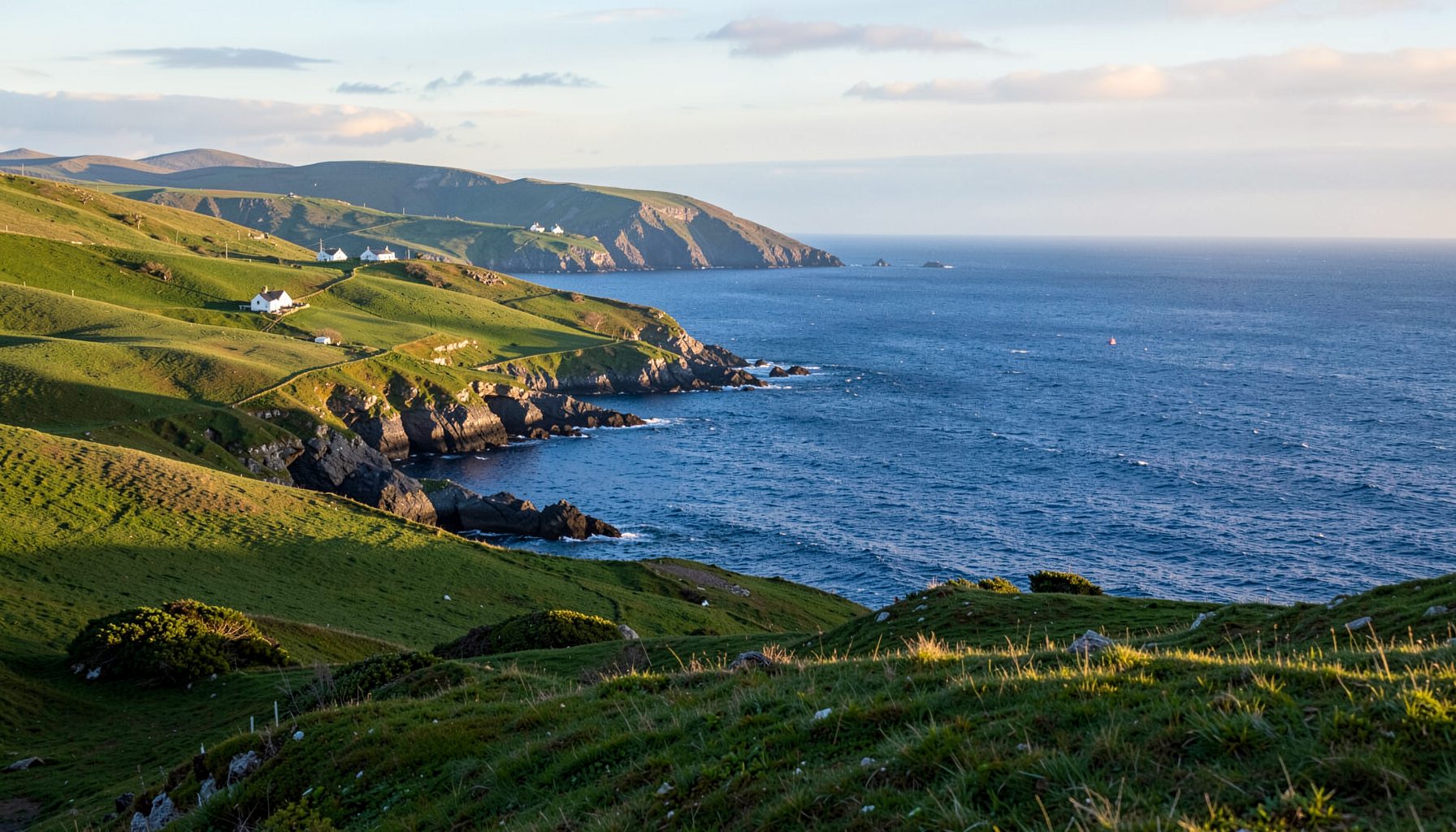
A guide to the churches and holy wells of the Skellig Coast
The Skellig Coast is often associated with dramatic cliffs, Atlantic islands and the stone beehive huts of Skellig Michael. Yet its religious heritage extends far beyond the famous monastic settlement. Parish churches, ruined chapels, graveyards and holy wells form a quieter network across the Iveragh Peninsula, connecting villages such as Valentia, Portmagee, Ballinskelligs, Cahersiveen, Waterville and Castlecove.
For visitors from Australia, these places offer a different kind of sightseeing. They are usually small, local and atmospheric rather than grand monuments designed for large crowds. A weathered graveyard beside a country road can hold as much historical interest as a major attraction, especially when its inscriptions, stonework and stories are understood in their community setting.
The region’s Christian heritage also overlaps with older patterns of pilgrimage and seasonal movement. Sacred springs were visited for healing, prayer and blessing, while churches became gathering places for baptisms, funerals, festivals and ordinary weekly life. Some traditions have continued in recognisable form; others survive through place names, folklore and the memories of local families.
Planning matters. Ireland’s western weather can change quickly, footpaths may be uneven, and several sites are located on working land or beside narrow roads. The most respectful visit is a slow one: check access, close gates, avoid climbing on ruins, leave stones and offerings in place, and treat active places of worship as part of living communities rather than open-air exhibits.
Early Christian traces and monastic landscapes
The most celebrated religious site on the coast is Skellig Michael, the steep island monastery rising from the Atlantic. Its dry-stone cells, oratories and terraces show the skill of early medieval monastic builders. The island’s isolation was central to its spiritual character, although it also makes access demanding. Boat landings and visits are controlled, and sea conditions can cancel departures even during the main season.
Skellig Michael is a UNESCO World Heritage Site, and its cultural importance is separate from its later appearance in Star Wars films. Film interest has brought more visitors to the wider area, but the monastery should still be approached as a protected sacred and archaeological landscape. Climbing the stone steps requires confidence, suitable footwear and care around exposed edges.
On the mainland, early Christian sites are often less complete but equally revealing. Ruined chapels, enclosed burial grounds and fragments of carved stone show how faith communities used the peninsula over many centuries. Cill Rialaig, near Ballinskelligs, is especially valuable for understanding the relationship between settlement, landscape and memory. Its deserted village setting invites close observation rather than hurried photography.
Village churches and local memory
Ballinskelligs Abbey is one of the best-known ecclesiastical ruins on the coast. Set close to the shore, it reflects the region’s medieval religious importance and its vulnerability to Atlantic weather. The surviving walls, window openings and architectural details are best appreciated from outside the structure, with attention to the surrounding dunes and coastline.
In Cahersiveen, the Daniel O’Connell Memorial Church gives a different impression. Its substantial Gothic Revival design reflects the confidence and public identity of a nineteenth-century town. The building is associated with Daniel O’Connell, the political leader born nearby at Carhan, and its scale makes it an important landmark within the townscape. Visitors should check opening arrangements before treating it as a sightseeing stop, since churches may have services, funerals or private events.
Valentia Island and Portmagee also retain churches that anchor local identity. Some are modest buildings whose importance is more social than architectural. They are places where generations of families have marked weddings, deaths, feast days and community gatherings. For Australian visitors accustomed to travelling between large regional centres such as Geelong, Newcastle or Wollongong, the scale of these settlements can be striking: a single church, shop or community hall may serve a wide rural area.
The story of the churches is connected with transport as well as belief. Island and coastal communities depended on boats, ferries and roads to attend services, bring supplies and maintain family ties. The Valentia ferry history helps place religious and social life within that broader pattern of movement across the water.
Holy wells, healing customs and folklore
Holy wells are among the most intimate features of Irish religious heritage. A spring might be associated with a saint, a local story or a particular cure, especially for eyesight, skin conditions or other ailments. Visitors may encounter names connected with St Finan, St Brendan, St Crohán or other figures, although spellings and traditions can differ between maps, publications and local speech.
The purpose of a well was not always narrowly religious. It could be a place to pause, meet neighbours and remember an older landscape. Some wells have rag trees, small crosses, coins or other offerings nearby. These objects should not be moved, and visitors should avoid adding modern items simply to create a photograph. If a tradition is still practised, quiet observation is more appropriate than participation without local guidance.
Access to a well may be less obvious than access to a church. A narrow lane, farm entrance or uneven track can lead to a spring, and the location may be known mainly to residents. Online map pins are not a complete guarantee of public access. Local heritage groups, parish contacts and community information centres can clarify whether a site is open, maintained or suitable for visitors.
Water quality should never be assumed. Holy wells are heritage places, not treated drinking-water supplies, and livestock or runoff may affect the spring. Australian travellers who are used to carrying a refill bottle on walks should keep using a safe, tested water source instead of filling it at an unfamiliar well.
How to visit with care
Begin with the practical details. Wear shoes with firm grip, carry a waterproof layer and allow extra time on roads where passing places are limited. Irish summer days can remain bright late into the evening, but cloud, wind and rain can arrive rapidly on exposed headlands. A visit that looks simple on a map may take longer because of gates, rough ground or the need to park well away from a narrow entrance.
The Australian travel market often favours tightly scheduled itineraries, especially for visitors flying from Sydney, Melbourne, Brisbane or Perth with limited annual leave. The Skellig Coast rewards a slower rhythm. Combining one major site with a village church, cemetery or well creates a more realistic day than attempting to cover every attraction between breakfast and dinner. Irish school holidays and the European summer can also bring pressure to popular roads and boat services, so advance planning is sensible.
Respect for heritage has a legal dimension. In Ireland, archaeological monuments and historic structures may be protected under the National Monuments Acts, and removing stones, digging, disturbing graves or taking artefacts is unacceptable. Australian visitors may recognise the principle from state and territory heritage laws, where Aboriginal cultural places, historic sites and archaeological material can also receive statutory protection. The fact that a ruin appears unattended does not make it unprotected.
Photography is generally welcome from public viewpoints, but people attending worship or tending graves should not be treated as part of the scenery. Drones require particular caution around people, buildings, wildlife and protected sites, and operators must comply with Irish aviation rules. The Australian habit of checking official park alerts before a walk is useful here: consult current local information for access, weather and conservation restrictions rather than relying only on old travel posts.
Building a meaningful coastal heritage trail
A rewarding route might begin in Cahersiveen, continue towards Valentia and Portmagee, then follow the coast through Ballinskelligs, Waterville, Caherdaniel and Castlecove. It need not be a formal pilgrimage. The value lies in noticing how sacred places sit beside homes, fields, roads, beaches and harbours. A church tower may guide a traveller into a village, while a well may preserve a memory in a much less conspicuous setting.
Graveyards deserve particular attention. Readable headstones can reveal Irish surnames, migration patterns, occupations and changing styles of remembrance. Some burial grounds contain older memorials beside modern graves, demonstrating that heritage is not sealed in the past. Keep to paths where possible, do not lean on fragile stones and avoid photographing personal inscriptions when families are present.
Local museums, libraries, schools and community initiatives can add context that guidebooks cannot provide. A story told by a resident may explain a place name, a feast day or a vanished chapel, but it should be treated as community knowledge rather than repeated carelessly as verified fact. Recording names and spellings accurately is especially important in a bilingual cultural landscape where Irish and English forms may both be used.
For visitors from Australia, the best souvenir may be a small set of notes rather than a piece of the landscape. Record the name of a site, its townland, the date of the visit and the story shared by a local source. Supporting a village café, heritage centre, bookshop or community event also helps keep the living culture around these places strong. Under the Australian Consumer Law, travel businesses must provide services as described, but an information website is not a substitute for checking the current terms of a ferry, tour or attraction directly.
The churches and wells of the Skellig Coast are ready to be explored with curiosity and restraint. Use local information to plan your route, allow time for weather and conversation, and approach every sacred or historic place as part of a continuing community. Share your photographs responsibly, support local cultural projects and carry the stories of the coast home without taking anything from the ground.