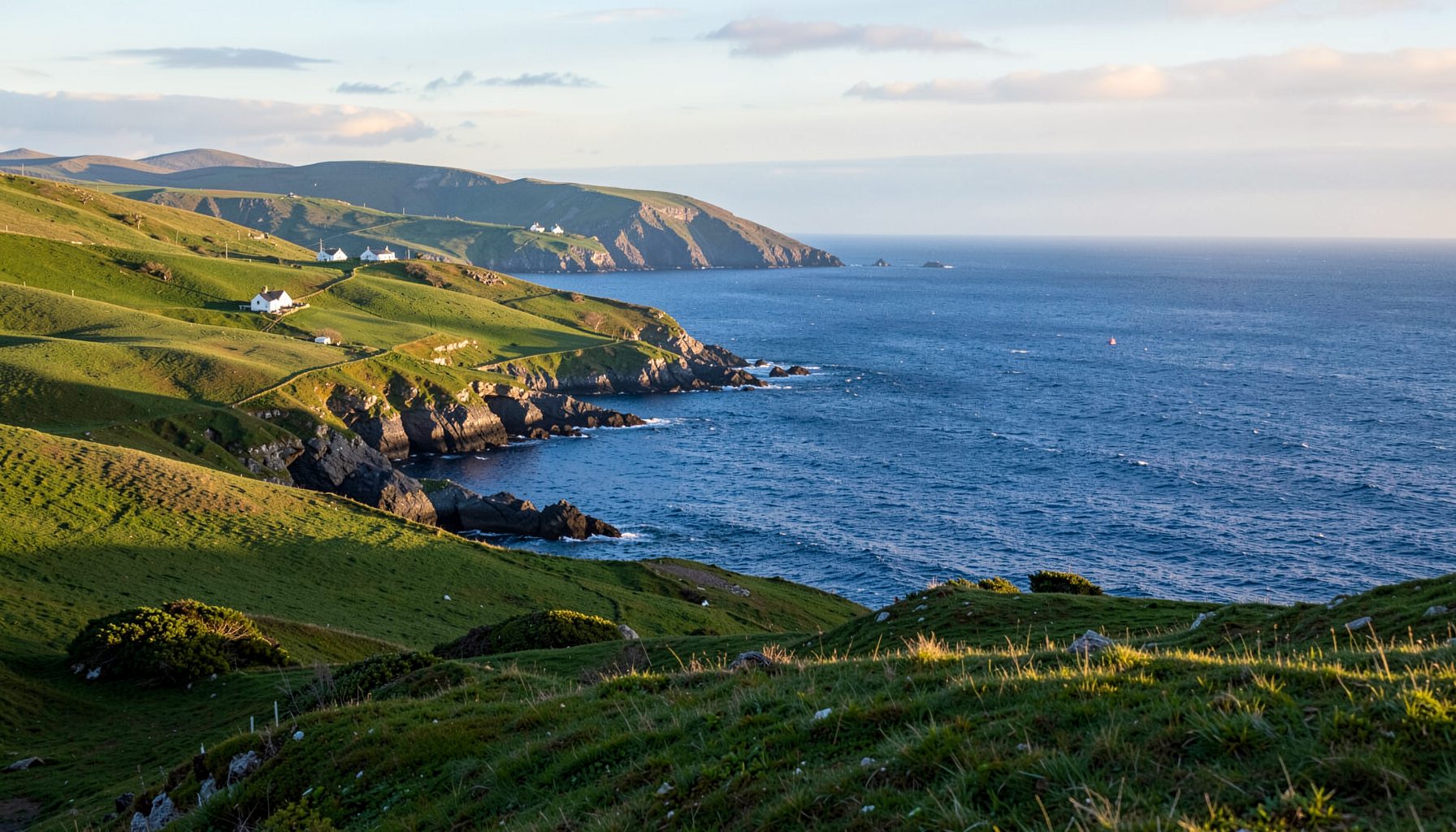
Birding the Skellig Coast from Ballinskelligs to Castlecove
Travelling from Ballinskelligs to Castlecove along the Iveragh Peninsula feels a bit like driving down a coastal strip that has been folded into the cliff itself. The road narrows, stone walls thin out, and the Atlantic opens up on the seaward side of every bend. For anyone who has clocked hours at places like Phillip Island or the cliffs near Port Campbell, the rhythm here is familiar: salt wind, low scrub, sudden bursts of seabird movement. The Skellig Coast does not shout about its birds. It quietly rewards those who pull over, lift the binoculars, and wait.
What makes this stretch particularly appealing is the density of different habitats packed into a small area. Sandy bays, raised bog, sea cliffs, sheltered inlets and reclaimed farmland all sit within a short drive. A half-day outing along this quiet arc can throw up storm-petrels, kestrels, herons and migrant waders without anyone needing to bush-bash their way through dense scrub. For travellers from Melbourne, Brisbane or Sydney, it is the kind of route that rewards a hire car, a thermos, and a flexible morning.
Why the Skellig Coast draws birders
The Iveragh Peninsula sits on a major Atlantic flyway, which means the same wind systems that push migrants onto European shores also sweep species out into the coves here. You are not chasing endemics, but you are lining up a solid cast of both residents and seasonal visitors. The cool, changeable weather feels closer to northern Tasmania than to the Mediterranean, so packing a proper waterproof rather than a thin shell is wise.
This part of Ireland also carries the cultural weight of Skellig Michael, the UNESCO-listed rock that doubles as a seabird stronghold. Even without taking the boat out, you can often see gannets, fulmars and kittiwakes wheeling off headlands visible from the mainland. Compared with Australian sites that are often vast and remote, the Skellig Coast offers birding in a compact, walkable frame. Local farms, lanes and beaches all hold birds within easy reach of the car.
Ballinskelligs Bay and the beach approach
Ballinskelligs offers the easiest entry point, with a wide curving strand that drops gently into shallow water. At low tide the mud and sand close to the castle ruin attract redshanks, ringed plovers and the occasional whimbrel on passage. Herons stalk the rocky edges and pied wagtails flick across the seaweed line. Most Australians would recognise the shoreline behaviour straight away, it is not unlike walking the mudflats of Western Port at low tide.
A short clifftop walk south of the beach lifts the views sharply. From here, ravens drift past at eye level, and choughs sometimes appear with their bright red bills catching the light. The chough is the kind of bird many Aussie twitchers only see in field guides, so a clean view through the scope here tends to be a trip highlight. Carry a notebook rather than a phone app. The wet salt spray quickly fogs screens.
Bolus Head and the headland cliffs
Bolus Head is the ridge that juts out west of St. Finian's Bay, and it gives the most exposed birding on this stretch. The cliffs drop hundreds of metres into the Atlantic, and the wind is rarely absent. Fulmars cruise the updrafts in long glides, while razorbills and guillemots ride the swell below. Manx shearwaters shear past on still mornings, sometimes only metres from the cliff edge.
For anyone used to the open skies of the Australian outback or the wide horizons around Broome, this is a different rhythm. Birds work tight against rock face and tide. Patience pays. Settle on the sheltered side of a stone wall, keep the scope low, and watch for the moment a falcon comes hunting the smaller auks. Bolus also turns up the unexpected. Snow buntings and American waders have both been recorded here, so it pays to check even the dullest-looking flock.
St. Finian's Bay and the inland patches
St. Finian's Bay itself is small and often quiet, but the lanes behind it hold the real variety. Boggy fields, old tracks and a couple of freshwater loughs sit within a short loop walk. This is where you pick up snipe, lapwings and the occasional woodcock at dusk. Reed buntings sing from low willow scrub, a sound that carries a long way in still evening air.
Inland Skellig Coast birding gives the day a balance: mornings along the cliffs, afternoons around the bogs, evenings back at a quiet bay for waders coming in to roost. The mix echoes what locals in Victoria do around the Western Treatment Plant at Werribee, except here the scale is intimate and the farms are still working. Knock politely at any gate before crossing private land. Farmers here are generally welcoming, but they do like a friendly head's-up.
Valentia Sound and the tide line
A short detour across to Valentia Island opens up the sheltered side of the coast, and the birding shifts. Valentia Sound is a sea strait between the island and the mainland, with a strong tidal pull. At low water the exposed reef attracts turnstones, purple sandpipers and shelducks. The soundtrack is gulls and oystercatchers, much like a quiet morning at Sandringham in Melbourne.
The lighthouse area on the north end of Valentia is one of the quieter patches for watching migration in spring, when falls of wheatears, willow warblers and the occasional rarer passerine drop in after a clear night. The trick is to arrive at first light. Australian birders used to early starts from places like Gluepot Reserve will feel right at home with the routine, except the coffee stops along the way are old stone-fronted pubs instead of utes at a roadhouse.
Castlecove and the quiet coves
Castlecove sits at the south end of the stretch and marks the transition toward Derrynane. The beach here is shingle rather than sand, and the low dunes behind it hold a different selection of birds. Stonechats perch on the highest tufts, linnet flocks feed along the back edge, and a sparrowhawk usually puts in an appearance by mid-morning. The bay curves back into cliffs that block most of the westerly wind.
Around Castlecove the small coves within walking distance are worth a slow morning. Look for chough feeding on the short grass above the tideline, peregrine sitting tight on a ledge, and a steady stream of gannets passing out to sea. Smaller species in the bracken slopes include great tits, wrens and the occasional long-eared owl roosting in thick ivy. It is the sort of place where a thermos, a folding stool and a couple of hours will quietly fill the page.
Birding notes and local etiquette
A few practical points help the day run smoothly. The roads are narrow and locals know the speed at which they drive, so mirror-to-mirror passing is the rule. Weather on the Iveragh Peninsula changes in a single morning. Carry a pack with waterproofs, a hat, suncream and a small first-aid kit. Bring euros for parking and small purchases, as card machines can be patchy in rural spots.
Resist any urge to chase birds across fenced fields. Stick to marked lanes, beaches and headland paths. If a guide is offered locally, take it. The local knowledge around Skellig Coast birding is rich and a good guide will turn a quiet morning into a long list. Photography should stay a respectful distance from nesting seabird colonies, which can be damaged by disturbance.
| Site | Habitat type | Best time | Likely species |
|---|---|---|---|
| Ballinskelligs Bay | Sandy beach and strand | Low tide, morning | Herons, plovers, whimbrel |
| Bolus Head | Sea cliffs and headland | Mid-morning, still winds | Fulmars, shearwaters, choughs |
| St. Finian's back lanes | Bog and freshwater lough | Late afternoon | Snipe, lapwing, bunting |
| Valentia Sound | Tidal reef and shore | Low tide | Turnstone, shelduck, waders |
| Castlecove | Shingle beach and dunes | Early morning | Stonechat, linnet, sparrowhawk |
Where to pull over and look
- St. Finian's Bay strand at low tide, where waders stack along the seaweed line
- The clifftop pull-in south of Ballinskelligs, ideal for choughs and ravens at eye level
- The bog loop behind St. Finian's, best for snipe, buntings and the odd late hen harrier
What to pack in the bag
- A compact scope for cliff work and a sturdy pair of bins
- Layered waterproof clothing, hat and gloves in any season
- A small thermos, a folding stool and a paper notebook
- A few euro notes, a head torch and a copy of the local bird checklist
If a quiet day of gannet-gliding cliffs and bog-edge buntings sounds like the right kind of trip, settle in for at least three nights between Ballinskelligs and Castlecove. Book a local guide through the Skellig Coast website, leave the coastal path exactly as you found it, and share your sightings with the local bird log so the next visitor can pick up where you left off.