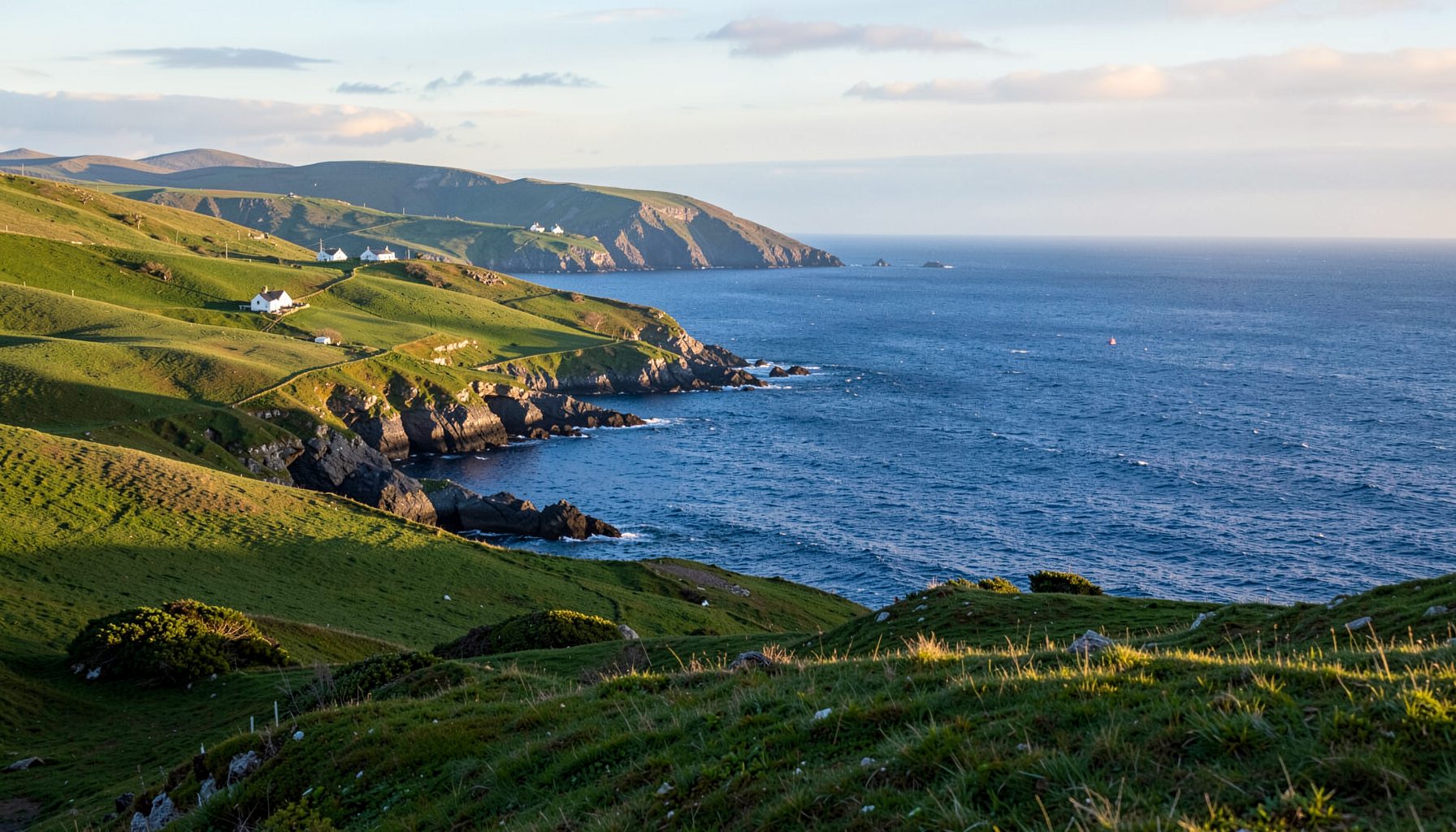
A Guide to Autumn Colors on the Ring of Kerry
Autumn gives the Ring of Kerry a quieter, more textured character. The Iveragh Peninsula is best known for Atlantic views, rugged mountains, stone forts and island heritage, yet its seasonal color is often found in smaller details: bracken turning copper, rowan berries brightening a hedgerow, oak leaves deepening to russet and low sunlight touching the lakes around Killarney.
The landscape does not resemble a continuous forest. Much of the route passes through open moorland, farmland, bog, rocky uplands and wind-shaped coastal vegetation. This variety makes the autumn experience distinctive. A single drive can move from gold-brown hills to green pasture, then to a sheltered woodland where the leaves have changed more dramatically.
From Kells and Cahersiveen along the Skellig Coast to Waterville, Ballinskelligs, Portmagee and Castlecove, fall is a good season for seeing familiar places under different conditions. Fewer visitors, softer daylight and lively weather can bring out the character of villages, heritage sites and walking routes without reducing the importance of careful planning.
What Autumn Looks Like Across Iveragh
The Ring of Kerry’s autumn palette is shaped by exposure. Coastal areas remain relatively green because of the Atlantic climate, while inland woods and sheltered valleys usually offer stronger displays of yellow, amber and brown. The hills may show broad stretches of purple-brown heather and fading bracken rather than dense tree color.
Native oak is especially important in the region’s wooded landscapes. Birch, rowan, holly and hazel add different shades and forms, while beech, sycamore and planted woodland can produce brighter yellow or copper tones. In some places, berries and moss provide more intense color than the leaves themselves.
Cloud and sunlight can change the appearance of the landscape within minutes. A wet road may reflect copper-colored vegetation, while a brief opening in the cloud can illuminate a distant ridge. For photographers and walkers, these changes are part of the appeal, but they also mean that a memorable autumn view may be fleeting.
The Best Time To See Fall Foliage
There is no fixed peak season for autumn leaves on the Ring of Kerry. September often brings the first signs of change, including bracken turning bronze and early color in some trees. October usually offers the broadest combination of foliage, mild walking conditions and autumn light. By November, many trees have lost their leaves, but woodland floors, hedgerows and mountain colors can remain attractive.
Sheltered sites change earlier than exposed coastal slopes. A woodland near Killarney may look distinctly autumnal while the coast around Waterville or Valentia still appears predominantly green. Higher ground can feel wintry before lowland trees reach their richest color, particularly after strong winds.
Weather is as important as the calendar. Calm, dry days make it easier to stop at viewpoints and follow trails, while rain can deepen colors and create atmospheric conditions. Strong wind may strip leaves quickly, especially from roadside trees and exposed ridges, so flexible timing is more useful than relying on a single predicted peak.
Woodland, Lakes And Mountain Light
Killarney National Park is one of the strongest places in the wider Ring of Kerry area for woodland color. Oak woods, mature planted trees, lakeshores and mountain backdrops create a more layered autumn landscape than the open peninsula roads. Around Muckross, Torc and the lakes, short walks can combine changing leaves with historic buildings, waterfalls and views toward the MacGillycuddy’s Reeks.
Torc Waterfall is particularly atmospheric after rain, when the cascade is fuller and the surrounding woodland is rich with moss and fallen leaves. The route can be busy at popular times, so early morning or later afternoon may provide a calmer experience. Wet stone, roots and boardwalk surfaces require care, especially when leaves cover the trail.
The Gap of Dunloe and surrounding mountain roads provide a different kind of seasonal view. Here, autumn color is distributed through valleys, fields and scattered trees rather than forming a dense canopy. The contrast between rust-colored vegetation, dark rock and reflective water can be striking when the weather is clear.
| Area | Autumn character | Suitable focus | Planning note |
|---|---|---|---|
| Killarney National Park | Oak woodland, beech, lake reflections and waterfalls | Short walks, photography and heritage visits | Popular sites can be busy; arrive early |
| Gap of Dunloe | Mountain valleys, bracken and scattered trees | Scenic driving and longer walks | Roads are narrow and conditions can change |
| Cahersiveen and Valentia Island | Hedgerows, fields and Atlantic light | Heritage, village stops and coastal viewpoints | Wind may reduce leaf cover quickly |
| Waterville and Ballinskelligs | Open hills, bracken and sheltered gardens | Coastal scenery and quiet walks | Expect more green than dense woodland color |
| Castlecove and the southern coast | Woodland pockets, stone walls and sea views | Short explorations and landscape photography | Check daylight and road conditions before stopping |
Autumn Along The Skellig Coast
The Skellig Coast offers a more open interpretation of fall color. Between Kells, Cahersiveen and Waterville, the route passes through fields, peatland, stone walls and low hills where copper bracken often provides the strongest seasonal accent. The Atlantic remains central to the view, and changing skies may be more dramatic than changing leaves.
Cahersiveen is a useful base for exploring local heritage alongside autumn scenery. The town’s connections with Daniel O’Connell, nearby forts and the wider Iveragh landscape give a seasonal visit more depth than a simple drive between viewpoints. Valencia Island adds village lanes, elevated coastal views and places where sheltered vegetation contrasts with exposed headlands.
Around Ballinskelligs, Portmagee and the approaches to Skellig Michael, the landscape is shaped by sea, wind and open ground. The famous Skelligs may appear sharply outlined against a bright sky or partially veiled by cloud. Autumn is not the season for assuming boat access; marine conditions and operator schedules vary, and Skellig Michael visits require advance planning and suitable weather.
South of Waterville, roads toward Caherdaniel and Castlecove combine ocean scenery with pockets of woodland and mature vegetation. Derrynane National Historic Park is notable for its coastal setting, gardens and links to Daniel O’Connell. Its sheltered areas can retain autumn color when nearby hills are already subdued, making it a valuable stop during a changeable day.
Viewpoints And Walks For Seasonal Color
A scenic drive is often the easiest way to experience the region, but the best autumn details appear at walking pace. Short trails near waterfalls, lakeshores, woodland estates and village heritage sites allow time to notice leaf litter, fungi, berries and the texture of stone walls. Always remain on marked paths where access is managed and avoid entering fields or private land.
The Ring of Kerry includes narrow roads with limited stopping space. A beautiful bend is not necessarily a safe place to pull over, especially on the N70 or N71 where buses, cyclists and local traffic share the route. Use signed parking areas and established viewpoints, then walk a short distance rather than stopping in the carriageway.
Light is often best in the morning or late afternoon, when the sun sits lower and brings out relief in hills and trees. Overcast conditions can work well for close-up images of leaves, moss and stone. A waterproof layer, sturdy footwear and a charged phone are useful even for short walks, since autumn showers can arrive quickly.
Ways To Plan A More Rewarding Visit
A successful foliage day does not need to cover the entire 179-kilometre Ring of Kerry. Choosing one inland woodland area and one coastal section usually creates a richer experience than spending all day driving. Local villages, community projects, galleries, cafés and heritage attractions can add warmth when weather limits time outdoors.
Check opening times and local conditions before setting out. Seasonal schedules may differ from summer, while roadworks, storms or temporary closures can affect access. Public transport and organised activities may also operate on reduced timetables, so visitors should avoid assuming that every summer option remains available.
- Start with Killarney’s woodlands if dense autumn color is the priority.
- Include a coastal stop near Cahersiveen, Valentia, Waterville or Castlecove for contrast.
- Allow extra time on narrow roads and never stop where visibility is restricted.
- Carry waterproof clothing, walking shoes, water and a small light source for late returns.
- Look beyond leaf color by noticing stone forts, historic houses, bogland, islands and changing sea light.
Connecting Nature With Local Heritage
Autumn scenery becomes more meaningful when it is read as part of the region’s history. The same landscape that now carries bracken and rowan once supported farming communities, monastic settlements, fishing traditions and long-distance travel. Stone walls, ringforts, ruined churches and old roads remain visible reminders that the Ring of Kerry is a lived-in cultural landscape.
On the Skellig Coast, the heritage of Skellig Michael is inseparable from its isolated position in the Atlantic. The island’s early monastic remains and UNESCO World Heritage status draw international attention, while its appearance in the Star Wars films has added another layer of recognition. From the mainland, autumn cloud and low light can make the Skelligs seem especially remote, though sea conditions always determine whether a visit is possible.
Community events, learning hubs and local cultural initiatives can offer another way to experience the season. Their schedules change from year to year, so regional information sources are useful for finding exhibitions, talks, walking programmes and gatherings connected with local history or the natural environment.
Use the autumn months to explore the Ring of Kerry at a measured pace, combining woodland color near Killarney with the open Atlantic character of the Skellig Coast. Check local listings on Skellig Coast before travelling for community events, heritage information and seasonal activities, then support the villages and organisations that help preserve this remarkable landscape.